10-Year Treasury Yield at 5.24%: S&P 500’s 0.6% Rise Hides the Real Problem
The 10-year Treasury yield finished at 5.24% while the S&P 500 rose 0.6%. That is not confidence. It is a market pretending money has not become brutally expensive.
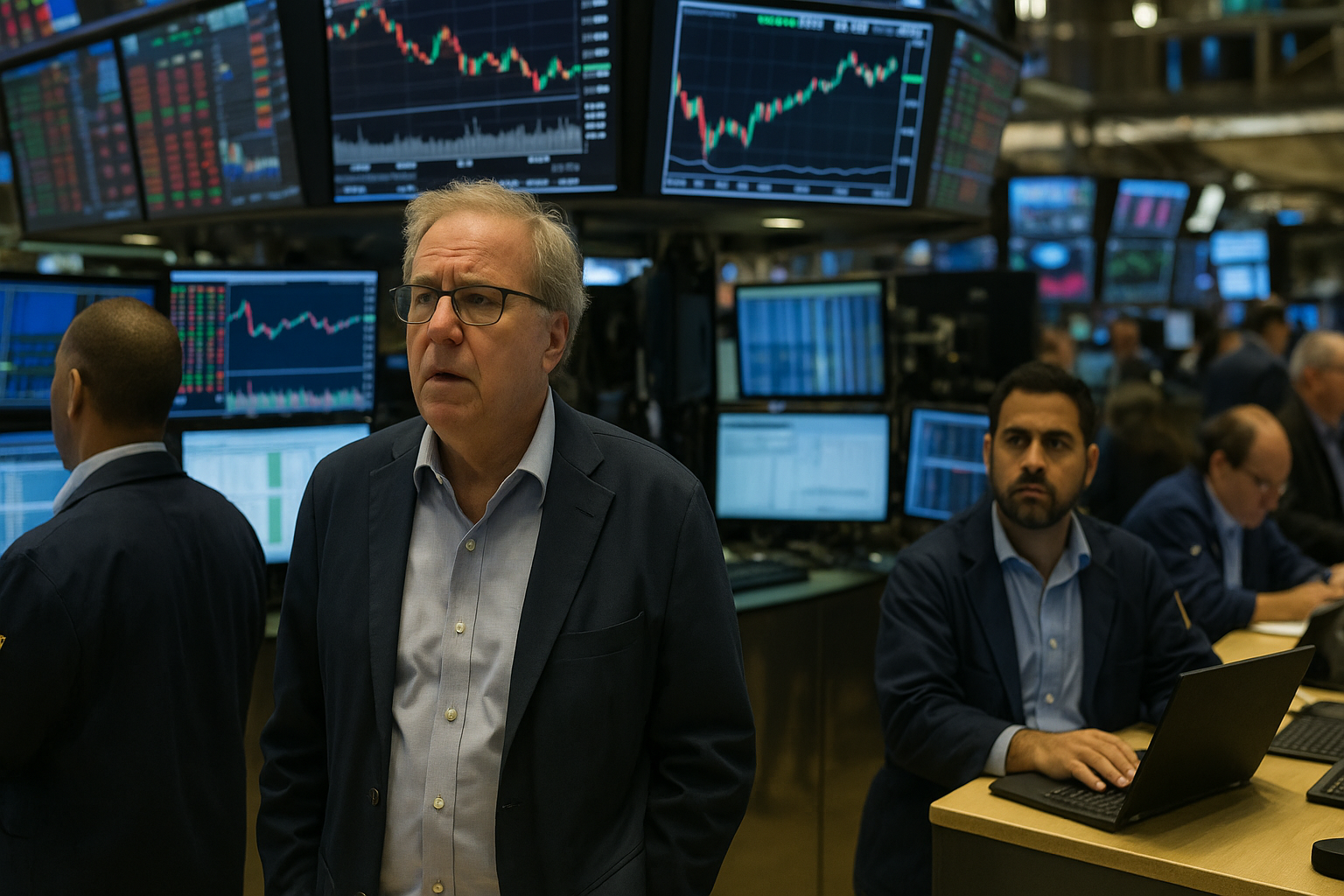
The 10-year U.S. Treasury yield finished at 5.24% on Friday while the S&P 500 rose 0.6%. If you think that is reassuring, you’re watching the wrong bloody screen.
Stocks are behaving as if expensive money is a minor inconvenience. It isn’t. A 5.24% benchmark yield is a price increase on nearly every ambitious plan in the economy: mortgages, acquisitions, data centres, inventory finance, commercial property, government debt and the fantasy valuations built on profits promised five years from now. ([apnews.com](https://apnews.com/article/5d0f953dbf96febb0690c1aef23fa8a9))
The market has not solved this problem. It has merely postponed admitting it exists.
The headline number investors should fear
On Friday, October 9, the S&P 500 gained 0.6%, the Dow added 423 points, or 0.8%, and the Nasdaq rose 0.6%. That capped a record-setting week for U.S. shares. Brent crude settled at $104.72 a barrel, after bouncing between $102.50 and $105 during the session. The 10-year Treasury yield rose to 5.24% from 5.22% the day before. ([apnews.com](https://apnews.com/article/5d0f953dbf96febb0690c1aef23fa8a9))
That is the uncomfortable setup: equities near records, oil above $100, and the reference price for long-term money sitting around highs not seen since 2002.
Markets did get a short-term breather after President Donald Trump said the U.S. would not attack Iran before next month’s midterm elections. Oil eased intraday and global shares moved higher. Fine. But a political reassurance is not the same thing as restored oil supply, repaired shipping routes or lower inflation. It is a pause in one immediate fear. ([marketscreener.com](https://www.marketscreener.com/news/oil-eases-bringing-some-respite-to-stocks-and-battered-bonds-ce785ddfd188f025))
The U.S. Energy Information Administration’s October outlook is the bit that deserves more attention than a one-day bounce in stocks. It forecast Brent crude would average $105 a barrel in the fourth quarter of 2026, up $14 from its forecast a month earlier. It also estimated global oil inventories fell by 1.9 million barrels per day in the third quarter and would fall another 0.7 million barrels per day on average in the fourth quarter. ([eia.gov](https://www.eia.gov/outlooks/steo/archives/oct26.pdf))
That is not a neat little inflation scare. That is a physical-market problem: fewer barrels in storage, disrupted production and transport, higher insurance costs, and a lot of people hoping the geopolitics become less stupid.
Why the sharemarket is being far too polite
The first mistake investors make is treating a high bond yield as just another line on a Bloomberg terminal.
It is not. The 10-year Treasury is the base rate for the world’s optimism. When it rises, every other asset has to compete with a safer alternative offering a much better return than it did a few years ago.
A founder trying to raise capital competes with it. A listed company looking to refinance debt competes with it. A property developer competes with it. So does a technology company that needs billions for chips, power, data centres and staff before it produces much cash.
That is why the current AI financing boom deserves a hard look rather than another standing ovation. Reuters reported that investors are weighing major fundraising by companies including SpaceX, Broadcom and Oracle to buy advanced AI chips. At the same time, investors have become more selective about whether the future earnings from all that spending will justify the capital being thrown at it. ([marketscreener.com](https://www.marketscreener.com/news/oil-eases-bringing-some-respite-to-stocks-and-battered-bonds-ce785ddfd188f025))
Good. They should be selective.
Cheap money lets mediocre businesses masquerade as growth businesses. Expensive money has a wonderful way of asking the rude question: when exactly does this thing make real cash?
It is not enough to say revenue is growing. It is not enough to say AI changes everything. It may well change everything. But changing everything and earning a return on billions of borrowed dollars are two very different jobs.
The sharemarket is still giving the biggest technology names the benefit of the doubt because they have scale, cash flow and balance sheets that smaller companies would kill for. Reuters noted that participation in the S&P 500 has been relatively narrow, with investors viewing big tech as better able to withstand higher oil prices and yields than the rest of the market. ([marketscreener.com](https://www.marketscreener.com/news/oil-eases-bringing-some-respite-to-stocks-and-battered-bonds-ce785ddfd188f025))
That may be true. It is also precisely why it is risky. A market carried by a handful of companies is not diversified confidence. It is concentrated faith.
Oil is not just a petrol-station problem
People see oil above $100 and think about filling the car. That is the consumer version of the story. The business version is nastier.
Higher energy costs feed through freight, aviation, logistics, manufacturing, agriculture, construction and any business that moves physical things. Then the second-order effects arrive: suppliers pass on costs, customers resist price rises, margins get squeezed, and management teams have to decide whether to absorb the pain or risk lower volume.
The EIA says the pressure is not confined to crude. It forecast U.S. retail diesel prices would stay above $6 a gallon in October, while noting that elevated tanker rates, insurance costs and longer routes around conflict zones are adding to the delivered cost of oil. ([eia.gov](https://www.eia.gov/outlooks/steo/archives/oct26.pdf))
Diesel matters because it is the bloodstream of the real economy. You can build a beautiful software business from a laptop. You cannot stock supermarkets, pour concrete, harvest crops or run a trucking fleet on inspirational LinkedIn posts.
And here is the part markets will eventually have to price properly: higher energy costs make inflation stickier at exactly the moment high government borrowing and elevated bond yields are already making capital scarcer.
That gives central bankers less room to ride in and rescue investors if growth weakens. The old reflex — bad news means rate cuts, therefore buy growth stocks — becomes much less reliable when oil is punching inflation in the face.
The contrarian angle: high yields are not automatically bad news
Now, I’m not joining the doom parade. A 5.24% 10-year yield is not proof that a crash is coming on Tuesday.
In fact, higher yields can be healthy when they reflect a genuinely growing economy and investors demanding a sensible return for lending money long term. Treasury auctions found demand even as yields jumped, which helped limit the move higher. ([apnews.com](https://apnews.com/article/5d0f953dbf96febb0690c1aef23fa8a9))
The overlooked opportunity is that capital finally has a price again.
For too long, founders were rewarded for raising more money than the bloke down the road. Investors were rewarded for marking up paper valuations. Operators were told growth solved everything. It doesn’t. Cash flow solves a lot more.
A higher-rate environment rewards the businesses that know their unit economics, collect cash quickly, keep customers, price properly and avoid debt they do not absolutely need. It punishes businesses that confuse a large addressable market with a viable business model.
That is not bad for capitalism. It is capitalism working after a long nap.
It also means there is a real case for owning quality assets rather than blindly fearing every rise in yields. Businesses with pricing power, durable demand, manageable debt and sensible capital spending can survive a more expensive world. Some will become stronger because weaker competitors run out of cash.
But do not confuse that with a reason to pay any price for fashionable stocks. The point is quality, not cheerleading.
What this means for you
If you are a founder, run your numbers at a borrowing cost that is worse than today’s, not better. Ask what happens if revenue lands 15% below plan, customers pay 30 days later, and your next capital raise takes twice as long. If the company breaks under that pressure, you do not have a growth plan. You have a hope plan.
If you are an operator, go hunting for energy, freight and financing exposure now. Not next quarter, now. Reprice where you can, renegotiate where you cannot, and get ruthless about working capital. Inventory that sits around looking impressive is cash wearing a warehouse uniform.
If you are an investor, stop treating government bonds as dead money. A 5.24% 10-year yield changes the arithmetic. It gives you an actual alternative to paying heroic prices for businesses whose profits live somewhere over the horizon. That does not mean sell every share and hide under the bed. It means demand a proper margin of safety and understand what you own.
And if you are a saver, use the moment. Check your mortgage, your cash rate, your debt and your emergency buffer. The people who get hurt in higher-rate periods are rarely the ones who read one scary headline. They are the ones who assumed cheap money was a permanent law of nature.
It wasn’t. It never is.
The S&P 500 can rise 0.6% for a day. Good on it. But the price of money has changed, oil is still above $100, and the bill will eventually find its way to every balance sheet. The smart move is not to panic. It is to prepare before everyone else notices the bill has arrived.