Aaron Donald’s $20M Rams Return Makes the Super Bowl a $30M Bet
The Rams paid a 35-year-old retiree $20 million for one season. If Aaron Donald helps win the Super Bowl, the bill hits $30 million — and every NFC quarterback pays for it.
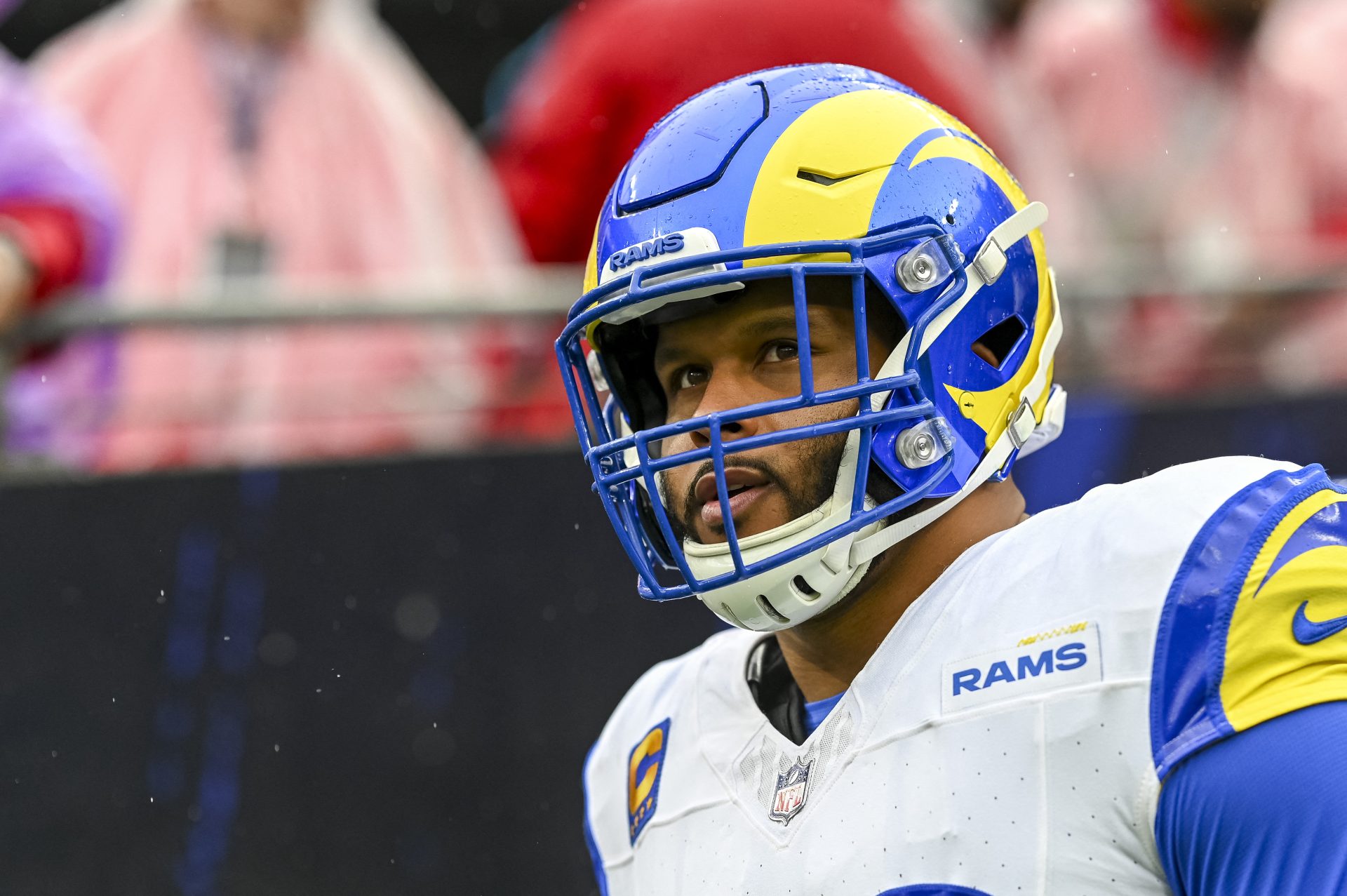
The Los Angeles Rams have just paid a 35-year-old who retired after the 2023 season $20 million to come back for one year. If Aaron Donald helps them win the Super Bowl, the number can reach $30 million.
That sounds reckless if you think the Rams bought a defensive tackle. They didn’t. They bought a very expensive chance to make the rest of the league panic.
For Rams fans, this is not a retirement-tour headline. It is a win-now move built around making the NFC’s most important games miserable for opposing quarterbacks.
The deal is a one-year Super Bowl invoice
Donald is returning to the Rams on a one-year contract worth $20 million, with another $10 million available through incentives. The reported structure matters: $10 million is base salary and $10 million comes via per-game 53-man roster bonuses. That is a sensible way to pay a player who has been out of football for two seasons. You pay for availability, not just reputation. ([frontofficesports.com](https://frontofficesports.com/aaron-donald-returns-rams/?utm_source=openai))
The Rams are not pretending this is a long-term rebuild move. They are going flat out.
Donald joins Myles Garrett on a defensive front that also includes Braden Fiske, Byron Young, Kobie Turner and Poona Ford. On the other side of the ball, Los Angeles already has Matthew Stafford and Puka Nacua. This is not a team making a sentimental reunion because fans like the old highlights. It is a team stacking premium assets around a narrow championship window. ([fantasy-www.nfl.com](https://fantasy-www.nfl.com/news/aaron-donald-unretires-rams-2026-season?utm_source=openai))
And that $30 million maximum is not the headline. The real number is the cost of failing.
When a club has already committed the draft capital, cap space and management attention required to acquire and retain elite talent, being merely “pretty good” is a terrible outcome. A playoff loss does not give you your draft picks back. It does not make Stafford younger. It does not make Garrett cheaper. It does not make the NFC less competitive next year.
The Rams are behaving like owners of a business that has found product-market fit and has decided to spend heavily before the market changes.
Good. More operators should think that way.
Aaron Donald is not being paid for his past — but it helps
Donald’s résumé is ridiculous enough to distort the discussion. He is a three-time Associated Press Defensive Player of the Year, a 10-time Pro Bowler, an eight-time first-team All-Pro and a Super Bowl champion. Across 154 regular-season games, he has recorded 111 sacks, 176 tackles for loss and 790 pressures. Those are not “solid career” numbers. They are the sort of numbers that make offensive coordinators wake up annoyed. ([therams.com](https://www.therams.com/team/players-roster/aaron-donald/career?utm_source=openai))
But rich organisations get into trouble when they pay for what someone used to be.
Donald is 35. He has not played an NFL snap since the 2023 season. The Rams know that. Sean McVay and the football staff have seen him work out, and Donald said he documented his training as he moved from conditioning into football drills. He returned to the facility, attended meetings and began ramping up in individual work immediately. ([therams.com](https://www.therams.com/news/aaron-donald-talks-rejoining-rams-in-2026-do-i-feel-like-i-can-play-at-a-high-level-yes?utm_source=openai))
That is why the contract is short, loaded with availability mechanics and carries upside tied to playoff success. The Rams have not signed up for a three-year tribute tour. They have made a one-season bet with a defined purpose.
Frankly, it is the grown-up version of a comeback story.
If Donald is still Donald for 13 or 15 high-leverage snaps a game, the Rams do not need him to be a 2018 machine playing every down. They need him to force double teams, wreck short-yardage plays, collapse the middle of the pocket and make Garrett’s life easier. Garrett does exactly the same in reverse.
That pairing is where the economics get interesting.
Myles Garrett changes the price of Aaron Donald
A player can be expensive in isolation and cheap in a system. Most people miss this because they look at a contract as if it sits on a spreadsheet by itself.
It does not.
Donald returning without Garrett would have been a big story. Donald returning because the Rams now have Garrett is a strategic story.
The Rams acquired Garrett on June 1. Front Office Sports reported that Los Angeles also sent first-, fifth- and sixth-round picks in 2026 plus a 2027 third-rounder to Kansas City for Trent McDuffie, then gave the cornerback a four-year, $124 million extension with $100 million guaranteed. That is an organisation declaring that its time is now, not someday. ([frontofficesports.com](https://frontofficesports.com/aaron-donald-returns-rams/?utm_source=openai))
Here is the bit fans tend to ignore: stars make other stars more valuable.
Donald spent much of his career being the entire problem. Offences could slide protection toward him, double-team him and build their week around not letting No. 99 ruin Sunday. Garrett means that approach can become suicidal. Put too much attention on Donald and Garrett gets a cleaner path. Overprotect against Garrett and Donald gets the sort of one-on-one opportunities he made a career out of turning into disasters.
The Rams are not paying $20 million for 111 career sacks. They are paying to create a defensive system where the opposition cannot solve the maths.
That is the difference between collecting talent and building leverage.
The overlooked angle: this is a risk-management contract, not a vanity deal
There is a lazy view that teams spending at the top of the market are simply playing with Monopoly money. Sometimes they are. But this particular deal has more discipline than it first appears.
First, it is one year. No ugly dead-money tail if Donald wakes up in November and decides retirement was actually quite nice.
Second, half of the reported $20 million is tied to per-game active-roster bonuses. That means the Rams have protected themselves against the obvious risk: a great player who cannot stay on the field.
Third, the extra $10 million is incentive-based. The player gets paid the biggest total if the club gets where it wants to go and he is part of the reason. That is exactly how you should structure a high-risk, high-upside agreement.
Too many businesses do the opposite. They give someone the headline number upfront, then pray the person remains motivated, healthy, useful and committed. That is not compensation design. That is wishful thinking with a payroll department.
The Rams have linked their cost to the outcomes that matter: availability and a deep postseason run.
There is also an important psychological layer. Donald is not coming back to join a middling side and chase personal statistics. He is returning to a roster loaded with championship-level names, including Garrett, Stafford and Nacua. The pitch is clear: one more proper run, with a real chance to win.
That is a far better recruiting message than “we have a five-year plan.” Nobody elite wants to hear about your five-year plan if they can see you have no intention of winning this year.
Why this could still go wrong
Now for the part that gets buried under the hype videos.
Donald’s historic greatness does not guarantee present greatness. NFL football is not a podcast business; you cannot simply resume where you left off after a long break. The Rams have to manage his ramp-up, workload and body. Donald himself acknowledged that being back in the football routine felt strange, even as he said he believed he could still play at a high level. ([therams.com](https://www.therams.com/news/aaron-donald-talks-rejoining-rams-in-2026-do-i-feel-like-i-can-play-at-a-high-level-yes?utm_source=openai))
There is also the danger of confusing a fearsome roster with a finished team. Injuries happen. Chemistry matters. Offensive lines can neutralise individual brilliance with fast releases, movement and smart protection. And the NFL has a nasty habit of punishing teams that spend all summer reading their own headlines.
But that does not make the move foolish. It makes it a calculated wager.
You do not avoid big bets because they can fail. You avoid dumb bets because the downside can cripple you. This one does not. A single-year deal with meaningful conditional pay is a contained risk. If it works, the Rams may have added the final unfair advantage to a roster already designed to win immediately.
What this means for you
There are three useful lessons here for Rams fans, NFL observers, founders, investors and operators.
1. Spend aggressively only when the window is real.
The Rams are not adding Donald because “elite talent is always nice.” They are doing it because their roster, quarterback situation and recent transactions say the opportunity is now. In your business, that might mean hiring the expensive salesperson when leads are already converting, buying inventory when demand is proven, or putting serious money behind a product that customers are already pulling from you.
Don’t light cash on fire to feel ambitious. But when the conditions line up, hesitation can be more expensive than action.
2. Pay for outcomes, not stories.
Donald’s deal has a base, availability-based pay and upside. That is how you should think about senior hires, advisers, agencies and partnerships. Pay enough to attract serious people. Then connect the big upside to the thing you actually need: revenue, retention, delivery, profit or a defined strategic milestone.
A famous name is not an outcome. A glossy CV is not an outcome. Build the commercial structure around the result.
3. Look for combinations, not individual assets.
Donald plus Garrett is worth more than Donald and Garrett separately because each changes the other’s operating environment. That is the whole play. In business, your best hire may be the person who makes your existing stars twice as effective. Your best acquisition may be the product that improves distribution, pricing power or customer retention across everything else you own.
That is where serious value gets created: not in the asset itself, but in the knock-on effect.
The Rams have paid $20 million for Aaron Donald’s return, and potentially $30 million if the season breaks their way. Fair enough. They are not buying a memory. They are buying leverage at precisely the moment leverage matters most.
That is how you take a proper swing — without being an idiot about it.