AbbVie’s $10.9B Apogee Bet Won’t Pay Off Until 2032
AbbVie has paid $10.9 billion for Apogee, and it says the deal will not lift earnings until 2032. That is either disciplined long-term thinking or a very expensive prayer.
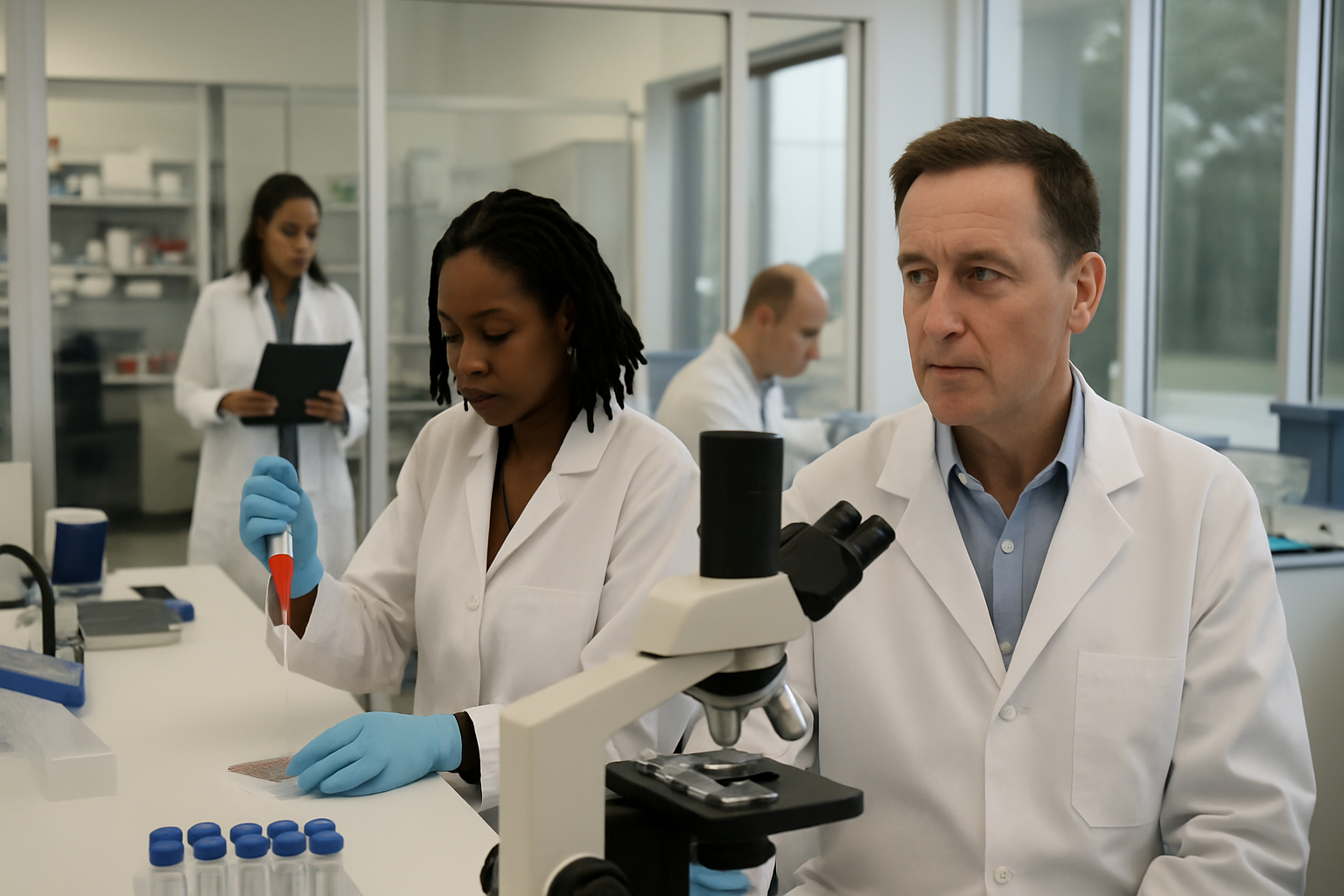
AbbVie has paid $10.9 billion for Apogee Therapeutics, and it says the deal will not lift adjusted earnings per share until 2032. That is either disciplined long-term thinking or a very expensive prayer.
On September 3, AbbVie completed its all-cash acquisition of Apogee at $135.11 per share. Apogee shareholders got a roughly 49% premium to the June 18 closing price. The public market got its win, the bankers got paid, and AbbVie now owns a clinical-stage immunology pipeline built around drugs that may one day become huge.
May is the operative word.
Too many people see a $10.9 billion takeover and assume the buyer must know something everyone else missed. Sometimes it does. Other times, a large company simply has a large problem and enough borrowing capacity to throw serious money at it.
AbbVie did not buy revenue. It bought time.
Apogee is not a mature, cash-spewing pharmaceutical business being folded into AbbVie for tidy cost cuts. Its value sits in experimental antibody treatments aimed at inflammatory and immunological diseases, including atopic dermatitis, asthma and chronic obstructive pulmonary disease.
The headline asset is zumilokibart, also known as APG777, a long-acting antibody targeting IL-13. AbbVie describes it as a late-stage programme for atopic dermatitis. The portfolio also includes APG273, a combination approach targeting IL-13 and TSLP for asthma.
That sounds technical because it is. But the commercial logic is dead simple: chronic inflammatory disease is big business, patients often need long-term treatment, and a drug that works well with less frequent dosing can be enormously valuable.
AbbVie knows this territory better than most. It built a monster in Humira, then watched biosimilar competition eat into demand. Its newer immunology drugs, Skyrizi and Rinvoq, have helped carry the load, but drug companies live under a permanent countdown clock. Patents expire. Competitors arrive. Yesterday's miracle drug becomes tomorrow's generic problem.
So AbbVie has made a very clear choice: spend heavily now to buy the next layer of its immunology future before the hole gets bigger.
This is not reckless by definition. In fact, it is exactly what a serious operator should do when a core profit engine has a shelf life. The recklessness would be pretending the old engine will run forever because quarterly numbers still look fine.
The number that matters is 2032
Here is the part investors should not glide past: AbbVie said the acquisition would reduce adjusted diluted earnings per share by about $0.14 in 2026 and $0.46 in 2027. It expects the deal to become accretive beginning in 2032.
Read that again. Six years.
AbbVie is funding the transaction with debt. It puts the purchase price at $10.9 billion, or about $10.1 billion net of estimated cash and marketable securities acquired, including the impact of a buy-back option connected to Apogee's Blackstone Life Sciences revenue-share arrangement. AbbVie has also said it aims to return net leverage to 2 times within two to three years of closing while maintaining its A2/A- credit ratings.
That is a proper commitment. It means management is not merely betting that Apogee's science works. It is betting it can finance the purchase, develop the drugs, navigate regulation, commercialise them against tough competitors and still keep its balance sheet respectable.
Every one of those steps can go wrong.
Clinical-stage biotech is where spreadsheets become theatre if you are not careful. The models can show blockbuster peak sales, but a model cannot make a trial succeed. It cannot make doctors prescribe a new treatment. It cannot make insurers pay. It cannot prevent a rival from producing better data or a more convenient drug.
AbbVie itself has been unusually frank about the risk in its deal materials. It flags the possibility that Apogee's candidates may not show the anticipated safety or efficacy in later-stage or larger trials, and that earlier positive results may not predict later outcomes. That is not legal boilerplate to ignore. That is the entire deal.
Why pay such a premium anyway?
Because waiting can be more expensive.
Apogee's board disclosed that $135.11 per share sat within Jefferies' discounted-cash-flow reference range of $117.65 to $151.35 per share. More importantly, AbbVie was not shopping for a generic pipeline. It was buying a focused set of assets in a therapeutic category where it already has enormous development, regulatory and commercial muscle.
That strategic fit matters.
A tiny biotech might have clever science but lack the capital, global trial infrastructure, manufacturing capacity and sales force required to turn it into a global medicine. AbbVie already has those things. If Apogee's drugs work, AbbVie may be able to extract more value from them than Apogee could alone.
That is the best version of this deal. Not “big company buys small company,” but “specialised science meets an industrial-grade commercial machine.”
The premium is also a reminder that good assets are rarely cheap when the buyer genuinely needs them. AbbVie did not pay $10.9 billion because the market had missed an obvious bargain. It paid because immunology is strategically important, because strong assets attract competition, and because the cost of having nothing credible after your current winners fade can be far worse.
The overlooked angle: this is a capital-allocation test, not a science story
The lazy take is that this deal is a verdict on Apogee's science. It isn't. The real verdict will be on AbbVie's capital allocation.
Plenty of companies can identify a promising asset. The hard part is knowing what it is worth after adjusting for risk, time, debt and the opportunity cost of every other dollar you could have deployed.
AbbVie is paying cash today for potential earnings beginning in 2032. That is a long-duration wager. It may be the right one, but it leaves no room for executives to hide behind the usual acquisition nonsense about “synergies” and “transformative platforms.” There are no instant savings here to distract from the question.
Will these drugs become commercially meaningful enough to justify the price?
That is it. That is the whole ball game.
I actually respect the clarity of that. A lot of management teams buy businesses because they want next quarter's revenue bump or because the board is bored and wants a headline. AbbVie is buying years of uncertainty in an attempt to defend decades of future profit. At least everyone can see the bet.
But clarity does not make it safe.
The brutal reality is that a 49% premium is only cheap if the assets outperform. If development disappoints, no amount of corporate optimism will rescue the return. And if they succeed, AbbVie will look clever not because it bought a biotech, but because it bought early enough, integrated properly and had the commercial engine ready when the science arrived.
What this means for you
If you are a founder, do not take the wrong lesson from a $10.9 billion exit. The lesson is not “raise money, build a deck, sell to pharma.” Apogee became valuable because it worked in an area where the acquirer had a real strategic need. Build something that removes an expensive future problem for a buyer, not something that merely looks fashionable in a pitch meeting.
If you are an operator, steal AbbVie's willingness to state the ugly timeline. Before approving a big initiative, write down when it will hurt, when it should pay back, and what has to go right in between. If your project only works when every assumption behaves, it does not work.
If you are an investor, separate the deal announcement from the outcome. The $135.11 per share is real for former Apogee shareholders. For AbbVie shareholders, the return is still being written. Watch the trials, the leverage reduction and whether management keeps its promise on the path to accretion. Do not confuse a completed acquisition with a completed success.
And for everyone else: remember that the best businesses are not built by avoiding long-term bets. They are built by knowing exactly which long-term bets you can afford to lose.
AbbVie has put $10.9 billion on one. Now it has six years before the maths is meant to start smiling.