Adobe’s $27.1B Test: Anil Chakravarthy Inherits the AI Knife Fight
Adobe made $6.62 billion last quarter and its shares are still down about 18% this year. That is what happens when the market thinks your moat is becoming a feature.
Adobe made $6.62 billion in its latest quarter, grew revenue 13%, and lifted its full-year targets. Its shares were still down about 18% in 2026 after falling more than 21% in 2025.
That is a brutal little lesson for every founder who thinks decent numbers will save them. They won’t. Not when the market suspects the thing you sell is getting cheaper, easier and less special by the month.
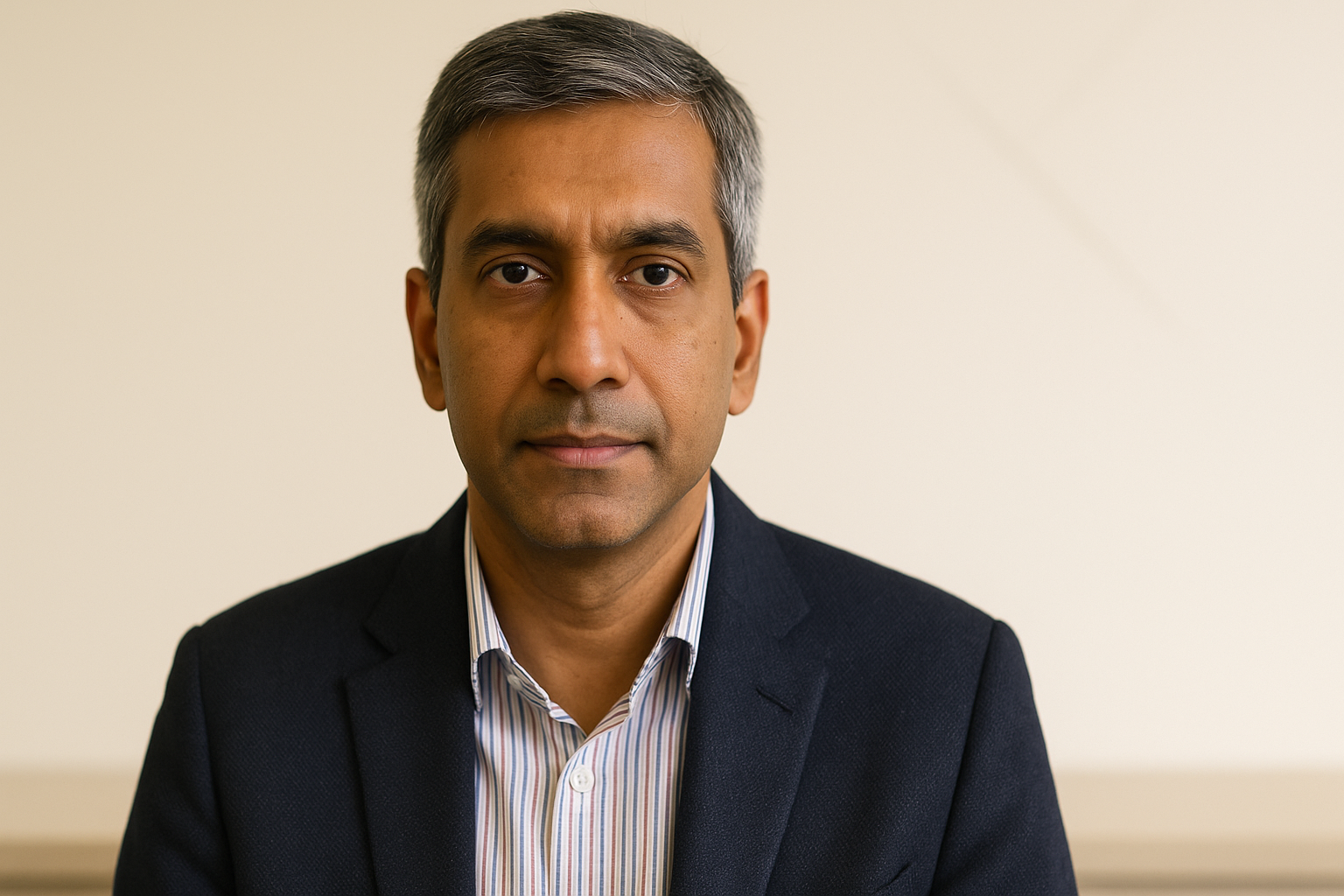
On September 3, Adobe named Anil Chakravarthy as its next president and CEO, effective December 1, 2026. Shantanu Narayen, the man who has run Adobe since 2007, will become executive chair. On paper, it is a tidy succession. In reality, it is Adobe admitting that its next problem is not selling more software licences. It is proving that AI does not turn its expensive creative empire into a very polished middleman.
Adobe has picked a growth operator, not a mascot
Chakravarthy is not some outside saviour wheeled in to shake hands with bankers and say “transformation” 40 times before lunch. He joined Adobe in January 2020 to lead its Digital Experience business, later took on worldwide field operations, and became president of the business in December 2021.
That background matters.
Adobe’s board has selected the executive closest to the commercial coalface: enterprise customers, sales execution, marketing workflows, data and the messy job of getting large organisations to actually use the technology they buy. Before Adobe, Chakravarthy spent four years as CEO of Informatica, after senior roles at Symantec, VeriSign and McKinsey.
This is not a romantic appointment. It is a practical one.
Adobe is betting that the AI era will not be won solely by whoever makes the flashiest image generator. It is betting that businesses will pay for a controlled system that creates content, manages it, approves it, personalises it, measures it and keeps the whole circus from wandering off-brand or into legal trouble.
That is why Chakravarthy’s Customer Experience Orchestration unit matters more than the name suggests. Adobe says he helped expand that business through products including Adobe CX Enterprise, GenStudio and Brand Visibility, and drove the integration of Workfront and Semrush. In plain English: Adobe has picked someone whose career has been built around selling complicated software into complicated companies.
That is sensible. It is also not enough.
The numbers say Adobe is healthy. The share price says investors do not trust the future.
Let’s not pretend Adobe is falling apart. Its fiscal second-quarter results, released June 11, were strong by any normal measure.
Revenue reached $6.62 billion, up 13% year on year. Adobe exited the quarter with $27.10 billion in annualised recurring revenue. Subscription revenue was $6.42 billion, up 14%. It generated $2.17 billion in operating cash flow and bought back roughly 8.5 million shares.
Its AI-first ARR more than tripled year on year and exceeded $500 million.
Those are not the figures of a business that has missed the AI train. They are the figures of a large, profitable company with real distribution, real customers and a lot of cash coming through the till.
But markets are forward-looking beasts. Sometimes irrational, often annoying, but not always wrong.
Adobe’s problem is that AI has changed the perceived scarcity of creative work. A generation of tools is promising to make images, video, layouts, copy and campaigns with fewer clicks, fewer specialists and, potentially, fewer Adobe subscriptions. Figma and Canva are part of that pressure, but the bigger threat is not any one logo. The threat is that creation becomes cheap enough that software workflows get unbundled.
A founder should pay attention to this distinction: being profitable today and being defensible tomorrow are different jobs.
Adobe can show a cracking quarter while investors ask whether its best margins were built for a world where professional-grade creation was hard. AI is trying to make it easy.
Shantanu Narayen’s real legacy is the subscription machine
Narayen deserves more credit than the market will probably give him during this handover.
He took over as CEO in 2007. Under his leadership, Adobe turned itself from a company known mainly for boxed creative software into a subscription heavyweight with a deeply embedded position in design, documents, marketing and enterprise workflow. That transition matters because recurring revenue is what lets a company invest through disruption instead of panic-selling the furniture.
By May 29, Adobe’s total ARR stood at $27.10 billion. That is not a vanity metric. It is a massive installed base, a cash-flow engine and a customer relationship most startups would sell a kidney to have.
Narayen will remain executive chair and work with Chakravarthy through the transition. Some people will call that continuity. Others will call it a handbrake. Both can be true.
The upside is obvious: Chakravarthy gets access to an 18-year institutional memory while taking over a business facing a genuine strategic shift. The risk is equally obvious: an executive chair can become a shadow CEO if the lines are fuzzy.
I have seen this in businesses of all sizes. A founder or long-serving chief says they are stepping back, then keeps “helping” on every consequential decision. Soon the new boss has the title, while the old boss still has the oxygen.
Adobe’s board needs to avoid that. Narayen should be a resource, not a second steering wheel. If Chakravarthy is the answer, let him own the answer — including the bits that go wrong.
The overlooked angle: Adobe may be better positioned for boring AI than sexy AI
Everyone wants to talk about AI-generated images because it is easy to understand and looks good in a demo. But that may not be Adobe’s strongest card.
The more valuable opportunity may be the dull, expensive operational mess inside large companies: thousands of assets, inconsistent brand standards, fragmented customer data, agencies, approvals, compliance checks, regional campaigns and marketing teams producing versions of the same thing until everyone hates one another.
That mess is where enterprise software earns its keep.
A bank does not merely want an AI tool that can make a pretty advert. It wants a system that can create 4,000 compliant variations, send them to the right channels, make sure the logo is not upside down, track what converts, and provide someone to call when the regulator starts asking questions.
That is not glamorous. It is very valuable.
Chakravarthy’s appointment suggests Adobe understands this. He comes from the part of the business built around enterprise customer experience and field execution, rather than the creative-tool side alone. If AI turns individual creation into a commodity, Adobe’s chance is to become the operating system for commercial content at scale.
But here is the contrarian bit: that strategy could also make Adobe slower.
Big enterprises pay well, but they buy slowly. They demand integrations, procurement reviews, security assessments and custom work. Meanwhile, the AI-native competitors can ship products quickly, acquire users cheaply and improve at absurd speed. Adobe cannot use enterprise complexity as an excuse for sluggish product decisions.
The company needs both: enterprise-grade control and startup-grade product velocity. Most big companies struggle to do one. Doing both is the actual CEO job.
This appointment also resets the leadership bench
The timing is not accidental. In June, Adobe CFO Dan Durn resigned, effective June 15, with Steve Day appointed interim CFO. Durn’s departure was a separate move, but it added to the sense that Adobe’s senior leadership structure was being refreshed while the company tries to persuade investors that its AI strategy is working.
For Chakravarthy, that makes the first year more complicated. A CEO transition is demanding enough. Doing it while the finance function is under interim leadership creates another decision he will need to get right quickly.
The trap for a new CEO is trying to demonstrate authority by changing everything. That is amateur hour. Adobe does not need a bonfire of executives or a new logo-shaped strategy deck.
It needs clarity on three things:
1. Where AI increases Adobe’s pricing power rather than simply protecting existing revenue. 2. Which products are core platforms and which are clutter that should be killed, sold or folded in. 3. Who owns the customer outcome when Creative Cloud, documents, marketing software and AI products collide.
The company’s June numbers show it has room to make those decisions from strength. That is a luxury. The market’s reaction shows it does not have forever.
What this means for you
If you run a business, Adobe’s handover is a useful slap in the face: do not confuse current revenue with future relevance.
Use this tomorrow.
First, ask whether your best product is genuinely hard to replace — or merely familiar. Your customers may love it right now, but AI is reducing the cost of producing competent work across more categories than people care to admit.
Second, do not make AI a feature parade. Tie it to a painful, measurable commercial outcome: less labour, faster turnaround, better conversion, fewer errors, lower churn or a higher price point. Adobe’s $500 million-plus AI-first ARR is meaningful because it is revenue. Your AI plan should have the same test.
Third, choose leaders for the next constraint, not the last win. Adobe did not appoint a creative celebrity. It chose a commercial operator who knows enterprise customers and complex product ecosystems. The board has decided execution is now the constraint. Be that honest about your own company.
Finally, if you hand over the reins, hand them over properly. A transition plan is not permission for the old boss to keep driving from the passenger seat. Give the new leader a defined mandate, clean decision rights and a scoreboard everyone understands.
Adobe has a $27.1 billion recurring-revenue machine. Anil Chakravarthy now has to prove it is a moat, not a museum piece. That is a much harder job than inheriting a healthy business — and far more interesting.