Ampersand Aureus’ $75 Bourbon Wins 2026 American Whiskey Masters Taste Master
A $75 bourbon that wasn’t even on shelves beat louder, older names in a blind tasting. That’s not a whiskey story. It’s a branding warning shot.
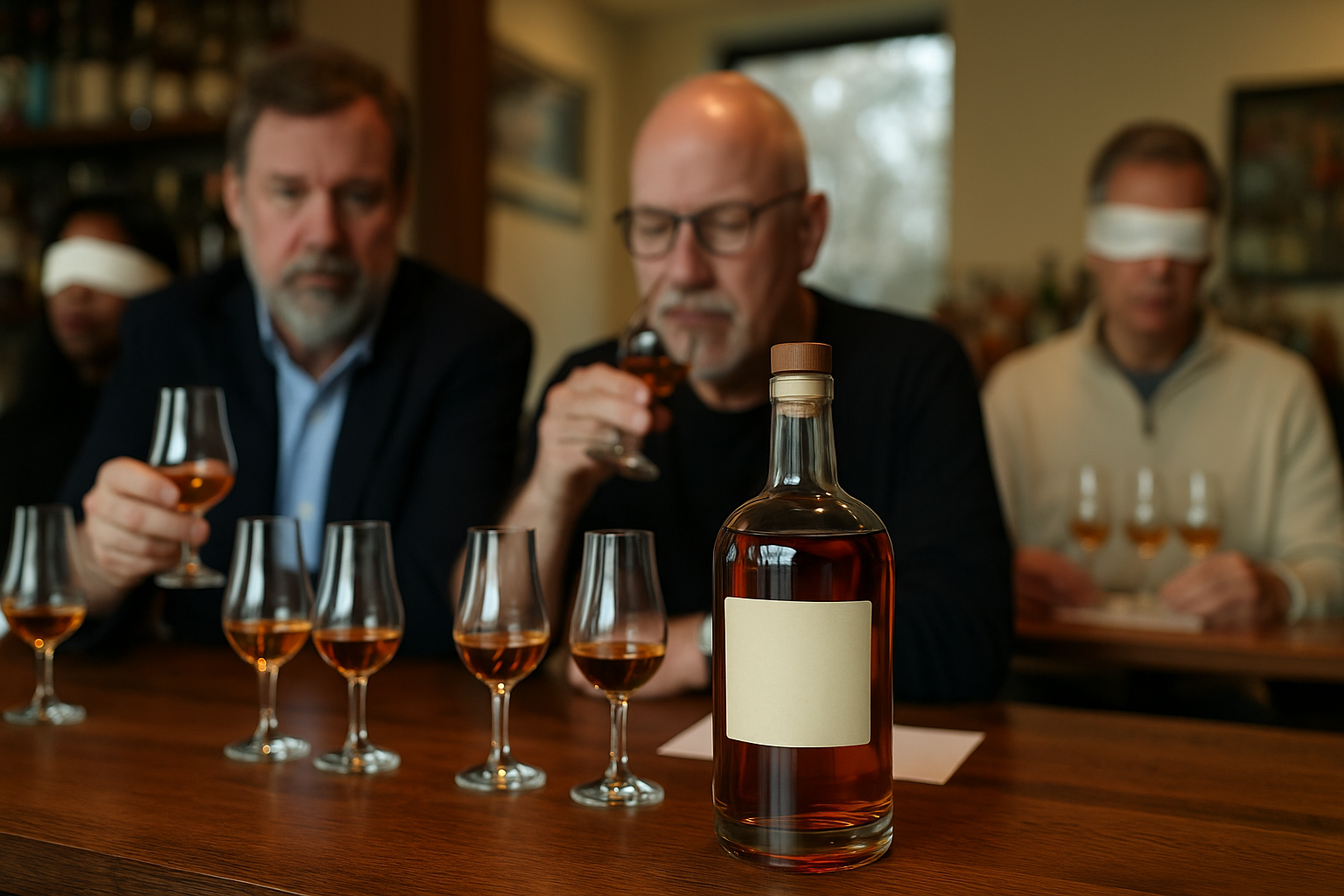
A $75 bourbon that wasn’t even on shelves beat louder, older names in a blind tasting. If that doesn’t make every spirits founder with a celebrity on the cap and a lazy liquid strategy slightly nervous, it should.
Ampersand Aureus has been named the 2026 American Whiskey Masters’ Taste Master—the top award in its American-whiskey judging—and it has done it before most drinkers could buy a bottle. The bloody thing is a coming-soon product.
That is the story worth paying attention to in spirits right now. Not because one judging panel has discovered the Fountain of Youth in a barrel, but because it exposes where real value is moving: distinctive liquid, credible makers and a product story that is hard to copy. Not another expensive bottle with a famous face glued to it.
The core story: a $75 bottle, 121.8 proof and no shelf presence
Ampersand Aureus is a Colorado straight bourbon finished for 18 months in Vino de Naranja casks hand-selected in Spain. Vino de Naranja is Spanish orange wine, and that finishing choice matters: it is not generic “cask innovation” dreamed up by a marketing department after lunch.
The liquid is 60.9% ABV, or 121.8 proof. Its mash bill is 60% corn, 20% rye and 20% malted barley. Ampersand describes the result as a cask-strength bourbon with citrus, tannin and deeper layers; the tasting notes point to dark honey, dried cherries, blood-orange marmalade, graham cracker and dark chocolate.
Whether those notes make your knees wobble is beside the point. The commercial point is that you can understand the product in one sentence: Colorado bourbon from the final stocks of the now-silent Peach Street Distilling, given a long finish in Spanish orange-wine casks.
That is specific. It is memorable. And more importantly, it gives a drinker a reason to care before they have even tasted it.
Forbes reported on September 7 that Aureus is expected to retail for $75. The same report said it had not yet formally reached shelves. Ampersand’s own site now lists the expression among its spirits, but the product’s early run of attention came before normal retail availability had done the selling.
That is rare, and it is useful.
Most new spirits brands have the reverse problem. They have inventory, a gorgeous bottle, a launch party, six vague adjectives—bold, smooth, elevated, disruptive, premium, artisanal—and absolutely no reason for anyone to give a toss.
Aureus had a reason.
Chip Tate and Foley Family Wines & Spirits did not try to make safe bourbon
Ampersand sits inside Foley Family Wines & Spirits, and its master distiller for innovation is Chip Tate, the founder of Texas whiskey maker Balcones. The first Ampersand releases arrived in November 2025. Aureus followed as a fourth expression.
That context matters because successful product innovation in spirits is not simply a matter of finding a weird barrel and hoping Instagram does the rest.
Ampersand has built its early range around combinations that cross categories without turning into circus tricks. Its Vinea combines Kentucky straight rye with grain spirit aged in Cognac casks. Its Opimus is a 15-year Kentucky straight bourbon finished in Tokaji wine casks. Aureus takes a different route: high-rye Colorado bourbon and Spanish orange-wine casks.
There is a coherent philosophy underneath it: take American whiskey seriously, but stop pretending the only legitimate flavour inputs are new oak, age statements and the same old Kentucky mythology.
The phrase “finished in wine casks” has been abused badly in the drinks business. Plenty of producers use it as a shortcut. Buy acceptable base spirit, chuck it in a fashionable barrel for long enough to make the label interesting, then slap on a premium price.
But the 18-month finish is a meaningful production decision, not a quick rinse. At that duration, the finishing cask is not merely adding a decorative note. It is materially shaping the bourbon’s identity. That makes it riskier—and, if it works, much harder to dismiss as a gimmick.
The American Whiskey Masters judges apparently thought it worked. Aureus received a Master medal and then the Taste Master distinction in the ultra-premium bourbon category. Inc. reported that the result put the young Ampersand label above a field that included bottles associated with established names such as W. L. Weller and George T. Stagg.
That does not mean every obscure $75 bourbon is suddenly a bargain, so don’t get silly. Awards can be useful signals, not holy scripture. But blind judging strips out one thing the spirits industry relies on far too often: borrowed prestige.
The overlooked angle: scarcity is not the moat
The lazy reading of this win is that rare bourbon has won again. Wrong.
Scarcity will probably help Aureus sell out. The source liquid comes from Peach Street Distilling, which is no longer operating, and that gives the release a finite-story element. Collectors understand finite. Retailers understand finite. Blokes with too many unopened bottles definitely understand finite.
But scarcity is not the enduring asset here. The enduring asset is product judgement.
You cannot build a serious company by repeatedly discovering one-off orphan barrels. That is a lovely side hustle, not a durable business model. Eventually the barrels are gone, customers move on, and you are left explaining why the sequel is different but somehow also exactly as special.
What Foley and Tate appear to be building is a repeatable capability: source interesting liquid, understand where it can go, select finishing casks with intent, then package the result under a recognisable brand philosophy.
That is a far better moat than “limited release”. It is the same distinction I see while building Agave Finder. In spirits, supply is part of the story, but discernment is the asset. Anybody can claim a bottle is rare. Far fewer can help people understand why it is worth drinking, collecting or stocking.
Why this should worry premium brands charging twice as much
Aureus is positioned at $75. That is not cheap, and it should not be. High proof, finite source stocks, international cask procurement and long finishing time are not a $29.99 proposition.
But $75 is also a remarkably disciplined price in a market full of premium spirits behaving as if a three-figure shelf tag is proof of quality.
It isn’t.
Price can signal confidence, but it can also signal that the business has not done the hard work of creating enough value. A consumer who pays $75 for a bottle that tastes original and tells a precise story feels clever. A consumer who pays $180 for a pretty decanter full of forgettable brown liquid feels mugged—and will remember.
The second-order implication is bigger than bourbon. Tequila, mezcal, rum, gin and whisky brands have all spent years training consumers to accept higher prices. That only works while the drinker believes they are buying a better experience.
When money tightens, vague luxury is the first thing to cop it. Distinctiveness holds up better.
This is why operators should stop asking, “How do we make the brand look premium?” The more useful question is, “What would a switched-on drinker repeat to a mate after one pour?” If the answer is only the celebrity founder, the bottle design or the price, you have built a billboard—not a brand.
The contrarian verdict: don’t copy the orange cask
Here is where founders will get this completely wrong: within six months, someone will be tempted to make orange-wine-finished everything.
Please don’t.
Copying the visible tactic is how markets become cluttered. The lesson is not that Vino de Naranja is a magic cheat code. The lesson is that a strong product emerges when the base spirit, the cask, the production time and the brand story actually agree with one another.
A bad orange-wine finish will taste like someone dropped marmalade into your bourbon. A good one creates an integrated flavour profile that still respects the underlying whiskey.
The same goes for tequila finished in Cognac, wine or exotic-oak casks. The category does not need more random experiments. It needs fewer, better ones—made by people prepared to wait, taste, reject batches and risk being boringly precise.
That is not sexy on a launch deck. It is how you avoid wasting capital on a product that gets one burst of influencer coverage and dies on the shelf.
What this means for you
If you are a founder, write your product story in 25 words without using “premium”, “craft”, “smooth” or “authentic”. If you cannot do it, you do not yet have a proposition. You have branding expenses waiting to happen.
If you are an operator, audit your range this week. Identify the three products that a staff member can explain clearly and confidently in under 20 seconds. Those are your commercial assets. Then fix or cut the products that require a brochure to justify their existence.
If you are an investor, be wary of scarcity theatre. Ask whether the company has a repeatable sourcing, production and innovation engine—or whether it has merely found one good batch and a polished photographer.
And if you are a drinker, do not confuse brand fame with quality. Blind tastings are humbling because they force the bottle to do its job without its mates from marketing standing beside it.
Ampersand Aureus has not proved that awards guarantee greatness. It has proved something more useful: a young brand with a sharp product idea can still beat the giants when the labels come off.
That is good news for anyone willing to do the hard bit properly.