Anglo American’s US$3.875B Coal Exit: US$2.3B Cash
Anglo American did not sell its Australian coal business for US$3.875 billion. It sold it for US$2.3 billion upfront and a very expensive hope that coal prices stay high.
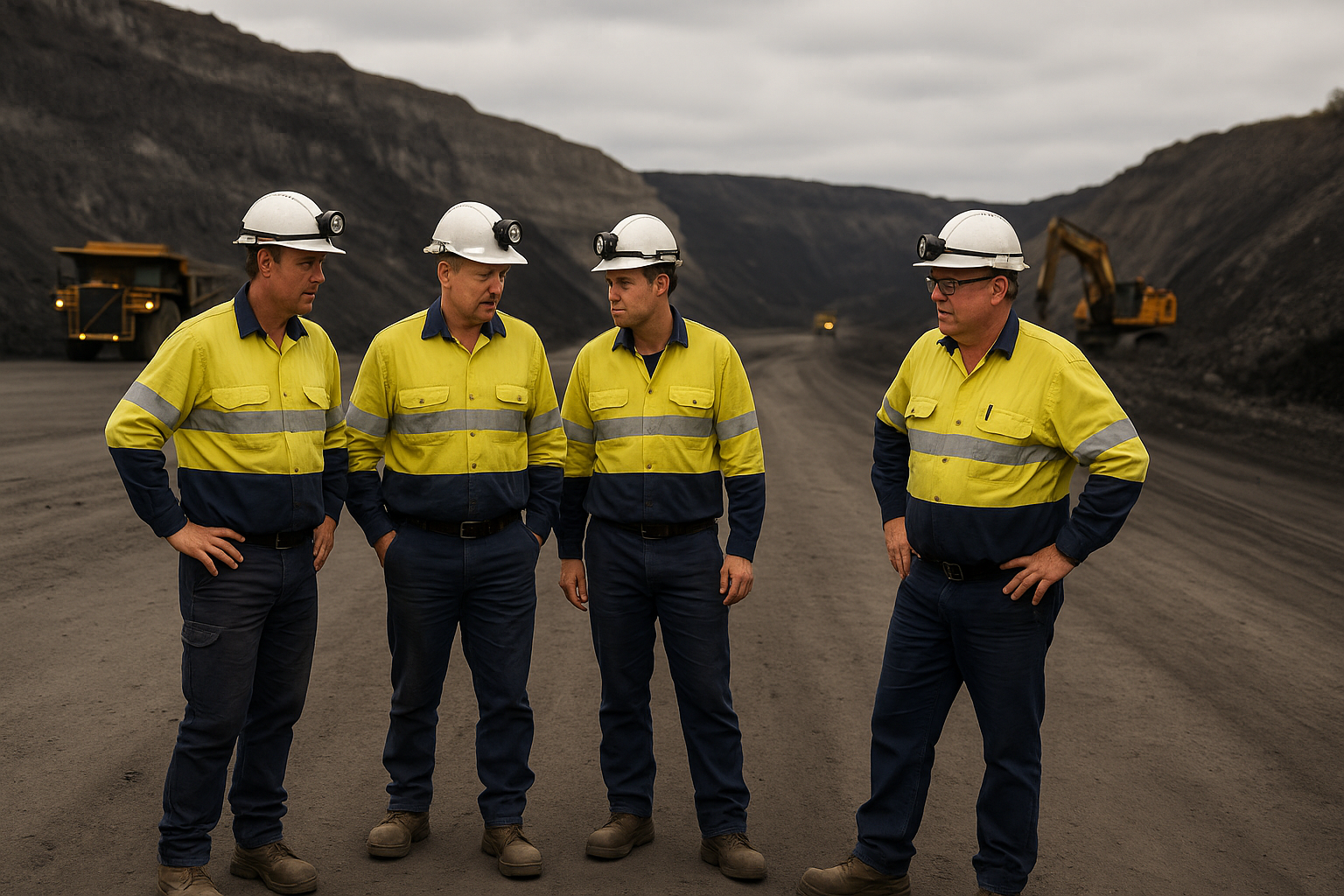
Anglo American did not sell its Australian coal business for US$3.875 billion. It sold it for US$2.3 billion upfront and a very expensive hope that coal prices stay high.
That is not a criticism. It is the point. The difference between a headline price and cash in the bank is where plenty of founders, investors and corporate directors get mugged.
Anglo has agreed to sell its Australian steelmaking-coal portfolio to privately held Dhilmar Limited for up to US$3.875 billion. But US$1.575 billion of that number is a coal-price-linked earnout. Completion is expected by the first quarter of 2027, subject to approvals and pre-emption arrangements. ([angloamerican.com](https://www.angloamerican.com/media/press-releases/2026/18-05-2026?utm_source=openai))
This is a big Australian deal with a bigger lesson: great operators do not just buy good assets. They get ruthlessly clear about which assets belong inside the next version of the business—and which ones need to go, even when the price is awkward.
Anglo American is paying to become simpler
The coal sale is part of Anglo American’s broader reshaping ahead of its merger with Teck Resources. The combined Anglo Teck is designed to be a critical-minerals heavyweight, with more than 70% copper exposure and a position among the world’s five largest copper producers. ([angloamerican.com](https://www.angloamerican.com/investors/anglo-american-teck-merger?utm_source=openai))
That tells you everything.
Anglo is not selling coal because nobody wants metallurgical coal. Dhilmar’s willingness to put US$2.3 billion of real cash on the table says the opposite. These are serious assets in Queensland’s Bowen Basin, one of the world’s most important steelmaking-coal regions. The portfolio includes stakes in Moranbah North, Grosvenor, Capcoal, Roper Creek, Dawson and Moranbah South. ([angloamerican.com](https://www.angloamerican.com/media/press-releases/2026/18-05-2026?utm_source=openai))
Anglo is selling because coal muddies the investment case it wants to take to the market. Management wants investors to see a more focused business built around copper, premium iron ore and crop nutrients—not a corporate garage full of unrelated assets demanding capital, attention and explanations. ([angloamerican.com](https://www.angloamerican.com/media/press-releases/2026/30-07-2026?utm_source=openai))
That is the bit business people routinely stuff up. They ask, “Is this asset profitable?” when they should ask, “Does this asset make our whole company more valuable?”
Those are not the same question.
A profitable business line can still be a distraction. It can use management bandwidth, drag down valuation multiples, complicate financing, create regulatory headaches and force you to explain a strategy nobody believes. The best time to fix that is before you are forced to fix it.
The painful number is not US$3.875 billion
The headline number is sexy. The structure is what matters.
Dhilmar will pay US$2.3 billion at completion. The remaining US$1.575 billion is contingent on future coal prices. Anglo says it will use the proceeds to reduce net debt. ([angloamerican.com](https://www.angloamerican.com/media/press-releases/2026/18-05-2026?utm_source=openai))
Now, I like an earnout when it is used properly. It can bridge a genuine disagreement between buyer and seller. If the buyer thinks an asset’s upside is fantasy and the seller thinks it is obvious, an earnout says: fine, prove it. Everyone shares the outcome.
But nobody should pretend contingent consideration is equal to cash. It is not.
Cash lets Anglo reduce debt on day one. Cash strengthens its balance sheet ahead of a merger. Cash gives management choices. An earnout gives management exposure to a commodity price it is supposedly trying to leave behind.
That is the trade-off. Anglo gets a credible buyer and a clean route out of coal, but it retains a partial economic tether to coal prices for years. It is not quite a divorce. More like moving out while keeping the joint savings account.
The latest reported numbers show why certainty matters. Anglo’s first-half 2026 results included a US$0.9 billion loss attributable to equity shareholders, including the effect of reducing the carrying value of the steelmaking-coal business to reflect the agreed sale terms. Its net debt stood at US$8.2 billion at June 30, down from US$8.6 billion at the end of 2025. ([angloamerican.com](https://www.angloamerican.com/media/press-releases/2026/30-07-2026?utm_source=openai))
That impairment is the honest part of the story. It is management admitting that what it once thought the business was worth is not what the market-backed deal says it is worth now.
Every owner eventually faces this moment. The asset you love, built, inherited or spent years defending may be worth less than the number in your head. You can cling to the old number and lose time. Or you can take the market’s verdict, bank the cash and build the next thing.
Why Teck changes the maths
Anglo’s merger with Teck is not just a bigger-company-for-the-sake-of-it exercise. The companies have identified around US$800 million in annual pre-tax recurring synergies by the end of year four after completion. About 80% of those run-rate savings are expected by the end of year two. ([angloamerican.com](https://www.angloamerican.com/media/press-releases/2026/30-07-2026?utm_source=openai))
More interestingly, they have flagged an estimated US$1.4 billion of average annual underlying EBITDA uplift, on a 100% basis, from 2030 through 2049 by better integrating the adjacent Collahuasi and Quebrada Blanca copper operations in Chile. That work could add roughly 175,000 tonnes of potential annual copper production. ([angloamerican.com](https://www.angloamerican.com/media/press-releases/2025/09-09-2025?utm_source=openai))
That is the sort of synergy I pay attention to: not ten slides about “shared services” and firing a few people in head office, but two neighbouring industrial assets that may work better as one system than as separate fiefdoms.
Still, don’t get carried away with merger presentations. Synergies are promises until they show up in cash flow. Mining mergers are particularly good at making spreadsheets look heroic before geology, regulators, communities, water, labour, power and commodity prices have their say.
The companies say they are progressing toward completion in the original September 2026 to March 2027 window, with China’s antitrust approval the final outstanding regulatory milestone as of Anglo’s July update. ([angloamerican.com](https://www.angloamerican.com/media/press-releases/2026/30-07-2026?utm_source=openai))
So this remains an unfinished deal. That matters. Until approvals land and integration starts, the US$800 million is a target, not income. The US$1.4 billion copper uplift is an opportunity, not a cheque.
The overlooked angle: the buyer may be getting the cleaner bet
Here is the contrarian view: Dhilmar may have bought the asset package that Anglo needs to sell—not an inferior asset package.
Dhilmar is taking on operating, commodity and execution risk. That is real. The assets include mines that have dealt with disruptions, and Anglo’s prior agreement to sell this coal portfolio to Peabody collapsed after Peabody cited a mine fire and sought to walk away. Anglo disputes that position and continues arbitration related to the terminated Peabody agreement. ([angloamerican.com](https://www.angloamerican.com/media/press-releases/2026/18-05-2026?utm_source=openai))
But risk is not automatically bad. Risk priced properly is the entire game.
Anglo is optimising for strategic focus and balance-sheet flexibility. Dhilmar is optimising for exposure to steelmaking coal. Each side is making a different bet because each side needs a different thing.
That is how smart deals work. The same asset can be worth more in someone else’s hands because their strategy, capital structure, operating capability and time horizon are different.
Founders often miss this because they treat a sale as an emotional referendum: “If I sell, am I admitting failure?” Rubbish. Selling can be a victory if it moves an asset to an owner who can extract more value from it while freeing you to focus on your highest-return opportunity.
What you must not do is sell merely to make the quarter look pretty. Anglo’s sale has a strategic logic because it lines up with a clearly stated move toward a copper-led Anglo Teck. Random asset sales without a destination are not strategy. They are liquidation with a PowerPoint.
The Australian lesson: stop worshipping the headline valuation
Australians understand commodities, but we can still get sucked in by the big number. US$3.875 billion sounds like a triumph. Maybe it will be. But the right questions are less glamorous:
- How much cash arrives at completion? In this case, US$2.3 billion. - What has to happen for the full price to be realised? Higher coal prices. - What liabilities, approvals and operating obligations remain before closing? - What is the seller doing with the cash? Anglo says debt reduction. - What better business does the transaction create afterward? A more copper-focused company preparing to merge with Teck.
If you cannot answer those questions, you do not understand the deal. You understand the press release.
There is another useful truth here. The earnout may actually be a sign of disciplined dealmaking rather than weakness. A buyer refuses to overpay for peak-cycle commodity assumptions. A seller refuses to surrender all the upside. They turn the argument into a formula. Done properly, that beats either side pretending it knows the future.
But make no mistake: earnouts are messy. They create arguments about definitions, calculations, operational decisions and incentives. The more material the contingent payment, the more carefully the contract needs to be written. If US$1.575 billion rides on a price-linked mechanism, lawyers and finance teams had better be painfully specific.
What this means for you
Whether you run a startup, a family business or a portfolio, take three practical lessons from Anglo’s US$3.875 billion exit.
First, separate price from proceeds. When someone offers you a headline valuation, ask how much is cash, how much is stock, how much is deferred, and what has to go right before you see the rest. A US$10 million deal with US$6 million at close can be worse than an US$8 million all-cash deal. Do the boring maths before you start celebrating.
Second, audit your strategic clutter. List every product, customer segment, investment or business unit consuming your attention. Then ask one brutal question: if I did not own this today, would I buy it again at its current value? If the answer is no, you have a candidate for sale, shutdown or delegation.
Third, make deals serve a destination. Anglo is not just exiting coal; it is attempting to build a copper-heavy company with Teck. Your acquisition, divestment or partnership should have the same clarity. “Growth” is not a destination. “More revenue” is not a strategy. Name the business you are trying to become, then decide what belongs in it.
The big lesson is simple: the best deal is not the one with the loudest number. It is the one that leaves you with more cash, fewer distractions and a far better next move.
Anglo American has taken US$2.3 billion of certainty, left itself some coal upside, and is trying to clear the deck for a much larger copper bet. If Anglo Teck delivers, this coal sale will look like smart preparation. If it does not, the earnout headline will not save anybody.
That is business. The price is what people talk about. The structure is where the money is made.