Apple Mac mini M6 $899: Specs, Pricing and the AI Hardware Bill
US$899 for Apple’s base M6 Mac mini is a 50% jump from June. The AI hardware bill is no longer theoretical — small operators are paying it upfront.
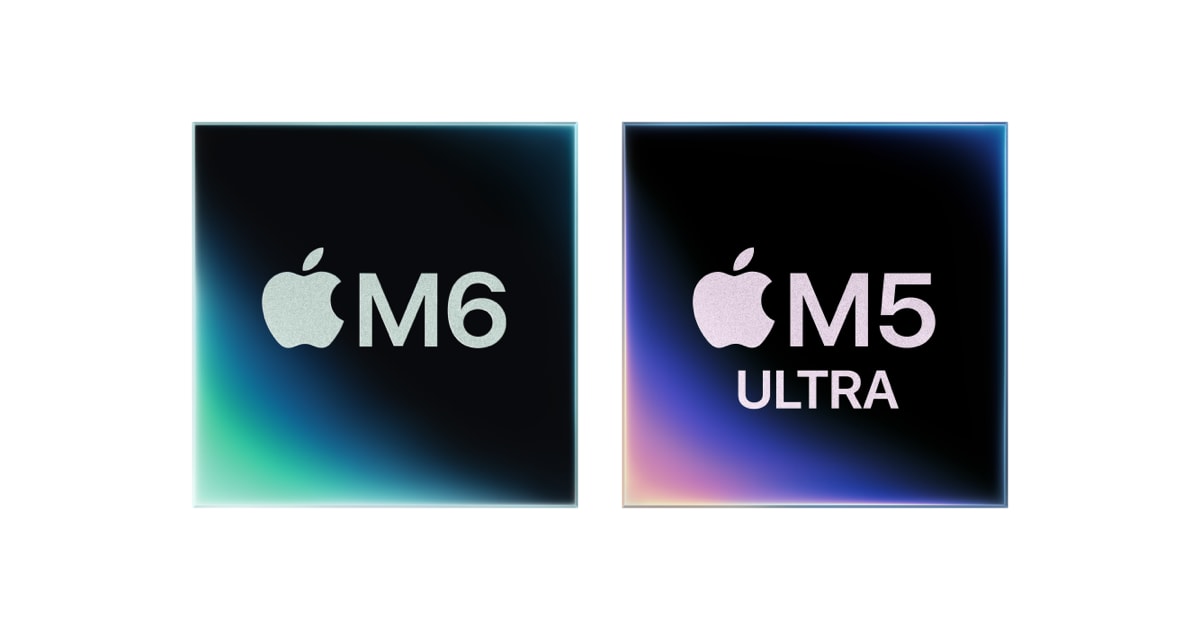
Apple’s M6 Mac mini starts at US$899 — a 50% jump from the US$599 entry price buyers had in June. That is not an AI revolution. It is an AI invoice.
Not the fluffy “AI is changing everything” rubbish. The invoice is changing. Apple’s new M6 Mac mini is the first clean example most small operators will actually feel in their bank account.
If you are searching for Apple Mac mini M6 specs, pricing or whether US$899 makes sense for a real business, start with that number. The chip matters. The upfront cost matters first.
Apple Mac mini M6 specs and pricing: the local-AI dream
On August 25, Apple released a new Mac mini with its M6 chip. The entry machine has 16GB of unified memory, 256GB of storage, a 12-core CPU and a 12-core GPU. It starts at US$899 and ships from September 22.
Apple says the M6 is its first 2-nanometre chip. It has dual 16-core Neural Engines, up to 170GB/s of memory bandwidth and, according to Apple’s own testing, up to four times the AI performance of the prior M4 Mac mini. Storage and graphics performance are claimed to be up to twice as fast in that comparison.
Read that properly: those are Apple’s published specifications and Apple’s testing claims, not an independent verdict on every real-world workload. Your results will depend on the job, the software, the model and the configuration you buy.
Fair enough. It is clearly a better computer on Apple’s stated specifications.
But don’t let a shiny chip diagram distract you from the commercial point: the Mac mini was the affordable doorway into Apple’s desktop ecosystem. Earlier this year, Apple sold a 256GB M4 version for US$599. The company then moved the available entry point to a 512GB M4 at US$799. Now the new M6 starts at US$899 with 256GB again.
That means the small-business owner, developer, creator or founder who wants a quiet desktop for running local tools, testing models or building AI workflows is paying more before they have made a single dollar from it.
The upgraded Mac mini with an M5 Pro starts at US$1,699. Apple’s new Mac Studio starts at US$2,499 with M5 Max, while the M5 Ultra version begins at US$5,499 with 96GB of unified memory and 1TB of storage.
That is not just a product refresh. It is a price ladder for the AI era.
The important Mac mini M6 spec is not 2nm. It is 16GB.
Apple would understandably prefer you to focus on the M6 being smaller, faster and more efficient. Those things matter. The company’s chips have been bloody good for years because Apple controls the hardware and software stack and squeezes more useful work from less power.
But for anyone actually buying a machine to do useful AI work, memory matters more than marketing theatre.
The US$899 M6 Mac mini ships with 16GB of unified memory and 256GB of storage. That is enough for normal office work, coding, a pile of browser tabs, image editing and plenty of lightweight on-device AI experiments. It is not a bottomless local-AI workstation.
Apple says the M6 can be configured with up to 32GB of unified memory. The M5 Ultra can stretch to 512GB. That enormous gap tells you exactly what Apple is selling: a cheapish entry ticket at one end, and serious local compute at the other.
The M5 Ultra has up to 36 CPU cores, 80 GPU cores, 1.2TB/s of memory bandwidth and up to 512GB of unified memory. Apple says it can run very large language models entirely on-device. That is proper workstation territory, not a founder buying a compact box because they are sick of monthly cloud bills.
And there is the rub. AI is supposed to democratise capability. In practice, the infrastructure bill is beginning to sort people into two groups: those who can treat compute as a strategic asset, and those renting it in small, annoying increments from somebody else.
Why the Mac mini matters more than a new Mac Studio
Nobody is shocked that a top-end Mac Studio can cost US$5,499. That machine is for video professionals, developers, researchers and businesses with real workloads. If it saves an editor a few hours a week, the maths can stack up quickly.
The Mac mini is different. It has become popular precisely because it was small, quiet and relatively cheap. Tech enthusiasts have increasingly used these little boxes to run local AI agents and models. Demand got hot enough that Mac minis were reportedly being resold above retail earlier this year.
That is what makes Apple’s move worth watching. The company is not merely chasing gamers or creative pros with more performance. It is responding to a genuine shift in what a desktop computer is for.
For years, most people bought a computer to consume software made elsewhere. The AI pitch is that your computer can increasingly become a little factory: running models, automating repetitive work, processing sensitive documents, writing code, producing media and coordinating tasks.
Apple sees that shift. The M6’s dual Neural Engines and its AI performance claims are not there because spreadsheet users demanded them. They are there because local inference and agent-style workloads are moving from novelty to a product category.
That is why the entry price is climbing.
The overlooked angle: Apple is not selling cheap compute
Here is the contrarian take: the US$899 Mac mini may still be decent value. But it is not cheap compute, and pretending otherwise is how operators waste money.
A fast machine does not automatically create an AI advantage. Most businesses do not need to run a model locally. Most would get a bigger return by fixing their data, documenting their processes and teaching their team to use the AI tools they already pay for.
I see founders make this mistake all the time. They buy hardware because it feels tangible and strategic. Then it sits on a desk running the same emails, meetings and browser tabs as the old one.
The new M6 Mac mini makes sense if you have a defined job for it: a developer workstation, a test environment, a private workflow involving sensitive files, a local automation box, or a creator’s machine where faster processing is billable.
It does not make sense because you vaguely think “we should have AI hardware.” That is how you end up with a very expensive silver paperweight.
The real opportunity is not owning the fastest chip. It is owning a workflow that makes a smaller team faster, more accurate or less dependent on outside contractors. Hardware is only useful when attached to a repeatable economic outcome.
Apple’s Mac mini M6 pricing is a warning for every founder
The broader lesson is uncomfortable: the AI boom is not making the physical layer cheaper just yet.
Everybody talks about software margins. Fine. But AI depends on chips, memory, storage, networking and electricity. When demand for that infrastructure goes through the roof, somebody pays. This time, it is increasingly the operator buying the workstation as well as the giant cloud company building the data centre.
Apple has enough pricing power to put an US$899 starting price on a machine that was US$599 a few months ago. Buyers will complain, then many will still buy it because the Mac mini remains one of the cleanest small-form-factor options for people who want Apple silicon on a desk.
That is the real story: AI is becoming normal infrastructure, and normal infrastructure gets priced like it matters.
The winners will not be the people who complain loudest about the extra US$300. They will be the ones who know whether that US$300 produces more than US$300 in value.
What this means for you
Before you buy an M6 Mac mini, do this tomorrow morning:
1. Write down the exact job it will do. Not “AI experiments.” Name the task: private document processing, code builds, video work, local testing or automations.
2. Calculate the monthly alternative. Compare the machine’s cost with cloud usage, contractor time and the hours your team currently burns doing manual work. If you cannot make a 12-month case, don’t buy it.
3. Buy memory for the workload, not the headline. The US$899 base machine has 16GB of unified memory. That is a sensible starting point for ordinary work and lighter local tasks, but do not kid yourself that it is a substitute for a high-memory workstation.
4. Keep production work separate from experimentation. If AI is business-critical, give it a defined budget, owner and measurable outcome. “Everyone should play with it” is not a strategy.
5. Use the price rise as a discipline test. If the extra US$300 feels outrageous, ask whether the workload is valuable enough to justify a dedicated machine at all. That question is worth more than any benchmark.
Apple’s M6 Mac mini is faster, more capable and more expensive. Welcome to the next phase of AI: less magic, more capital allocation. The operators who treat it that way will do just fine.