Apple Watch Series 12: $399 AI Memory Is a Privacy Test
Apple just put a $399 microphone on your wrist that can turn the last 15 seconds of a conversation into text. The clever bit isn’t the AI. It’s getting normal people to accept it.
Apple just put a $399 microphone on your wrist that can turn the last 15 seconds of a conversation into text. The clever bit isn’t the AI. It’s getting normal people to accept it.
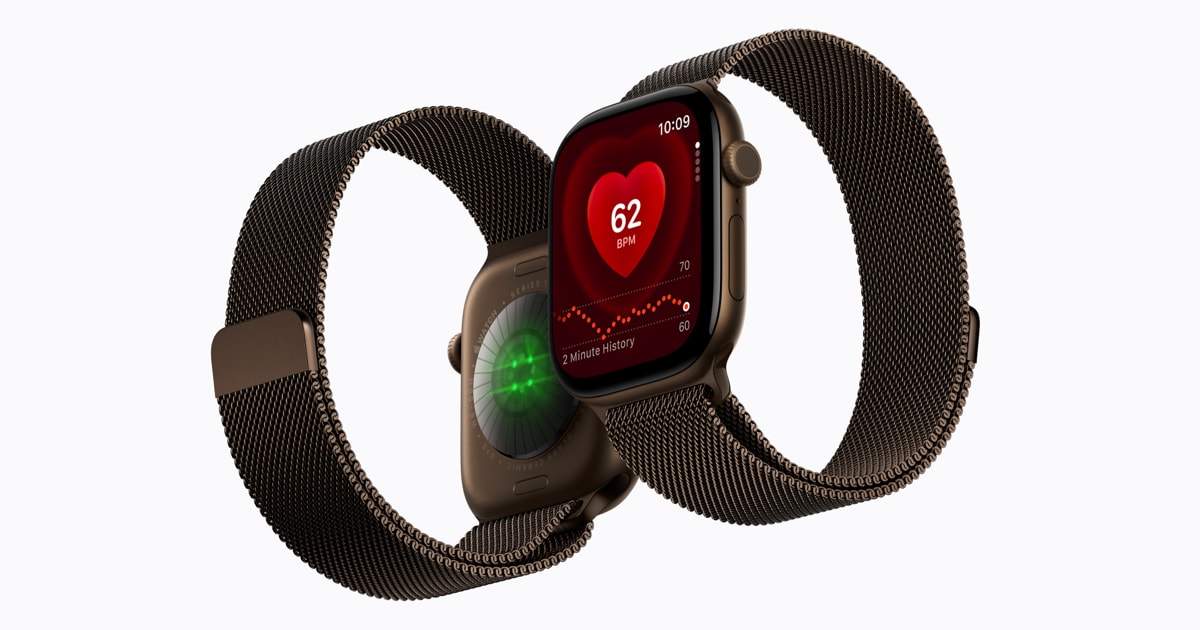
On September 9, Apple unveiled the Apple Watch Series 12, and the headline wasn’t another marginal health sensor or a shinier case. It was Audio Intelligence: a set of features including Live Rewind, which lets a wearer double-press the Digital Crown and see a text snippet of the previous 15 seconds of speech, and Siri Recap, which creates summaries of conversations when the user turns it on. Apple Watch Series 12 starts at US$399 and reaches stores on September 18. ([apple.com](https://www.apple.com/newsroom/2026/09/introducing-apple-watch-series-12-with-the-all-new-health-sensing-system/))
That sounds handy. It is handy. It is also a proper line in the sand.
For years, Silicon Valley has tried to sell us AI gadgets that listen, watch and remember. Most of them have felt like a solution looking for a problem, or worse, a surveillance product wearing a friendly little cardigan. Apple’s move is different because it is not asking people to buy a weird new necklace, badge or pair of glasses. It is slipping ambient AI into the most socially normal wearable on earth.
That is a far bigger bet than a new watch feature.
Apple is selling forgetfulness as the enemy
Live Rewind solves an embarrassingly common problem: someone says a name, number, direction or instruction; your brain is juggling six other things; and you miss it. Rather than asking them to repeat themselves, you press the crown and read the recent snippet. Siri Recap goes further, generating a title and key points from a conversation so they can be revisited later in Apple’s new Siri app. ([apple.com](https://www.apple.com/newsroom/2026/09/introducing-apple-watch-series-12-with-the-all-new-health-sensing-system/))
No sane operator should dismiss that. I’ve sat through enough meetings where the expensive part wasn’t the people in the room; it was the fact that nobody wrote down the decision. Memory is a lousy database. It is selective, political and gets worse the more tired you are.
Apple understands the commercial angle: the best AI does not need another dashboard. It removes a tiny daily irritation at exactly the moment it happens. You do not wake up wanting “ambient intelligence”. You want to remember the restaurant recommendation, the school pickup change, the supplier’s revised delivery date, or the thing your co-founder said before the conversation moved on.
John Ternus, Apple’s new chief executive, framed the broader strategy bluntly at the launch: Apple wants the iPhone to remain the centre of a user’s AI life — what it calls an “intelligent personal hub” — rather than betting on a standalone AI device. The Watch is the sensor and interface on your body; the iPhone remains the hub. ([techcrunch.com](https://techcrunch.com/2026/09/09/apple-ceo-john-ternus-says-the-best-ai-device-is-still-the-iphone/))
That matters because Apple is not trying to win the AI race by persuading consumers to change behaviour from scratch. It is building on habits that already exist: people wear watches, carry iPhones and trust the pairing. That is boring strategy. Boring strategy often makes the most money.
The privacy pitch is clever — but it is not a free pass
Apple has made an unusually serious effort to avoid the obvious creep factor. Live Rewind requires a deliberate press of the Digital Crown. When activated, it plays an audible chime even if the watch is on silent or headphones are connected; the screen shows an animation and microphone indicator. Apple says the speech is processed on-device, that Audio Intelligence does not create audio recordings, and that the Live Rewind snippet disappears roughly 30 seconds after the display dims unless the user saves it. ([macrumors.com](https://www.macrumors.com/2026/09/10/apple-watch-live-rewind/))
Good. Frankly, that chime is the adult decision.
The tech industry loves pretending consent is a settings menu buried behind three taps. It isn’t. In the real world, consent is social. The person sitting across from you needs to know when a device has been asked to retrieve what they just said. Apple’s chime may annoy users who wanted stealth, but that is precisely why it is valuable. If a feature only works when the other person does not notice, the product manager has built the wrong feature.
Still, don’t get carried away with the word “privacy”. A product can be private in its technical architecture and still change the behaviour of everyone around it. Once wrist-based memory becomes normal, people will speak differently in meetings, at dinners and in negotiations. Some will love the accountability. Others will find it suffocating.
And Apple itself says Live Rewind and Siri Recap will arrive in beta later in 2026, require a compatible Apple Intelligence-enabled iPhone — iPhone 16 or later, excluding iPhone 16e — and will have daily usage limits where server-side models are involved. They also will not initially be available in the European Union. ([apple.com](https://www.apple.com/newsroom/2026/09/introducing-apple-watch-series-12-with-the-all-new-health-sensing-system/))
So the launch-day story is not “your Watch records your life now”. It is more subtle: Apple has created the hardware, interface and social rules for an AI memory layer, then will widen the tap slowly.
That is exactly how a competent platform company de-risks a sensitive category.
The overlooked angle: this is an ecosystem lock-in machine
Everyone will argue about whether a watch should help you remember a conversation. Fair enough. But founders and investors should look one layer deeper.
The feature is not truly a Watch product. It is an Apple stack product.
You need the latest Watch hardware: Series 12 or Ultra 4. You need a compatible iPhone. You need Apple Intelligence and Siri AI. The Series 12 feature set arrives through watchOS 27, while the more ambitious Audio Intelligence functions come later as a beta. ([apple.com](https://www.apple.com/newsroom/2026/09/introducing-apple-watch-series-12-with-the-all-new-health-sensing-system/))
That means Apple has turned one small, emotionally sticky use case — “I don’t want to miss what was just said” — into a reason to upgrade multiple devices and stay inside its system. This is what a moat looks like when it is done well: not a dramatic lock on the door, but a growing pile of useful things that work better together than apart.
The AI industry has spent a lot of time obsessing over model intelligence, benchmarks and billion-dollar compute bills. Apple is making a different wager. It is betting that the winning consumer AI experience will be the one embedded in devices people already own, linked to personal context, and made frictionless enough to use without thinking.
That does not mean Apple wins automatically. It means competitors now face a nasty problem. To beat this, they need more than a smarter model. They must earn permission to enter the most sensitive parts of daily life: conversations, health signals, location, calendar, contacts and habits. Then they need a consumer to charge and wear the thing every day.
That is much harder than putting a chatbot in an app.
The contrarian view: Apple may be underestimating the workplace headache
Here is the bit everyone cheering the demo should consider: a workplace is not a family kitchen.
A manager casually using Siri Recap after a conversation with an employee could create a messy dispute about what was said, what was retained, who had access and whether the other person properly understood the tool was on. Lawyers will have a field day. So will compliance teams.
Apple’s design choices reduce that risk for Live Rewind: explicit activation, chime, no recording and ephemeral snippets are sensible guardrails. But the moment a user saves something to the Siri app, it is no longer just an ephemeral prompt. It is information that needs a policy.
My contrarian take is this: the big early market may not be corporate meetings at all. It may be personal logistics, accessibility, travel, parenting, trades, sales calls where consent is clear, and anyone managing a chaotic life with too many moving parts. Corporate deployment will follow only after organisations decide what is permitted, what is retained and what gets banned.
The winners will not be the businesses that say, “Use AI everywhere.” That is lazy management dressed up as progress. The winners will identify the two or three moments where AI saves a person from error, delay or rework — and put firm rules around the rest.
What this means for you
First, stop asking whether AI is “taking over”. Ask where people lose information at the exact moment it has value. That is where useful products get built.
Second, if you run a business, create a simple policy before your staff create one accidentally: can wearable AI be used in meetings; must everyone be told; can summaries be saved; where can they live; and what conversations are off-limits? One page is enough to start. No corporate novel required.
Third, do not buy hardware because a keynote made you feel behind. Buy it when you can name the recurring mistake it removes. If you routinely miss verbal instructions, appointments or customer details, a $399 Watch may earn its keep quickly. If you just want a new toy, call it a toy and enjoy it. There is nothing wrong with that.
Finally, founders should take the real lesson from Apple: the next durable AI businesses will not sell intelligence as magic. They will sell fewer forgotten details, fewer dropped balls and fewer stupid mistakes.
That is not as sexy as artificial general intelligence. It is a hell of a lot more useful.