Apple’s $109.4B Handover: John Ternus Has 17 Days to Earn the Job
Apple is handing a $4 trillion company to its hardware boss after a $109.4 billion quarter. John Ternus doesn’t need a smoother handover; he needs to make Apple dangerous again.
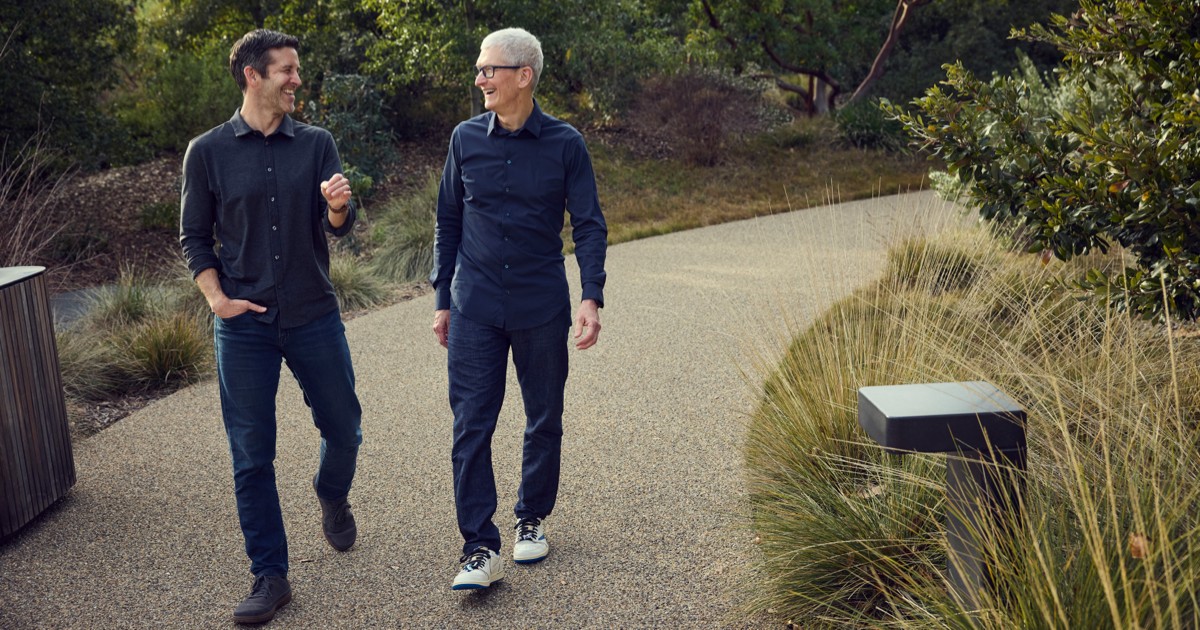
A $4 trillion company has made the most dangerous leadership decision in business: it has promoted the bloke who helped perfect the machine and asked him to reinvent it.
John Ternus takes over as Apple CEO on September 1, 2026, with just 17 days left in the transition from Tim Cook. He inherits a company that has never been richer, more loved, or more at risk of confusing flawless execution with a future.
Apple Is Not Handing Over a Turnaround. It Is Handing Over a Problem Money Cannot Fix
The numbers are almost ridiculous.
Apple finished Tim Cook’s final reported quarter with $109.4 billion in revenue, up 16% year on year, and earnings per share of $2.02. iPhone revenue reached $54.25 billion. Services brought in $30.74 billion. Revenue rose across every geographic segment, while iPhone, Mac and Services each set June-quarter records.
That is not a business in distress. It is a business operating at a scale most CEOs will never see outside a spreadsheet.
Cook became CEO in 2011. Since then, Apple’s market capitalisation has climbed from roughly $350 billion to $4 trillion. Annual revenue rose from $108 billion in fiscal 2011 to more than $416 billion in fiscal 2025. The installed base now exceeds 2.5 billion active devices. Services alone has become a business worth more than $100 billion annually.
So let’s give Cook his due. He took a company built around products and turned it into an industrial-grade compounding machine. He expanded the ecosystem, protected margins, built services, pushed Apple-designed silicon, grew wearables, expanded retail, and made privacy part of the product rather than a compliance slide deck.
That is exceptional management.
But exceptional management creates its own trap. When every major decision gets filtered through the question, “Will this harm the machine?”, eventually nobody asks the more important one: “What machine should we build next?”
Ternus is walking into that exact problem.
John Ternus Is the Sensible Choice. That Is Both the Point and the Risk
Apple did not pick a celebrity outsider or stage a boardroom panic. It chose one of its own.
Ternus joined Apple’s product design team in 2001, became vice president of Hardware Engineering in 2013 and joined the executive team in 2021. He has worked across iPad, AirPods, iPhone, Mac and Apple Watch. Apple credits his team with major work on durability, reliability, materials, repairability and its more recent hardware launches.
That background matters. Hardware is not a side show at Apple. It is the front door to almost every customer relationship and the physical foundation for the company’s services revenue.
A CEO who understands the product deeply is not a romantic luxury. It is useful.
But being brilliant at getting a product over the line is not the same as deciding which impossible product should exist in the first place. One skill is execution. The other is strategic imagination. Companies constantly pretend they are identical because it makes succession planning sound tidy. They are not.
Former Apple employees and analysts have pointed to the challenge plainly: Apple became extraordinarily good at iteration, while the market is now waiting to see whether it can again produce category-defining breakthroughs.
That is Ternus’s real job description.
Not “maintain growth.” Not “continue Apple’s values.” Not “deliver a seamless transition.” Those are table stakes. The real question is whether he can make a business with 2.5 billion active devices behave like it still has something to prove.
Tim Cook Is Leaving the Corner Office, Not the Building
Cook becomes executive chairman on September 1. Arthur Levinson, Apple’s non-executive chairman for the past 15 years, becomes lead independent director. Ternus joins the board.
On paper, it is an orderly succession. In reality, it is a delicate arrangement.
Cook will remain involved in parts of the business, including engagement with policymakers around the world. That makes obvious sense. Apple is a global political target as much as it is a technology company. Governments care about its App Store rules, supply chain, encryption, privacy, market power and manufacturing footprint.
Still, every founder, CEO and board member should pay attention here: an executive-chair transition only works if authority is painfully clear.
The old boss cannot become the unofficial approvals department. The new boss cannot spend two years acting like a caretaker worried about disturbing the furniture. And the executive team cannot be allowed to shop decisions upward whenever the new CEO makes them uncomfortable.
That is how succession plans turn into corporate taxidermy: the old animal is gone, but everyone keeps arranging the room as if it might move again.
Cook’s continued presence could be a massive advantage for Ternus if it gives him political cover while he makes hard calls. It becomes a liability if it makes the organisation cautious. The board’s job is to make sure it is the first one.
The Financial Handover Is Strong. The Strategic Handover Is Not Easy
Ternus is not inheriting an empty wallet. He is inheriting record numbers, a powerful brand, a services engine, a vast installed base and extraordinary customer loyalty.
He is also inheriting supply constraints, rising memory costs, tariff pressure and an AI arms race that is getting more expensive by the month.
Apple said it expects revenue to grow 9% to 11% in the current quarter, despite foreign-exchange headwinds and tighter supply conditions affecting iPhone, Mac and iPad. Cook also flagged that memory costs are rising.
That is the bit investors should not miss. A record quarter is lovely, but it can hide the next CEO’s hard choices.
Ternus will have to decide where Apple absorbs cost, where it passes costs through, and where it spends heavily to avoid being strategically late. Those are not merely finance questions. They are product and culture questions.
If Apple protects short-term margins by becoming timid on AI, it risks losing relevance. If it spends aggressively without preserving the company’s privacy advantage and product discipline, it risks turning into another company shoving half-baked AI into everything because Wall Street is yelling.
Neither option is attractive. That is why he has the job.
The Overlooked Angle: Apple Does Not Need More Ideas. It Needs More Permission
Here is the contrarian take: I do not buy the lazy argument that Apple lacks talent or ideas.
You do not build Apple silicon, AirPods, a global services business and a 2.5 billion-device installed base by employing passengers. The company is packed with smart people. That was never the issue.
The issue is whether people have permission to take a serious swing before the spreadsheet can prove it will work.
At scale, every company slowly trains its best people to avoid embarrassment. The larger the revenue base, the harder it is to back something that may cannibalise an existing winner, upset a supply-chain plan or fail publicly.
That is why Ternus’s hardware pedigree could be more valuable than it first appears. Engineering leaders understand trade-offs. They know that a product is not improved by adding every feature suggested in a meeting. But he must apply that judgement to the organisation itself.
He should protect small teams with large mandates. He should insist that product, design, software, AI and services leaders argue in the same room rather than handing polished decks up the chain. And he should reward people for killing weak projects early, not merely for launching safe upgrades on time.
Apple’s next breakthrough will not arrive because the CEO declares innovation a priority. That is corporate wallpaper. It will arrive because somebody inside the company is authorised to risk being wrong.
What This Means for You
Whether you run a 10-person startup, a division inside a big company or your own investment portfolio, Apple’s handover contains a useful warning: do not mistake a clean operation for a complete strategy.
Use this tomorrow.
First, write down the one part of your business that is performing so well it has become beyond criticism. That is probably where complacency is hiding.
Second, separate your operators from your explorers. Operators make the current machine reliable. Explorers test what could replace it. You need both, and they should not be judged by the same scorecard.
Third, if you are handing over leadership, define decision rights before the announcement. Who owns product bets? Who owns hiring? Who owns capital allocation? Who gets the final call when the former CEO disagrees? Vague answers are cowardice dressed up as harmony.
Finally, make one uncomfortable bet while you can afford it. Not a reckless bet. A real one: a product line, market, hire or technology capability that could matter in three years but makes little sense in next quarter’s dashboard.
Cook proved that operational excellence can create staggering wealth. Ternus now has to prove that it does not also become a velvet cage.
That is the handover worth watching.