Apple’s 14% Human-Made Ad Advantage Is a Warning to Brands
AI can make an acceptable ad in minutes. That may be the most expensive mistake your brand makes if customers still pay more for proof that someone actually gave a damn.
AI can now make a perfectly acceptable ad in minutes. That is precisely why perfectly acceptable is about to become the most expensive thing your brand produces.
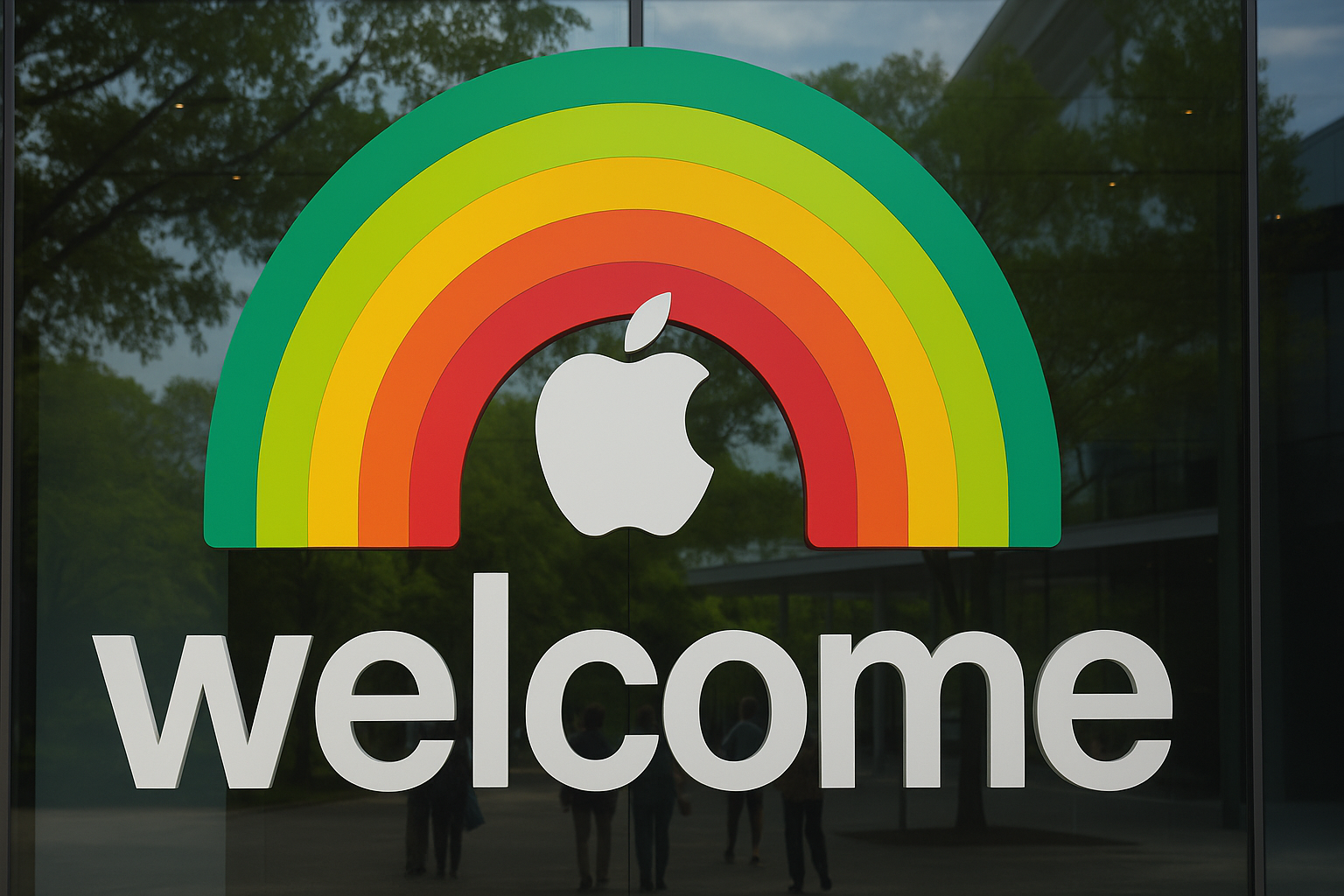
In October 2026, Apple’s “Welcome Home” launch offered a useful slap in the face for every founder and marketer treating generative AI like a substitute for taste. For its October 13 launch, Apple used a hand-embroidered version of its old rainbow logo, created by Sydney artists Maricor/Maricar, and showed the work being stitched rather than merely presenting a polished final image.
That is not some cute craft-project detour. It is brand strategy with teeth.
A 2026 Ipsos study conducted with Syracuse University put 20 ads in front of 3,000 US consumers. Human-made ads were 14% stronger on predicted short-term sales effectiveness and 17% stronger on long-term brand equity than AI-generated alternatives. The uncomfortable bit for the AI evangelists: consumers generally could not reliably tell which was which.
So the gap is not simply that AI sometimes produces six-fingered nonsense or glossy fake people with dead eyes. The bigger problem is that even when AI work looks good enough, it can still leave less commercial value on the table. That should make every operator paying for content sit upright.
Apple did not sell embroidery. It sold care.
Apple has not said the embroidery was an anti-AI statement. Fair enough. We do not need to invent motives the company has not claimed.
But the timing is obvious enough to matter. Feeds are filling with cheap synthetic images, plastic-looking video and content farms pumping out visual noise at industrial scale. Into that mess, Apple put hands, thread, tiny inconsistencies and visible labour front and centre.
The product may be technology. The signal is humanity.
That is the clever part. Apple did not argue that technology is bad. That would be absurd from a company selling devices. It used an analogue creative process to make the technology feel more considered, more domestic and less like another black mirror shouting for attention.
The old Apple rainbow logo matters too. It is not just decoration. It carries memory, optimism and a bit of the company’s creative mythology. Embroidering it turns an existing brand asset into evidence of effort.
Most brands get this backwards. They think branding is the finished asset: the logo, the colour palette, the slogan, the slick ad. It is not. Branding is the set of conclusions people draw when nobody from your company is in the room.
Apple showed people a process. That lets the audience conclude: these people care about details. Whether that conclusion is fully deserved across every product and support queue is beside the point. Advertising works by giving people a reason to believe.
The cheap-content trap is real
I am not anti-AI. That would be a stupid position for anyone building a business in 2026.
Use it to summarise research, produce first drafts, explore rough creative territories, translate variants, find gaps in a landing page, clean up production admin and speed up testing. If a machine can remove dull work, let it. I have no romantic attachment to wasting payroll on jobs a good tool can do faster.
But there is a difference between using AI behind the scenes and making your brand feel as if it was assembled behind the scenes.
The danger is not that every customer sees an AI-generated image and storms out in protest. The Ipsos result is more interesting than that. People may not identify the production method, yet human-made work still performed better in the research.
That suggests the issue is not a binary “AI bad, human good” judgement. It is that human creative work is still better at producing the messy, specific, emotionally intelligent choices that make somebody pause, feel something and remember you later.
AI is brilliant at averaging what already exists. Brands grow by being recognisably themselves.
Those are not the same job.
If every competitor can generate 200 polished ads before lunch, the marginal value of a polished ad falls through the floor. Volume becomes table stakes. Distinctiveness becomes the scarce asset.
And scarce assets are where the money is.
The overlooked angle: visible effort is becoming a premium signal
There is a lazy interpretation of this story: consumers will simply pay more for things made by humans. Sometimes they will. But that is too broad and too soft.
What they may pay for is confidence.
When buyers cannot easily assess quality before purchase, they look for signals. A good restaurant has an open kitchen. A serious investor asks better questions than everyone else. A premium service business puts its best thinking in public before the sales call.
Apple’s embroidery does the same thing. It makes care visible.
That matters most in categories where trust, price or perceived quality are doing heavy lifting: financial services, health, education, premium consumer goods, hospitality, property, professional services and any startup asking customers to hand over money before they fully understand the product.
If you sell cheap commodity stuff, rapid AI production may be perfectly rational. You are competing on price, distribution or convenience. Fine. Do not spend like a luxury house when you are selling batteries at a servo.
But if your margin depends on taste, trust or aspiration, flooding the market with generic AI content is a strange way to protect it. You are telling customers, often without saying it aloud, that you value output more than judgement.
That is not efficiency. It is a brand haircut.
Apple has made its share of marketing mistakes. Its 2024 iPad Pro ad showing creative tools being crushed prompted backlash and an apology. It also withdrew a Thailand-set ad after criticism of its portrayal of the country. That context makes the embroidery campaign more useful, not less. Big brands do not get brand trust permanently assigned to them. They have to keep earning it.
The lesson is not “copy Apple’s aesthetic.” Please do not. The world does not need 50 startups filming moody close-ups of hands making coffee while a founder whispers about craftsmanship.
The lesson is to find the real human proof inside your own business.
Your advantage is probably hiding in the boring bits
The best brand material is often not invented in a brainstorm. It is sitting inside the work.
Maybe your product team rejected 40 bad versions before landing on the one customers love. Maybe your warehouse manager has a ridiculous process that gets orders out accurately. Maybe customers keep returning because your service team solves problems other companies bounce between departments. Maybe the founder knows the category better than the agencies trying to market it.
Show that.
Not with a beige manifesto about “authenticity.” That word has been beaten to death by people selling online courses. Show receipts instead.
A builder can show the details nobody sees behind a finished renovation. A skincare brand can show the chemist explaining why an ingredient is there and what it does not do. A B2B software company can show an operator using the product on a bad day, not a staged demo on a good one. A retailer can put the buyer, not just the product, in front of the camera.
Human-made does not mean expensive cinema. It means specific choices made by people who know what they are doing.
That is why a sharp founder video recorded on an iPhone can beat a $100,000 campaign full of generic claims. One has a point of view. The other usually has a committee.
What this means for you
Here is the practical play for founders, operators and marketers.
First, split your marketing workflow into machine work and meaning work. Let AI handle research summaries, versioning, formatting, tagging, rough concepts and production grunt work. Keep customer insight, brand decisions, final creative judgement and anything that represents your values in human hands.
Second, stop measuring content teams by output volume alone. Track whether creative is remembered, whether it improves conversion quality, whether it lifts repeat purchase and whether it makes your pricing easier to defend. Ten thousand cheap assets are not an asset if they make you forgettable.
Third, create a “proof of care” list this week. Write down five things your business does with unusual competence or effort. Not your mission statement. Actual proof: response times, sourcing standards, product testing, customer stories, craft, expertise, process. Build your next month of content around that list.
Fourth, run the test properly. Put AI-assisted creative and human-led creative against each other in the same channel, for the same audience, with the same offer. Measure beyond clicks. Cheap clicks can be bought by anyone. Watch conversion, retention, branded search, direct traffic and sales quality.
Finally, do not confuse speed with advantage. Every tool that makes it easier for you to publish makes it easier for your competitors to publish rubbish too.
Apple’s embroidered logo is a small campaign detail with a large message: when content becomes infinite, care becomes visible. And when care becomes visible, it becomes commercially valuable.
That is where you should invest.