Apple’s $2,500 Foldable iPhone Is John Ternus’s CEO Test
Apple needs customers to pay more than $2,500 for a phone. John Ternus’s first launch will show whether premium hardware can still win while AI rewrites the industry.
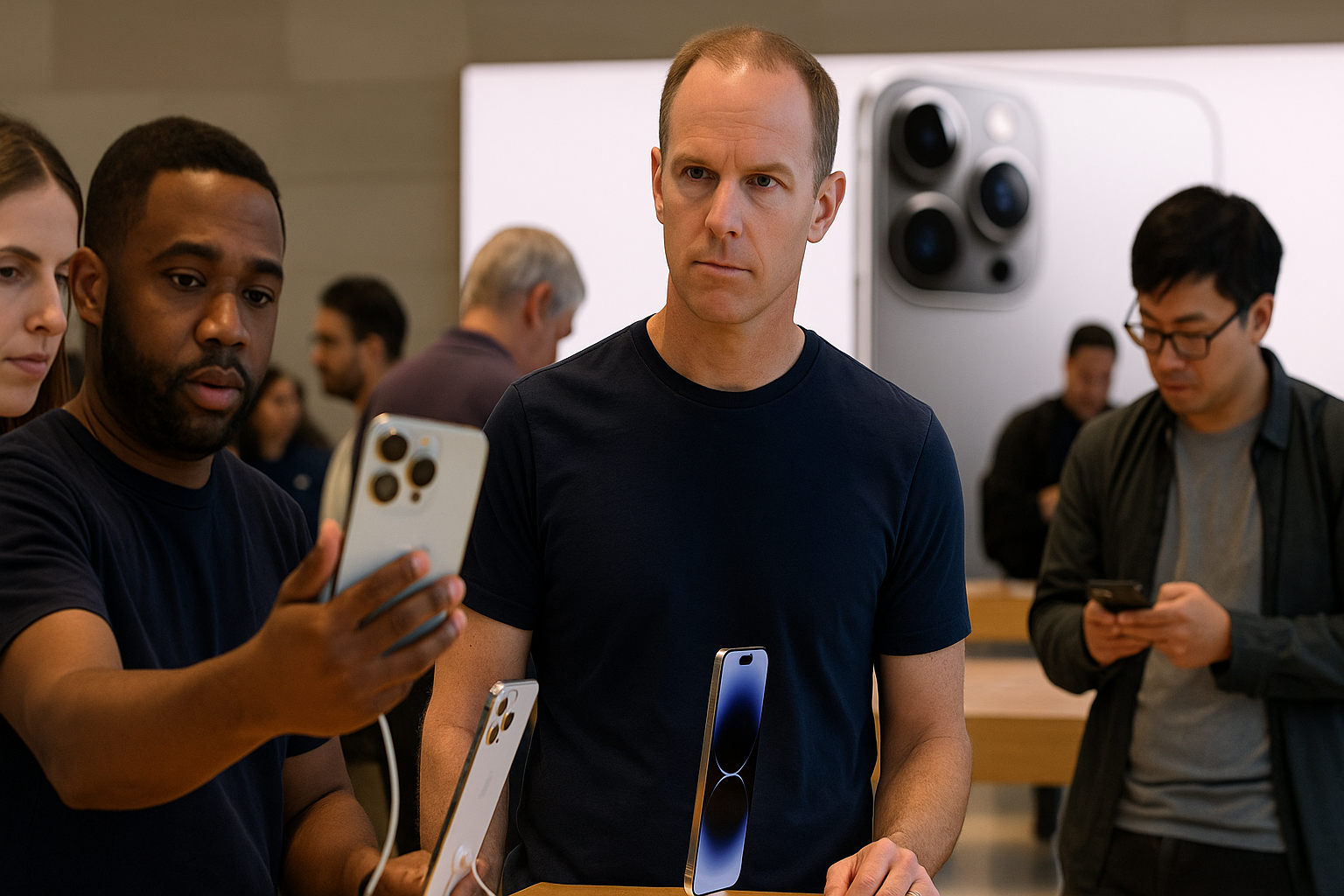
Apple does not need another phone. It needs to prove it can still charge more than $2,500 for one without looking desperate.
That is the real business story behind Apple’s September 9 product event — and the first major public test for new chief executive John Ternus, who took over from Tim Cook on September 1.
Reports ahead of the Cupertino launch say Apple is expected to unveil its first foldable iPhone, alongside new premium iPhones and a more serious Siri strategy. Samsung has sold foldables since 2019. Google, Motorola and Huawei have all had a crack. Apple is arriving late, as it usually does, and asking the market to believe that late means better.
Sometimes it does. Sometimes it means you have spent years watching everyone else make the mistakes you were too proud to make yourself.
The $2,500 question Apple cannot dodge
Reuters reported that analysts expect Apple’s foldable to cost more than $2,500. That is not a casual price rise. It turns a phone into a small capital purchase.
For that money, customers will not tolerate a novelty hinge, a visible screen crease, compromised cameras or software that feels like an iPhone stretched across a bigger rectangle. They will want the thing to feel inevitable — the same trick Apple has pulled with the iPod, iPhone, iPad, Apple Watch and AirPods.
That is a brutal standard. It is also the only standard that matters.
The foldable category has existed for years without becoming a mass-market monster. There are clever devices, loyal buyers and plenty of YouTube reviewers folding and unfolding things for clicks. But the category has not produced the kind of global, cultural demand that turns a product line into a cash machine.
Apple thinks it can change that by doing what it does best: take an existing category, strip out the rough edges and plug it into an ecosystem people already hate leaving.
Bloomberg reported that IDC expects Apple to ship 10 million foldable iPhones in the first year. If that number proves right, it matters far beyond one expensive gadget. Ten million customers paying premium prices is not merely revenue. It is a reset button for Apple’s average selling price, its margins and its ability to convince investors that the iPhone still has room to grow.
But let’s not get carried away. A high price can signal confidence. It can also be a polite way of saying the economics are ugly and the supply will be tight.
John Ternus has inherited the hardest version of Apple
Tim Cook ran Apple brilliantly. He turned operational discipline into an art form, expanded the company’s services business and made the supply chain look like a strategic weapon. But he also leaves Ternus with the difficult bit: convincing the market Apple can lead through the next platform shift, rather than merely package it better a few years later.
Ternus comes from hardware engineering. That makes this launch feel more personal than the usual annual iPhone parade. Apple’s first foldable is not just another product under a new bloke. It is an early signal of what sort of Apple CEO he will be.
Does he run the company as a careful custodian of a magnificent cash engine? Fair enough — most CEOs would kill for that job.
Or does he push Apple back into making products that change buyer behaviour, developer behaviour and competitor behaviour all at once?
The foldable is the visible part of that answer. Siri is the more dangerous part.
Reuters reported that Apple has already announced a significant Siri overhaul, partly by using Google’s AI technology behind the scenes. That is a sharp reminder of the uncomfortable truth Apple cannot market its way around: hardware supremacy is no longer enough.
For more than a decade, the smartphone battle was mostly about cameras, screens, chips, battery life and industrial design. AI shifts the competitive terrain toward software capability, data, developer tools and the speed at which a product can actually do useful work for its owner.
That is not Apple’s traditional comfort zone.
The foldable is a margin play wearing a product costume
People will obsess over whether the phone folds like a passport, whether the crease is invisible and whether it fits in a pocket. Fine. Those details matter.
But the bigger commercial point is simpler: Apple is trying to sell customers more phone without needing to find more customers.
That is what mature businesses do when their core market is enormous. You either expand the number of buyers, expand how often they buy, or expand how much each buyer spends. Apple has been exceptionally good at the third option.
A successful foldable gives Apple a new premium tier above the Pro and Pro Max models. It also gives the company a reason to make its ecosystem feel more valuable. A larger screen needs better multitasking, better apps, better continuity with Macs and iPads, and more reasons to stay inside Apple’s walls.
That is why founders should pay attention. Great product strategy is rarely about adding a feature. It is about building a reason for the customer to spend more while making every alternative feel slightly less convenient.
Apple does not need every iPhone owner to buy a foldable. It needs a meaningful slice of its wealthiest, most engaged customers to decide that going back to a flat slab feels like a downgrade.
If it manages that, competitors have a problem. They will not just be competing with a new handset. They will be competing with Apple’s enormous distribution, retail footprint, developer base, accessory ecosystem and installed base of customers who already have their photos, payments, messages and lives tied to the platform.
Here is the contrarian view: Apple may be late because late is safer
The fashionable criticism is that Apple has missed the AI moment and arrived late to foldables. There is truth in both points.
But being early is wildly overrated when the category is expensive, technically fragile and not yet proven at scale. I have watched plenty of businesses burn cash trying to be first, only to educate the market for someone else. First movers get the headlines. The better operators often get the profit.
Samsung and others have spent years teaching consumers what a foldable is, what can break, why it costs more and where it is genuinely useful. Apple now gets to enter a market where the customer does not need a five-minute explanation.
That does not guarantee success. It simply improves the odds.
The greater risk is not that the foldable fails. Apple can survive a niche $2,500 device. The real risk is that its AI experience remains second-rate while rivals make assistants genuinely useful across search, work, coding, shopping and communication.
A beautiful foldable phone with an underwhelming AI layer is still a beautiful phone. In the next few years, that may not be enough.
What this means for you
If you are a founder, do not copy Apple’s product. Copy the commercial logic.
First, find the customer segment already paying you the most and ask what expensive problem they still have. Do not begin with the broadest audience. Start with the buyers who value time, reliability, status or output enough to pay for a materially better result.
Second, do not add AI because every deck now has an AI slide. Add it only where it removes labour, compresses decision time or makes your product improve with use. If it does not change an outcome, it is just a shiny button and your customers will work that out quickly.
Third, charge properly. A premium price is not greed if the value is real. Underpricing because you are scared of rejection is one of the most common ways founders build busy businesses that never become valuable ones.
Finally, remember the Apple lesson that actually matters: late is fine. Average is not. You can enter a proven market after everyone else, provided your product solves the parts customers quietly hate and your economics improve as you scale.
John Ternus’s first big day is not about whether a phone can fold. Plenty already can.
It is about whether Apple can make a mature category feel new, make customers pay dearly for it, and show that its next era will be built around more than polished hardware. That is a much harder trick. And it is the one worth watching.