Apple’s $3.6T Tim Cook Handover Leaves John Ternus No Grace Period
Apple didn’t pick John Ternus to protect Tim Cook’s legacy. It picked him because a $3.6 trillion run is useless if the next CEO cannot find the next growth engine.
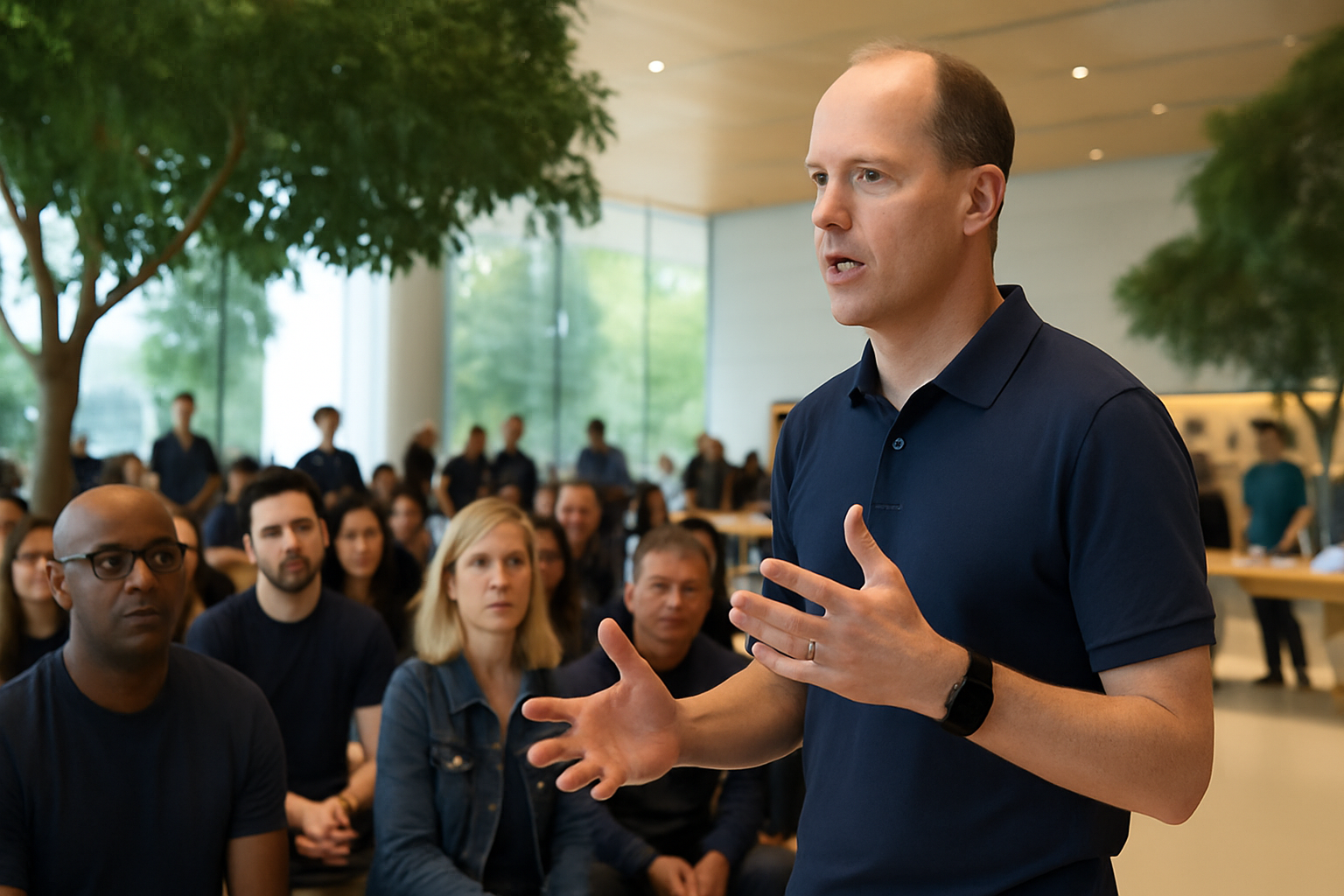
Apple didn’t pick John Ternus to protect Tim Cook’s legacy. It picked him because a $3.6 trillion run is useless if the next CEO cannot find the next growth engine.
On September 1, 2026, Ternus takes over as Apple CEO while Cook moves upstairs to executive chairman. Plenty of companies call that succession. Apple has called it what it is: a transfer of responsibility for one of the world’s most valuable businesses at the exact moment its old playbook is under pressure.
Cook’s tenure turned Apple into a machine. Ternus now has to prove it can still be an inventor.
Apple has made the cleanest possible handover — and the hardest possible job
The board has not rolled the dice on an outsider with a PowerPoint deck and a private-equity haircut. It has chosen a 50-year-old insider who joined Apple’s product design team in 2001, became a hardware-engineering vice president in 2013 and joined the executive team in 2021.
That matters. Ternus knows where the cables are buried.
He has overseen the teams behind the iPhone, iPad, Mac, Apple Watch and AirPods. That is not a decorative résumé. Those products are the commercial core of Apple. Bloomberg reported that the hardware portfolio under Ternus accounts for roughly 80% of the company’s revenue.
But don’t confuse familiarity with an easy job.
Cook took over from Steve Jobs in 2011, when the question was whether an operations man could preserve a product company. He did more than preserve it. Apple’s market value rose by more than $3.6 trillion during his tenure, according to the Associated Press. The company became exceptionally good at turning existing product categories into an ecosystem with brutal customer loyalty, fat margins and recurring revenue.
Ternus inherits something different. The question is no longer whether Apple can execute. It plainly can. In its final quarter under Cook, Apple reported $109.4 billion in revenue, up 16% year on year.
The question is whether it can create the next habit people will pay for before competitors make the smartphone less central.
That is a much nastier question.
Tim Cook leaves an operating system for business, not a blank cheque
People often talk about CEO succession as if the new boss gets a clean slate. That is fantasy. The bigger the predecessor’s success, the less room the successor has to be different.
Cook is not disappearing to a beach in Alabama. He becomes executive chairman on September 1 and will remain involved with Apple, including engagement with policymakers around the world. John Ternus will also join the board, while Arthur Levinson shifts from non-executive chairman to lead independent director.
That is a neat governance arrangement on paper. It is also a serious management test in practice.
An executive chairman can be valuable: institutional memory, political relationships, supplier credibility and a steady hand during a transition. Apple has lots of all four. Cook spent years making Apple’s global supply chain, regulatory posture and capital allocation look almost boring — which, for a company this large, is a compliment.
But every new CEO needs clear air. Employees must know whose call wins. Senior executives must not be able to shop decisions between the old boss and the new one. Board members must avoid treating the chairman as a shadow CEO whenever the incoming chief makes a decision they find uncomfortable.
The board appears to understand the risk. This was unanimously approved, it was announced months before the handover, and Ternus has been steadily given a larger profile. That is how grown-up succession works: no leaks, no panic, no last-minute crown ceremony after the outgoing chief has exhausted everyone.
Still, structure cannot do the job for them. Ternus will need to establish quickly that Cook is a resource, not an appeals court.
The overlooked bet is not Ternus. It is Apple choosing hardware again.
The conventional line is that Apple is handing the reins to a hardware man because the company needs its next hit product. That is broadly right, but it misses the more interesting point.
Apple did not select a finance chief, a sales operator or a software executive at a moment when artificial intelligence is reshaping the technology industry. It selected the person who has spent his career making physical products feel inevitable.
That is a declaration of intent.
AI is making software cheaper to build, easier to copy and harder to differentiate. A smart assistant with a decent model is not a moat. Every serious technology company knows that now. Apple’s chance is not merely to bolt AI onto its existing devices and call it courage. Its chance is to use its control of chips, hardware, software, retail, services and distribution to make new behaviours feel simpler than the alternatives.
That plays to Ternus’s background.
It also carries danger. Hardware is expensive, slow and unforgiving. You cannot patch a manufacturing failure with a late-night software update. If you launch the wrong device at scale, the mistake arrives in millions of boxes and lives in warehouses.
Apple has been conservative because conservatism is usually rational at its size. When you sell to more than a billion users, reliability matters more than a founder’s ego. But the company cannot allow “we do not ship unfinished products” to become a respectable excuse for never placing a meaningful bet.
Ternus’s challenge is to preserve Apple’s discipline without preserving its inertia.
A $109.4 billion quarter can hide a strategic problem
This is where operators get fooled by success.
When revenue is growing 16%, the temptation is to congratulate the machine and leave it alone. The dashboards are green. The board is relaxed. Everyone gets very clever at explaining why the current model will last forever.
That is precisely when leaders must get more paranoid.
Apple’s iPhone franchise remains enormous, and its ecosystem is still one of the best businesses ever built. But the market is moving toward AI-driven experiences that may change how people search, communicate, work, create and buy. The risk is not that iPhones vanish next Tuesday. The risk is that the centre of gravity shifts gradually, then suddenly, while Apple is optimising a device category rather than defining the next interface.
Cook’s Apple mastered the compounding game: better chips, better cameras, better integration, better services, better margins. Ternus must decide where compounding ends and disruption begins.
That requires a different sort of courage. Not reckless courage — I have seen enough founders torch money chasing “vision” to know that word is often a tax-deductible excuse for bad judgement. I mean the courage to put good people and real capital behind a bet before the spreadsheet can prove it.
The new CEO’s scorecard should not be whether he produces a miracle product in his first quarter. That is childish thinking. His scorecard should be whether, over the next 12 months, Apple becomes visibly faster at deciding what it will build, what it will kill and where it is prepared to be early rather than perfect.
The contrarian view: Ternus does not need to be Steve Jobs
Every Apple CEO gets compared with Jobs. It is lazy, and it has already been disproved once.
Cook was not Jobs. Thank God. Trying to replicate a singular founder usually produces a pale imitation with worse manners. Cook played to his own strengths and built a company worth vastly more than the one he inherited.
Ternus should not attempt to be Cook either.
His advantage is that he comes from the product side, but product leaders can fall into their own trap: believing that superior design solves a business problem. It does not. A brilliant product with no distribution logic, no service model, no developer ecosystem or no reason to become habitual is just an expensive trophy.
The job is broader than hardware. Ternus must run a global organisation, allocate enormous capital, manage regulators, retain elite talent, set the pace on AI and make difficult trade-offs without turning Apple into a committee.
The good news is that he is not being dropped into chaos. Apple has planned this transition, Cook remains available and Ternus has spent 25 years inside the company. The bad news is that nobody will give him a honeymoon. The business is too large, the expectations are too high and the next platform shift is too important.
That is fair. The chair is worth the pressure.
What this means for you
Whether you run a 10-person startup, a family business or a division inside a giant company, Apple’s handover offers three useful lessons.
First, build succession before you need it. If your business falls apart because one person takes a holiday, you do not have leadership — you have dependency. Give potential successors real operating responsibility, public exposure and decisions that actually matter.
Second, separate continuity from control. Keep experienced leaders close, but make reporting lines and final decision rights painfully clear. A former CEO who keeps overruling the new one is not preserving the business; they are suffocating it.
Third, do not let a strong quarter numb you. Ask one question at your next leadership meeting: if our best product stopped getting better tomorrow, what would we build next? If the room goes quiet, good. That is where the real work starts.
Ternus inherits a phenomenal business on September 1. But he does not inherit the right to coast. Neither do you.