Apple’s $4.75T Problem: John Ternus Can’t Ship Another Incremental iPhone
Apple is worth $4.75 trillion because it once made people want the future. John Ternus now has to prove it can still build it—not just sell a shinier version.
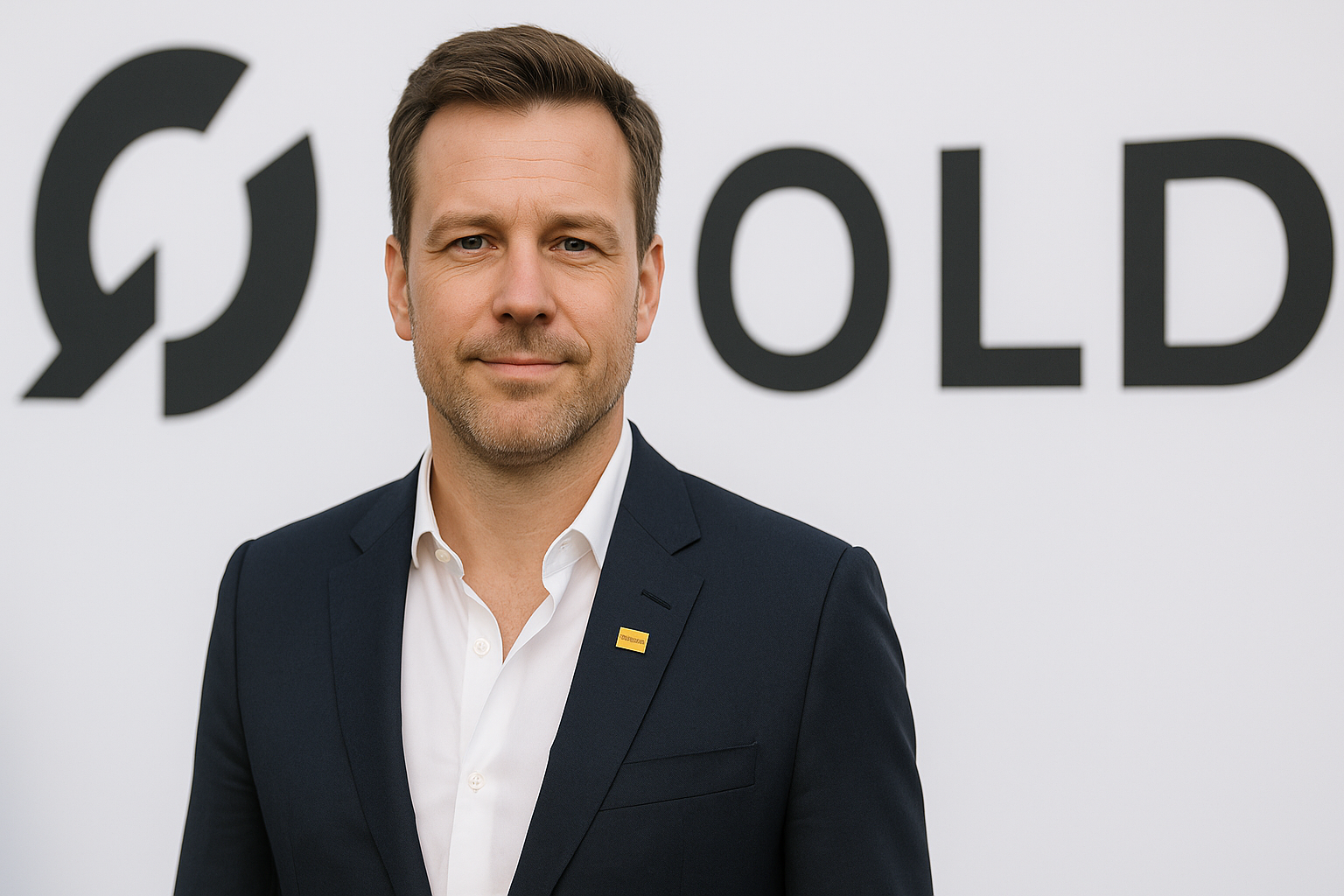
Apple is worth $4.75 trillion and still looks terrified of taking a proper swing.
That is the uncomfortable reality John Ternus inherited when he became Apple’s CEO on September 1. A company does not get that valuable by being stupid. But it can absolutely get that valuable by becoming so good at protecting the machine that it forgets how to build the next one.
The handover is real. So is the problem.
Tim Cook has moved from chief executive to executive chair after 15 years in the top job. Apple’s board appointed Ternus—formerly senior vice president of Hardware Engineering—as CEO effective September 1. He joined Apple in 2001 and has held his senior hardware role since 2021.
This was not a panicked boardroom coup. It was a planned succession, disclosed months ago. That matters. Calm handovers are usually better than drama-filled ones.
But the calmness should not fool anyone into thinking Ternus has inherited an easy job.
Cook leaves behind an absurdly successful business. Axios calculated that Apple’s stock rose 2,272% during his tenure, from $13.35 when he took over in August 2011 to $316.61 at the close on August 31, 2026. Apple’s market capitalisation grew from $347 billion to roughly $4.7 trillion over that period. The company also said it had more than 1.5 billion paid subscriptions across its platforms, while its services division generated $30.7 billion in its most recent quarter.
That is a phenomenal run. Anyone calling Cook anything less than a great CEO is trying too hard to sound clever.
Here is the catch: operational excellence can become a sedative. It keeps the numbers looking lovely while the market underneath you changes shape.
Apple’s next big test is not whether it can sell another excellent phone. Of course it can. It is whether the company can define what personal computing looks like when artificial intelligence is not merely a feature buried in settings, but the layer through which people work, communicate, search, buy and create.
Ternus’s first major public test arrives on September 9 at Apple’s product event. He will not be judged on the polish of the presentation. He will be judged on whether Apple looks like it has a point of view about the next decade.
Cook built the cash machine. Ternus must rebuild the appetite for risk.
Cook’s great achievement was turning Apple from a company heavily tied to blockbuster device cycles into a commercial fortress. Hardware still matters enormously, but services, subscriptions, the App Store and the broader ecosystem made the business more durable and more profitable.
That is why investors loved him. Predictability is catnip to markets.
The issue is that predictability is not the same as leadership.
Apple still accounts for roughly one in five smartphones shipped globally, according to Fortune. Yet even Apple loyalists can see the product rhythm has become familiar: better cameras, better processors, thinner edges, nicer screens, then another lap around the track.
There is nothing wrong with improving a proven product. I run businesses; I understand the attraction of reliable revenue. You do not throw away a cash machine because you have become bored with it.
But you do not confuse maintaining the cash machine with inventing the future either.
Apple has had reminders of that. Vision Pro did not become the mass-market category-defining hit many hoped for. Siri’s promised AI progress has stumbled. Its Liquid Glass software redesign attracted criticism over legibility and performance. A foldable iPhone is expected to arrive years after Samsung helped establish that category.
None of these on its own is fatal. Great companies miss things all the time.
What becomes dangerous is the pattern: the market starts viewing your company as the place where new ideas are refined after somebody else proves them, rather than where new ideas are born.
That is a hard reputation to reverse because it changes how the best people, developers, partners and consumers behave around you. They stop waiting for your next move.
AI is not a chatbot problem. It is a product-design problem.
Most commentary around Apple and AI gets bogged down in a boring scoreboard: whose model is smarter, who has more data centres, who has spent more billions.
That is relevant, but it misses Apple’s actual decision.
Apple does not need to beat every frontier-model company at their own game. It does not need to cosplay as OpenAI, Google or Anthropic. It does need to decide where AI belongs in the customer experience, and then execute without the usual excuse-making.
The company’s historic advantage has been integration. Apple takes difficult technology, hides the ugly bits, then makes it feel obvious. The iPod was not the first music player. The iPhone was not the first smartphone. Apple Watch was not the first wearable. Apple’s genius was making the whole package more useful and desirable than the sum of its parts.
AI is begging for that treatment.
Consumers do not wake up desperate for another model benchmark. They want fewer administrative tasks, better decisions, software that understands context and devices that reduce friction without becoming creepy or unreliable. If Apple can put genuinely useful AI into the moments people already spend on their phones, watches, earbuds and computers, it has an enormous opening.
But that requires product courage. It means choosing what not to build, saying no to gimmicks and accepting that a privacy-first approach cannot become a marketing bunker for slow execution.
Privacy is valuable. It is also not a product roadmap.
The overlooked angle: Ternus may be exactly the right sort of CEO.
The lazy take is that Apple needs a theatrical visionary. Silicon Valley loves a bloke in black clothes promising to bend reality. It makes for better conference clips.
I am not buying that entirely.
Ternus comes from hardware engineering. He worked on Apple Watch, AirPods and Vision Pro. If the next phase of AI shifts value from standalone apps toward devices that see, hear, understand and assist, then a CEO who understands the physical product is not a handicap. It could be the point.
The biggest opportunity may not be to stuff AI into an iPhone screen. It may be to make the device ecosystem itself more intelligent: better interfaces, better ambient assistance, more useful wearables, more seamless handoffs between products.
That is where Apple has historically been lethal.
The problem is that engineering competence only helps if it is paired with commercial aggression. Apple has been a relatively restrained buyer in the AI era. In January, it announced an acquisition of audio-AI startup Q.ai for almost $2 billion, its second-largest deal ever. That is meaningful, but it also highlights the scale of the question in front of Ternus.
Will Apple use its balance sheet, distribution and talent to move faster? Or will it keep acting as if careful annual updates are enough while the interface to the internet is being rebuilt around AI?
A $4.75 trillion company has the resources to make mistakes. What it cannot afford is to make timid decisions dressed up as discipline.
The second-order implication is brutal for every other operator.
If Apple gets AI right, it will not merely sell more phones. It will decide which behaviours become normal.
That affects every founder building a consumer app, every software company trying to own customer attention, and every retailer relying on people opening an app out of habit. The more intelligence moves into the operating system, the harder it becomes for businesses built on shallow engagement to survive.
Think about it plainly. If a device can anticipate a customer’s needs, surface the best option and complete simple actions, then many businesses lose the luxury of being discovered through a dozen clicks and a mediocre app experience.
That is not a reason to panic. It is a reason to stop building products that depend on customers tolerating friction.
The winners will be the companies with something the operating system cannot easily commoditise: trusted brands, proprietary data, difficult operational capability, a community, a supply advantage, or a customer relationship worth protecting.
If your whole moat is that you have a prettier interface than the next startup, I would not sleep like a baby.
What this means for you
First, separate your profitable core from your future bet. Do not let the thing paying today’s bills consume every capable person in the business. Apple has made the core extraordinarily profitable; Ternus now has to show the future gets serious resources too. You should do the same, on a scale that does not bankrupt you.
Second, use AI to remove a painful step for customers or staff this month. Not to publish another press release. Pick one repeatable job—support triage, sales preparation, document review, inventory forecasting, onboarding—and measure time saved, errors reduced or revenue gained. If you cannot measure a result, you are probably buying theatre.
Third, build assets you own. Customer trust, first-party data used with permission, specialised knowledge and operational muscle become more valuable when platforms get smarter. Do not rent your entire future from somebody else’s interface.
Finally, remember this: big companies rarely die because they lack money or clever people. They drift because protecting yesterday feels more responsible than backing tomorrow.
John Ternus has inherited one of the greatest businesses ever built. His task is not to prove he can keep it tidy. It is to prove Apple still has the guts to make the rest of us feel a little behind if we do not keep up.