Apple’s $4.7T Succession: John Ternus’s AI Test
A $4.7 trillion company is exactly where new ideas go to die. John Ternus has inherited Apple’s finest machine—and its most dangerous excuse for standing still.
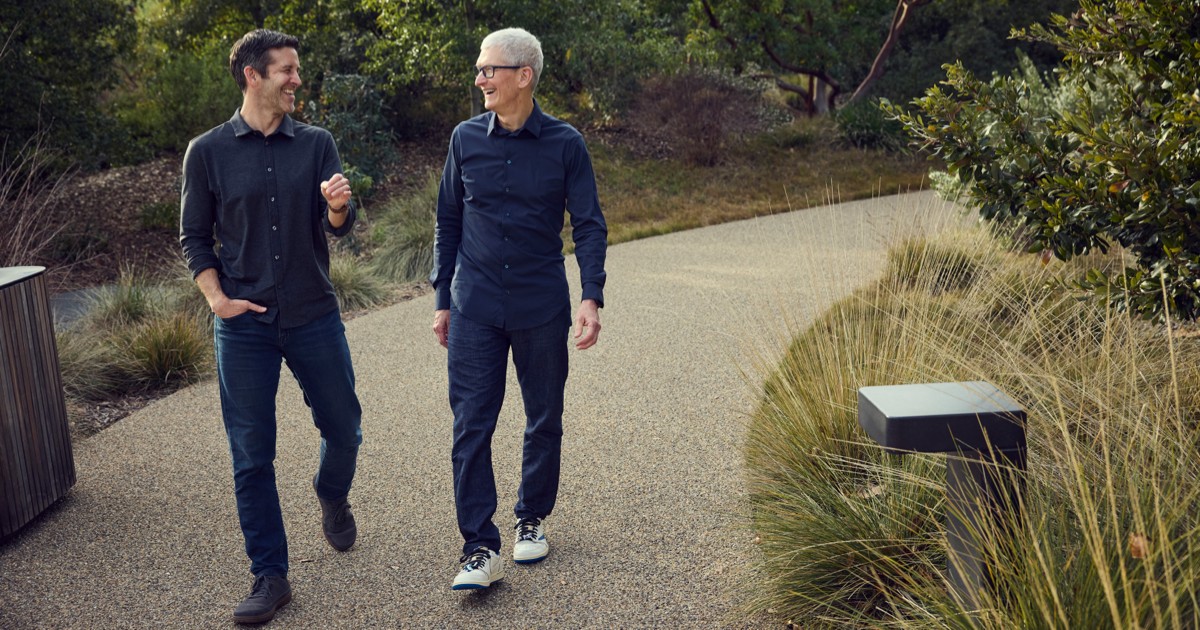
A $4.7 trillion company is exactly where new ideas go to die.
John Ternus has inherited Apple’s finest machine—and its most dangerous excuse for standing still. Tim Cook turned Apple into an industrial-grade cash engine. Now Ternus has to prove that protecting it does not mean slowly embalming it.
The biggest CEO handover in business is not a victory lap
Apple said John Ternus would become its CEO on September 1, ending Tim Cook’s 15-year run in the top job. Cook would move to executive chairman, while Ternus—Apple’s hardware engineering chief—would take over the company’s day-to-day leadership. This was not an emergency succession. Apple announced it in April, its board approved it unanimously, and Cook spent the northern summer handing over the keys. ([apple.com](https://www.apple.com/nz/newsroom/2026/04/tim-cook-to-become-apple-executive-chairman-john-ternus-to-become-apple-ceo/))
That is the good news.
The bad news, if you are Ternus, is that there is nowhere to hide. Axios reported Apple closed Monday valued at roughly $4.7 trillion. Under Cook, its share price rose from $13.35 in August 2011 to $316.61—a 2,272% gain. Its market value went from $347 billion to $4.7 trillion. Bank of America calculates that Apple added about $32 million in value every hour for 15 years. That is not a legacy. That is a benchmark designed to make perfectly capable successors look ordinary. ([axios.com](https://www.axios.com/2026/09/01/apple-ceo-cook-stock))
Investors will say Ternus must “unlock the AI opportunity.” Corporate types love a vague instruction because it saves them from making a decision. Here is the cleaner version: Ternus must make sure Apple is not reduced to being the beautifully engineered front door through which customers access everyone else’s intelligence.
That is the whole game.
Tim Cook built the machine every founder should study
Cook did not need to invent the iPhone. He did something investors routinely underrate: he made Apple’s existing advantages brutally repeatable.
The former supply-chain operator took a company built around blockbuster product launches and made it less dependent on them. Apple now has more than 1.5 billion paid subscriptions across its platforms. Its services business generated $30.7 billion in the most recent quarter, up 12% from a year earlier. App Store fees, iCloud, Apple Pay, Apple Music, TV and News turned a hardware company into a business with recurring revenue attached to an installed base that competitors would kill for. ([axios.com](https://www.axios.com/2026/09/01/apple-ceo-cook-stock))
That is not sexy. It is better than sexy. It is profitable.
Plenty of founders chase the next shiny thing while ignoring the fact their customers pay once, complain twice and leave three months later. Cook’s Apple shows what happens when you build a product people keep, an ecosystem they hate leaving and services they continue paying for.
But the strength of the Cook model creates Ternus’s problem. When a company owns about one-fifth of the global smartphone market and closer to two-thirds of premium smartphones priced above $600, it has every incentive to protect the current model. That is precisely how successful businesses talk themselves out of the next market. ([fortune.com](https://fortune.com/2026/09/01/apple-ceo-john-ternus-innovators-dilemma/))
Nobody at BlackBerry woke up wanting to lose to the iPhone. They simply had a profitable product, loyal customers and a very sensible set of reasons not to disrupt themselves. Then the market did it for them.
Apple’s AI issue is not that Siri needs a facelift
Ternus is a 25-year Apple veteran. He joined the product-design team in 2001, became a hardware engineering vice president in 2013 and joined the executive team in 2021. He has worked across Macs, iPads, iPhones, AirPods and Apple silicon. By all accounts, he knows the products in absurd detail. That matters. ([apple.com](https://www.apple.com/nz/newsroom/2026/04/tim-cook-to-become-apple-executive-chairman-john-ternus-to-become-apple-ceo/))
But being brilliant at hardware is not automatically the same as being brilliant at a platform shift.
Artificial intelligence is not merely another feature to bolt onto a phone at the September 9 launch event. If it becomes the main interface between people and the internet, it changes who owns customer attention, who controls discovery, who captures commerce and who knows what a customer actually wants before they start tapping icons.
Apple has had a rough start in AI after failing to deliver some promised features on schedule, according to the Associated Press. It has since announced AI upgrades for Siri and stressed privacy and practical, everyday use as it tries to catch rivals. ([apnews.com](https://apnews.com/article/2fac80118828b4ada9d160d012c7be32))
That privacy angle is not trivial. In fact, it may be Apple’s best card.
The overlooked point is that Apple does not need to beat every AI company at every benchmark. That is a fool’s errand. It needs to own the trusted, useful and deeply integrated AI experience across the device people carry all day. If Apple can make an assistant genuinely useful without turning its customers into data feedstock, it has a differentiated offer—not just another chatbot wearing a nicer shirt.
But “could” is doing a lot of heavy lifting there. Ternus needs a product answer, a talent answer and a capital-allocation answer. He needs the right people running AI, the permission to make decisions quickly, and the willingness to buy capabilities rather than pretend every breakthrough must be grown inside Cupertino.
The second-order risk: Tim Cook is still in the building
Cook becoming executive chairman is sensible on paper. Apple says he will help with policymaker engagement and other company matters, while Arthur Levinson moves from non-executive chairman to lead independent director. ([apple.com](https://www.apple.com/nz/newsroom/2026/04/tim-cook-to-become-apple-executive-chairman-john-ternus-to-become-apple-ceo/))
For a company with global supply chains, tariff exposure, regulators circling and politicians wanting a piece of every large technology business, keeping Cook involved is rational.
Still, every operator should notice the risk. A former CEO who remains powerful can become a comfort blanket for the board and a shadow hanging over the successor. The new boss owns the title but not the room. Decisions slow down because everyone wonders what the old boss thinks. Staff hedge. The organisation develops two centres of gravity.
Disney showed how ugly that can get when Bob Iger stayed on as executive chairman after Bob Chapek became CEO, then eventually returned to the top job. Apple is not Disney, and Cook is not Iger. But the lesson is simple: succession only works when authority is unmistakable. ([fortune.com](https://fortune.com/2026/09/01/apple-ceo-john-ternus-innovators-dilemma/))
Ternus needs Cook’s experience, especially externally. He does not need Cook’s approval for every consequential internal call.
If I were advising Apple’s board, I would insist on boringly clear rules: Ternus owns product priorities, executive appointments, operating decisions and the AI roadmap. Cook owns board leadership, long-range counsel and external relationships. No ambiguity. No unofficial vetoes. No staff running around the CEO to get a friendlier answer upstairs.
That is not politics. That is operational hygiene.
The contrarian view: Apple may be better off being late—if it is useful
There is a fashion in tech commentary that says Apple must immediately unveil a miraculous AI gadget or it has missed the entire future. Rubbish.
Apple has often arrived after the first mover and won by making the product simpler, more reliable and more desirable. The iPod was not the first digital music player. The iPhone was not the first smartphone. Apple Watch did not invent the smartwatch.
The catch is that arriving late only works if you arrive meaningfully better.
A mediocre AI assistant with Apple branding will not cut it. Nor will a privacy speech that masks an inferior product. Customers are not loyal to a company’s values presentation; they are loyal to outcomes. Save them time. Help them make better decisions. Remove friction. Do that consistently and the money follows.
Ternus’s engineering background could actually be the advantage here. AI has become a land grab for gigantic models, data centres and hype merchants. Apple’s winning move may be to make AI feel less like a separate destination and more like a native utility—fast, personal, secure and embedded in the device. That is an inference, not a guarantee. But it fits Apple’s existing strengths far better than trying to cosplay as OpenAI. ([fortune.com](https://fortune.com/2026/08/31/apple-new-ceo-john-ternus-tim-cook-ai-competition-corporate-succession/))
What this means for you
First, do not confuse a great existing business with a protected future. If your margins are healthy, customers are sticky and everyone congratulates you at conferences, that is exactly when you should ask what can make your model obsolete.
Second, build recurring revenue before you need it. Apple’s $30.7 billion quarterly services business did not happen because someone added a subscription button one Tuesday afternoon. It came from years of building an ecosystem people rely on. Ask yourself: after the first sale, why does your customer keep paying you?
Third, succession is not a press release. If you are handing over a business, write down who decides what. The outgoing founder or CEO should be available, not omnipresent. Advice is valuable. A permanent backseat driver is expensive.
Finally, treat AI like any other investment: demand proof of value. Not logins. Not pilot programs. Not a bloke in a black turtleneck saying “transformation.” Measure time saved, errors eliminated, margin improved, revenue created and customers retained. If the answer is none of those, you have bought theatre.
John Ternus does not need to beat Tim Cook’s 2,272% share-price run. That would be a stupid target. He needs to make sure the next Apple is worth owning because it creates the future—not because it was brilliant at monetising the last one.