Argenx’s $2.2B Forte Deal Is a $77 Bet on One Drug
$2.2 billion for an early-stage drug is either disciplined foresight or a spectacular mistake. Argenx paid $77 a share because waiting can cost far more.
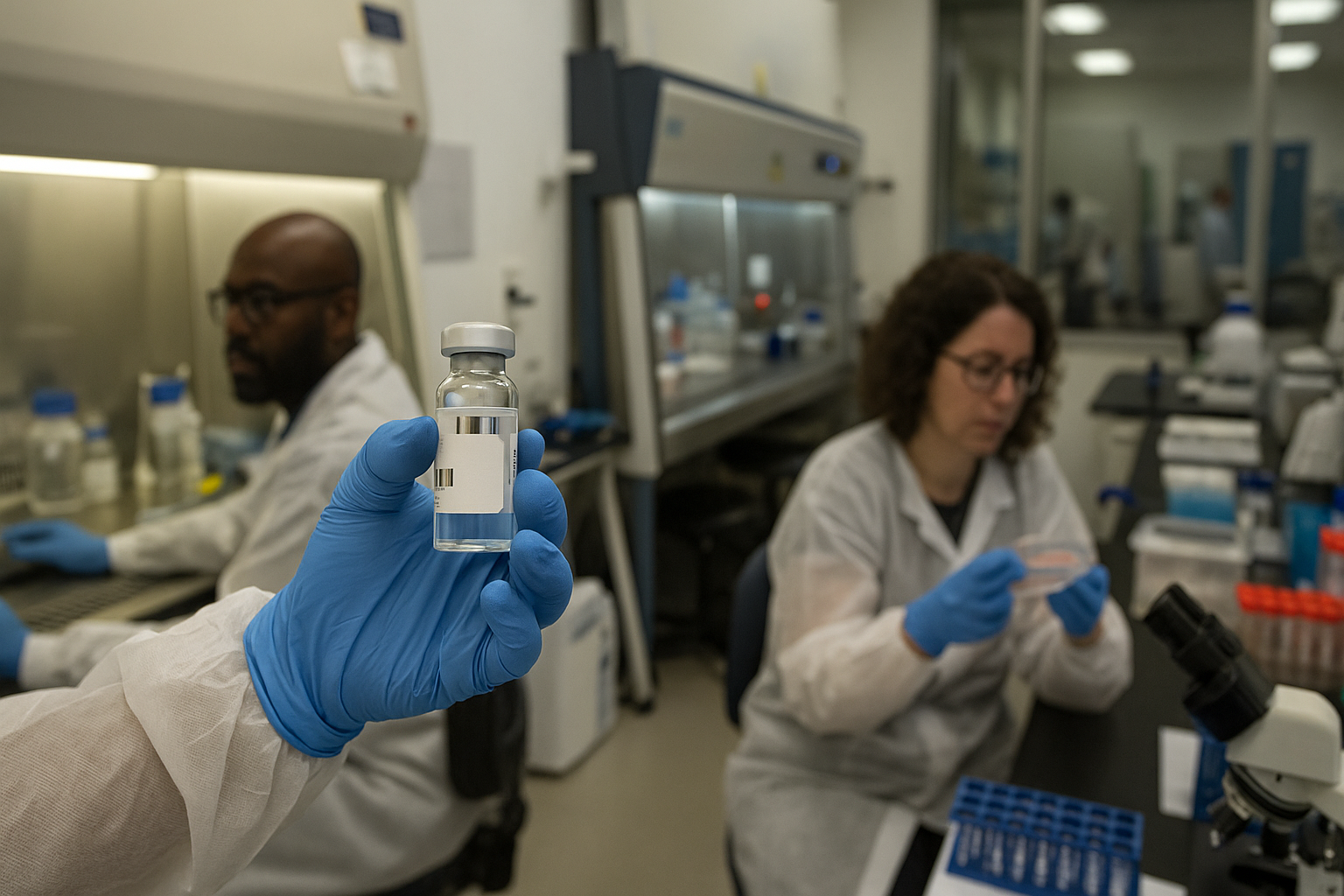
A $2.2 billion bet on a drug still in early clinical development is either disciplined foresight or a spectacular mistake.
Today, August 27, Forte Biosciences is scheduled to disappear from the market as argenx completes its acquisition. The price is $77 cash per share, valuing Forte at roughly $2.2 billion. That is a hefty cheque for a business built around FB102, an anti-CD122 antibody still progressing through Phase 1b work in vitiligo and celiac disease.
Most people will look at that and say: too early, too expensive, too risky.
I look at it and see a company refusing to wait until the asset is obvious, crowded and ten times the price.
The core story: argenx is buying a position, not revenue
This is not a deal for current sales. Forte does not bring argenx a mature product throwing off rivers of cash. It brings a possible new way to attack immune-driven disease through the CD122 pathway.
That distinction matters.
A lot of operators talk about innovation as though it is a department down the hall with beanbags and a decent coffee machine. In the real world, innovation is usually bought, partnered with or hired. Big businesses get very good at defending what already works; small businesses are better at taking scientific or commercial risks that look unreasonable until they work.
argenx is buying Forte because it believes FB102 could be more than a single indication. The company has described it as a pipeline-in-a-product opportunity, with early work in vitiligo and celiac disease designed to validate the biology. Whether that ultimately proves true is the whole game. There is no spreadsheet that turns early clinical signals into certainty.
But there is a spreadsheet that tells you what waiting costs.
The $77 price represented roughly an 86% premium to Forte's volume-weighted average price since the company reported positive Phase 1b vitiligo data on July 9. Against Forte's closing share price immediately before the deal was announced, the premium was about 41%. Both numbers can be true, and the gap is important: the market had already started repricing Forte after its data, then argenx paid up again to end the auction before it became one.
That is what decisive acquisition looks like. You do not buy the asset at yesterday's price. You buy it at the price required to stop a rival getting it.
Why $2.2 billion can be cheap—or painfully stupid
Here is the bit corporate press releases avoid: this deal may fail.
FB102 may not produce convincing results in larger trials. Safety, durability, dosing, competition, reimbursement and regulation can all ruin a beautiful early thesis. Biotech is brutally binary compared with most operating businesses. A warehouse can be improved. A sales team can be retrained. A drug that does not work cannot be motivated by a new PowerPoint deck.
So why pay up now?
Because the upside in immunology is enormous when the mechanism holds and the company finds the right patient populations. A successful therapy can generate durable revenue for years, while a platform around related immune biology can create several shots on goal. For argenx, the attraction is not simply adding another molecule to a slide deck. It is the chance to extend its position in immunology with an asset that could address diseases where patients and doctors still have limited options.
The real price was not $2.2 billion. The real price was $2.2 billion plus every dollar, every trial and every year needed to turn FB102 into an approved medicine.
That is precisely why the deal deserves attention from investors, operators and anyone weighing an acquisition outside biotech. The purchase price is the sexy number. The total commitment is the number that matters.
I have seen plenty of buyers congratulate themselves for getting an acquisition over the line, then act surprised when integration, product development, talent retention and distribution cost more than the purchase itself. That is amateur hour. Buying is the easy bit. Making the bought thing more valuable is the job.
The overlooked angle: argenx had already done its homework
The cleverest part of this transaction may be what happened before the public offer.
As of August 5, argenx already beneficially owned 951,655 Forte shares, or approximately 4.48% of the company. That is not a controlling position. It is something more useful: a sign that argenx had prior exposure and a reason to understand the asset before the broader market was forced to pay attention.
This is a lesson founders routinely miss. The best acquirers do not wake up one Tuesday morning, spot a company on LinkedIn and lob in a heroic bid by Friday. They build relationships early. They make small investments. They partner. They watch management under pressure. They learn whether the science, product or customer base is real before the spreadsheet arrives.
By the time a buyer makes a nine-figure or billion-dollar move, it should not feel like a first date. It should feel like the final decision after years of observation.
That does not eliminate risk. It does reduce the idiot risk—the risk of paying a premium for a story you have never properly interrogated.
This is especially relevant in the current AI obsession. Plenty of founders are building businesses to look acquirable rather than building businesses worth owning. They polish the demo, inflate the narrative and hope a large company buys the dream before customers discover the gaps.
Serious buyers will increasingly pay for proof: proprietary technology, credible customer pull, unusual talent, regulatory know-how, distribution access or data that cannot be recreated with a large cheque and six months of engineering work.
Forte's value was not that it had a clever ticker symbol or a hot sector label. Its value was the potential significance of its biology and the evidence it had begun to produce.
The contrarian verdict: early is not reckless when late is guaranteed to be expensive
There is a fashionable view that acquisitions should be conservative. Buy companies with revenue. Wait for certainty. Let somebody else fund the messy years.
Sounds sensible. It is often how incumbents get slowly strangled.
By the time a new product has revenue, glowing customer references and a clean forecast, it has attracted competitors, bankers and private-equity firms. The price is no longer based on what the business is; it is based on what everybody in the room fears it could become in someone else's hands.
The better question is not, “Is this early?”
It is, “Do we have an edge in judging this earlier than everyone else?”
argenx clearly thinks it does. It is making a concentrated bet on a mechanism, a team and early clinical evidence. If it is right, $2.2 billion may look like a bargain. If it is wrong, the price will look grotesque in hindsight.
That is capitalism, mate. Big outcomes do not come with a warranty card.
The mistake is not taking risk. The mistake is taking risk you cannot explain, cannot finance and cannot survive.
What this means for you
You do not need $2.2 billion or a drug pipeline to use the lesson from this deal tomorrow.
First, decide what you would buy early. In your market, identify the capability that would be prohibitively expensive once it is proven: a niche distribution channel, an exceptional operator, a technical product, a regulatory approval, a loyal community or proprietary data. Write it down before it becomes obvious.
Second, build options before you need them. Partner with promising businesses. Invest small amounts where sensible. Get to know founders and key staff. Commercial relationships are often the cheapest form of diligence because reality shows up quickly once work begins.
Third, price the full journey, not the entry ticket. If you acquire a company for $5 million but need another $5 million, 18 months and your best people to make it useful, you bought a $10 million problem. Be honest about it before you sign.
Fourth, protect the thing you are buying. The asset in a deal is often not the logo or the IP. It is the handful of people who understand the product, customers or science. If they leave, you may have bought a very expensive husk.
And finally: stop treating a premium as proof of stupidity. A premium is simply the price of certainty for the seller. The only question is whether you are buying something that becomes far more valuable in your hands.
argenx has put $2.2 billion on its answer. Now comes the hard part: proving it.