Arxis’ $1.3B IPO: Arcline Sold You a Debt Paydown, Not a Moonshot
The market gave Arxis a hero’s welcome for raising $1.3 billion. Most of that applause was for a debt repayment dressed up as an AI-and-defence growth story.
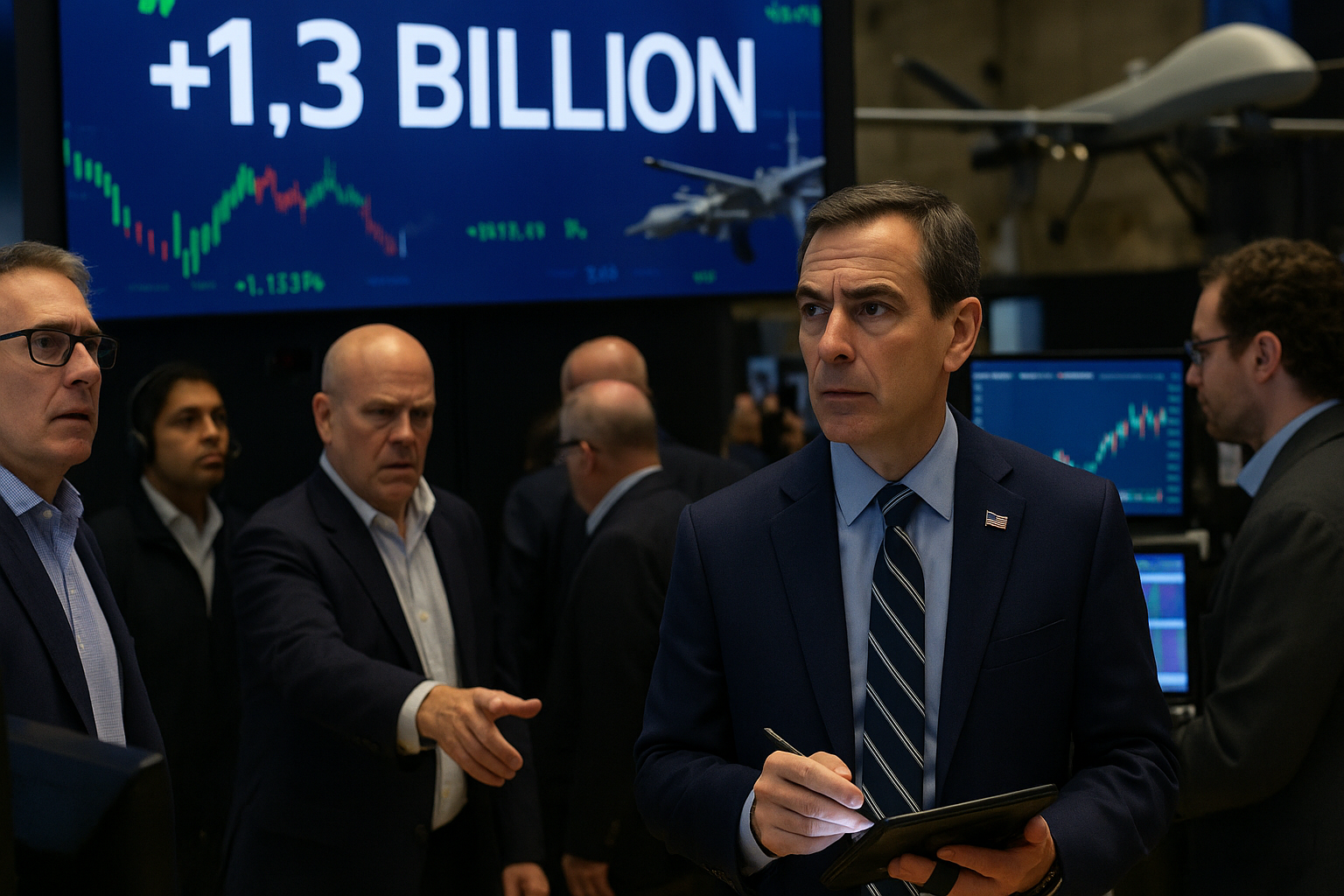
Wall Street will happily call almost anything an AI trade if it makes the share price jump. Arxis’ $1.3 billion IPO is the latest proof: a debt paydown in a very expensive costume.
That is not an insult to Arxis. It is a warning to investors who see “defence”, “data centres” and “mission-critical components” in the same sentence, then forget to read the bloody numbers.
The deal: $1.3 billion raised, and nearly $953 million went straight at debt
Arxis floated in April, selling 46.575 million Class A shares at $28 each. That is roughly $1.304 billion in gross proceeds; after underwriting discounts and offering costs, the company reported net proceeds of about $1.221 billion.
The first-day result was a beauty. Shares closed at $31.75, up 18% from the IPO price, after the company raised $2.23 billion in the broader offering structure reported by Bloomberg. The debut gave investors exactly what public markets love: an industrial business with defence exposure, aerospace exposure, a data-centre angle and a private-equity sponsor with an acquisition record.
But here is the part worth circling in red pen. During the first six months of 2026, Arxis repaid $952.8 million of debt. Total debt fell from about $2.66 billion at December 31, 2025 to roughly $1.73 billion by June 30, 2026.
Again: good move. Sensible move. But it changes the story.
This was not primarily a company raising growth capital to build the next great industrial platform from scratch. It was a financial reset that shifted a big slice of the balance-sheet risk from a private-equity-owned structure into a listed company with public shareholders.
Arcline Investment Management, the sponsor behind Arxis, did not build a fairy tale. It assembled specialised industrial businesses, took them public and used the market’s appetite for strategic hardware to strengthen the capital structure. That is what competent dealmaking looks like. Just do not confuse competent dealmaking with a bargain.
What Arxis actually sells — and why buyers care
Arxis makes engineered electronic and mechanical components for applications where failure is not merely annoying. Its end markets include defence and space, commercial aerospace and industrial technology.
That includes the sort of parts no one talks about at a barbecue: specialised bearings, ceramic packages, connectors, polymer seals and other components designed to work under nasty conditions. Heat, vibration, pressure, power, reliability — the boring stuff becomes very exciting when a satellite, aircraft or defence platform stops working.
The company reports two main segments. In the June quarter, electronic components produced $214.8 million in revenue and mechanical components produced $285.9 million. Combined quarterly revenue was $500.7 million, up from $400.4 million in the comparable 2025 period.
For the first six months of 2026, revenue reached $959.6 million, versus $780.5 million a year earlier. Segment adjusted EBITDA was $399.1 million, up from $287.8 million.
Those are proper numbers. The underlying business is not a PowerPoint deck with a chip on it.
It also explains why investors turned up. Defence budgets, aerospace production and data-centre construction all create demand for parts that are difficult to qualify and painful to replace. Once a component is engineered into a mission-critical system, customers are not keen to swap suppliers to save 4%.
That is the attraction: sticky specifications, technical know-how and a customer base that cares more about performance than a slightly cheaper quote.
The background investors should not skip
Arxis is a classic industrial-compounder story. The model is to buy specialist businesses, preserve the engineering capability, improve operations, add adjacent products and keep acquiring.
In June 2025, the Arxis businesses bought UK-based Oldham Seals Group for $115.4 million. In September 2026, Arxis completed acquisitions of Schatz Bearing Corporation and StratEdge Corporation. Schatz makes specialised bearings used in aerospace, defence and space applications; StratEdge makes ceramic packages for high-frequency and high-power electronics used in defence and space systems.
That is a coherent shopping list. The businesses fit the broad thesis rather than looking like a desperate pile of unrelated revenue.
But compounding through acquisitions has an ugly cousin: leverage. Buy enough businesses with borrowed money and eventually the interest bill starts behaving like an uninvited relative who has moved into the spare room.
Arxis recorded $83.4 million of net interest expense in the first half of 2026. For context, operating income over the same period was $143.2 million. Interest was not a rounding error; it was a serious claim on the business.
The IPO materially reduced that pressure. Investors should see this clearly: the debt paydown may be the most valuable operational achievement of the listing, even if it is far less sexy than talking about defence technology.
The second-order implication: public capital is now part of the acquisition machine
The real deal is not the listing day. The real deal is what Arxis can do next with a cleaner balance sheet, public currency and lower financial strain.
A leveraged private company has a limited menu. It can buy more businesses if lenders cooperate, cash flow holds up and the debt market stays friendly. A public company with a credible share price has another option: it can issue stock, refinance debt more flexibly and use equity in acquisitions.
That matters in fragmented industrial niches. You do not need to buy Boeing to create value. You need to buy dozens of obscure but critical suppliers at rational prices, then avoid stuffing up the integration.
Arxis has also retained a governance structure that should make outside investors pause. At June 30, Class B shareholders held 340.7 million shares, each carrying 20 votes, while Class A shares carried one vote each. Economic rights may be broadly aligned, but voting power is not distributed evenly.
That is not automatically bad. Founder or sponsor control can protect a long-term acquisition strategy from quarterly tantrums. But it means public shareholders are backing the sponsor’s judgement with limited ability to overrule it.
If you buy the stock, you are not merely buying aerospace and defence components. You are hiring Arcline to keep allocating capital on your behalf.
The overlooked angle: the best part of the IPO may be the least exciting part
Everyone wants the exciting answer: AI data centres need cooling, defence spending is rising, aerospace has supply shortages, and Arxis sells the picks and shovels.
Fine. All true enough as a broad thesis.
But the contrarian point is simpler. Arxis does not need every fashionable theme to work. It needs to keep making specialised parts customers cannot easily replace, preserve margins, integrate acquisitions without turning them into corporate soup, and stop interest expense from eating the upside.
The June-quarter financials show why you must separate operating performance from headline profit. Revenue grew sharply and adjusted EBITDA was $211.5 million. Yet Arxis reported a $4.9 million quarterly net loss, driven in meaningful part by $107.1 million in share-based compensation expense, plus interest, amortisation and other costs.
You can argue over adjusted EBITDA until the cows come home. I have seen executives use it like cologne: too much and they think no one can smell the underlying problem.
Still, the right conclusion here is not that adjusted EBITDA is fake. It is that a buyer must ask what converts into cash after interest, taxes, maintenance capital expenditure, integration costs and stock compensation. That is where a great industrial business proves it is great.
What this means for you
If you are an investor, do not buy an IPO because it has the right buzzwords. Start with three questions.
First: Where did the cash go? If most of the money repays debt, call it what it is — a balance-sheet repair. That can be valuable, but it is not the same as funding explosive growth.
Second: Who controls the company after I buy? Arxis’ dual-class structure means control remains heavily concentrated. Decide whether the capital allocator has earned that trust before you hand over yours.
Third: What has to go right from here? In Arxis’ case, the essentials are clear: demand must remain resilient, acquired businesses must integrate well, margins must hold, and management must not get drunk on acquisition capacity now that public-market money is available.
If you are an operator, there is a cleaner lesson. Growth financed by debt feels brilliant right up until it starts dictating every decision. A stronger balance sheet gives you options: you can invest through a downturn, say no to bad customers, buy competitors when they are cheap and keep your best people.
That is the real value of Arxis’ IPO. Not that the ticker jumped on day one. Not that someone mentioned AI. It is that a serial acquirer just bought itself breathing room.
Breathing room is not glamorous. But in business, it is often what separates the bloke making decisions from the bloke begging his bank for permission.