AT&T’s $125B Revenue: John Stankey on Meeting Preparation
Most meetings are just salary-burning group therapy. AT&T’s John Stankey has a simpler rule: do your homework before you take a seat—or don’t waste everyone’s time.
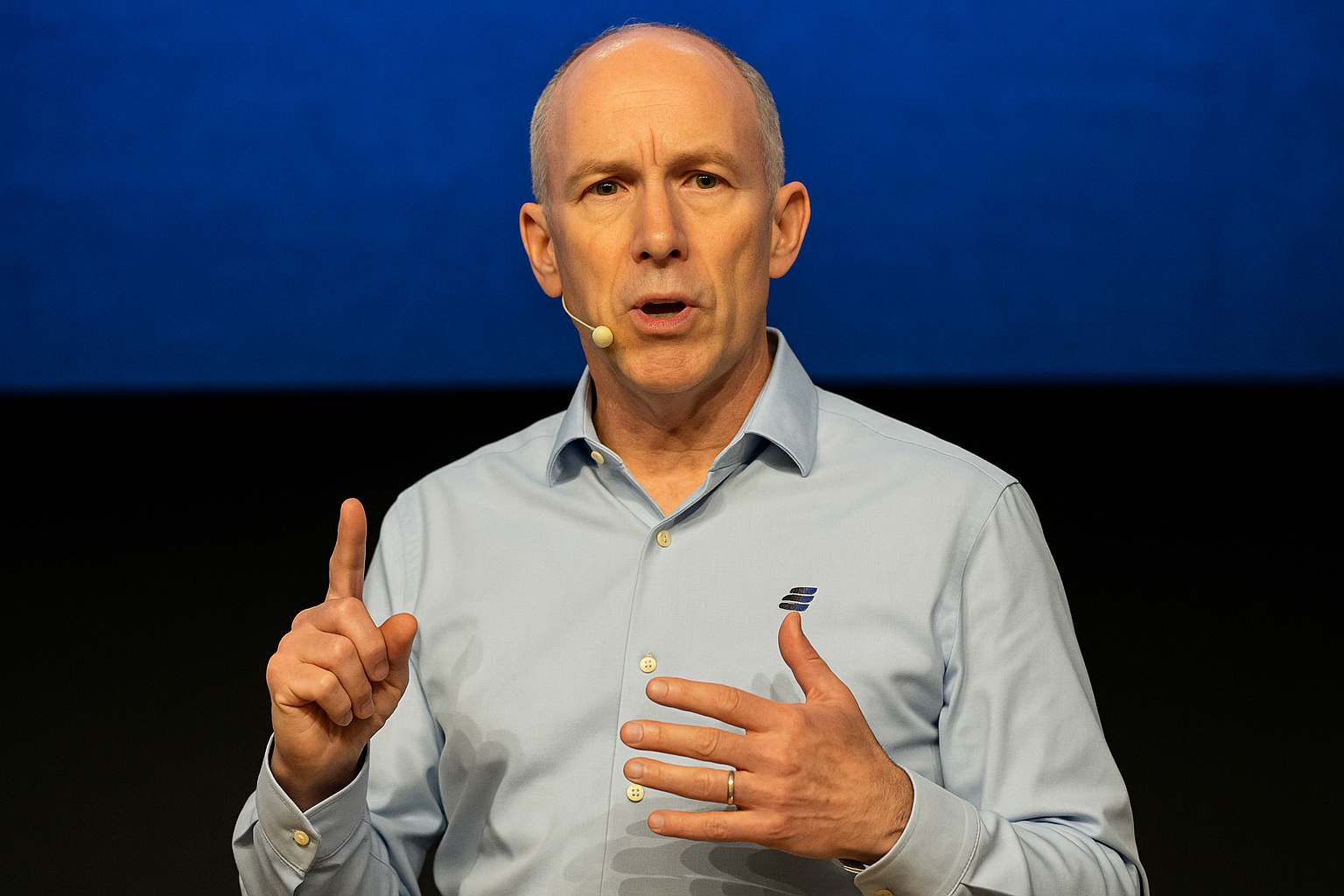
Most meetings are just salary-burning group therapy. AT&T’s John Stankey has a simpler rule: do your homework before you take a seat—or don’t waste everyone’s time.
That sounds brutally obvious. Which is precisely why most companies won’t enforce it.
On September 6, Stankey said one of AT&T’s cultural principles is that people should not arrive at a meeting without having done their homework. He also said he wants discourse: people prepared to contribute a view, not warm a chair and nod at whoever has the highest job title. JPMorgan Chase CEO Jamie Dimon made the same basic point in their LinkedIn discussion: preparation earns attention; pointless meetings deserve the bin. ([fortune.com](https://fortune.com/2026/09/06/att-ceo-john-stankey-meeting-etiquette-show-up-prepared-crave-productivity-like-jpmorgan-ceo-jamie-dimon/?utm_source=openai))
This is not a productivity hack. It is a management standard. And in a business with more than $125 billion in 2025 revenue, serving more than 100 million US wireless and broadband subscribers, the standard matters. Tiny bits of executive indecision and employee passivity become very expensive when multiplied across a company that size. ([investors.att.com](https://investors.att.com/corporate-governance/leadership?utm_source=openai))
The actual story is not meetings. It is permission.
Most organisations say they want people to speak up. Then they schedule a 12-person meeting, circulate a 40-page deck at 9:47 p.m., let the most senior person talk for 35 minutes, and call the final five minutes “discussion.”
Nobody believes that is discussion. It is theatre with a calendar invite.
Stankey’s position matters because he is pairing two things that managers constantly separate: preparation and disagreement. One without the other is useless.
Prepared people who are not allowed to disagree become clever note-takers. People encouraged to “share freely” without preparation create a fog machine of opinions, anecdotes and half-baked objections. Neither produces decisions.
The useful standard is harsher: if you have not read the material, understood the question and formed a position, you are not ready for the room. If you have done those things but cannot challenge the prevailing view, the room is still broken.
That is the job of management. Not to create more opportunities for people to talk, but to create conditions where informed disagreement happens early enough to change the outcome.
Why John Stankey can make this call
Stankey has been AT&T’s CEO and president since July 2020 and became chairman in February 2025. His leadership team is running a connectivity business built around massive network investment, wireless, fibre and enterprise customers—not a little software company where a bad call can be patched next Tuesday. ([investors.att.com](https://investors.att.com/corporate-governance/leadership?utm_source=openai))
AT&T says it invested more than $150 billion in wireless and wireline networks, including spectrum acquisitions, from 2021 through 2025. That is the sort of capital intensity that makes sloppy decision-making more than an annoyance. A delayed project, a muddled product call or a senior team that discovers basic risks halfway through a meeting can cost real money and real time. ([investors.att.com](https://investors.att.com/corporate-governance/leadership?utm_source=openai))
The company’s 2025 annual report lists a senior operating bench that includes COO Jeff McElfresh, CFO Pascal Desroches, CTO Jeremy Legg and Chief Human Resources Officer Darcie Henry. That matters because a meeting culture is never fixed by a CEO quote. It gets fixed—or ignored—by the executives who decide what information must be ready, who gets invited, who owns the decision, and what happens after the meeting ends. ([about.att.com](https://about.att.com/ecms/dam/snrdocs/2025-annual-report-complete-annual-report.pdf?utm_source=openai))
Stankey has also spoken publicly about the hard bit of transformation: culture. Strategy, he has argued, is easier than cultural change. He is dead right. A strategy deck can be approved in an afternoon. Getting thousands of people to stop treating attendance as contribution takes years and consequences. ([hbr.org](https://hbr.org/podcast/2026/07/leadership-summit-2026-att-ceo-john-stankey-on-developing-technology-and-talent-in-the-ai-era?ab=HP-bottom-podcast-text-3&utm_source=openai))
The expensive lie: being busy means being useful
Here is the lie corporate life tells good employees: if your calendar is full, you must be important.
Rubbish.
A packed calendar often means the organisation cannot decide who has the authority to make a call. So it hires a committee, adds observers, books a follow-up and calls it collaboration. People come away exhausted, pleasantly vague and no closer to an answer.
I have seen this in businesses of every size. The people doing the work spend their days in meetings explaining the work to people who are too busy to read about it beforehand. The business then wonders why execution is slow.
The cost is not merely an hour of wages. It is the context switching before the meeting, the catch-up afterward, the decisions deferred because “we need one more stakeholder,” and the message sent to high performers that preparation does not matter. Eventually, your sharpest people stop bringing their best thinking because the room has taught them it will be flattened into consensus mush.
That is how a company becomes polite and slow at the same time.
Stankey’s rule is valuable because it calls the bluff. Attendance is not work. A point of view is work. Reading the relevant material is work. Naming the trade-off is work. Taking accountability for the decision is work.
Everything else is often just a more socially acceptable version of hiding.
AI can improve preparation—or make meetings even worse
The overlooked part of Stankey and Dimon’s discussion was not merely that they value pre-reads. Both described using AI tools to consume and investigate information faster before meetings. ([fortune.com](https://fortune.com/2026/09/06/att-ceo-john-stankey-meeting-etiquette-show-up-prepared-crave-productivity-like-jpmorgan-ceo-jamie-dimon/?utm_source=openai))
This will split companies into two camps.
The good ones will use AI to raise the baseline. Leaders will arrive with a clearer grasp of the numbers, the customer feedback, the previous decisions and the plausible objections. Teams will spend less time reciting status updates and more time deciding what to do.
The bad ones will use AI to produce longer pre-reads nobody reads, generated summaries nobody trusts and ten more slides to avoid a hard choice. They will turn a 30-minute meeting into a 30-minute meeting plus an hour of AI sludge.
The technology is not the point. The operating rule is the point.
AI should answer: What do I need to understand before I walk in?
It should not answer: How can I look prepared without doing any thinking?
That distinction is worth money. If everyone arrives with the same generated summary, you have made information cheaper but not judgement better. The edge comes from using the information to spot the assumption the room is missing, the risk nobody owns, or the customer consequence hiding behind a nice-looking spreadsheet.
The contrarian angle: fewer meetings is not automatically better
The fashionable advice is to kill meetings. Fine. Kill the bad ones with a shovel.
But “no meetings” is not a management strategy. It is often an excuse for leaders who cannot run a useful conversation.
Some decisions need real-time argument. Complex capital allocation. Pricing changes. Hiring a senior operator. A product launch that cuts across multiple teams. A difficult customer problem. These are not solved by 47 comments in a document while everyone pretends asynchronous work is inherently more intelligent.
The answer is not fewer conversations at all costs. It is fewer passengers and better decisions.
A strong meeting has a single owner, a written question, a small group of people with relevant knowledge, pre-work distributed early enough to matter, and an explicit decision at the end. If the owner only wants to inform people, send a note. If the group cannot make the decision, do not convene them until the actual decision-maker is available.
And if someone arrives unprepared, do not reward them by replaying the entire pre-read verbally. That is how bad habits become company policy.
What this means for you
You do not need to run AT&T to use this tomorrow. You need to stop confusing activity with contribution.
Before your next important meeting, do four things.
First, write the decision in one sentence. Not the topic. The decision. “Should we launch in October at this price?” is a decision. “October launch discussion” is calendar rubbish.
Second, send a one-page pre-read 24 hours beforehand. Include the facts, the trade-offs, your recommendation and the one or two questions you genuinely need help answering. If you need 40 pages, you probably have not done the thinking yet.
Third, ask every attendee to arrive with a position. They can change their mind in the meeting—that is what evidence is for—but they should have a starting view. Passive attendance is not neutral. It pushes the thinking burden onto everyone else.
Fourth, end with an owner and a date. “We will look into it” is not an outcome. Name who does what by when, write it down and send it within 15 minutes.
Then measure the result for a month. How many meetings ended with a decision? How many attendees spoke? How many decisions were reopened because the right person had not done the work? You will find the weak points quickly.
Stankey’s point is not that meetings should be stern little performance reviews. It is that a seat at the table comes with an obligation: bring facts, bring a view, and be willing to have your view tested.
That is a far better deal than most workplaces offer. And if your business cannot enforce something that basic, do not blame the calendar. Blame the leadership.