Baker Mayfield’s $165M Bucs Deal: Tampa Bay Buys Certainty
Tampa Bay just paid $165 million to avoid quarterback chaos. $55 million a year is not the price of an elite quarterback; it is the price of replacing Baker Mayfield.
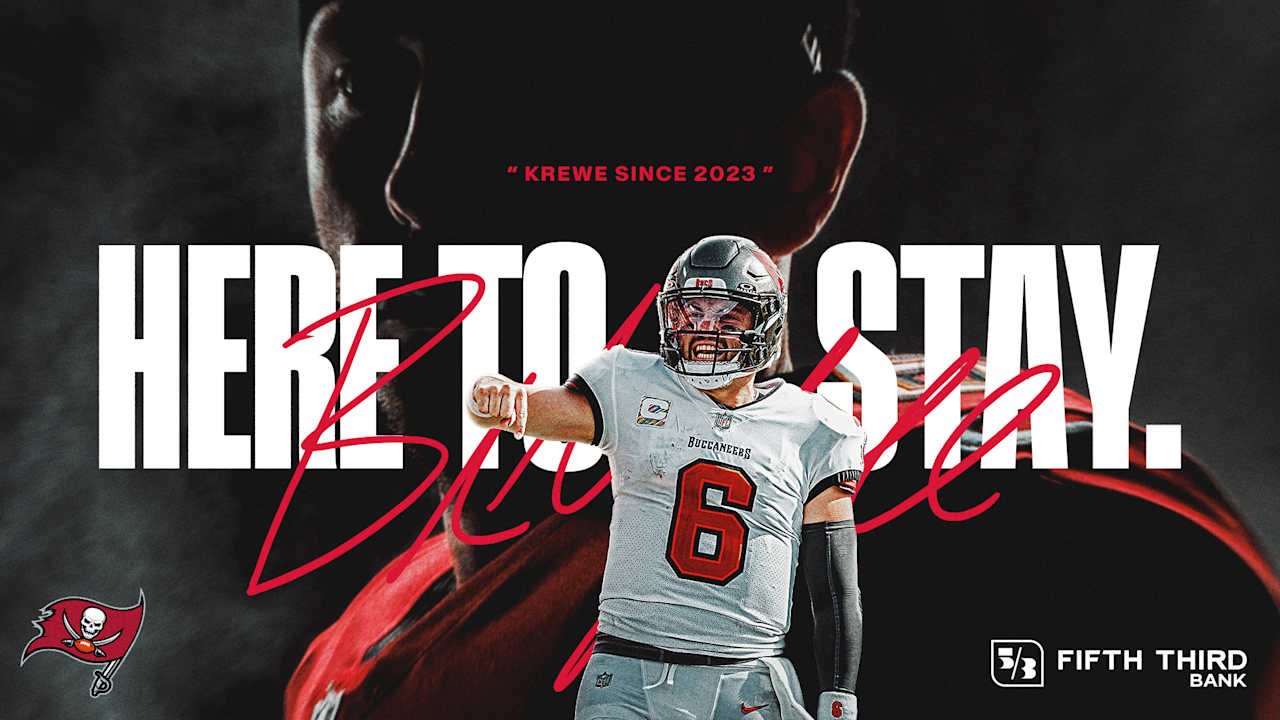
Tampa Bay just paid $165 million to avoid quarterback chaos. $55 million a year is not the price of an elite quarterback. It is the price the Tampa Bay Buccaneers have paid because finding the next Baker Mayfield could cost them far more.
On September 8, the Bucs gave Mayfield a three-year, $165 million extension that runs through 2029. The club calls it the biggest contract in franchise history. That is a big bloody number for a bloke who was once moved on by Cleveland, benched in Carolina and picked up by Tampa Bay in 2023 on a prove-it deal. ([buccaneers.com](https://www.buccaneers.com/news/locked-long-term-baker-mayfield-bucs-agree-extension-through-2029?utm_source=openai))
Tampa Bay did not buy a quarterback. It bought an answer.
The lazy reaction is that Mayfield has been paid like a superstar. Maybe. But that misses the commercial decision.
The Bucs were staring at the final year of Mayfield’s previous three-year, $100 million contract, signed in March 2024. His old average annual salary was $33.33 million, reportedly 16th among NFL quarterbacks before this deal. Now the new-money figure is $55 million a year. That is a 65% jump in the headline annual rate. ([fieldlevelmedia.com](https://fieldlevelmedia.com/news/bucs-sign-qb-baker-mayfield-to-3-year-extension-worth-reported-165m/?utm_source=openai))
Nobody should pretend that sort of lift is pocket change. It changes what Tampa can spend elsewhere. It makes every roster hole more expensive. It means the front office has less room to make stupid decisions and call them “depth.”
But the alternative was not a clean spreadsheet that read: save $55 million and enjoy life. The alternative was entering 2027 without a settled quarterback plan, potentially losing a player who has become the centre of the building, and hoping the draft, free agency or a trade delivered an upgrade.
That is how football clubs burn years.
Mayfield has started for Tampa Bay from 2023 through 2025 and, according to the club, ranked second in the NFL over that three-season stretch with 95 touchdown passes and third with 12,237 passing yards. He led the Bucs to two division titles in that run. Those figures do not prove he is Patrick Mahomes. They prove something more useful: Tampa has had a functioning, productive quarterback operation after Tom Brady. ([buccaneers.com](https://www.buccaneers.com/news/locked-long-term-baker-mayfield-bucs-agree-extension-through-2029?utm_source=openai))
That matters because stable quarterback play is not merely a football asset. It is a business asset. It gives the coaches a system they can build on, gives the front office a clearer shopping list, gives sponsors a recognisable face and gives supporters something better than annual hope dressed up as strategy.
Owners love certainty right up until they have to pay for it. Joel Glazer and general manager Jason Licht have now paid for it.
The timing tells you who blinked — and who had leverage
This was not one of those tidy offseason extensions announced with a glossy video and everyone pretending the negotiation was harmonious.
Mayfield and the Bucs had reportedly paused talks before training camp. Mayfield had publicly expressed frustration that a deal had not been done by his own camp deadline. Then, with the regular season only days away, discussions restarted over the weekend and a deal was completed on September 8. ([newsespn.pages.dev](https://newsespn.pages.dev/nfl/story/_/id/49872379/bucs-baker-mayfield-agree-3-year-extension-sources-say?utm_source=openai))
That is leverage in plain English.
Mayfield had an expiring contract, production on the board and a club with a clear reason not to destabilise its most important position. Tampa had age, injury history and future roster flexibility to think about. Neither side held every card. That is usually where real deals get done.
The useful lesson is that a negotiation does not need to look friendly to be rational. A founder who takes a hard position is not automatically disloyal. An employee who sets a deadline is not automatically difficult. Sometimes both parties simply need the consequences of no deal to become painfully obvious.
Mayfield’s leverage was not built in the final weekend. It was built over three seasons of delivering enough wins, production and leadership that the Bucs decided the cost of replacing him was worse than the cost of keeping him.
That is the bit people forget when they see the press release. The negotiation happens at the table. The leverage is earned long before you walk into the room.
The $165 million headline is not the real contract
Here is where fans, pundits and plenty of business people get carried away: total contract value is marketing; structure is economics.
The Bucs did not disclose the financial terms. The reported number is three years and $165 million, or $55 million annually. Until the guarantees, payment timing, injury protections and salary-cap treatment are known, nobody outside the deal should pretend to know precisely how much risk Tampa has accepted or how much security Mayfield has truly locked in. ([buccaneers.com](https://www.buccaneers.com/news/locked-long-term-baker-mayfield-bucs-agree-extension-through-2029?utm_source=openai))
This is not a technicality. It is the whole ball game.
A $165 million deal with substantial early guarantees is a very different beast from a $165 million deal that gives the club off-ramps after a season or two. One is a commitment. The other is a well-paid option with excellent PR.
I have watched people get seduced by valuation headlines in business for years. “We raised at $100 million.” Great. What liquidation preference did you give away? “We sold for eight figures.” Lovely. How much cash arrived, how much was earn-out, and who controls the business now?
Same principle here. Do not confuse the loud number with the valuable number.
For Mayfield, the headline itself still matters. It resets his public standing. For Tampa, the public declaration matters too: the franchise has decided its post-Brady identity will not be built around a quarterback audition.
The overlooked angle: this is a bet against organisational chaos
The contrarian take is not that Baker Mayfield is underpaid or overpaid. It is that those are incomplete questions.
The sharper question is: what does instability at quarterback cost an NFL club over three years?
It costs draft capital when you chase an answer. It costs free-agent money when you overpay for a stopgap. It costs coaching continuity when an offensive system gets ripped up. It costs development when young players spend their first seasons catching passes from a revolving door. And it costs credibility when everyone in the building knows the club is improvising at the position that dictates the whole operation.
Tampa Bay has recent evidence that even a good roster can get knocked about. The team described its 2025 season as injury-plagued, with Mayfield, much of the offensive line, running back Bucky Irving and several receivers missing meaningful time. Locking in the quarterback before the 2026 opener is an attempt to remove one major variable before the next problem arrives — because another problem always arrives. ([buccaneers.com](https://www.buccaneers.com/news/locked-long-term-baker-mayfield-bucs-agree-extension-through-2029?utm_source=openai))
That does not make the deal risk-free. Mayfield will be 34 when the extension ends. Quarterbacks get hurt. Form moves. NFL rosters are brutal things. And $55 million a year raises the performance bar whether it is fair or not.
But sensible operators do not eliminate risk. They choose which risk they can live with.
Tampa has chosen the known risk of a costly, productive quarterback over the unknown risk of a quarterback search. I reckon that is a grown-up decision.
What this means for you
Whether you run a startup, manage investments or lead a team of 10, take three things from the Mayfield deal.
First: pay for proven reliability before you pay for theoretical upside. Mayfield’s value to Tampa is not a fantasy projection. It is the evidence already on tape: 95 touchdowns, 12,237 yards, two division titles and three years inside the building. In your business, identify the people who repeatedly make the machine work. Do not wait until competitors are calling them to learn what they are worth.
Second: separate price from cost. $55 million a year is the price. The cost of losing Mayfield might have been years of quarterback roulette, wasted draft picks and a diminished roster around whoever came next. Every major decision has that comparison. The cheapest option can be ruinously expensive once you count disruption.
Third: read the structure, not the headline. Whether it is an employment offer, a supplier agreement, an acquisition or an investment term sheet, ask where the risk sits. Cash today, guarantees, exit rights and control matter more than the number people put in bold type.
Mayfield has done well here. The Bucs may have done well too. That can happen when both sides understand the real alternative and stop pretending the headline is the whole story.