Becle Warns as U.S. Tequila Imports Drop 26%
U.S. tequila imports fell 26% in the first nine months of 2025. Becle expects a transition year. A glossy bottle and celebrity are not a business plan — they are clearance stock.
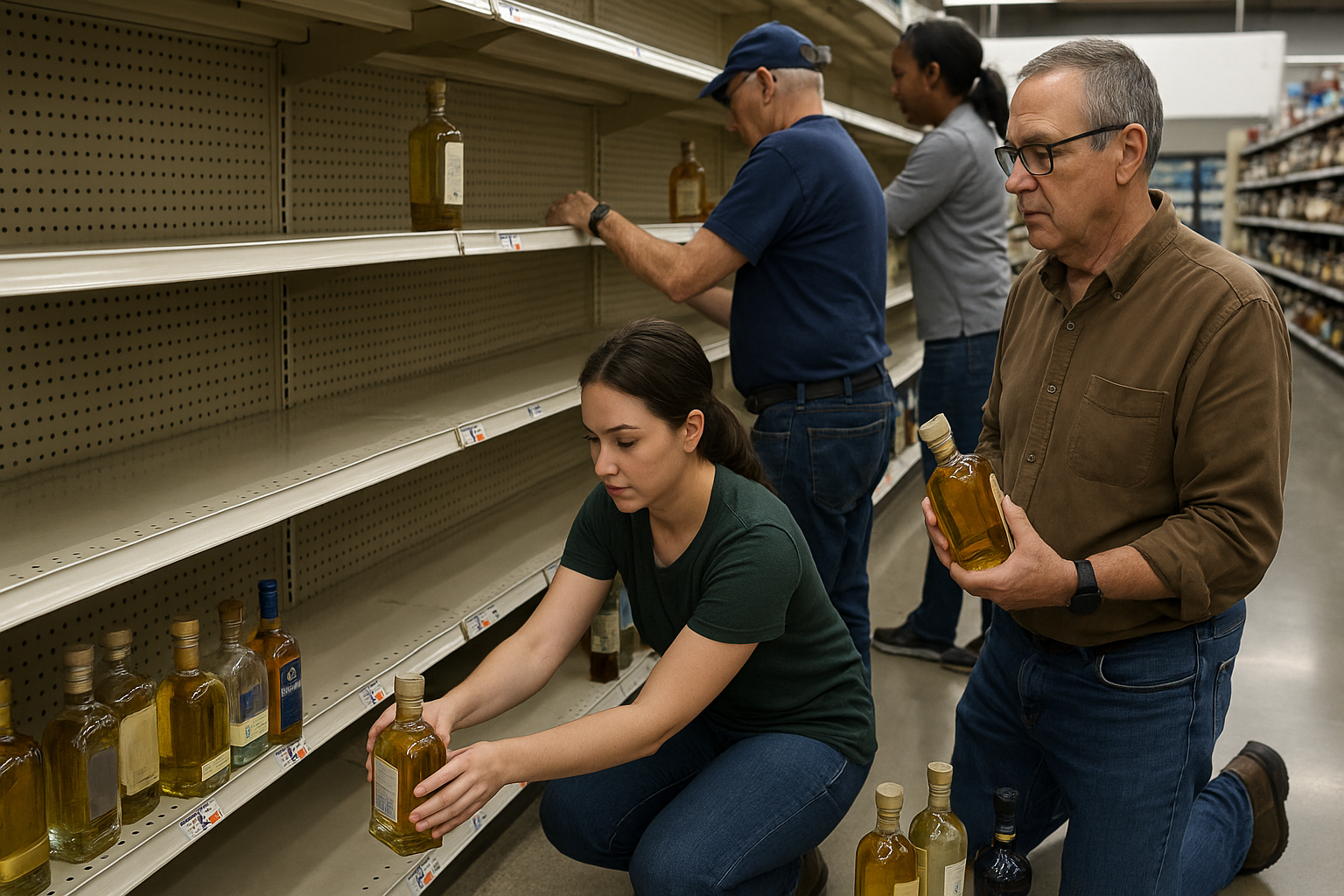
U.S. tequila imports fell 26% in the first nine months of 2025 than they did a year earlier. That is not a hangover. That is the bill arriving for an industry that confused a boom with permanent demand.
For years, tequila brands could get away with murder: a decent liquid, a loud founder, a pretty bottle, a whiff of Mexico, and a price that made consumers feel sophisticated for buying it. Capital flooded in. Celebrities piled on. Every second bloke with a marketing deck claimed to be building the next Casamigos.
Now the market is doing what markets eventually do. It is separating brands people genuinely buy from brands distributors were willing to warehouse.
Becle has the problem everyone else should be watching
Keep the numbers separate: the 26% figure is a U.S. tequila import signal. Becle’s reported figures are its own sales numbers.
Becle — the Jose Cuervo owner and the world’s largest tequila producer — gave the market the clearest warning in February. Its U.S. and Canada sales fell 4% through 2025. North American sales dropped 14% in the final quarter of the year. The company told investors 2026 would be a transition year and forecast low-single-digit organic sales declines.
That is a serious admission from the biggest player at the table.
Becle also ended its relationship with Republic National Distributing Company, or RNDC, in February 2026. RNDC’s exit from California late last year created a mess for suppliers, retailers and brands relying on the old distribution machine. Becle has been rebuilding its U.S. route to market while trying to manage shipment volatility, inventory realignment and the usual bureaucratic circus that comes with changing distributors.
Anyone who has actually sold physical product understands why this matters. A distributor change is not a press release. It is a commercial heart transplant. You can have great product, a healthy brand and a warehouse full of stock, then watch sales disappear because the wrong account was not called, the new rep does not know your story, or the incentive structure has changed.
Becle expects U.S. growth to return in 2027, not tomorrow. That is the honest timeline. The company is cutting planned capital spending to US$90 million to US$110 million in 2026, from US$130 million in 2025. Translation: protect the balance sheet, fix the distribution problem, and stop pretending the market is behaving normally.
This should be required reading for every founder in spirits, and every investor who thinks a tequila brand is a shortcut to wealth.
The tequila boom did not die — lazy premiumisation did
Here is the important distinction: tequila has not become irrelevant. The idea that the category is simply “over” is just as lazy as the old belief that every bottle would sell itself.
The latest U.S. retail read is more interesting. In the four weeks ended September 5, total U.S. spirits sales fell 3.3% by dollar value and 3.4% by volume, according to NIQ-linked data reported this month. Yet LALO grew 48.8%, Cazadores grew 36.5%, and Lunazul grew 19.5%. Don Julio, meanwhile, fell 6.8%.
That is not a category collapse. It is a sorting mechanism.
The winners are landing in the part of the market where real people still make decisions: bottles they can afford to order at a bar, use in a margarita, take to a barbecue, and buy again without needing a bonus cheque. The growth is concentrated around the US$20 to US$35 range, not in trophy bottles designed mainly for Instagram shelves.
This is where the premium spirits industry got drunk on its own story. “Premiumisation” became a polite word for charging more. But charging more only works while consumers believe the upgrade delivers something they can taste, understand or show off. Once wallets tighten, a category packed with lookalike luxury cues gets exposed fast.
People still want tequila. They just do not want to be mugged at the shelf.
Diageo proves scale does not make you immune
If you think this is only a Jose Cuervo problem, look at Diageo.
The owner of Don Julio, Casamigos and DeLeón reported fiscal-2026 net sales of US$19.643 billion, down 3.0% on a reported basis. Organic net sales fell 2.0%. The company pointed directly to weak U.S. spirits performance and adverse price/mix — corporate language for consumers buying less expensive things, buying fewer things, or both.
Earlier in the financial year, Diageo said its U.S. spirits share loss was driven largely by Don Julio, Casamigos and Crown Royal. In its third-quarter update, Diageo said tequila sales declined by double digits, citing difficult comparisons, competitive pressure and softer category conditions.
That is a brutal combination. When a brand is big, it needs a lot of incremental consumers just to keep growing. When those consumers trade down, drink less often, switch to ready-to-drink products, or simply decide the $80 bottle is taking the piss, the decline shows up everywhere: distributor orders, retailer displays, marketing efficiency and margins.
Diageo is not broke. Far from it. It generated US$3.2 billion in free cash flow in fiscal 2026. But even a giant has had to get serious about cost. Its 2026 change programme carried a US$800 million cost, with savings expected over the following two years.
That should kill another comforting belief: scale does not solve a weak proposition. It just makes the spreadsheet bigger.
The overlooked angle: distribution is now part of the brand
Most founders treat distribution as plumbing. Make the stuff, sign a distributor, run some ads, and assume the cases find their way to the right bars and shelves.
Rubbish.
Distribution is part of the product. Particularly in spirits.
The consumer cannot buy the brand you have not got placed. The bartender cannot recommend the brand the venue does not stock. The retailer cannot reorder a bottle that is perpetually out of stock or buried beneath incentives from a larger supplier. Your expensive launch party means absolutely nothing if the account manager does not have a reason to prioritise your case over the other 200 sitting in the portfolio.
Becle’s disruption makes this painfully visible, but it applies to the whole market. The old growth model was built on stuffing inventory into a system that was happy to carry it while tequila was racing. In a slower market, inventory is not proof of demand. It is a liability with glass, labels and storage costs attached.
This is one thing I keep seeing while building Agave Finder: consumers are getting better at finding specific bottles, comparing prices and learning what sits behind the label. That is bad news for generic premium brands. It is good news for operators who can explain, in plain English, why their tequila deserves repeat purchase.
Not a founder story. Not a mood board. A reason.
Cheap agave is not a strategy
There is one apparent bright spot for producers: agave costs have fallen. Becle said lower agave costs supported margins in 2025 and should continue helping in 2026, though less than before.
Fine. Lower input costs are useful. But they are not demand.
This is exactly where mediocre operators make another mistake. They see a cheaper raw material and decide to flood the market, discount aggressively or launch three more SKUs nobody asked for. Then they train the consumer to wait for promotion and destroy their own brand architecture.
The smarter move is to use lower costs to improve the business, not disguise weakness. Protect quality. Improve service levels. Fund trial in the right venues. Make the bottle commercially sensible. Build enough margin to survive the distributor’s demands without forcing the customer to take out a small loan for a margarita.
A brand that needs permanent discounting is not a premium brand. It is a clearance business wearing a black label.
What this means for you
If you are building, investing in, or operating a spirits brand, use this market properly.
First, measure depletion, not just shipment. Cases sent to a distributor are not customer demand. Track what is actually leaving shelves and back bars. If you do not have that visibility, you are guessing with expensive inventory.
Second, get brutally clear on your repeat buyer. Not your target demographic in a deck — the person who buys bottle two, three and four. Know where they drink, what they compare you against, and why they choose you when money is tight.
Third, audit your distributor relationship account by account. Which 50 accounts truly matter? Who calls them? What is the incentive? What happens when stock runs low? If you cannot answer those questions, your distribution is not a strategy.
Fourth, build for the US$20-to-US$35 logic even if you sell above it. I do not mean race to the bottom. I mean make the value obvious. Give people a credible reason to pay more than the dependable cocktail bottle — and make sure that reason survives a sober look at their bank balance.
Finally, stop betting on category tailwinds. Tequila may grow again. Some brands are already growing quickly. But the period when the word “agave” alone made investors clap like trained seals is over.
Good. It should be.
The next winners will not be the loudest brands. They will be the ones with liquid people genuinely want, pricing that respects the buyer, distribution that actually works, and operators sober enough to know the difference between attention and demand.