Berkshire Hathaway’s $1.1T Handover: Warren Buffett Finally Lets Greg Abel Run It
Most founders don’t have a succession plan. They have a fantasy that somebody else will save the business when they’re gone. Warren Buffett just showed them what grown-up leadership looks like.
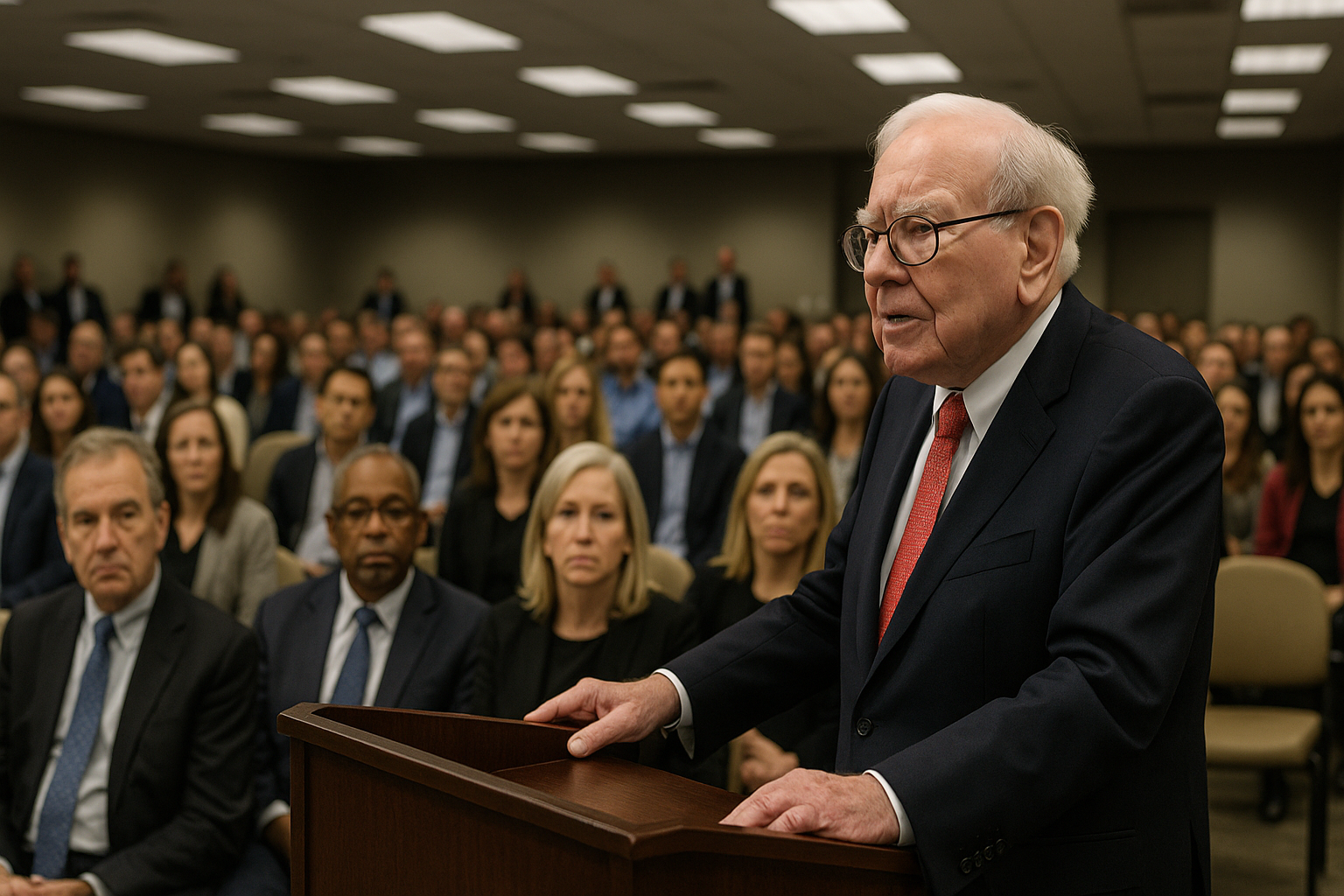
Warren Buffett did the thing nearly every powerful founder avoids: he gave up the chair.
Not the ceremonial version. Not the “I’m stepping back but still approving every bloody decision” version. On September 18, Buffett, 96, became Berkshire Hathaway’s chairman emeritus, handed the board chair to his son Howard Buffett and left Greg Abel as the man actually running the $1.1 trillion company.
That is not a retirement story. It is a management story—and most businesses will get the lesson wrong.
Buffett has separated power from purpose
Berkshire’s new structure is unusually clean.
Greg Abel, 64, is chief executive officer. He runs the company. Buffett wrote that Abel has been making the decisions that matter “for some time now,” and that he has not had to second-guess them.
Howard Buffett, 71, is non-executive chairman. He has been a Berkshire director since 1993. His job is not to play pretend CEO. It is to protect the culture and values that made Berkshire work in the first place.
Susan Decker remains lead independent director. Ajit Jain continues to oversee insurance. Adam Johnson oversees consumer, services and retail businesses. Ted Weschler remains a key investment manager.
That distinction matters. Companies routinely wreck succession by muddling two jobs:
1. Running the machine—capital allocation, operating performance, hiring, incentives and acquisitions. 2. Protecting what must not be traded away—standards, reputation, decentralisation, long-term thinking and honesty with owners.
Buffett and Berkshire have put Abel in the first seat and Howard in the second. One has operating authority. The other has cultural stewardship. Clear lines. No corporate fog. No committee designed to ensure nobody is accountable for anything.
If you are a founder, you should be slightly uncomfortable reading this. Because odds are your business is still wired around your judgement, your contacts, your approval and your emotional weather.
That is not leadership. That is a key-person risk with good branding.
The real handover began long before September 18, 2026
The press release looks sudden only if you have not been paying attention.
Abel’s CEO succession was announced years ago, and he officially took over on January 1, 2026. He arrived at Berkshire through its acquisition of MidAmerican Energy in 2000, built what became Berkshire Hathaway Energy, then became vice chairman in 2018 overseeing Berkshire’s vast non-insurance operations.
That is a 26-year apprenticeship inside the system he now leads.
Compare that with the usual circus: a board hires an outsider, pays a fortune for a glossy transformation deck, gives them 18 months to “drive strategic alignment,” then acts surprised when the staff, customers and economics refuse to cooperate.
Berkshire did the boring work. It watched Abel run a huge operating business. It expanded his remit. It gave him time to make decisions before the title changed. Then Buffett moved out of the chief executive role before surrendering the chairmanship.
That sequencing is the point.
A proper succession is not an announcement. It is a transfer of judgement, relationships, authority and confidence over years. The public announcement should be the least interesting part of it.
Abel has already started making the role his own. Reuters reported that since becoming CEO he spent $16.8 billion across two days to buy homebuilder Taylor Morrison and expand Berkshire’s Alphabet stake. Berkshire ended June with $364.7 billion in cash—an absurd amount of financial firepower, and a very public test of whether Abel can deploy capital without Buffett’s halo beside him.
That is the next chapter. Not whether Howard says the right things about culture. Whether Abel makes enough good decisions with an enormous balance sheet when nobody can credibly say, “Warren would never have done that.”
Berkshire’s culture was never folksy—it was operational
People talk about Buffett’s culture as if it is quotes on a wall, Coca-Cola at the annual meeting and a few dad jokes in a shareholder letter.
Rubbish.
Berkshire’s culture is an operating model.
Its subsidiaries—from GEICO and BNSF to industrial, energy, retail and manufacturing businesses—are allowed to run their day-to-day affairs without Omaha trying to micromanage every spreadsheet. Berkshire buys managers it trusts, sets a high bar for integrity and capital discipline, then largely lets adults behave like adults.
That sounds obvious. It is not.
Most big companies do the opposite. They centralise decisions after an acquisition, smother good operators in reporting lines, replace customer knowledge with head-office PowerPoint and call the inevitable slowdown “integration.” Then they wonder why the founder who sold them the business has mentally checked out.
Berkshire has earned its reputation because it understood a blunt truth: capable people do not need daily supervision; they need clear expectations, resources and consequences.
Howard Buffett’s role is valuable precisely because he is not there to duplicate Abel. Buffett himself described Howard as a safeguard for the culture shareholders hope never needs to be used. That is a much more useful definition of chairman than “the person who pops up for board photos and signs the CEO’s pay packet.”
A good chair protects the rules of the game. A good CEO plays to win inside them.
The overlooked risk is not Howard Buffett—it is the Buffett premium
Here is the uncomfortable bit for investors.
Berkshire is not just losing a chairman. It is losing the market’s permanent belief that Warren Buffett was sitting somewhere in Omaha, ready to deploy cash when the world lost its mind.
Through September 17, Berkshire shares had lagged the S&P 500 by about 11 percentage points in 2026, according to Reuters. The company still has immense strengths, but shareholders now have to price it as a company led by Greg Abel rather than a living investment religion led by Buffett.
That is not an insult to Abel. It is the reality of succession after an irreplaceable founder.
The stock’s performance will matter, but not because a three-month chart proves anything. The meaningful question is whether Berkshire’s decentralised model still produces intelligent capital allocation when the founder’s reputation is no longer doing half the work externally.
Abel’s big advantage is that he does not need to become Buffett. In fact, trying would be idiotic.
His job is to preserve the few principles that compound—rational capital allocation, autonomy for strong operators, patience, candour and low bureaucracy—while making decisions that suit the world in front of him. Buffett built Berkshire from a failing textile business into a $1.1 trillion conglomerate. Abel inherits a different company in a different market, with a cash pile large enough to become either a weapon or a very expensive security blanket.
The contrarian lesson: succession should reduce founder importance
Founders love being told they are indispensable. Employees often encourage it because it is easier than challenging the person who signs the cheques.
But if you are genuinely building a durable company, your aim should be to become less operationally necessary every year.
Not irrelevant. Different.
You should move from bottleneck to teacher. From decision-maker on every issue to designer of decision systems. From person with all the answers to person who has built a team capable of answering without you.
Buffett did not remove himself in one grand gesture. He created room for Abel to operate, make calls and earn trust while Buffett was still available. That is generous to the successor, fair to shareholders and brutally sensible.
The founder who waits until illness, exhaustion or a board revolt to discuss succession has not protected their legacy. They have gambled it.
What this means for you
Whether you run a 12-person startup, a family company or a listed business, steal the useful bit of Berkshire’s playbook tomorrow.
First, name your actual successor. Not a vague “leadership team.” One person. If you cannot identify them, you have a talent problem or an honesty problem.
Second, transfer decisions before titles. Give that person a meaningful budget, real hiring authority and ownership of a painful business problem. Watch how they operate when the answer is not obvious.
Third, write down the non-negotiables. Keep it short: how customers are treated, what risks you will not take, what gets escalated, how bad news travels and what sort of person does not belong in the business. Culture that only exists in the founder’s head dies with the founder’s attention span.
Fourth, separate governance from management. A chair, board member or adviser should challenge the CEO and defend the standards—not quietly run the company from the sidelines.
Finally, test the business without you. Take two weeks away from decisions, not just email. If everything slows down, breaks or waits for your blessing, do not congratulate yourself on being essential. Fix it.
Warren Buffett’s final handover is not impressive because he is Warren Buffett. It is impressive because he did the hard, unglamorous thing powerful people hate: he made the institution bigger than himself.
That is the job. Build something that still works when your name is no longer on every decision.
Sources
- Berkshire Hathaway: Warren Buffett Becomes Chairman Emeritus; Howard Buffett Elected Chairman
- Axios: Warren Buffett steps down as Berkshire Hathaway chairman
- Reuters: Warren Buffett steps down as Berkshire chairman, replaced by his son Howard
- Reuters: Key executives running Berkshire Hathaway’s $1 trillion empire