Better.com’s $1.5B Loss: Vishal Garg’s Governance Fight
If your company loses more than $1.5 billion and 90% of its share value, demanding your CEO chair back is not founder grit. It’s a governance test.
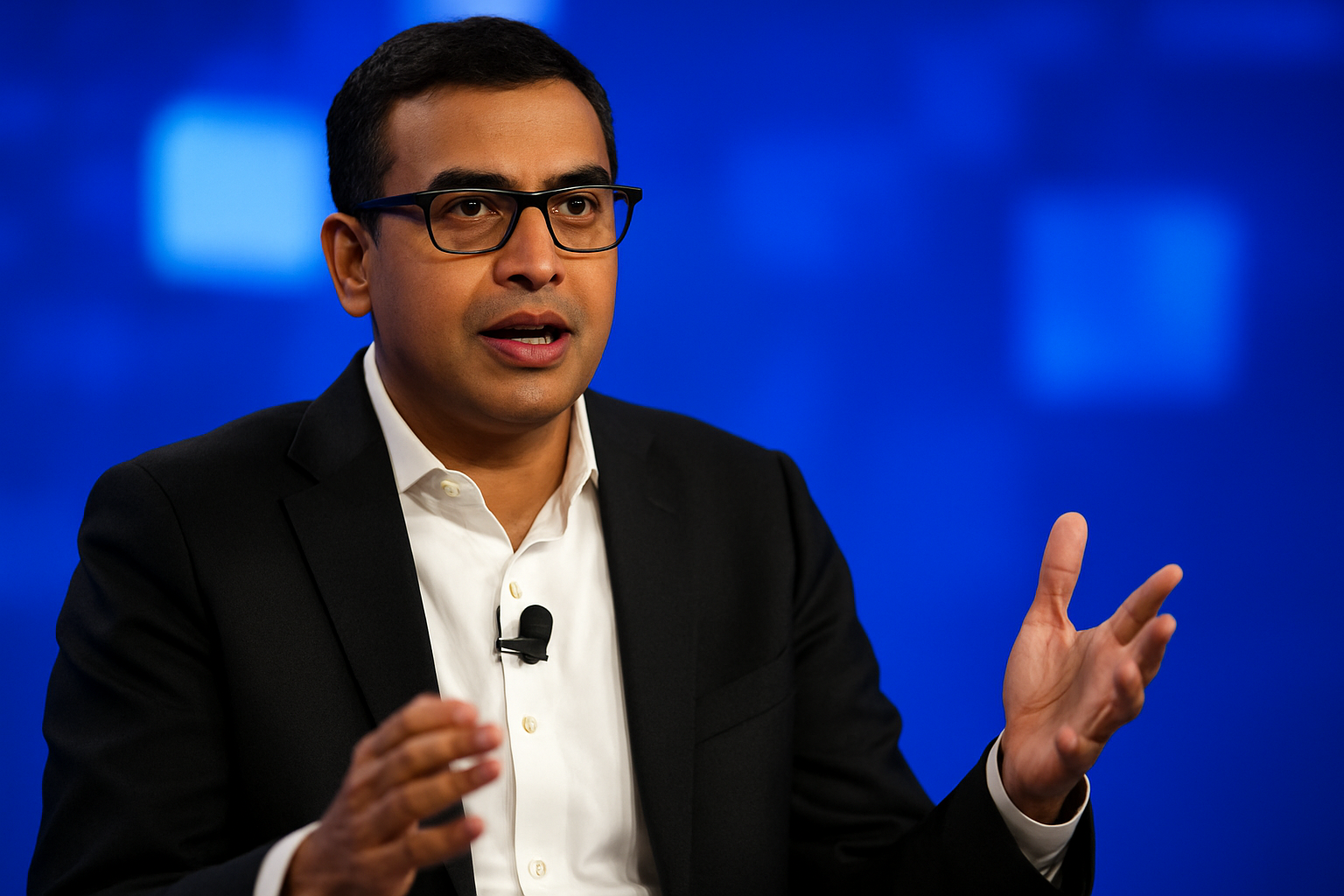
Better.com’s founder wants his job back after the company’s board says it oversaw more than $1.5 billion in net losses since 2022 and a share-price fall of more than 90% under his leadership.
That isn’t founder grit. It’s a very public test of whether a board is there to protect the business—or simply mind the furniture until the founder storms back in.
Vishal Garg was out on August 3. Then the knives came out.
On August 3, Better Home & Finance replaced founder and CEO Vishal Garg with board member Daniel Lewis as interim CEO. The announcement was polite enough to make your teeth hurt: Garg had “mutually agreed” to transition out, would remain a director, and would help ensure an orderly handover.
Lewis was not a lifelong Better operator. He had joined the board only days earlier, on July 27. His background includes running Ascend Fundraising Solutions and founding the special-situations investment firm Orange Capital. Better’s chairman, Harit Talwar, said Lewis would execute the board-approved operating plan and set strategic direction.
Then the orderly handover lasted about five minutes.
By August 10, Garg was calling for the board to go. On August 13, he said he had support from shareholders representing a majority of Better’s voting power to replace directors and restore him to control. His proposed comeback package included a $1 salary until profitability, a planned $5 million personal investment, a $30 million buyback, and a future search for a long-term CEO.
That last bit is the giveaway. Garg’s case is not really “put me back in charge forever.” It is “put me back in charge long enough to decide who gets to replace me.”
No thanks.
A board cannot remove a founder because he is annoying, intense, eccentric, or difficult in meetings. Plenty of excellent founders are all four before breakfast. But it absolutely can—and should—act when the argument is no longer about style. At Better, the argument is about performance, credibility, control and whether the company can attract customers, employees, capital and partners while its former CEO tries to retake the wheel through a public brawl.
The business is improving. That does not make the founder untouchable.
Here is the uncomfortable part for the board’s supporters: Better is not a dead company.
For the second quarter ended June 30, 2026, Better reported $1.67 billion in loan volume, up 38% year on year. Revenue rose 28% to $54.7 million. Platform loan volume reached $912 million, or 55% of total loan volume. Its net loss improved to $30.6 million, from $36.3 million a year earlier.
Those are genuine improvements. And they matter because mortgage lending is a horrible place to bluff. It is capital-intensive, regulated, rate-sensitive and packed with competitors who will happily eat your lunch for a fraction of a point.
Better also says it expects annualised cost reductions above $45 million by the end of 2026, up from its previous $25 million target. Its pitch is that Tinman, the company’s mortgage technology platform, can make loan manufacturing cheaper through automation, enterprise partnerships and broker distribution rather than expensive consumer acquisition.
Fair enough. That is a sensible strategy.
But improving from a bad position is not the same as earning a lifetime exemption from accountability. A company can have a real product, growing volumes and a founder who is still the wrong person to run it.
Better guided for another adjusted EBITDA loss of $15 million to $18 million in the third quarter. So this is not a clean turnaround where the board has fired the genius moments before the champagne arrives. The company is still losing money. It still needs a permanent CEO. It is still pursuing the sale of its UK banking subsidiary, Birmingham Bank. It still needs its people focused on borrowers, brokers, regulators and execution—not on boardroom warfare.
This isn’t about the 900-person Zoom call. It’s worse than that.
Everyone remembers the 2021 Zoom call in which Garg fired roughly 900 employees. It became the sort of corporate disaster that follows a chief executive around forever: partly because it was brutal, partly because it was televised by the internet, and partly because it confirmed what people already suspected about the gap between “hard-driving” and simply treating staff like disposable rubbish.
But that episode is not the central issue now.
The more serious issue is governance. Better’s board says Garg tried to assemble shareholder support to replace a majority of directors and reinstall himself, while the company alleges his campaign involved misleading statements and improper solicitation. Garg disputes the board’s version and has argued that shareholders should have their say.
That dispute will run through lawyers, filings and whatever theatre comes next. I am not pretending I can adjudicate securities-law claims from the other side of the world.
But I know this: when a founder’s response to being removed is to immediately destabilise the board, demand directors resign, and campaign to resume control, every employee gets the same message—nothing is settled, nobody is safe, and the real work can wait.
That is poison in a turnaround.
A lender is not a pirate ship. It relies on process, controls, counterparties and trust. You can sell “move fast and break things” to a social-media startup. Try selling it to the people whose mortgages, underwriting files and regulatory obligations are passing through your systems. Good luck with that.
The overlooked angle: Daniel Lewis has not won anything yet.
It would be easy to write this as a neat morality play: bad founder out, professional manager in, adults restored to the room.
That is corporate fairy dust.
Daniel Lewis is interim CEO, not the messiah. He joined the board shortly before taking the chief executive role. He now has to demonstrate that the board did not merely remove a problem; it installed a better operating system.
The test is brutally simple:
- Can Better keep growing loan and platform volume without buying growth at stupid economics? - Can it turn Tinman from a good technology story into durable, high-margin enterprise revenue? - Can it reduce costs without gutting the people who actually make mortgages close? - Can it recruit a permanent CEO of genuine quality while the founder remains a director and a very noisy shareholder? - Can it convince employees that performance—not proximity to the founder or board—is what determines their future?
If Lewis and the board cannot answer those questions with results, not PowerPoint slides, then Garg’s supporters will have a legitimate opening. Boards do not get points for firing someone. They get points for leaving the company in better hands.
Still, the board has one decision right already: a founder’s ownership, history and passion do not automatically entitle him to operational control. Founders build the asset. They do not own the right to endlessly run it badly.
The real lesson for founders: build succession before you need it.
The best founders I know hate this idea because it feels like planning their own funeral. Tough luck. If the business only functions with one person’s authority, moods and relationships holding it together, you have not built a company. You have built an expensive personality cult.
Garg built Better into a business that says it has funded more than $110 billion in loans since 2016. That is real achievement. It deserves acknowledgement.
But achievement is not a blank cheque.
A serious founder should want a board capable of removing him if the facts warrant it. Not because directors are wiser by default—they often aren’t—but because someone must have the legal and practical ability to say, “Mate, this is no longer working.”
The alternative is worse: a board full of ceremonial nodders, employees terrified to deliver bad news, and investors discovering too late that their governance amounted to a framed mission statement in reception.
What this means for you
If you run a business, use this tomorrow.
First, separate founder value from founder control. Write down the jobs only you can do: product instinct, recruiting, sales, capital raising, culture. Then write down the jobs a capable executive could do better: cadence, controls, operating discipline, succession. Be honest. Your ego is not an org chart.
Second, give your board a real mandate before the crisis. If directors cannot challenge strategy, review CEO performance and prepare succession without triggering a civil war, they are ornaments. Replace them.
Third, measure progress against cash and trust, not just growth. Better’s 38% loan-volume growth is encouraging. Its losses still matter. In your business, ask: are we growing profitably, are customers staying, and can our best people sleep at night?
Finally, never confuse noise with leadership. A public fight can feel decisive because it is loud. It usually destroys value because it distracts everyone from the only thing that matters: building a business people want to work for, buy from and invest in.
The founder who can step aside when the business needs something different is not weak. He is rare. And rare is usually where the real money is.