Better.com’s 52.02% Founder Revolt Is a Boardroom Failure, Not a Comeback
A founder removed as CEO in August used 52.02% of Better.com’s voting power to sack five directors. If your succession plan can be reversed in two months, you never had one.
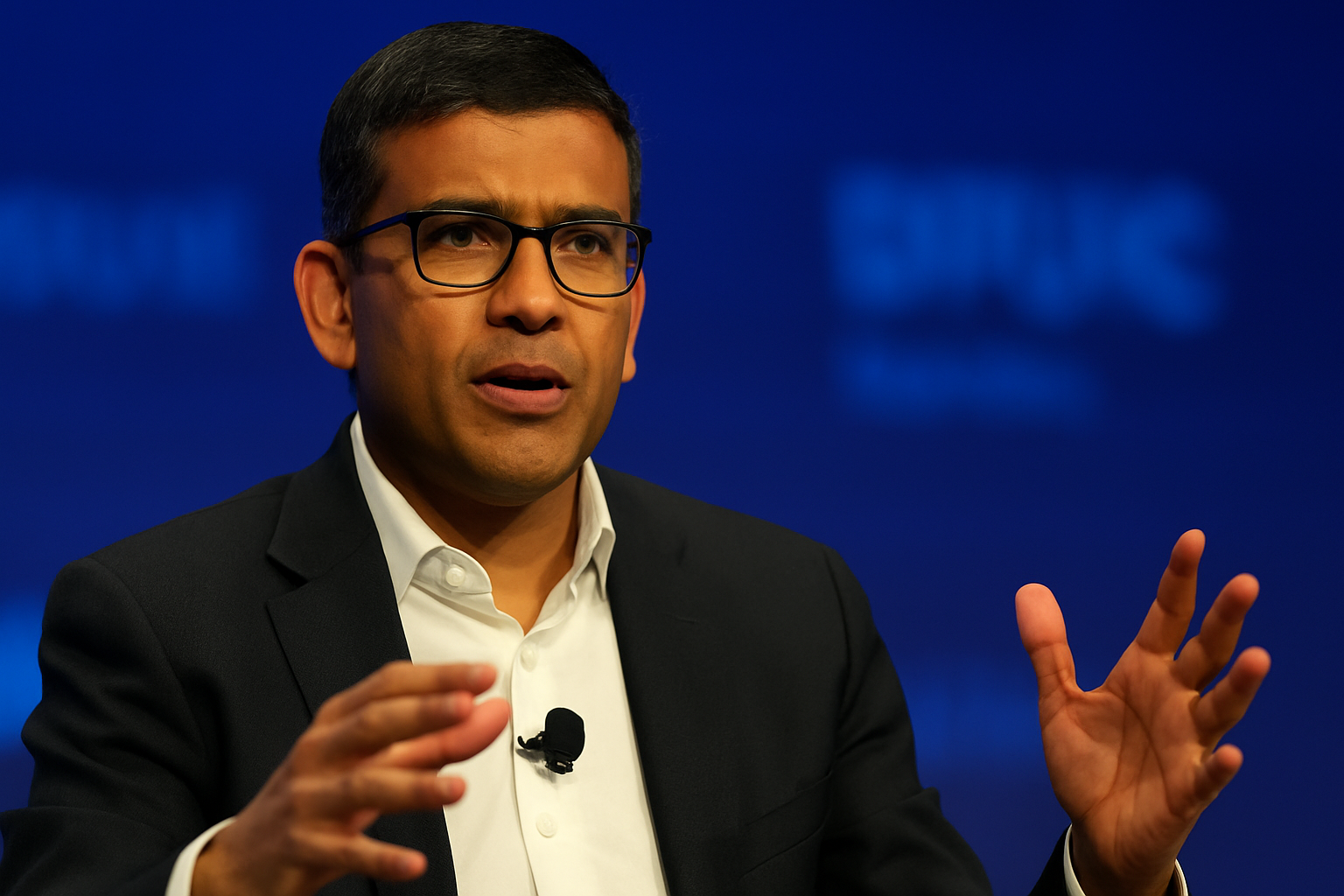
Better.com’s board didn’t lose a proxy fight. It exposed that its CEO succession plan was held together with chewing gum.
In August, the online mortgage lender removed founder Vishal Garg as chief executive and installed director Daniel Lewis as interim CEO. Less than two months later, shareholders representing 52.02% of Better’s voting power backed Garg’s campaign to remove Lewis, chairman Harit Talwar and three other directors. That is not normal corporate rough-and-tumble. That is a public admission that the people supposedly governing the business did not have durable control of the mandate, the cap table or the story. ([sec.gov](https://www.sec.gov/Archives/edgar/data/1297602/000092189526002683/dfan14909002_09302026.htm))
And before anyone starts calling this a triumphant founder comeback: slow down. A board getting rolled does not prove the founder was right. It proves the board was not credible enough to win.
The 52.02% vote that blew up Better’s reset
As of Monday, October 19, 2026, the most consequential recent leadership story is not another polished CEO appointment. It is Better’s spectacular governance failure.
On August 3, Better announced that Garg would transition out of the CEO role, while remaining a director. Daniel Lewis, who had joined the board shortly before, became interim CEO. The company said Lewis would manage the organisation, execute the board-approved operating plan and set strategy. That is a hell of a mandate to hand someone in an interim job. ([sec.gov](https://www.sec.gov/Archives/edgar/data/1297602/000119380526001110/ex991to13da500322betr_081826.pdf?utm_source=openai))
Garg then moved to remove five directors: Lewis, Talwar, Arnaud Massenet, Bhaskar Menon and Prabhu Narasimhan. The company fought back hard. Its special committee said Garg’s campaign risked handing him extraordinary control, warned that he could become the only remaining director, and pointed to more than $2 billion in cumulative net losses during his decade-plus leadership. ([sec.gov](https://www.sec.gov/Archives/edgar/data/1835856/000162828026059438/betr-defa14anotice2111.htm))
Garg’s side argued the board had disrupted a turnaround just as Better’s operating numbers were improving. Better’s own second-quarter results showed loan volume of $1.67 billion, revenue of $54.7 million and a net loss of $30.6 million—still a loss, obviously, but an improvement from the prior year. ([investors.better.com](https://investors.better.com/quarterly-results?utm_source=openai))
Then the vote landed. Shareholders representing 52.02% of Better’s outstanding voting power supported removing the five directors. Lewis was out. So was the board structure that had removed Garg.
The key fact is not that a founder fought back. Founders fight. The key fact is that he won control through written shareholder consent less than two months after the board tried to create a clean break.
That is an astonishingly short shelf life for a leadership transition.
A CEO change is not a press release
Boards love to talk about succession as though it is a calendar event: announce the outgoing chief, thank them for their service, install the successor, publish a photo of handshakes and call it orderly.
Rubbish.
Succession is a transfer of authority. If the outgoing founder still has voting influence, personal loyalty inside the company, relationships with major investors and a competing public narrative, you have not transferred authority just because you changed the title on LinkedIn.
Better’s board appears to have treated the CEO role as the centre of power. It was not. The centre of power was the combination of Garg’s ownership, founder status and ability to persuade shareholders that the board had interrupted rather than repaired the business.
That is why Lewis’s appointment was always vulnerable. He may have had investment, governance and operating experience, but he had not built the company, did not own its history and had no long runway to establish an independent strategic case before the fight became public. The interim label made that worse. “Interim” tells employees, customers and investors that the person in charge may not actually be in charge for long.
You cannot run a business through a contested temporary arrangement. People freeze. Good executives wait to see who survives. Customers smell instability. Every hard decision becomes political because nobody knows whose strategy they are executing.
The overlooked problem: both sides were arguing about control, not the customer
Here is the contrarian bit: I do not think the main lesson is “never sack a founder.” Sometimes you absolutely should. A founder can be brilliant at creating a business and hopeless at running the next version of it. Founders are not sacred cows. I have seen plenty of them become the bottleneck they insist they are protecting everyone from.
The Better lesson is this: do not remove a founder unless you have a better operating mandate, a settled board and enough shareholder backing to make the decision stick.
The company’s case against Garg was serious. Its filings pointed to huge accumulated losses and argued that abruptly removing five directors would weaken the board. Garg’s case was also serious enough to win the vote: he said the company was gaining momentum and that the leadership change had wrecked continuity. ([sec.gov](https://www.sec.gov/Archives/edgar/data/1835856/000162828026059438/betr-defa14anotice2111.htm?utm_source=openai))
But notice what disappears when adults in the boardroom start throwing furniture: the customer.
Better is meant to be building a mortgage and home-finance platform in a brutal market. That requires lower acquisition costs, reliable underwriting, sharper technology, disciplined risk management and a real path to profitability. It does not require an executive soap opera.
The company’s Q2 numbers show why this is especially frustrating. A business can have rising revenue and loan volume while still losing money. That is precisely when governance needs to be boring, clear and ruthless about execution. Instead, Better spent weeks fighting over directors, consent cards, court actions and competing claims of legitimacy.
No customer gets a better mortgage because the board wins an argument.
Why investors should not cheer too early
A 52.02% win sounds decisive. It is decisive legally. It is not decisive commercially.
Garg’s victory removes a board majority. It does not remove the underlying problem: Better still needs stable governance, independent directors, a properly defined CEO role and an operating plan that turns improving activity into durable profits.
In fact, the win raises the standard. When a founder regains influence after being pushed out, the excuses run out. You cannot spend months saying the board destroyed value, then return to power and blame the furniture. The next numbers matter more than the next press release.
There is another trap here. Founder-led companies often confuse loyalty with alignment. They are not the same thing. Loyalty says, “I trust him because he built it.” Alignment says, “The incentives, decision rights, board oversight and performance measures are clear enough that the company works even when personalities clash.”
Real businesses need the second one.
If Better now appoints directors who merely agree with Garg, it will have swapped one governance failure for another. A founder needs independent directors precisely because they are willing to say, “No mate, that’s a terrible idea,” before the market says it more expensively.
What this means for you
Whether you run a startup, sit on a board or own shares in a founder-led business, do three things this week.
First, map where power actually sits. Not the org chart—the real map. Who owns the voting rights? Who controls investor relationships? Which executive has employee loyalty? Who can credibly tell the market a competing version of events? If those answers point to someone outside the CEO role, your succession plan is incomplete.
Second, never appoint an interim CEO without a 90-day authority plan. Put it in writing: what decisions can they make, what must come to the board, what strategic choices are locked, what metrics determine whether they become permanent, and who communicates what to staff. “Interim” must not mean “power vacuum.”
Third, separate the founder question from the CEO question. A founder can remain a major shareholder, product visionary or board member without being chief executive. But that only works if the role is explicit, the decision rights are real and everyone stops pretending ambiguity is diplomacy.
Better.com’s 52.02% revolt is not a romantic story about a founder beating the suits. It is a warning label.
If your leadership transition can be overturned before the new CEO has had time to rearrange the office plants, you did not manage succession. You staged a coup with a PowerPoint deck.