BlackRock’s $25B STACK Talks Show AI Is Buying Power
A $25 billion data-centre deal can still be a stupid purchase. BlackRock and IFM are not buying servers from Blue Owl—they’re buying a claim on scarce electricity.
A $25 billion data-centre deal can still be a stupid purchase.
BlackRock and IFM Investors are not really buying servers from Blue Owl Capital. They are buying a very expensive claim on scarce electricity—and calling it AI infrastructure because that sounds sexier in a pitch deck.
The deal is not done. The signal already matters.
On September 24, Bloomberg reported that a consortium backed by BlackRock and IFM had entered exclusive talks to acquire STACK Infrastructure’s Asia-Pacific data-centre portfolio from Blue Owl. The reported value: roughly US$20 billion to US$25 billion.
That is not a signed deal. It is not cash in the bank. The buyer group is preparing to do due diligence, and exclusivity is where clever people can still discover they were about to overpay.
But don’t miss the bigger point because the lawyers have not finished sharpening their pencils: serious institutional capital is prepared to put up to US$25 billion behind a portfolio of data centres across Asia-Pacific.
That tells you what AI has done to infrastructure investing. It has made a boring old constraint—power, land, fibre, permits and cooling—the asset everyone suddenly wants to own.
The money is chasing the picks and shovels again. Except this time the shovel needs a substation, years of grid planning and enough political goodwill to avoid becoming the local villain when households see their electricity bills.
STACK is selling something much harder to build than a building
Data centres are routinely described as real estate. That is only half true, and it leads people to ask the wrong questions.
A warehouse is a building. A useful AI data centre is a coordinated system: land in the right place, reliable high-voltage power, network connectivity, cooling, construction capability, customers with enormous compute demand, and permissions that do not get bogged down for five years.
Miss any one of those and you do not own digital infrastructure. You own an expensive concrete box with a very impressive artist’s rendering.
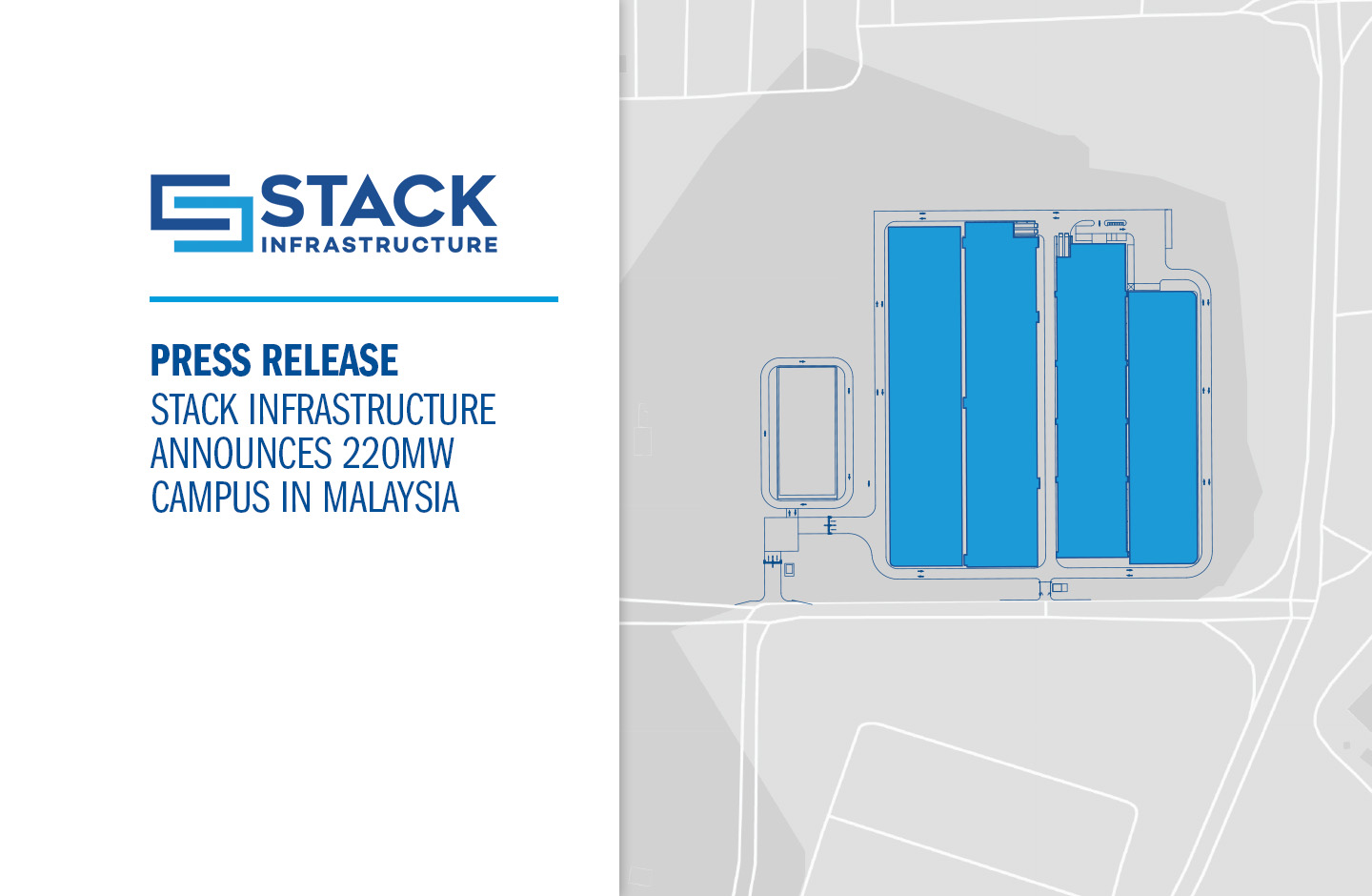
STACK was established in 2019 and expanded into Asia-Pacific in 2021. Its regional footprint includes assets and developments in Australia, Japan and Malaysia. The company delivered its first Australian facility in Melbourne in 2023. It also announced a 220-megawatt Malaysian campus, supported by 275kV infrastructure, with initial delivery scheduled for the fourth quarter of 2026.
That last detail matters more than most people realise. Megawatts are becoming the lingua franca of the AI economy because chips do not run on vibes. Every supposedly magical AI product eventually turns into a procurement conversation about power availability, transformers, backup generation, water, network capacity and construction lead times.
This is why a portfolio can command an eye-watering headline valuation. The buyer is not starting from scratch. It is buying a position in the queue.
And in infrastructure, getting to the front of the queue is often the whole game.
Why BlackRock and IFM would want it
BlackRock’s involvement is through the Artificial Intelligence Infrastructure Partnership, or AIP. This is not some speculative venture fund punting on the next chatbot. It was built to deploy very large pools of capital into AI infrastructure.
The partnership has already been associated with a much bigger statement of intent: the approximately US$40 billion acquisition of Aligned Data Centers by an investor group including BlackRock, Nvidia and Microsoft.
That is the tell. The same capital is not merely betting that AI software businesses will grow. It is betting that compute demand will force companies to rent, build and consume enormous quantities of physical capacity for years.
IFM, meanwhile, knows what it is doing around long-life infrastructure. That matters because data centres are a strange hybrid asset. They have infrastructure-like characteristics—large upfront capital needs, long contracts, critical-service customers—but technology cycles can move much faster than a toll road or airport.
The attraction is obvious. If demand remains hot and capacity is constrained, the owner of powered, connected data-centre capacity can enjoy pricing power. The danger is obvious too. If you pay a growth multiple for an asset that becomes technically second-rate or power-constrained, you have bought a very costly yield trap.
This is why the US$20 billion-to-US$25 billion range should make operators sit up straight. At that price, you are not being paid to be vaguely competent. You need to be right about occupancy, customer quality, development cost, power access, financing costs and the durability of AI demand.
That is a lot of things to be right about at once.
The overlooked risk: AI demand is not the same as AI economics
Here is the contrarian bit: the rush into data centres may be sensible, and plenty of individual deals may still be priced like nonsense.
People keep making the same intellectual mistake they made in earlier booms. They see genuine demand and assume every asset connected to that demand is therefore a great investment at any price.
Nope.
There was genuine demand for internet connectivity in the late 1990s. There was genuine demand for mobile data. There was genuine demand for solar generation. Plenty of investors still managed to lose their shirts by paying too much, building too early or funding weak operators.
AI compute demand can be real while returns on AI infrastructure become mediocre. Those are not contradictory ideas. They are often partners.
If the most valuable input is power, then the risk is not simply whether people keep using AI. The risk is whether data-centre owners can secure power economically enough to earn a return after everyone else has piled in.
A data centre can be fully leased and still disappoint its owner if construction costs blow out, energy costs rise faster than contracts allow, debt is expensive, or a customer with enormous bargaining power captures most of the economics.
The hyperscalers are not mugs. Microsoft, Amazon, Google and the other giants understand that the infrastructure suppliers need them. If capacity becomes abundant, they will negotiate like absolute animals—as they should.
The market’s current excitement is built on scarcity. Smart operators must ask what happens when supply responds.
Australia has a seat at the table—but no free lunch
As an Australian, I find the regional angle especially interesting. STACK’s Asia-Pacific portfolio includes Australian assets, and Australia has obvious attractions for data-centre development: land, established institutional capital, technical talent, strong connectivity and a relatively stable operating environment.
But we should not get carried away and pretend a few giant campuses automatically equal national prosperity.
The useful question is: what remains in Australia after the build-out?
If the answer is upgraded grid infrastructure, better connectivity, skilled jobs, reliable energy investment and local businesses that can sell into a growing ecosystem, brilliant. That is a proper industrial tailwind.
If the answer is imported equipment, overseas cloud customers, pressured local grids and a handful of press releases, then we have simply become a very expensive extension lead for somebody else’s AI ambitions.
Governments love announcing big-ticket projects because the numbers look terrific in a headline. Operators should care about the boring details: grid connection agreements, power pricing, water use, planning certainty, local procurement and whether the project creates a durable ecosystem rather than a temporary construction spike.
That is where actual wealth gets created—or quietly exported.
What this means for you
If you are a founder, do not use “AI infrastructure” as a substitute for a business model. Ask the hard question: what bottleneck do I control that gets more valuable as AI scales?
It may be power access. It may be workflow data. It may be distribution into an industry. It may be trusted customer relationships. It may be software that reduces the cost of operating physical infrastructure. But it has to be something real.
If you are an investor, stop treating every AI-adjacent company as interchangeable. Separate the businesses selling scarce capacity from the businesses selling a story about capacity. Then ask three questions before you get excited:
1. What is actually scarce here? A customer list, a permit, a power contract, a technical capability or merely shares available to buy? 2. Who captures the economics? The asset owner, the chip supplier, the cloud platform, the power provider or the customer? 3. What breaks if growth slows by 30%? If the answer is “the valuation,” you are not investing. You are hoping.
If you run a business, take an even more practical lesson from the STACK talks: secure critical inputs before you desperately need them. In your world that might be talent, distribution, supply, regulatory approvals, data or financing. By the time everyone agrees an input is strategic, it is usually expensive.
BlackRock and IFM are looking at STACK because the market has decided that powered data-centre capacity is strategic. Maybe they will strike the deal. Maybe due diligence will expose a price that makes no sense and they will walk.
Either outcome is fine.
The useful takeaway is simpler: the biggest fortunes are often made by owning the bottleneck before the crowd works out there is one. The disastrous losses come from paying any price once the crowd has worked it out.