Bloomberg Muni Index: $1.8B Exit Creates a 4.3% Yield Opportunity
Investors yanked $1.8 billion from muni funds because prices fell. High-income investors who panic-sell may be handing over tax-efficient income at a far better price.
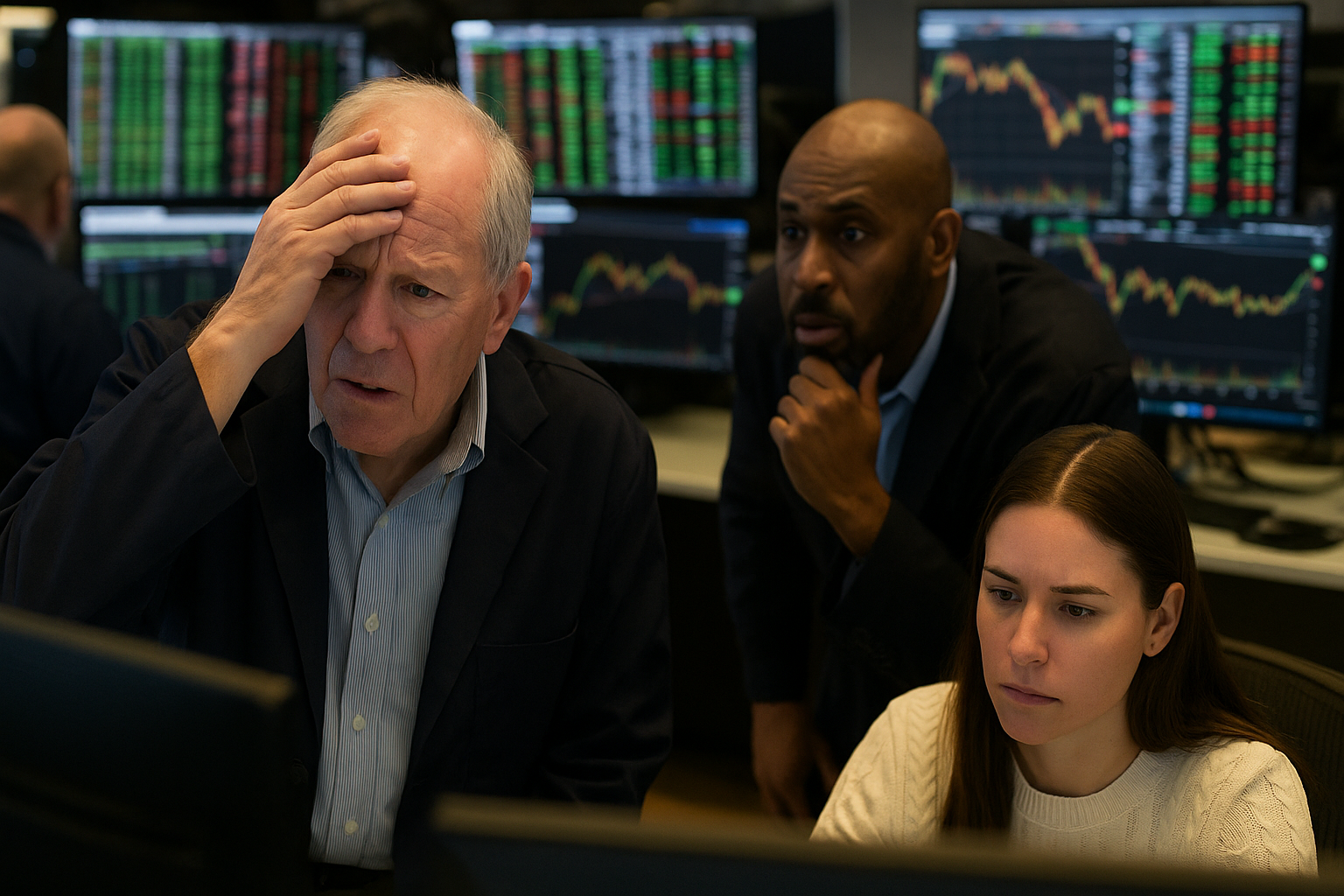
Investors yanked $1.8 billion from muni funds because prices fell. Most people who own municipal bonds are doing the one thing a bond investor cannot afford: confusing a falling statement with a broken investment.
This week, investors pulled about $1.8 billion from municipal-bond funds. If you are a high-income investor selling because the line on your app went red, you may be handing a much better deal to somebody who understands basic maths.
The $1.8 billion exit is the story — but not for the reason people think
Municipal bonds are meant to be the boring bit of a portfolio. States, cities and local authorities borrow money; investors receive interest that is generally exempt from federal income tax. Nobody buys them for cocktail-party stories. They buy them for dependable, tax-efficient income.
And yet the market has behaved like a nervous bloke at the pub who has just read one scary headline.
For the week ending Wednesday, municipal-bond funds suffered roughly $1.8 billion of withdrawals, according to a JPMorgan note cited by Bloomberg. It was the largest weekly outflow since April 2025 and snapped a 21-week run of inflows. Municipal bonds are on track for a third straight month of declines, while a Bloomberg gauge showed the market down about 1.7% for the year through this month’s volatility.
That is unpleasant if you bought recently and expected bonds to behave like cash. But bonds are not cash. They are loans with a price that moves when the market demands a different return.
The cause is hardly mysterious. Inflation concerns, higher Treasury yields and a large pipeline of new municipal issuance have pushed prices down and yields up. The amount of bonds put out for bid reportedly climbed to about $2.5 billion, the highest level since April 2025. When fund investors want out at the same time, managers must sell what they can sell. That creates more pressure on prices, which scares more investors, which creates the usual little feedback loop.
That is not a clever theory. It is just how markets work when people use daily-liquid funds to own assets they only pretend are as liquid as a savings account.
The number worth watching is 4.3%, not the red ink
The Bloomberg Municipal Bond Index was yielding about 4.3% on Friday, according to CNBC. For the right investor, that is not a sleepy number.
A 4.3% tax-exempt yield is roughly equivalent to a 7.3% taxable yield for somebody facing the top federal rate plus the 3.8% net investment income tax. Put differently: a taxable bond needs to pay materially more than 4.3% before that high-bracket investor is genuinely better off after tax.
That is the bit retail investors routinely stuff up. They compare a muni yield with a Treasury or corporate-bond yield before tax, then declare the taxable bond the winner. It is the financial equivalent of comparing your gross salary with somebody else’s take-home pay and pretending the numbers mean the same thing.
They do not.
Now, this does not mean every investor should rush out and buy the longest municipal bond they can find. That would be idiotic. The value of tax-exempt income depends on your actual tax bracket, where you live, what you own already, your time horizon and whether you need the money soon.
But if you are in a low tax bracket, municipal bonds may be less compelling than taxable alternatives. If you sit in a high bracket, particularly in a high-tax state, dismissing munis because the stated yield looks lower can be an expensive habit.
The point is not that municipal bonds are suddenly magic. The point is that the market is finally offering a price worth examining.
Why heavy issuance is not automatically bad news
September municipal issuance is expected to be roughly $37 billion, about 50% higher than a year earlier, CNBC reported. More supply has been one reason prices have been under pressure.
Most investors hear “more supply” and stop there. They think it must be bad.
It is bad for owners who wanted prices to rise immediately. It is not automatically bad for a buyer with cash, patience and taxable income. More issuance means more bonds to choose from: more maturities, more structures, more issuers and potentially better pricing. If you are building an income portfolio rather than trading a chart, choice is useful.
This is where fund flows matter more than the economic headlines. A city issuing debt to build infrastructure is not the same thing as a company issuing junk bonds because it cannot pay the bills. Municipal credit analysis still matters enormously, but the current weakness is also being driven by technicals: rate volatility, supply and investors running from recent losses.
That distinction matters because temporary selling pressure can create opportunity without requiring a grand prediction about the economy.
You do not need to know where the 10-year Treasury yield will be next Tuesday. You need to know whether the income on offer today compensates you for duration, credit risk, liquidity risk and tax treatment.
That is investing. The rest is television.
The overlooked risk: a fund is not a bond
Here is the part people hate hearing: owning a municipal-bond fund is not the same as owning a municipal bond.
With an individual bond, assuming the issuer remains able to pay, you have a defined maturity date and a contractual stream of interest. Its market value can fall before maturity, but you know what you own and when the principal is due back.
With an open-end fund or ETF, you own a moving basket. The manager is constantly dealing with inflows, outflows, purchases, sales, maturities and index changes. You may get diversification and convenience, which are real benefits. But you also inherit fund-flow risk and, in some cases, a perpetual interest-rate exposure.
That is exactly why the $1.8 billion withdrawal matters. It is not proof that municipal credit has collapsed. It is evidence that people who wanted daily liquidity were selling a market that can become awkward when everyone wants the exit at once.
For some investors, a low-cost, diversified muni fund remains the sensible answer. For others with larger portfolios, a ladder of high-quality individual bonds can be worth considering because it matches known future cash needs with known maturities. Neither approach is universally superior. Anyone claiming otherwise is trying to sell you something.
But you should at least know which game you are playing.
The contrarian angle: do not chase the longest bond for a flashy tax-equivalent yield
The temptation now will be obvious. A 20- or 30-year municipal bond can advertise a more attractive yield than a short bond. CNBC reported that strategists at Bank of America, Barclays and Hilltop Securities saw value in gradually adding high-quality municipal exposure, particularly at longer maturities.
Fair enough. But “gradually” is doing a lot of work in that sentence.
Longer-dated bonds can get hit harder if yields keep rising. Their prices have more sensitivity to interest-rate moves. A tax-equivalent yield that looks brilliant on a spreadsheet can be miserable if you need to sell in two years.
I have made enough investing mistakes to know that yield is often just risk wearing a nice shirt.
The better question is not, “What is the highest tax-equivalent yield I can buy?” It is, “What maturity matches the date I may actually need this money?” If your goal is to fund a house deposit, a business acquisition or tuition inside five years, loading up on long bonds because somebody said 7%-plus tax-equivalent income is available is not sophisticated. It is mismatched.
A boring ladder across several maturity dates may look less impressive in a screenshot. It can be far more useful in real life.
What this means for you
Here is the practical version. No waffle, no prediction addiction.
First, work out whether municipal bonds are even relevant to you. Look at your marginal federal tax rate, any applicable investment-income tax and your state tax position. If you are not paying much tax, do not force a tax-exempt product into your portfolio just because it is fashionable.
Second, compare income after tax. Do not compare a 4.3% muni yield with a taxable yield at face value. Calculate the taxable-equivalent yield using your own marginal tax rate. If you cannot be bothered doing that, you are not ready to buy a bond for income.
Third, separate money by job. Emergency money belongs in cash-like vehicles. Money needed in the next few years should generally not be taking big duration bets. Long-term capital can tolerate more price movement, but only if you genuinely will not panic-sell when the statement looks ugly.
Fourth, check what you already own. If you hold a broad muni fund, know its duration, fees, concentration and whether it owns the sort of lower-quality credits you would be uncomfortable holding through a rough patch. “Municipal” is not a risk rating.
Finally, do not buy all at once because a market has become cheaper. Buy in tranches if the asset suits your plan. That is not cowardice; it is risk management. The market may get better before it gets worse, or worse before it gets better. Nobody knows.
The wealthy habit is not always buying the dip. It is knowing when a falling price has improved the deal — and having cash, patience and a plan when everyone else is selling the boring stuff.