BLS’s 29,000 Jobs Warning: Why the S&P 500 Rally Isn’t a Victory
America added 29,000 jobs in September and Wall Street threw a party. That is not confidence; it is a market celebrating the chance the Fed won’t make money even more expensive.
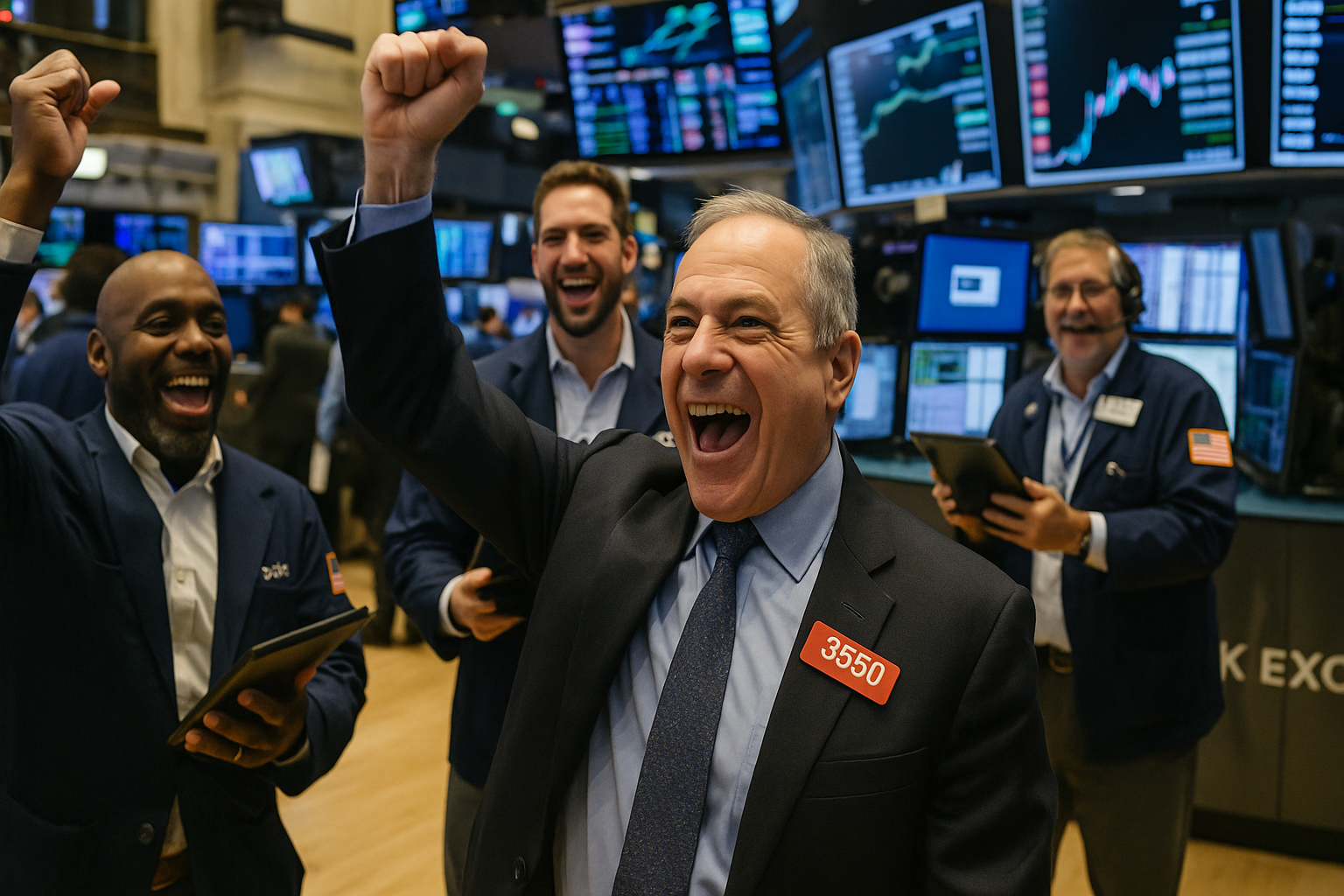
America added 29,000 jobs in September and Wall Street threw a party. That is not confidence; it is a market celebrating the chance the Federal Reserve won’t make money even more expensive.
That is a bloody strange thing to cheer — and it tells you exactly where the economy is sitting.
The number that matters is not 29,000. It is 89,000.
The US Bureau of Labor Statistics reported on Friday, October 2, that nonfarm payrolls rose by just 29,000 in September. Economists had expected roughly 84,000 to 90,000.
That is a miss of about 55,000 to 61,000 jobs in one month. Then the BLS went back and cut another 60,000 jobs from its July and August estimates. July was revised from a gain of 21,000 to a loss of 10,000. August was trimmed from 162,000 to 133,000.
So this was not one soft monthly print. It was a downgrade to the recent past as well.
The unemployment rate ticked from 4.1% to 4.2%. That is not recession territory on its own, and anyone claiming the sky is falling from one report is selling fear by the kilogram. But it is a clear change in direction when hiring has already been running at an average of only 45,000 jobs a month over the prior 12 months.
The relevant release landed on Friday, October 2, 2026. October 3 is a Saturday, so there is no fresh US payroll report to rescue the story this weekend.
Wall Street’s immediate response was predictable: stocks rose, the Nasdaq pushed to an intraday record, and traders cut back expectations for an October rate increase. The logic is straightforward. Fewer jobs and softer wage pressure reduce the chance that the Fed has to keep tightening.
That is the good news.
The bad news is that markets are now treating weaker economic data as good news because the alternative — sticky inflation and even higher interest rates — scares them more.
The Fed has become the market’s co-founder
For years, too many investors have treated the Federal Reserve like a venture capitalist with an unlimited cheque book. Bad data? Great: rate cuts might come. Strong data? Also great: earnings are strong.
That game gets ugly when inflation remains too high and bond yields refuse to behave.
The September report did cool near-term rate-hike bets. But it did not magically make the cost of capital cheap. The federal-funds target range sits at 3.75% to 4.00% after the Fed’s September increase. Meanwhile, longer-dated Treasury yields have been far more stubborn.
The 10-year Treasury yield touched 5.3445% on October 1, its highest level since 2002, after a sharp quarterly rise. It eased after the jobs report, but remained above 5% — hardly the sort of number that lets founders, property owners, private-equity operators or heavily indebted businesses relax.
This is the part many equity investors miss: the Fed controls the very short end of the rate curve. It can influence expectations. It cannot order global bond investors to accept a lower return on lending money to the US government for 10 or 30 years.
If bond investors worry about inflation, government borrowing, oil, fiscal deficits or plain old supply and demand for Treasury debt, long yields can stay high even while the Fed pauses.
That is precisely why a one-day stock rally should not be confused with an all-clear signal.
A soft labour market does not automatically mean cheap money
There is a comfortable belief that a slowing jobs market solves everything: inflation falls, the Fed cuts, mortgages get cheaper, growth stocks rip, everyone goes home happy.
Lovely story. Real life is less polite.
September’s average hourly earnings rose 0.1% for the month and 3.0% over the prior year. That is softer than the sort of wage growth that would make central bankers sweat, but it is not the only inflation story. Energy matters. Imports matter. Housing matters. Government deficits matter. And the price investors demand to own long-dated US debt matters a great deal.
Oil had also eased on Friday, helping sentiment. But it had been elevated enough in recent days to amplify inflation anxiety. When markets are watching jobs, oil and long bonds with the same nervous twitch, it is because they are trying to answer one question: is inflation actually beaten, or merely taking a breather?
The answer is not available from a single payroll print.
For business owners, this matters more than the day’s S&P 500 move. You do not run payroll, inventory or debt repayments on a CNBC headline. You run them on actual borrowing costs, actual consumer demand and actual cash flow.
If your business only works when rates fall quickly, you do not have a growth strategy. You have a weather forecast wearing a PowerPoint deck.
The overlooked angle: the jobs number was weak, but not broad-based panic
There is another reason not to overreact.
The BLS said employment across the major industries changed little in September. Health care added 17,000 jobs, though that was slower than its 12-month average monthly gain of 33,000. The average private-sector workweek held at 34.4 hours. Part-time employment for economic reasons was little changed at 4.5 million.
That does not read like a labour market falling through a trapdoor. It reads like a labour market losing momentum.
There is a meaningful difference.
A collapse normally shows up in widespread layoffs, shrinking hours, sharp jumps in involuntary part-time work, rapidly worsening unemployment and consumer spending rolling over. We do not have that full picture from this release.
But slowing momentum can be just as awkward for operators, because it creates uncertainty. Companies become hesitant to hire. Candidates become more cautious about moving. Consumers keep spending on essentials but think twice about bigger discretionary purchases. Sales cycles lengthen. Buyers ask for more proof, more discounts and more time.
That is not a crash. It is often worse for mediocre businesses because it exposes them slowly.
The best operators use this period to get sharper before the pain becomes obvious. They tighten collections. They cut vanity spend. They sort staff by output, not by who talks best in meetings. They preserve cash without panicking themselves into paralysis.
The contrarian take: weaker data may be bad news for the businesses people assume will benefit
Growth stocks rallied because a softer jobs number reduced fear of another imminent Fed hike. Fair enough.
But plenty of expensive companies are still priced on the assumption that earnings will grow strongly for years while discount rates eventually become friendlier. That is a lot of assumptions stacked on top of each other.
If the economy slows enough to hurt revenue growth, lower rate expectations may not save every richly valued business. A cheaper discount rate is helpful. Missing your sales target is not.
The same goes for small business. Lower short-term rates, if they come later, will not instantly repair a customer base that has become price-sensitive or a balance sheet loaded with floating-rate debt. The businesses that win will not be the ones waiting for Jerome Powell to do them a favour. They will be the ones that can make money in the environment already in front of them.
That is the blunt verdict: markets can celebrate a softer payroll report for a day. Operators still have to make payroll next month.
What this means for you
If you are a founder or operator, assume money stays expensive longer than the market hopes.
Do three things this week.
First, run your business plan at today’s borrowing costs, not at the rate you reckon you will get after two or three future Fed decisions. If your margins disappear under current rates, deal with it now: raise prices, reduce fixed costs, renegotiate debt, improve collections or stop funding work that produces no return.
Second, separate demand from optimism. Look at your actual pipeline conversion, average order value, churn, repeat purchase rate and days-to-close. Do not let a rising share market trick you into believing your customers have more money or urgency than they do.
Third, keep dry powder. That means cash for households, and liquidity for businesses. A slower labour market creates opportunities: good staff become available, competitors get desperate, assets come cheaper and customers look for reliable suppliers. But you can only take advantage if you are not already stretched to the eyeballs.
For investors, do not confuse a rate-relief rally with proof that risk has vanished. Own quality businesses with real cash generation, sensible debt and pricing power. Avoid treating every soft economic number as a buy signal for anything with a high valuation and a good story.
The BLS gave markets a 29,000-job warning on October 2. The smart response is not panic. It is preparation.
Because when Wall Street celebrates bad news, you should look twice at what it is actually afraid of.