BLS’s 52.9% Labor Share Is a Warning to Every Worker and Investor
The American economy got more productive in Q2. Workers got a smaller cut than at any point since 1947. If you only earn wages, that is not a recovery story.
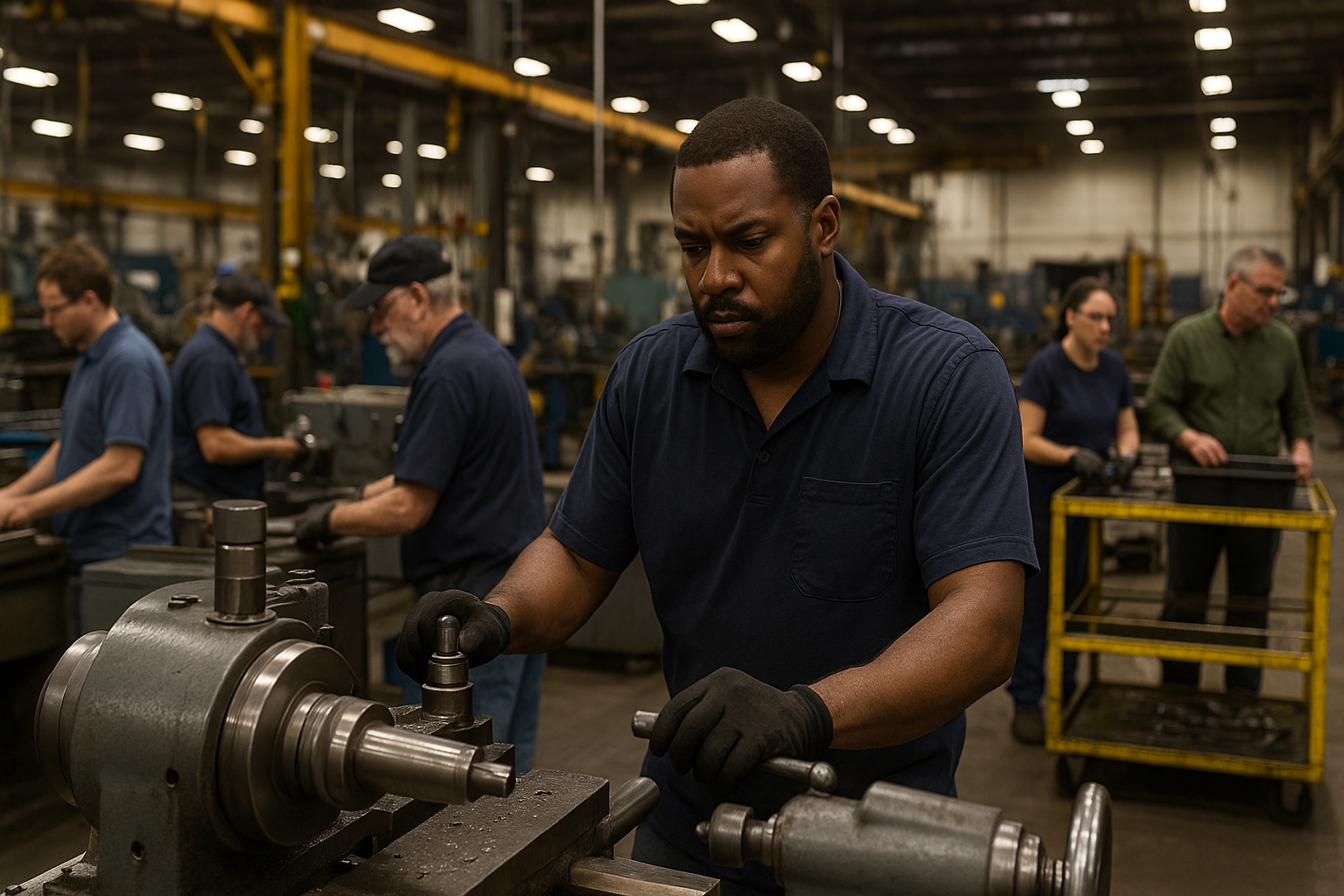
The American economy got more productive in the second quarter of 2026. Workers got a smaller cut than at any point since 1947.
That is not a contradiction. It is the whole bloody point.
The U.S. Bureau of Labor Statistics says labour’s share of nonfarm business output fell to 52.9% in Q2, down from 53.7% in Q1 and the lowest reading in a series that starts in 1947. At the same time, productivity rose at a 1.4% annualised rate, output rose 1.7%, and hours worked rose just 0.3%.
Translation: businesses produced more without needing much more labour. Great for margins. Great for owners. Potentially great for shareholders. Not automatically great for the people doing the work.
That distinction matters more than most of the market commentary you will hear this week.
The BLS number people will try to ignore
“Labour share” sounds like something cooked up in a university economics department and then abandoned at a dinner party. It is simpler than that.
It measures how much of the value created in the nonfarm business economy ends up with workers through wages and benefits. The rest goes elsewhere: profits, interest, rents, depreciation and returns to capital.
In Q2, the worker slice shrank to 52.9%. The BLS also reported that real hourly compensation fell at a 3.1% annualised rate during the quarter and was down 0.1% over the past four quarters.
Meanwhile, unit labour costs rose only 1.3% in Q2. That is the number operators and investors should clock. When productivity rises quickly enough, companies can absorb higher nominal compensation without seeing their cost base blow out. The BLS reported hourly compensation rose 2.7%, but productivity gained 1.4%, helping keep unit labour-cost growth contained.
This is why a business can tell a perfectly truthful story about investing in people while shareholders still capture most of the economic upside.
I am not having a crack at profit. I like profit. Profit is what funds risk, investment, payrolls, product development and the occasional very expensive mistake. I have built businesses; I know the alternative to profit is usually a grim meeting with the bank manager.
But don’t confuse a bigger economy with a broadly shared one. They are not the same thing, and the numbers are making that painfully clear.
Productivity is a win — just not a win for everyone by default
There is a lazy view that productivity growth is bad because it threatens jobs. That is wrong. A country that cannot produce more per hour eventually gets poorer, less competitive and less able to pay for anything it has promised itself.
Productivity is how wages can rise without prices going berserk. It is how smaller teams can build better products. It is how a founder stops paying people to shuffle spreadsheets and starts paying them to solve actual customer problems.
The BLS data are not bad news because productivity rose. The uncomfortable part is who appears to be collecting the dividend.
Since the fourth quarter of 2019, nonfarm-business productivity has grown at an annualised 2.1% rate — better than the 1.5% rate in the prior business cycle and equal to the long-run rate going back to 1947. That is a proper improvement, not a rounding error.
But productivity does not arrive with a built-in profit-sharing agreement. It simply creates more output per hour worked. Whether that surplus goes into wages, lower prices, new investment, dividends, buybacks, debt reduction or executive bonuses is a choice made by companies, markets and policymakers.
Right now, the evidence says capital has the stronger hand.
Corporate profits from current production were $4.43 trillion in the first quarter of 2026, according to the Bureau of Economic Analysis, up from $4.35 trillion in Q4 2025. That figure is not directly interchangeable with the BLS labour-share measure — different accounts, different definitions — but the direction of travel is hard to miss: returns to owning productive assets remain extremely healthy while workers’ share has hit a record low.
Why AI makes this more than another economic chart
Automation did not begin with artificial intelligence. Nor did businesses discovering they could sell more without hiring proportionally more people. That story is older than the fax machine.
But AI is putting a rocket under it because it reaches into white-collar work: analysis, customer support, marketing production, coding, design iterations, sales administration, document review and layers of management reporting that should never have existed in the first place.
The key commercial question is not whether AI eliminates every job. It won’t. The better question is: can a business generate the same revenue with fewer incremental hires?
For plenty of firms, the answer is increasingly yes.
That creates an awkward two-speed economy. Owners of good businesses get expanding operating leverage. Highly capable people who can use AI to become more valuable can win too. But average workers whose job is easy to standardise, monitor or unbundle may find that being “reliable” is no longer enough to command a bigger share of the pie.
Axios noted that labour’s bargaining position has weakened markedly since the brief pandemic-era period when employers were scrambling for workers. Reuters pointed to decades-long drivers — weaker organised labour and globalisation — alongside newer technology that lets firms raise output without adding much headcount.
AI is not the only culprit. It is simply the accelerant nobody can afford to ignore.
The overlooked angle: this can eventually hurt the companies winning today
Here is the contrarian bit.
A falling labour share can be brilliant for an individual company and still become a problem for the wider economy.
Businesses need customers with money. In the United States, household consumption is the giant engine of demand. If a growing share of economic output accrues to owners while a shrinking share reaches wage earners, the system becomes more dependent on asset prices, borrowing, savings drawdowns or government support to keep spending moving.
That does not mean markets must fall next Tuesday. Anyone claiming to know that is selling theatre, not analysis.
It means investors should separate margin expansion from durable demand. A company that cuts costs with AI may look sensational for several quarters. But if its customers are also workers whose income growth stalls, the revenue side can eventually bite back.
The winners will be businesses with one of two things: customers insulated by wealth, or products so essential that consumers keep paying even when discretionary budgets get squeezed.
The losers will be firms selling nice-to-have goods to customers who are technically employed but financially going nowhere.
For founders, this is equally important. Do not use AI simply as a headcount-reduction machine and call it strategy. That is the lazy first move. Use it to increase speed, quality, service and output per person. Then share enough of the upside with the people who become more valuable, or your best operators will leave and build the next thing without you.
Owners need to act like owners
The blunt lesson is that wage income alone is becoming a less reliable way to participate in growth.
That is not a moral judgement. It is a capital-allocation reality.
If you are an employee, your job is not merely to ask for a bigger salary. It is to become harder to commoditise and to acquire ownership where you can: retirement accounts, broad index funds, carefully selected shares, profit-share arrangements, equity grants, a side business or a stake in the business you help build.
If you are a founder, stop handing out vague promises about “culture” while keeping all the upside. The people who can produce five times more with the right tools are not costs. They are compounding assets. Pay them well, give them real incentives and remove the rubbish work that wastes their time.
If you are an investor, do not blindly cheer lower labour costs. Ask why they are falling. Is a company becoming genuinely more productive? Is it improving service and building a moat? Or is it gutting capability, pushing work onto customers and dressing up short-term cost cuts as innovation?
Only one of those compounds.
What this means for you
Use this tomorrow, not in some imaginary future when the economy is easier to read.
First: audit your income. Work out what percentage comes from labour and what percentage comes from assets you own. If the answer is nearly all labour, do not panic — just stop pretending you are diversified.
Second: build leverage around your work. Learn the AI tools relevant to your role, but do not become the person who merely types prompts. Become the person who understands customers, makes decisions, owns outcomes and can turn technology into revenue or saved time.
Third: negotiate for upside, not just salary. A pay rise matters. Equity, profit share, commission tied to actual value creation or a genuine path to ownership can matter far more over a decade.
Fourth: invest in productive assets consistently. The BLS’s 52.9% figure is a reminder that the ownership class is capturing an outsized share of efficiency gains. You do not need to become a hedge-fund genius. You need a sensible, repeatable ownership plan and the discipline to stick with it.
And finally, if you run a business, treat this as both an opportunity and a warning. Productivity is the prize. But a business that wins by making customers poorer is eventually eating its own market.
Build something more efficient. Make a proper profit. Then make sure the people creating the value have a reason to keep creating it with you.