Boeing’s 19.75% Archer Deal Turns a Flying-Taxi Bet Into a Defence Business
Boeing handed Archer three aviation businesses, took shares equal to 19.75% of Archer’s stock before close, and left shareholders holding the gamble.
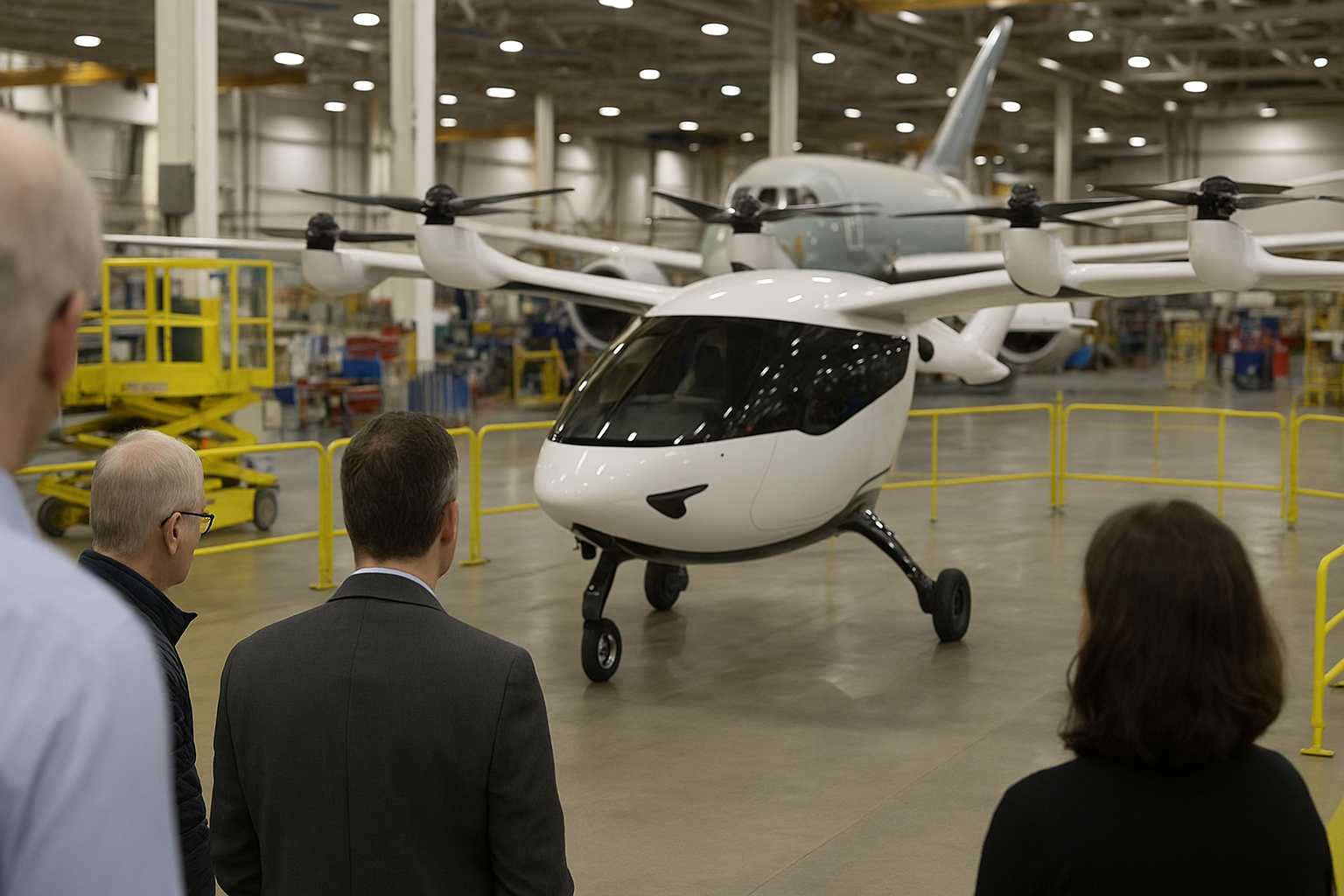
Boeing handed Archer three aviation businesses, took shares equal to 19.75% of Archer’s stock before close, and made Archer shareholders carry the gamble.
Boeing didn’t sell Archer three aviation businesses because flying taxis are ready to conquer cities. It handed over a costly problem, kept the upside, and made Archer’s shareholders pay for the gamble.
That is not automatically a bad deal. In fact, it may be the smartest thing Archer Aviation has done. But let’s stop calling this a flying-taxi acquisition. It is a hard pivot into defence, autonomy and aviation infrastructure — financed with a big slab of Archer equity.
Boeing has traded certainty for upside
On August 10, Archer announced it had agreed to acquire Boeing’s Wisk Aero, SkyGrid and Insitu subsidiaries. Boeing is not taking a conventional cash cheque. It will receive newly issued Archer shares equal to 19.75% of Archer’s stock outstanding immediately before closing, plus two warrants covering $100 million of Archer shares each. One warrant has a $13 exercise price; the other is priced at $17.88. The deal is expected to close by the end of 2026, subject to conditions including antitrust clearance. ([investors.archer.com](https://www.investors.archer.com/news/news-details/2026/Archer-to-Shape-Physical-AI-Future-of-Aerospace-and-Defense-with-Acquisition-of-Boeings-Wisk-Aero-Insitu-and-SkyGrid-Subsidiaries-Boeing-to-Invest-in-Archer-and-Collaborate/default.aspx))
Read that again: Boeing is accepting shares and warrants, not cash.
That tells you two things. First, Boeing wants Wisk, SkyGrid and Insitu off its books more than it wants to squeeze every last dollar from them today. Second, Boeing thinks the combined Archer has enough upside to be worth owning — while keeping its own balance sheet focused on the brutal job of making commercial aircraft, defence systems and services work properly.
Boeing will retain access to Wisk’s core autonomous-flight technology through a technology-sharing arrangement. So it gets to reduce operational burden, preserve access to the intellectual property, and retain an equity position if Archer makes the whole thing work. That is a lovely trade if you can get it. ([investors.archer.com](https://www.investors.archer.com/news/news-details/2026/Archer-to-Shape-Physical-AI-Future-of-Aerospace-and-Defense-with-Acquisition-of-Boeings-Wisk-Aero-Insitu-and-SkyGrid-Subsidiaries-Boeing-to-Invest-in-Archer-and-Collaborate/default.aspx))
For existing Archer shareholders, though, this is dilution with a very expensive haircut if management fails to integrate the businesses. Boeing’s 19.75% pre-close ownership translates to roughly 16.5% after the transaction, according to reporting on the regulatory filing. That is a serious new owner, not a decorative strategic partnership. ([techcrunch.com](https://techcrunch.com/2026/08/10/archer-buys-former-rival-wisk-aero/))
Archer is buying revenue, not another glossy prototype
Here is the part the market should focus on.
Wisk is the headline name because it is the autonomous electric-air-taxi business. SkyGrid provides digital airspace and traffic-management capability. But Insitu is the commercial engine room of this package: a drone business with more than $200 million in annual revenue, operations across 35 countries, and more than 3,500 uncrewed aircraft manufactured and fielded, according to Archer and Boeing. ([investors.archer.com](https://www.investors.archer.com/news/news-details/2026/Archer-to-Shape-Physical-AI-Future-of-Aerospace-and-Defense-with-Acquisition-of-Boeings-Wisk-Aero-Insitu-and-SkyGrid-Subsidiaries-Boeing-to-Invest-in-Archer-and-Collaborate/default.aspx))
That makes this deal radically different from the usual eVTOL nonsense, where investors are invited to fund a future full of beautiful renders, regulatory promises and revenue scheduled for sometime after the sun burns out.
Insitu has actual customers, actual systems and actual operating history. Its drones are used for intelligence, surveillance and reconnaissance. In other words: Archer is not merely buying the dream of autonomous aviation. It is buying a business that has already sold aircraft and support into defence environments where reliability matters more than a slick launch video.
Wisk brings another ingredient Archer lacks at scale: a long autonomy-development history. Wisk has designed, built and flown six generations of eVTOL aircraft and completed more than 1,700 flight tests. Archer says the acquired businesses bring nearly two million combined flight hours into the broader platform. Those are useful assets — not because they guarantee autonomous air taxis will soon shuttle office workers across town, but because autonomy is a compounding capability. Every flight test, sensor stack, control system, certification conversation and operational lesson is hard-won. ([investors.archer.com](https://www.investors.archer.com/news/news-details/2026/Archer-to-Shape-Physical-AI-Future-of-Aerospace-and-Defense-with-Acquisition-of-Boeings-Wisk-Aero-Insitu-and-SkyGrid-Subsidiaries-Boeing-to-Invest-in-Archer-and-Collaborate/default.aspx))
Archer founder Adam Goldstein is effectively saying: if passenger air taxis take longer than hoped, we are not sitting around waiting for wealthy people to order an aerial Uber. We are building a broader aerospace-and-defence company that can sell drones, autonomy and airspace tools in the meantime.
That is the right strategic instinct.
The dirty little secret: flying taxis were always the weakest commercial case
I don’t dislike flying taxis. I dislike pretending that a difficult engineering problem becomes a good business just because it looks futuristic.
The commercial eVTOL pitch has always had four awkward questions hanging over it: certification, infrastructure, operating economics and demand at a price high enough to make the model work. You need aircraft certified, pilots or reliable autonomy, vertiports, charging or fuel systems, maintenance, air-traffic integration, insurance and passengers willing to pay a premium without treating the ride as a once-a-year novelty.
That is a bloody long chain. Break one link and the spreadsheet gets ugly fast.
Reuters reported that Boeing’s Wisk sale looks less like the opening shot of a broad corporate breakup and more like a decision to remove a non-core business that had become a distraction amid Boeing’s turnaround. The same report noted that air-taxi development and certification have taken longer and cost more than advocates expected. No kidding. ([investing.com](https://www.investing.com/news/stock-market-news/boeings-wisk-sale-unlikely-to-kick-off-another-divestment-round-4860856))
Boeing had put another $450 million into Wisk in 2022 before making it a wholly owned subsidiary in 2023. Now it is moving Wisk, along with SkyGrid and Insitu, into Archer in exchange for equity exposure. ([techcrunch.com](https://techcrunch.com/2026/08/10/archer-buys-former-rival-wisk-aero/))
That does not mean Wisk is worthless. It means Boeing has decided that owning and funding the whole operation is less attractive than backing a specialist to carry the risk.
There is a difference founders should understand: a strategic investor saying your sector matters is not the same thing as a strategic investor wanting your P&L on its own balance sheet.
The overlooked angle is not Wisk — it is the stack
Most commentary will obsess over whether Archer now has a better shot against other eVTOL players. Fair enough, but it misses the more interesting point.
Archer is assembling pieces of a full aviation stack:
- Aircraft through its Midnight programme and other VTOL work. - Autonomous-flight technology through Wisk. - Airspace-management software through SkyGrid. - Proven uncrewed systems, production and defence relationships through Insitu. - A collaboration with Boeing that keeps the aerospace giant economically interested.
That matters because the largest profits in a new transport category often do not sit with the company selling the sexy vehicle. They sit with whoever owns the operating system, the workflow, the servicing layer, the network or the bottleneck nobody can avoid.
You can see versions of this everywhere. The manufacturer gets the applause; the infrastructure owner quietly collects the better economics. Archer is now attempting to own more of the infrastructure and autonomy layer rather than being just another company trying to sell an electric aircraft.
But there is a trap here. “Full stack” is often founder-speak for “we have acquired three integration problems.” Wisk, SkyGrid and Insitu have different customers, cultures, products, timelines and regulatory realities. Defence procurement does not behave like consumer transport. Air-traffic software does not behave like drone manufacturing. Autonomous aircraft certification is its own beast entirely.
Archer has bought strategic breadth. It has also bought management complexity.
Boeing has structured this like a grown-up
The cleverness in Boeing’s position is that it has not made a clean exit.
If Archer succeeds, Boeing participates through its equity. If autonomous technology becomes strategically important for commercial or defence aircraft, Boeing retains access through the technology-sharing arrangement. If the businesses struggle, Boeing is no longer directly carrying the full operating burden.
That is what a proper strategic transaction looks like: protect the downside, preserve the option value, and avoid pretending you can run every interesting project in-house forever.
Archer’s side of the bargain is tougher. It must prove that the assets create more value together than separately. The revenue from Insitu gives it a practical bridge. Wisk and SkyGrid give it technical depth. Boeing gives it credibility and strategic alignment. None of that matters if Archer turns into a corporate cupboard full of expensive projects with no clear commercial owner.
My contrarian view: the market should judge this deal less on the first air-taxi route Archer launches and more on whether Insitu’s revenue grows, whether defence customers adopt the combined autonomy capability, and whether SkyGrid becomes an indispensable layer in automated airspace. Those are the signs of a business. The flying taxi is still the optionality.
What this means for you
If you are a founder, take this lesson: stop worshipping the headline product. Build the assets that make you useful even when the headline product is delayed.
Archer’s passenger-air-taxi dream may take years to fully prove. By acquiring a revenue-producing drone business and the autonomy and airspace tools around it, the company is giving itself more ways to win. That is sensible portfolio construction inside a company.
If you are raising capital, notice the deal structure. Boeing did not demand all cash. It took ownership and warrants because it wants upside. But it also shifted execution risk to Archer shareholders. When you negotiate with a bigger company, do not just ask, “What valuation are they offering?” Ask, “Who is carrying the risk after close?” That is where the real economics live.
If you are an operator, use this tomorrow: make a list of the capabilities your business depends on but does not control. Distribution. Data. Manufacturing. Regulation. Maintenance. Customer workflow. Then decide which one is worth owning, partnering for, or acquiring.
The companies that survive long enough to get rich are rarely the ones with the prettiest vision. They are the ones that build a second and third way to win before the first plan gets punched in the mouth.
Archer has just done that. Now it has to prove it bought a platform — not Boeing’s leftovers.