Brent Crude $100: 5 Moves to Protect Your Mortgage and Wealth
Brent above $100 is a bill most people will only see after it has hit: petrol, mortgages and portfolios all get dragged into it.
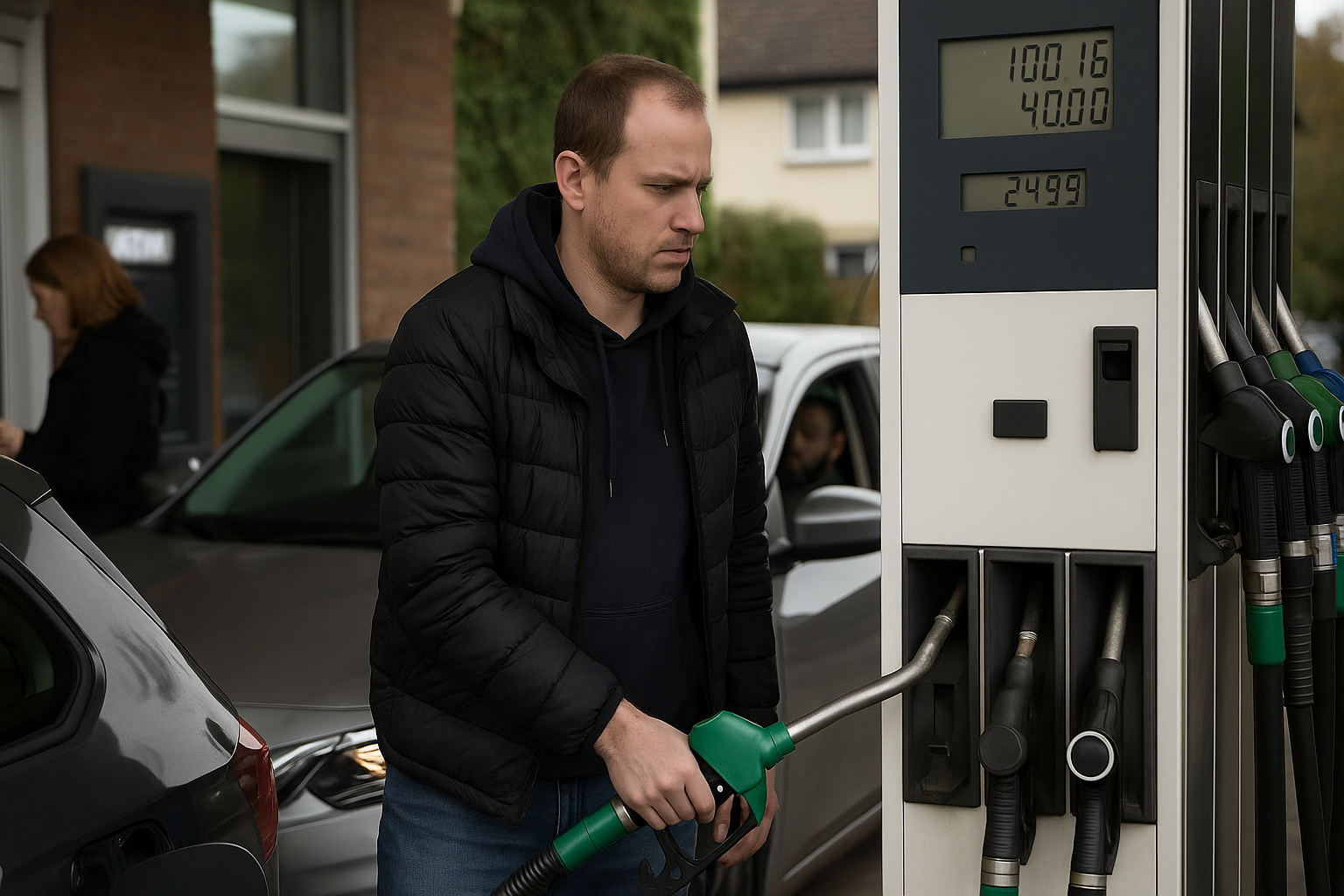
Brent above $100 is not an energy story. It is a bill arriving at your petrol pump, your mortgage broker and your share portfolio — and most people will notice only after it has hit.
Brent crude traded at $100.93 on Wednesday, September 9, after escalating attacks involving the United States and Iran reignited fears about Middle East supply. That is not yet the $126 peak Brent hit earlier in the conflict. But it is plenty high enough to wreck the comforting narrative that this was a temporary spike we could all ignore.
The real problem is not one expensive tank of fuel. The real problem is that markets are starting to price in a more expensive energy system for longer. That has consequences for inflation, interest rates, business margins, mortgages and the price investors are willing to pay for growth stocks.
You do not need to predict the next missile strike to act intelligently. In fact, trying to trade headlines is how investors turn a manageable problem into an expensive hobby. You need to understand the transmission mechanism: expensive oil makes nearly everything more expensive, and expensive money then punishes anyone who is overextended.
The $100 number matters because the assumptions changed
The most important thing in this story is not that Brent briefly crossed a round number. Round numbers are mostly theatre. The important part is why major banks have been lifting their longer-term oil forecasts.
Goldman Sachs raised its December Brent forecast to $85 and its average 2027 forecast to $80, based on an assumption that Middle East shipping disruptions continue into 2027. Bank of America lifted its baseline to $83 for the second half of 2026 and $75 next year. HSBC forecast $95 Brent in the fourth quarter, lifted its 2027 forecast by $20 to $85, and raised its longer-term forecast to $75 from 2028 onward.
That is the market moving from “this will blow over” to “build the disruption into the spreadsheet.” Big difference.
Reuters reported that about 10 million barrels a day of oil exports — roughly 10% of world demand — remain missing because of the Iran war, according to Vortexa estimates. The International Energy Agency had expected global oil supply to fall by 4.3 million barrels a day this year. Meanwhile, six months of disruption have depleted inventories, including the US Strategic Petroleum Reserve, which Reuters said stood at 289.7 million barrels, its lowest level since 1982.
When inventories are thin and spare capacity is limited, markets do not need an actual shortage to panic. They only need less room for error. That is where we are.
I have built businesses through periods where every supplier suddenly had an excuse to raise prices. Fuel is one of the cleanest excuses in the world. It touches freight, packaging, farming, manufacturing, flights, delivery vans and every person driving to work. The first increase hurts. The second is when companies decide they are not absorbing it anymore.
This is how oil becomes a mortgage problem
The 10-year US Treasury yield was hovering around 4.8% on September 9 after reaching its highest level in nearly three years. That yield is not your mortgage rate, but it is an important benchmark feeding into the cost of mortgages and other borrowing.
Higher oil prices raise inflation expectations because energy affects both what it costs to make things and what it costs to move them. Bond investors then demand a better return to lend money for long periods, because future dollars buy less if inflation stays elevated. Higher bond yields put pressure on the valuations of shares too, especially businesses valued on profits expected far into the future.
That is the ugly little chain reaction:
1. Oil rises. 2. Transport and production costs rise. 3. Inflation gets stickier. 4. Bond yields rise. 5. Borrowing stays expensive or gets more expensive. 6. Property affordability and lofty share valuations take another punch.
This is why the Federal Reserve suddenly matters more than most people think. The Fed’s September meeting is now hanging on inflation data measured in absurdly fine increments. Analysts are watching whether monthly core PCE inflation looks closer to 0.2% or 0.3%. That sounds trivial until you annualise it: 0.2% a month works out to roughly 2.43% a year; 0.3% becomes roughly 3.66%.
That gap is the difference between inflation looking like it is behaving and inflation looking like it has had three espressos and started a fight.
Kevin Warsh and the Fed do not have the luxury of pretending a renewed oil shock is harmless. If energy costs bleed into broader prices, central bankers may have to keep rates higher for longer — or lift them — even while households are already feeling stretched.
The contrarian point: do not confuse a real problem with a trading signal
Here is where retail investors can get themselves into trouble. They see oil at $100, buy the hottest energy stock after it has already run, then sell their long-term index funds because someone on social media says a recession is coming.
That is not risk management. That is performance art.
The better read is more boring: an oil shock increases the value of resilience. Households with cash buffers, manageable debt and diversified investments have options. Households with a maxed-out credit card, a variable-rate mortgage they barely service and a portfolio built around expensive growth stories have none.
The overlooked angle is that high oil prices can hurt before they show up cleanly in official inflation data. Diesel futures have reached an all-time high of $4.73 a gallon. Diesel is embedded in the price of food, construction materials, parcels, retail inventory and pretty much anything delivered by truck. If you run a business, that is a margin issue before it becomes a headline CPI issue.
But do not become a doomer either. The Dallas Fed’s scenario work is a useful antidote to panic. It finds that the inflation impact depends heavily on how long disruption persists and what happens when the Strait of Hormuz reopens. Under scenarios where prices remain structurally higher after reopening, the estimated effect on core PCE inflation in 2026 ranges from 0.36 to 0.53 percentage points depending on the duration of disruption. That is meaningful. It is not civilisation ending.
The smart position is neither “nothing to see here” nor “sell everything and buy canned beans.” It is to stop making financial decisions that assume money will be cheap, fuel will be cheap and asset prices only travel north.
What this means for investors and operators
For investors, the key risk is concentration. If your portfolio is essentially one giant bet on long-duration technology shares, you are more exposed to rising yields than you probably realise. I am not telling you to dump quality companies because oil had a bad week. I am saying know what you own and why it might fall when the discount rate moves higher.
For business owners, go through your cost base now. Identify every cost linked directly or indirectly to freight, fuel, energy and financing. Ring suppliers before they ring you. Ask about price-review clauses, lead times and alternative delivery arrangements. The best time to negotiate is before the surcharge appears on an invoice.
For savers, remember that inflation is a tax on cash left idle. A cash buffer is essential; leaving every investable dollar sitting idle because the news feels scary is not. Your emergency money and your long-term money have different jobs. Do not make one bucket try to do both.
And for people carrying expensive consumer debt, this is your reminder that high rates are not an abstract debate between economists. They are a compounding penalty for buying today with tomorrow’s income. Pay down the debt that can hurt you. A guaranteed saving on a nasty interest rate is often more valuable than another speculative punt dressed up as investing.
What this means for you
Do these five things this week.
First, calculate your monthly debt repayments at a rate 1 percentage point higher than today. If that number makes your stomach turn, you have found the problem.
Second, build or protect a proper cash buffer. Not money earmarked for a holiday. Not shares you hope will be up when you need them. Cash.
Third, review your portfolio by exposure, not by ticker symbol. How much depends on cheap capital, heroic future earnings or a single economic outcome?
Fourth, if you operate a business, model a 10% increase in freight and energy-related costs. Decide now whether you cut costs, raise prices, renegotiate or accept lower margins. Waiting is not a strategy.
Finally, do not make a dramatic oil trade because Brent crossed $100. Build a financial life that can survive Brent at $80, $100 or $120. That is what wealthy people actually do: they keep enough margin for error that the world’s next surprise becomes an inconvenience, not a catastrophe.
The $100 oil barrel is not a reason to panic. It is a reason to stop being financially flimsy.