Brent Crude at $95: How the Oil Shock Hits Business Margins
Brent crude above $95 is not an oil story. It is a tax on every business that moves anything—and most operators will notice it after their margins are already gone.
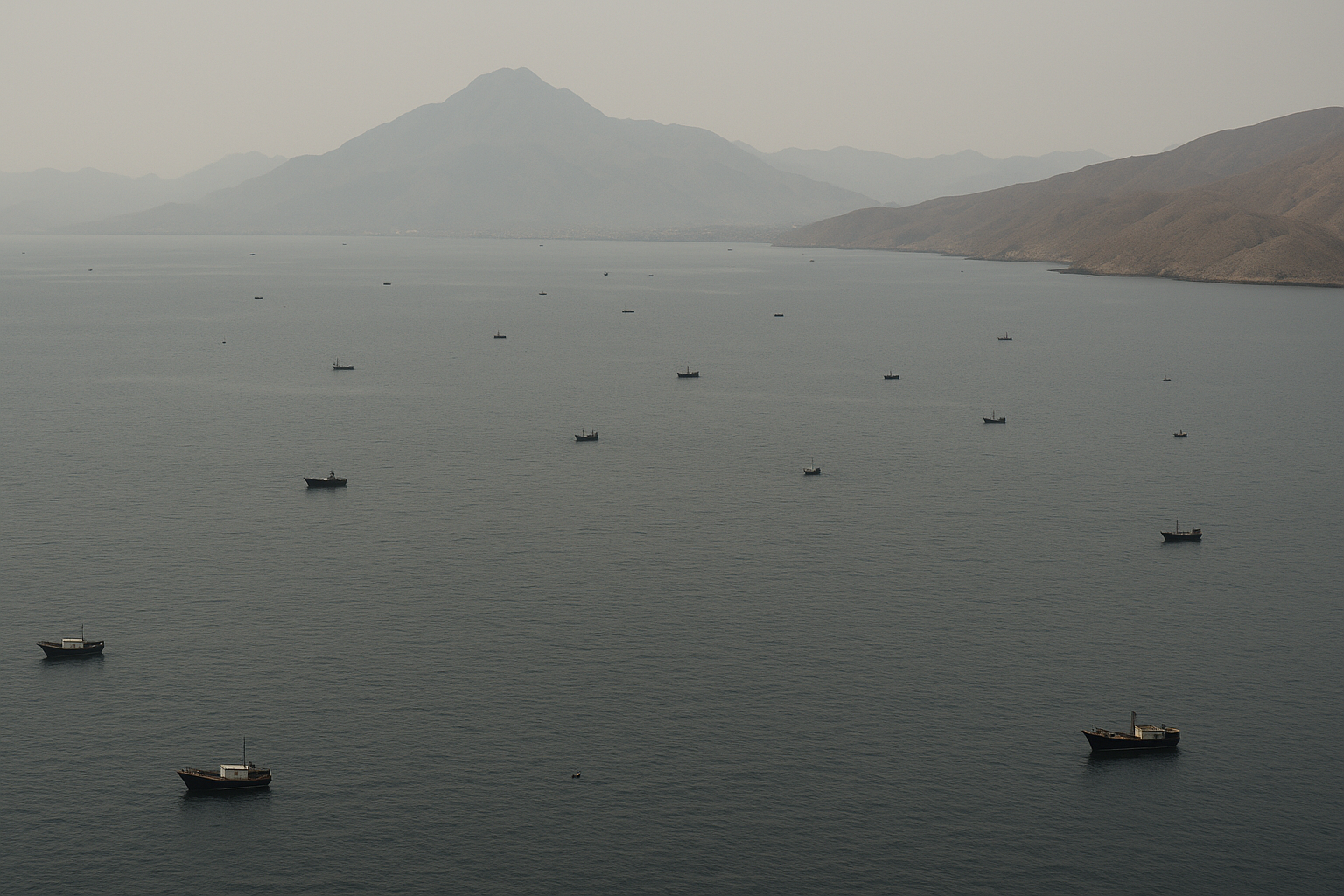
Brent crude above $95 is not an oil story. It is a tax on every business that moves anything—and most operators will notice it after their margins are already gone.
That is the nasty bit. A CEO sees a crude chart and thinks, “Not my department.” Then diesel, freight, packaging, airfare, supplier invoices and customer anxiety turn up in the P&L wearing fake moustaches. By then, the margin has already been nicked.
The $95 barrel is the headline. Diesel is the problem.
On September 2, Brent crude pushed above $95 a barrel as renewed US-Iran fighting raised the prospect of further disruption around the Strait of Hormuz. Reuters reported Brent at $95.91 in Asian trading after fresh US strikes, while Bloomberg reported it around $95.60 as the broader sell-off in shares and bonds spread through Asian markets.
That is a sharp move, but the bigger issue is not whether you can recite the Brent price at a barbecue. It is what happens after the oil market moves.
Oil is the raw input. Diesel is the business cost.
Axios highlighted the ugly gap in late August: US benchmark crude was around $84.39 a barrel, while diesel futures had climbed to $181.55. That is the number operators should have taped to the wall. Trucks run on diesel. Freight runs on diesel. Farms, construction sites, warehouses, forklifts, backup generators and a fair chunk of industrial production run on diesel.
Every product business likes to talk about customer acquisition costs. Fine. But if you manufacture, import, distribute or physically deliver anything, energy is part of your acquisition cost too. It is just hidden inside everyone else’s invoice.
And hidden costs are the ones that hurt most, because they arrive late.
The Strait of Hormuz is not some distant geopolitical trivia question
Before this conflict, roughly one-fifth of global oil consumption moved through the Strait of Hormuz. When that route is threatened, traders do not wait for an accountant to confirm a shortage. They pay up for the risk that barrels may not arrive where they are meant to arrive.
That is what markets are pricing now: not merely current supply, but the cost of disrupted shipping, war-risk insurance, delayed cargoes, rerouted vessels and a much fatter uncertainty premium.
This distinction matters. A barrel of oil does not need to disappear for your costs to rise. It only needs to become more complicated, more dangerous or more expensive to insure and transport.
That is why the “America produces lots of oil now” argument, while partly true, can make people complacent. America is more insulated from an oil shock than it was decades ago. It is not magically exempt from global pricing, refined-product bottlenecks or the cost of moving fuel to where it is needed.
The United States may produce more energy. Your courier still has to fill up a van.
Your supplier still has to get a container off a ship, onto a truck and into a warehouse. Your staff still pay for petrol. Your customers still feel poorer when the weekly household bill gets punched in the face.
The second-order damage is where businesses get ambushed
The first-order effect is obvious: transport costs rise.
The second-order effects are where mediocre operators get caught sleeping.
Start with working capital. Suppliers facing higher freight, energy or insurance costs usually do not absorb them forever. They ask for higher prices, shorter payment terms or both. If you are undercapitalised, that is when a business that looked profitable on paper suddenly needs cash it does not have.
Then comes demand. Higher fuel bills are not merely an “inflation” statistic on television. They are a budget cut for households. People may keep buying essentials, but they delay discretionary purchases, trade down brands, reduce travel, cut restaurant visits and become much fussier about whether something is worth the money.
Then comes pricing. Most businesses are terrible at passing through cost increases. They wait for certainty. They want to be nice. They fear losing customers. So they wear the cost for two or three months, convince themselves it is temporary, and finally raise prices after the damage is done.
That is not customer service. It is financial cowardice dressed as politeness.
There is also a timing problem. Crude can jump in a day. The effects on freight contracts, wholesale prices and consumer behaviour often arrive over weeks or months. So the business owner staring at today’s sales numbers may feel fine right up until the next supplier price list arrives.
By that point, everyone is raising prices at once. You have lost the chance to explain your move clearly and calmly. You are just another bloke sending an apologetic email saying, “Due to increased costs…”
Nobody respects that email. Least of all you.
The overlooked angle: this is less about recession than redistribution
Here is the contrarian view: a higher oil price does not automatically mean the US economy falls in a hole.
Axios cited Dallas Federal Reserve research estimating that a disruption equivalent to this year’s Middle East shock would have cut US GDP growth by 5.6 percentage points in 1980. In 2026, the estimated hit is only 0.3 percentage point. The reason is structural: the US is now a net oil exporter and uses less oil for each dollar of economic output.
That is real progress. It matters.
But do not confuse “less damaging to GDP” with “painless for people” or “irrelevant to your business.” GDP is an average. Your business does not operate at the average.
A Texas producer, energy-services contractor or refinery-linked business may benefit. A logistics-heavy retailer, a small manufacturer importing inputs, a tradie with a vehicle fleet, or a family that drives long distances to work does not experience the same upside.
The economy can look resilient while specific households and sectors get properly squeezed.
That is the bit investors and politicians routinely miss. Oil shocks are redistribution events. They move money from consumers and fuel-intensive businesses toward producers, refiners, transport owners and whoever has pricing power.
If you own assets on the winning side of that transfer, good on you. If you run a business on the losing side, pretending it is a temporary nuisance is not a strategy.
Why founders should care even if they do not sell physical goods
Software founders love believing they have escaped the physical economy. They have not.
A software business may not buy diesel, but its customers do. If you sell into hospitality, retail, construction, transport, consumer services or small business, an energy squeeze can delay purchasing decisions and lift churn risk. The customer does not need to cancel because they hate your product. They can cancel because cash is tight and your invoice is an easy line item to cut.
Investors should pay attention too. The market often treats an oil spike as a simple sector rotation: buy energy, sell airlines, move on. That is too cute.
The deeper question is which companies have the ability to pass costs through without wrecking demand, and which ones are already operating with margins so thin that a few more percentage points of freight or input costs expose the fraud in their business model.
The winners are not necessarily the companies with the flashiest energy narrative. They are the companies with disciplined pricing, healthy balance sheets, sensible inventory planning and customers who genuinely value what they sell.
Boring, I know. Boring is where the money is when everyone else is panicking.
What this means for you
If you run a business, do three things this week.
First, find your real energy exposure. Not just your fuel bill. Add freight, courier charges, packaging, supplier surcharges, travel, outsourced logistics and the likely cost increase from your top 10 suppliers. If you cannot estimate that number, you are not managing a business. You are hoping.
Second, build a pricing trigger before you need it. Decide now what happens if key input costs rise 5%, 10% or 15%. Which products get repriced? Which customers get a surcharge? Which low-margin offers get killed? Make the decision while your heart rate is normal.
Third, protect cash. Stretching payment terms with suppliers because you are short of cash is a lousy plan when those suppliers are facing the same cost shock. Keep more liquidity than feels fashionable. A bit of cash looks inefficient until everybody else needs it at the same time.
For investors, stop treating every oil move as a trading signal. Look for exposure you did not know you owned: transport-heavy retailers, airlines, consumer brands with weak pricing power, industrials dependent on diesel and businesses carrying too much debt. Then look for the opposite: strong balance sheets, necessary products and proven ability to raise prices without losing customers.
Brent at $95 is not the apocalypse. But it is a reminder that the real economy still runs on physical stuff, moved by physical machines, paid for by real people.
Ignore that because you prefer a cleaner story, and the market will charge you for the lesson.