Brent Crude at $96.80: What Hormuz Disruption Costs Business
Brent at $96.80 is not an oil-market story. It is a fresh tax on anyone who moves goods, borrows money or thinks inflation has finished causing trouble.
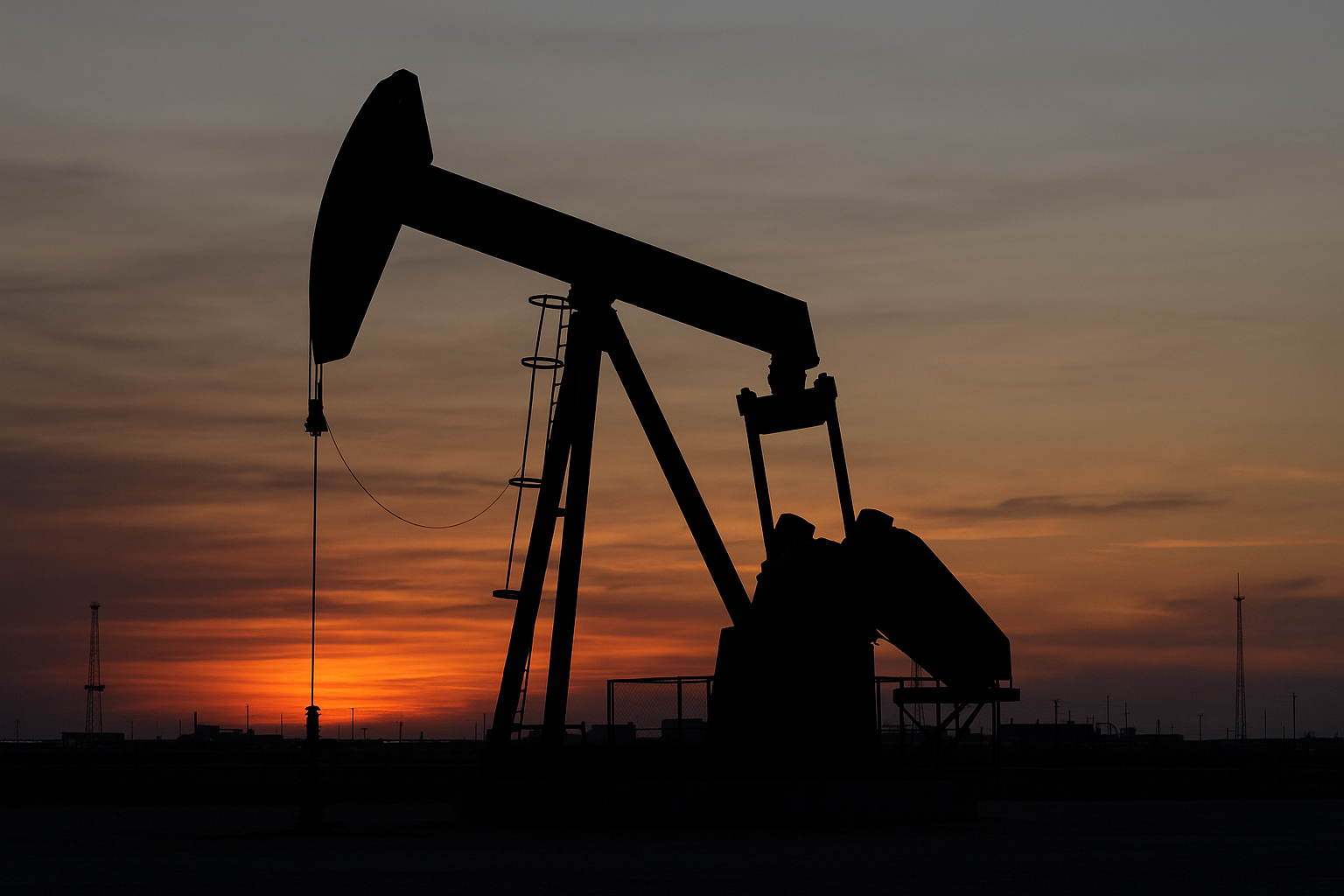
Brent crude at $96.80 a barrel is not an oil-market story. It is a fresh tax on anyone who moves goods, borrows money or thinks inflation has finished causing trouble.
On Monday, September 7, Brent rose to $96.80 and West Texas Intermediate reached $92.14 after U.S. and Iranian forces struck commercial vessels around the Strait of Hormuz over the weekend. That is not background noise for traders in coloured jackets. It is the price of everything getting pushed uphill again.
The Strait of Hormuz has become the bill nobody ordered
Reuters reported that Brent gained 7.8% last week and WTI nearly 10% as shipping through Hormuz was disrupted. Before this conflict, roughly one-fifth of global oil supply transited the strait. That single fact explains why a few attacks on tankers can reach a suburban petrol bowser, a freight invoice and eventually the price of a sandwich.
The escalation matters because commercial ships are no longer merely caught near a conflict. They are part of the conflict. U.S. forces said they struck three Iranian oil tankers on Saturday, including one near Kharg Island, Iran’s key oil-export hub. Iran’s Revolutionary Guard said it targeted three tankers in the strait and three additional U.S. vessels elsewhere.
That is a nasty change in the game. When shipping becomes a deliberate pressure point, every cargo owner, insurer, refinery and retailer has to price in more than ordinary supply-and-demand risk. They have to price in delay, detours, insurance, disrupted schedules and the chance that the next escalation is worse.
Kpler data cited by Reuters showed an average of only 10 commodity ships per day moved through Hormuz over the past 10 days, the lowest level since May. Ten ships a day through one of the world’s crucial energy chokepoints is not a healthy market clearing its throat. It is a supply chain being strangled politely before it gets strangled properly.
Higher oil is a business problem before it is an investment opportunity
Plenty of investors look at a spike in crude and immediately start asking which energy stock to buy. Fair enough. But that is the shallowest version of the question.
The bigger question is: where does this cost land next?
It lands first in transport. Diesel is the ugly plumbing of the real economy: trucks, delivery fleets, construction machinery, farm equipment and plenty more besides. On Friday, the national U.S. diesel average hit $5.85 a gallon, an all-time high, according to AAA data cited by the Associated Press. You do not need an economics degree to work out what happens from there. Freight gets dearer. Margins get thinner. Businesses either absorb it and make less money, or pass it on and risk losing customers.
Most will do a bit of both. That is why oil shocks are such a mongrel. They hurt profits and prices at the same time.
For founders, this is especially relevant if you run a business with physical inputs. A company can look wonderfully asset-light in a pitch deck, then discover it is very much asset-heavy once packaging, warehousing, field staff, deliveries, manufacturing partners and customers’ shrinking budgets get involved.
The businesses most exposed are not always the obvious ones. Airlines and logistics firms wear it on the chin immediately. But so do retailers with thin margins, hospitality venues buying more expensive supplies, tradies driving between jobs, and online merchants who assumed delivery was someone else’s problem. It never is. Somebody pays. The only argument is over who.
OPEC+ did not rescue the market
On Sunday, OPEC+ left its output policy unchanged for October. That decision was hardly a surprise in a market where production quotas still need to be settled, but it mattered because it offered no quick extra barrel to calm nerves.
Markets hate uncertainty more than they hate bad news. Bad news can be modelled. A shipping lane where tankers are being targeted, a proposed restricted zone outside Hormuz, and an unclear path back to normal flows cannot be modelled with much confidence at all.
ANZ analysts told Reuters they expect exports to remain constrained through the rest of 2026, with a gradual reopening only late in the fourth quarter. They do not expect pre-war throughput until late in the first or second quarter of 2027.
That forecast may prove wrong. Forecasts often do. But smart operators do not build a plan around the most cheerful possible outcome just because it is cheaper. They build a plan that survives the unpleasant but plausible one.
If your business needs fuel, shipping capacity, resin, chemicals, imported stock or customers with spare cash, the unpleasant-but-plausible scenario is now a longer period of elevated energy costs.
The Fed is now stuck with a problem it cannot print away
This is where the oil story collides with the broader economy.
The U.S. Federal Reserve meets on September 15-16. August consumer-price data arrives on September 11. After last week’s stronger-than-expected labour report, markets increased the implied probability of a September rate increase to 60.4%, according to CME FedWatch data cited by AP.
I am not interested in pretending I know what the Fed will do. Anyone speaking with certainty before the inflation print is selling theatre, not insight.
But the problem is obvious: energy-driven inflation leaves central bankers with rotten options. They can hold rates steady and risk being seen as too relaxed about prices. Or they can raise rates into an economy where businesses and households are already carrying higher energy costs.
Neither option makes fuel cheaper tomorrow. Higher rates cannot produce safe tanker routes. They can only suppress demand elsewhere in the economy. That may eventually cool inflation, but it is a brutal way to do it.
This is why business owners should stop treating interest rates as a separate issue from oil. They are connected through cash flow. Higher transport and input costs chew up operating cash. Higher borrowing costs make the gap harder to finance. Businesses with weak pricing power get squeezed from both ends.
The overlooked angle: this is a working-capital trap
Here is the part most market commentary misses because it is less exciting than crude charts.
An oil shock can hurt a decent business even if demand stays fine. Imagine your supplier raises prices now, your freight bill rises now, but your customer pays 30, 60 or 90 days later. Revenue might look healthy on paper while cash disappears in the real world.
That is not a profit-and-loss problem first. It is a working-capital problem.
I have seen operators get caught by this. They focus on gross margin percentages, which can look passable, while ignoring that every extra dollar tied up in stock or receivables needs funding. Then the bank asks questions, the line of credit is suddenly expensive, and a good business starts behaving like a distressed one.
The contrarian point is this: do not rush to whack every customer with a blanket price rise just because Brent jumped. That can be lazy management. First work out your actual exposure. A professional operator knows which products, routes, suppliers and customers carry the risk. A panicked operator sends one dreadful email saying “due to market conditions”.
The first person protects margin. The second person invites customers to shop around.
What this means for you
Whether you are investing, saving or running a company, use this week to do the boring work that pays.
If you run a business: calculate your exposure to fuel, freight and energy inputs as a dollar figure, not a vague concern. Ask each key supplier what is fixed, what floats and when repricing clauses trigger. Review your customer payment terms before you review your marketing plan. Cash collected fast is suddenly worth more.
If you sell physical products: identify your bottom 20% of customers or orders by contribution margin. Some revenue is expensive theatre. If fulfilment costs rise, low-margin volume can become a machine for making you busier and poorer.
If you borrow: assume money does not get cheaper on your preferred timeline. The Fed has inflation data on September 11 and a decision on September 16; neither is something you control. Refinance early if you have a sensible option. Do not build survival around a rate cut that has not happened.
If you invest: distinguish between owning a quality business that can pass through costs and owning a business whose margins depend on cheap inputs and cheap debt. They are not remotely the same thing, even if both have had a nice chart lately.
And finally, do not confuse a temporary-looking problem with a temporary problem. Oil at $96.80 is not a reason to panic. But it is absolutely a reason to sharpen the pencil. The winners from this sort of mess are rarely the loudest. They are the ones who know their numbers before everyone else is forced to learn theirs.