Brent Crude’s $100 Warning in May 2026: 3.8% Inflation Is the Easy Part
A $100 oil price is not the problem. It is the invoice arriving before the real bill—higher rates, weaker margins and consumers who stop spending.
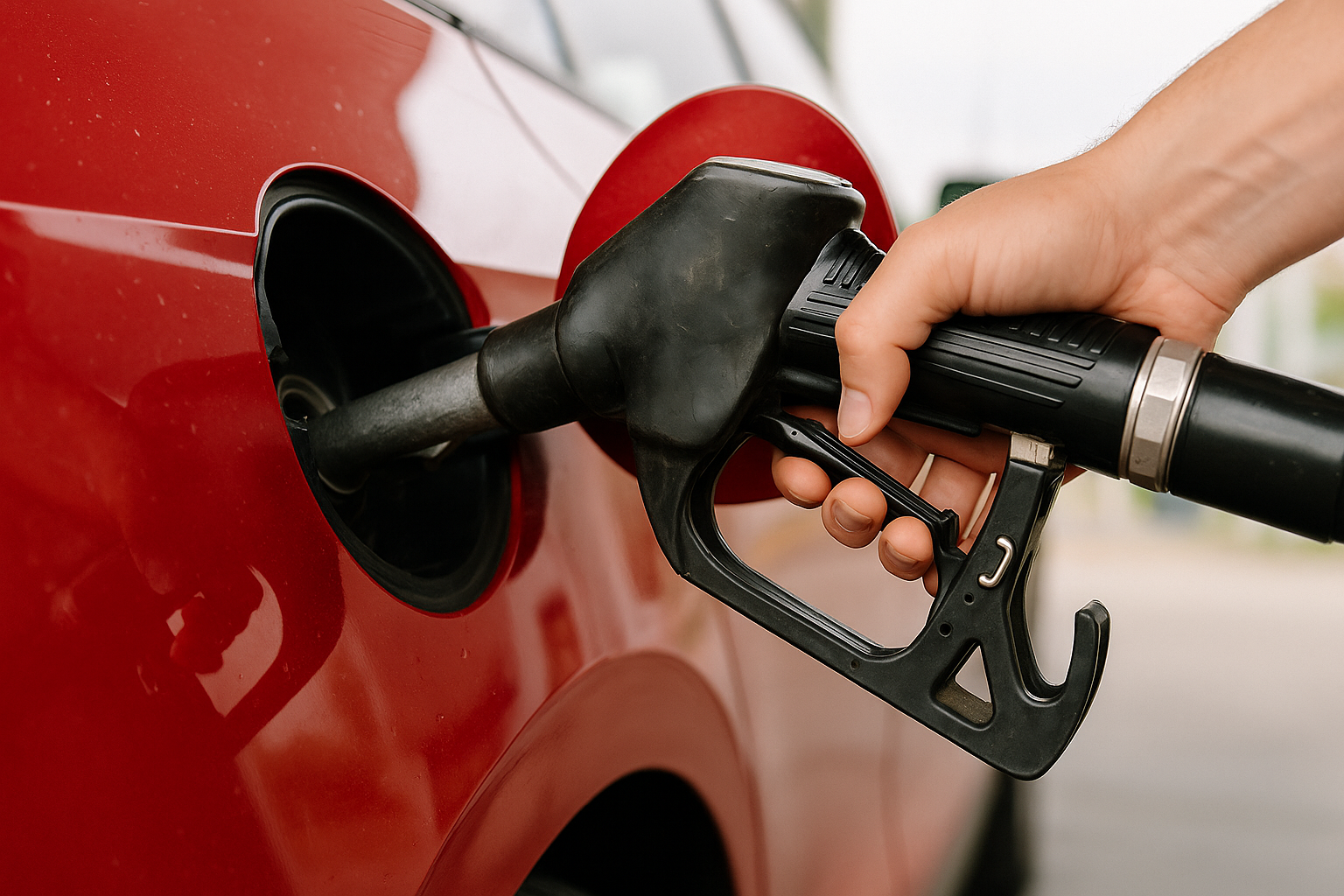
Oil at roughly US$100 a barrel is not a market panic. It is a market refusing to do the maths.
The US inflation rate hit 3.8% in April, petrol was more than 28% dearer than a year earlier, and plenty of investors still behaved as if a neat ceasefire headline would make the whole thing disappear. That is not optimism. That is laziness dressed up as risk appetite.
The number everyone should be staring at
The obvious headline was America’s April consumer-price inflation: 3.8% year-on-year, with prices up 0.6% in a single month. That was the sharpest annual reading consumers had seen in three years.
But the detail matters more than the headline. Petrol prices rose 5.4% during April and more than 28% from a year earlier. Average US petrol prices had climbed above US$4.50 a gallon, roughly 44% higher than a year earlier. Fuel oil was up more than 54% year-on-year.
That is not a rounding error in a government spreadsheet. Energy is an input into nearly everything: freight, food, packaging, construction, manufacturing, travel and the cost of getting a worker to the job. You do not need an economics degree to understand it. If diesel costs more, someone pays more to move every physical thing.
The supposedly reassuring number was core inflation: 2.8% year-on-year, excluding food and energy. Markets love that number because it allows them to say the inflation problem is contained.
Maybe. But that conclusion is premature.
Core inflation is a lagging comfort blanket in an energy shock. It tells you the fire has not yet spread through the whole house. It does not prove the fire is out.
Why a US$100 Brent price can be more dangerous than US$150
Brent crude hovered around US$100 a barrel in May, down from a post-war peak of US$126 in April. For anyone who only looks at the ticker, that decline looked like relief.
I think it was more likely a warning.
A violent spike to US$150 would force everyone to react immediately. Consumers would cut discretionary spending. Businesses would slash budgets. Politicians would start throwing subsidies and emergency policies around. The problem would be impossible to ignore.
US$100 is more insidious. It is high enough to destroy margins and household cash flow, but not so high that boards, fund managers and policymakers feel compelled to deal with it properly. It lets people pretend the damage is temporary while the costs quietly roll through contracts, inventories and wage demands.
That is how a manageable shock becomes a nasty economic hangover.
There was a brief reminder of how fragile the optimism was. On May 24, Brent fell as much as 5.2% to US$98.12 a barrel after signs that a US-Iran arrangement and a reopening of the Strait of Hormuz could be getting closer. West Texas Intermediate was around US$92.
Fine. Markets should move on new information. But a price decline driven by hopes of a deal is not the same thing as restored supply, rebuilt inventories or lower input costs across the economy. Traders can buy a story in five minutes. Supply chains take far longer to repair.
Founders should tattoo that distinction somewhere visible: a better headline is not the same thing as a better operating environment.
The actual issue is the buffer, not the barrel
The overlooked story is not simply how much oil costs. It is how little room the system has left to absorb another problem.
Reporting in May described global inventories being run down at extraordinary speed as supplies from the Persian Gulf were disrupted. Analysts cited by Fortune warned that commercial inventories in developed economies could approach operational stress levels. Goldman Sachs estimated oil stocks could fall to 98 days of global demand by the end of May.
That is the bit markets hate admitting: resilience is often just stock sitting in a tank somewhere.
When inventories are plentiful, a supply shock is painful but manageable. Buyers can draw down stocks. Governments can release strategic reserves. Refiners can reshuffle cargoes. Companies can wait.
When the buffer is depleted, the next disruption has a much bigger impact. Not necessarily because demand suddenly rises or production suddenly collapses, but because there is no spare capacity in the system to absorb bad news.
This is true well beyond oil. It is true in your business too.
The operator who runs every team at maximum capacity is not efficient; they are one sick employee, delayed supplier or lost customer away from chaos. The business that keeps a little cash, inventory capacity and managerial slack may look less aggressive in a spreadsheet. It is usually the one still standing when conditions turn ugly.
China may have bought the world time—nothing more
There is a genuinely contrarian angle here. China may have helped postpone the oil market’s crunch.
China’s crude imports reportedly fell 20% in April to 9.4 million barrels a day, their biggest drop since the pandemic. Early May data suggested an even steeper decline, toward 7 million barrels a day. Analysts pointed to lower refinery consumption, limits on fuel exports and the possibility that Chinese refiners were drawing on large stockpiles rather than importing as much crude.
Estimates put China’s reserves at around 1.4 billion barrels. If those estimates are broadly right, China has functioned as a hidden shock absorber for the global oil market.
That matters because it changes the timing. It does not magically change the arithmetic.
Less Chinese buying can leave more barrels available elsewhere and reduce immediate pressure on prices. It can push a shortage from June into July, according to one Capital Economics estimate. But delaying a problem is not solving it. At some point, inventories need rebuilding, normal consumption resumes or another disruption arrives.
This is precisely where investors get themselves into trouble. They confuse a postponed reckoning with a cancelled reckoning.
I have lost money making versions of that mistake. You see a problem, then the market rallies, then you decide perhaps the problem was not a problem after all. Usually, the market has not disproved your thesis. It has merely changed the timetable.
The Fed is stuck with the worst choice in business
High energy inflation is awkward for central banks because it creates a rotten trade-off.
If the Federal Reserve goes softer on rates because growth and employment look vulnerable, it risks allowing an energy shock to seep into broader prices and inflation expectations. If it stays tight or gets tougher, it raises the odds of breaking already-stressed consumers, borrowers and businesses.
Neither option is attractive. That is why anyone confidently calling for easy money should be treated with suspicion.
The April data gave the Fed one crumb of comfort: core inflation had not yet exploded. But that “yet” is doing serious work. Food prices rose 0.7% in April, while more expensive diesel and shipping were beginning to move through supply chains.
The sequence matters. Energy hits first. Transport and goods costs follow. Businesses then try to protect margins. Workers notice their bills. Wage pressure builds. Only then does the tidy core number start looking less tidy.
Markets price the first move. Good operators prepare for the second and third.
The mistake is thinking this only matters to oil traders
If you run a company, this is a working-capital story.
Energy shocks do not just lift costs. They stretch payment cycles, force customers to protect cash, encourage suppliers to demand price rises and make forecasts less reliable. Your gross margin can be technically intact while your cash conversion cycle gets punched in the throat.
If you invest, this is a valuation story.
Companies that rely on cheap freight, low fuel costs, easy credit and a consumer willing to keep spending are more fragile than their last quarterly report suggests. A business can have terrific revenue growth and still be a dud investment if every extra dollar of revenue requires more working capital and produces less real cash.
And if you are a household saver, this is a behaviour story.
Do not respond to inflation anxiety by randomly punting on commodities or chasing whatever stock has “energy” in the name. That is how people turn a sensible concern into an expensive hobby. Your first job is to make your own finances harder to break: reduce expensive debt, keep liquidity, know what your household actually spends on essentials, and do not build a lifestyle that only works if prices behave.
What this means for you
Here is the useful bit. Do these four things this week.
1. Stress-test your costs at another 10% higher. If you run a business, model freight, energy and supplier costs 10% above today’s assumptions. Then decide now where you would cut, reprice or renegotiate. Waiting until the invoice lands is amateur hour.
2. Check cash before chasing growth. Review receivables, inventory and debt maturities. Revenue does not pay bills; cash does. In a volatile cost environment, a stronger balance sheet is not boring—it is negotiating power.
3. Separate hopeful headlines from operational facts. A ceasefire rumour, an oil-price dip or a friendly central-bank comment may move markets. Ask what has actually changed in supply, inventories, customer demand and funding costs.
4. Own businesses with pricing power, not stories. The best operators can pass on reasonable cost increases without losing every customer. The worst operators are trapped between suppliers raising prices and customers refusing to pay more. Know which one you own—or which one you are.
The US$100 oil price is not the final verdict. It is the early warning.
The people who get hurt will be the ones who keep treating it as somebody else’s problem until it turns up in their margins, mortgage, inventory bill or investment account. The people who get ahead will have already built the buffer.