Brent Oil at $103: Trump’s Iran Comment Didn’t Fix Oil
Brent at US$103 is not relief. It is a warning that one Trump comment can move markets while tankers, inventories and margins are still under pressure.
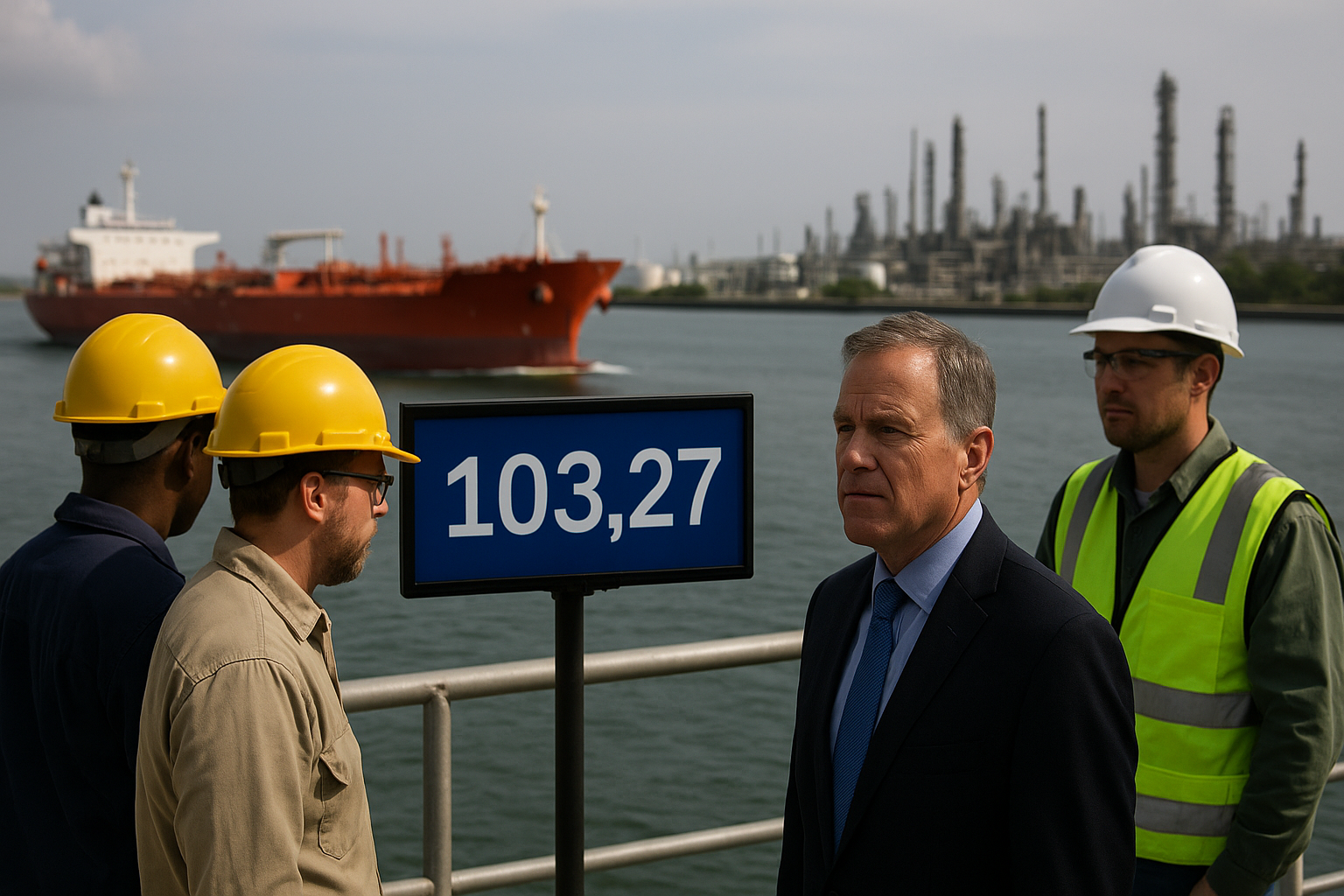
Brent at US$103 is not relief. It is a warning that one comment from Donald Trump can move markets while the actual problem is still sitting in the warehouse, on the tanker and inside the refinery.
The market moved. The oil problem did not.
On Friday, October 9, oil eased after Trump’s comments lowered the immediate fear of another escalation with Iran. Reuters reported that Brent fell about 0.75% to roughly US$103 a barrel after jumping more than 4% the prior session. That sounds like relief.
Then look at the close. Brent bounced between US$102.50 and US$105 on Friday and settled at US$104.72, up 0.4%. That is not a market confidently pricing a return to normal. It is a market chewing its fingernails while pretending it has a plan.
The S&P 500 rose 0.6%, the Dow added 423 points and the Nasdaq gained 0.6%. Fine. Stocks liked the idea that the next nasty geopolitical headline may have been delayed. But “not before the election” is not a peace agreement, a reopened shipping route, rebuilt infrastructure or a full oil inventory.
It is a timing comment.
There is a big difference between a lower chance of disaster this week and a solved energy problem. Investors are paid to know the difference. Operators have no choice.
The numbers that matter are uglier than Friday’s bounce
The U.S. Energy Information Administration’s October outlook makes the real picture clear. It expects Brent to average US$105 a barrel in the fourth quarter of 2026, which is US$14 higher than its September forecast. In other words, even after the market’s Friday exhale, the official near-term base case is still expensive oil.
The EIA says Brent averaged US$114 a barrel in September, up US$23 from August, after attacks on Middle East oil infrastructure and tankers. It expects constrained Middle East flows to leave an average 4.5 million barrels a day of production shut in during the fourth quarter.
That is the bit plenty of commentators skip because it ruins the neat story.
Oil is not expensive simply because traders got dramatic. It is expensive because barrels are harder and riskier to move. Tanker costs rose to record levels in September as insurance costs climbed and vessels took longer routes around conflict zones. The EIA expects global oil inventories to have fallen by 1.9 million barrels per day in the third quarter and to fall by another 0.7 million barrels per day on average in the fourth.
You can announce restraint at a podium. You cannot announce inventories back into existence.
And while people obsess over petrol prices at the bowser, diesel may be the nastier economic signal. U.S. retail gasoline averaged US$4.35 a gallon in September. Diesel averaged US$6.29. Diesel is what moves food, stock, construction materials and half the physical economy that tech investors occasionally forget still exists.
Why Wall Street is too cheerful about a temporary headline
The contrarian point here is simple: Friday’s stock rally was not evidence that the market has solved the oil risk. It was evidence that the market desperately wanted permission to look away from it.
That is human. I have done it in business. You get one decent email from a supplier, customer or regulator and suddenly your brain starts booking the win before the paperwork is signed. It feels great right up until reality sends the next invoice.
Markets do the same thing, just with better suits and more zeros.
The underlying exposure is broader than energy stocks. Higher energy costs flow through freight, manufacturing, travel, farming, building and consumer spending. The damage does not arrive in one dramatic press release. It turns up as a gross-margin miss, a delayed project, a customer who buys one less thing or a supplier who asks for revised terms.
That is why the EIA’s forecast matters more than a single-day move in Brent. The agency expects oil prices to stay elevated until constraints on Middle East flows are resolved and inventories can rebuild. Its base case is that Brent eventually falls to an average of US$84 a barrel next year, with much of the region’s output returning to pre-conflict averages by the end of the second quarter of 2027.
Read that carefully: 2027.
The market may trade on tomorrow morning’s comments. Businesses need to survive the next several quarters.
The overlooked risk is not oil. It is false confidence.
Most founders and investors handle bad news better than uncertainty. A known ugly number can be budgeted. A moving target makes people do stupid things: over-order inventory, lock in the wrong costs, slash prices to protect volume, or spend money they have not earned yet.
Oil at US$105 is manageable for plenty of good businesses. What is harder to manage is oil that swings several dollars in a day because every military statement, tanker incident or infrastructure attack changes the short-term equation.
Volatility is a tax on decision-making.
It is also a tax that falls unevenly. Big companies with procurement teams, scale, hedging programs and negotiating power can absorb more of it. Smaller operators tend to wear it directly. They pay the higher freight bill, cop the delayed delivery, then discover their customer does not care why the price went up.
The EIA expects gasoline prices to ease gradually after October, but it also says retail prices do not immediately follow lower wholesale costs. Taxes, distribution and retailer margins sit between a lower crude chart and the price people actually pay. That lag matters. Your customers feel the real-world bill, not the Bloomberg terminal’s momentary optimism.
There is a useful lesson here for investors too. A business that claims it has “pricing power” should be able to explain where that power sits. Can it pass through higher freight and inputs? How quickly? To all customers, or only some? Does volume collapse when it tries?
If the answer is vague, it probably does not have pricing power. It has a hopeful PowerPoint.
Don’t confuse an oil forecast with a promise
The EIA expects prices to come down as workarounds expand: pipeline and overland bypass routes, ship-to-ship transfers and new UAE bypass capacity expected in 2027. Those are sensible mechanisms, and the forecast is useful.
But forecasts are not contracts with reality.
The same report warns that attacks on Saudi Arabia’s East-West pipeline show the potential for continued volatility in physical flows. It also flags tight diesel markets and depleted inventories. So the right reading is not “oil will definitely crash next year.” The right reading is: the baseline expects improvement, but the path there is fragile and operationally messy.
That distinction is where good decisions live.
You do not build a business plan around the best-case forecast. You build it so the business is still standing when the forecast is wrong, late or both.
What this means for you
If you run a business, do three boring things this week. Boring is underrated; boring pays dividends.
First, calculate your direct and indirect energy exposure. Do not stop at fuel. Add shipping, packaging, supplier surcharges, travel, contractor costs and the customers most likely to pull back when household bills rise. If you cannot put a number on the exposure, you do not understand it.
Second, stress-test a 10% and 20% increase in freight and key input costs. Work out where margin breaks, which prices can move, which contracts need revisiting and what spending can be delayed without harming the engine of the business. Do this before the pain arrives, not after your finance team has started using the word “unexpected.”
Third, keep more cash than your ego thinks you need. In volatile markets, cash is not dead money. It is negotiating power. It lets you buy inventory when others cannot, say no to rubbish financing and stay calm when competitors start making panicked decisions.
For investors, stop treating a one-day stock bounce as a macro all-clear. Look for companies with low energy intensity, genuine pricing power, sensible debt and management teams that discuss costs in numbers rather than adjectives.
Trump’s comment bought the market a little breathing room. It did not refill inventories, lower tanker insurance, repair infrastructure or guarantee Middle East oil flows.
That is the whole game: do not let a temporary mood improvement trick you into making a permanent decision.