Brent’s $86.80 Reality Check: Hormuz Is a Trade, Not Peace
Brent fell from $92.17 to $86.80 in roughly 24 hours. That isn’t peace breaking out; it’s traders pricing a corridor before a single safe passage is proven.
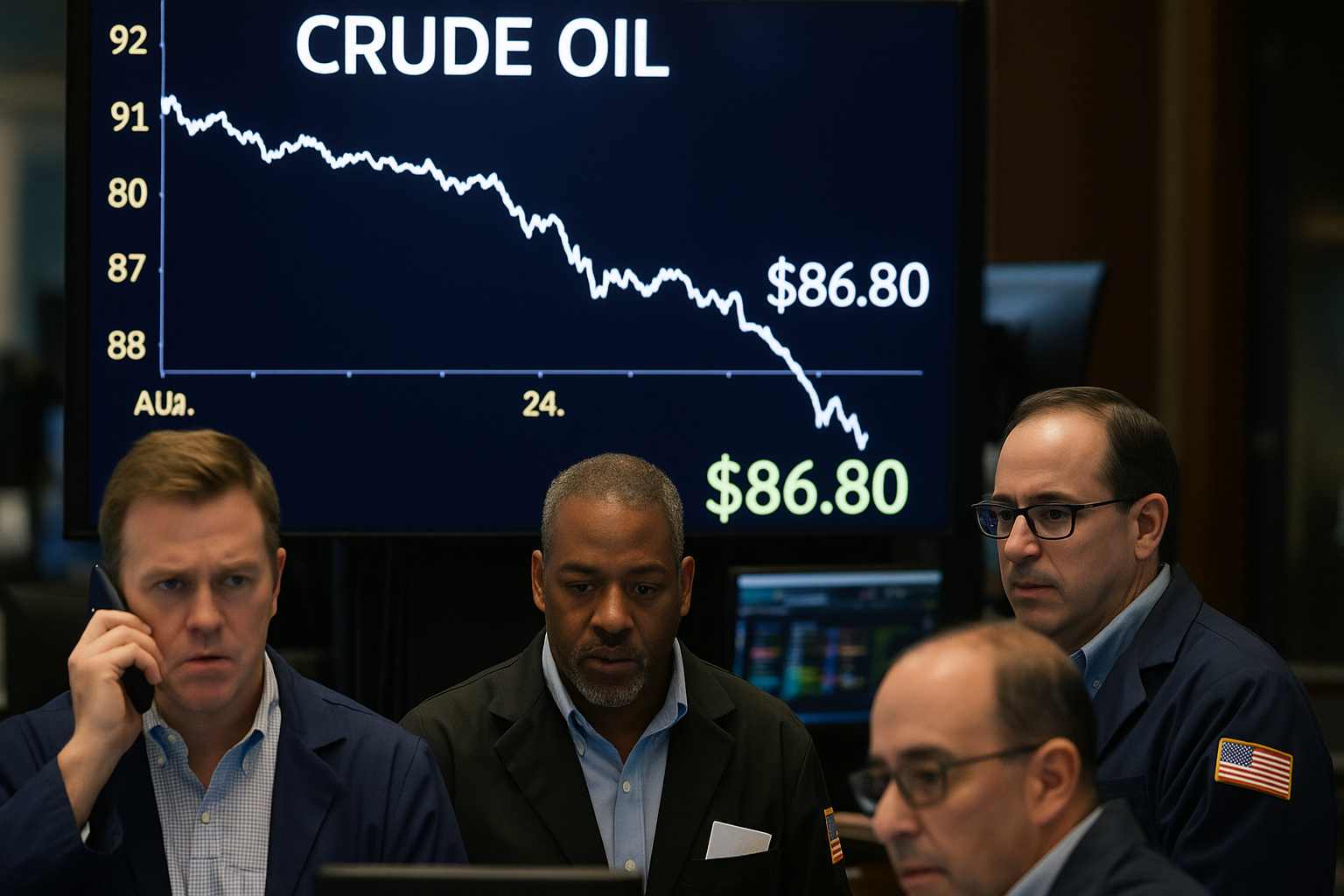
Brent fell from US$92.17 to US$86.80 in roughly 24 hours.
That is not peace breaking out. It is a market doing what markets do best: pricing the best possible outcome before anybody has actually delivered it.
On Wednesday, oil traders sold first and asked questions later after Iran and Oman restarted talks on managing traffic through the Strait of Hormuz. Brent was down US$1.78, or 2.0%, at US$86.80 a barrel in early trade after losing 3.9% on Tuesday. West Texas Intermediate was down 1.8% at US$80.87 after a 3.1% fall the day before.
Fair enough. A path toward reopening the world’s most important energy choke point matters.
But let’s not get carried away and call a discussion about a temporary navigation corridor a solved geopolitical problem. The same reports say an oil tanker was struck and disabled near the entrance to the strait on Tuesday. That is not a detail. That is the whole bloody point.
The market has repriced hope, not safety
Iran and Oman said they had discussed a joint temporary corridor through Hormuz and clearing mines from the waterway. Before the war began in February, the strait handled about one-fifth of global oil and liquefied natural gas shipments.
That number explains the speed of the sell-off.
When Hormuz looks blocked, the market has to price a supply shock. When it looks even partly passable, traders remove some of that fear premium. Brent’s fall from US$92.17 at Monday’s close to US$86.80 early Wednesday says the market thinks the odds of a full, prolonged shutdown have eased.
It does not say that shipping is normal. It does not say insurers are relaxed. It does not say shipowners will suddenly queue up to send expensive assets through a waterway where a tanker has just been disabled.
A corridor is not the same as reliable access.
A corridor means terms, patrols, mines, permissions, risk assessments and, most importantly, whether commercial operators believe the rules will still exist tomorrow morning. You can announce all the diplomacy you like. The bloke signing off on a tanker voyage still wants to know whether he will get the vessel, crew and cargo home.
That gap between a diplomatic headline and a functioning commercial route is where the real risk sits.
Why US sanctions did less than expected
The other part of the move is just as important. On Monday, US Treasury Secretary Scott Bessent unveiled expanded sanctions aimed at increasing economic pressure on Iran. Markets looked at that and decided sanctions are materially less threatening to immediate physical supply than another military escalation.
That verdict is cold, but logical.
Sanctions can be disruptive. They can reshape trade routes, financing, insurance, buyers and sellers. They can force businesses into costly workarounds. But they usually work over time. A missile strike, a mining event or a blockade can change the physical availability of oil today.
Traders therefore treated the shift toward economic pressure as a reduction in the near-term worst-case scenario. Oil sold off accordingly.
There was another practical factor: the American Petroleum Institute estimated US crude inventories rose by about 4.2 million barrels in the week ended August 21. Reuters polling had pointed to an expected increase of roughly 600,000 barrels.
That is not a trivial miss. A 4.2 million-barrel build is a reminder that the oil market is not only a map of the Middle East. It is also storage tanks, refinery demand, freight, production and whether the United States is accumulating barrels or drawing them down.
When a geopolitical premium meets a bigger-than-expected stock build, the easy trade is down.
Oil is not cheap. It is less panicked.
This is the bit many investors get wrong. They see a 5%-plus two-day move and declare that oil has become safe again.
No. Oil has become less terrified.
Brent at US$86.80 is not a price that screams abundance. It is a price that still carries a serious risk premium, just not the full panic premium attached to a potentially closed Hormuz.
That distinction matters for everyone from a portfolio manager to a small business owner ordering stock six months ahead.
If the corridor starts working, vessels move consistently, insurance availability improves and the risk of attacks visibly drops, oil can keep bleeding lower. The market will not wait for a formal peace treaty. It will respond to evidence that barrels can actually move.
But if talks stall, mines remain an issue, shipping incidents continue or either side decides the other has broken the arrangement, that premium can return with impressive violence.
Oil is one of the few markets where you can wake up to a two-sentence government statement and find yesterday’s consensus has been incinerated before breakfast.
That is why treating US$86.80 as a new permanent reality is amateur hour.
The overlooked angle: the price of oil is only half the bill
Here is the contrarian point: even if crude keeps falling, businesses and households may not feel immediate relief in the neat, linear way television commentators promise.
The headline crude price is only one input. The delivered cost of energy includes shipping, insurance, refining, distribution, currency moves, taxes and margins. A partially reopened route may reduce the crude panic premium while freight and insurance remain ugly because the actual operating environment is still dangerous.
That means a lower Brent price can coexist with stubbornly high costs further down the chain.
For operators, this is particularly relevant. If you import products, use energy-intensive freight, run a fleet or buy goods with heavy transport content, do not build your next quarter’s budget around one encouraging oil chart.
The same goes for investors piling into airlines, consumer stocks or anything marketed as a clean winner from lower energy. A lower barrel price helps. But it does not magically undo supply-chain uncertainty or restore consumer confidence if the broader inflation problem remains sticky.
Markets love simple narratives because simple narratives fit in a push notification. Real businesses live in the messy bit after the notification.
What Hormuz tells us about risk management
There is a broader lesson here that has nothing to do with whether you trade oil.
Most people insure against a repeat of yesterday’s problem. Good operators prepare for the thing that can happen between now and next Tuesday.
Hormuz has reminded the world that concentration risk is fine right up until it is catastrophic. One narrow waterway had carried about a fifth of global oil and LNG shipments. That is efficient on paper. It is also a giant single point of failure.
Businesses make the same mistake constantly. One supplier. One key customer. One advertising platform. One warehouse. One lender. One staff member who knows how the whole place works.
Then something breaks and everyone acts shocked.
Don’t be shocked. Fix the concentration before it becomes a crisis. The cost of a second supplier or a deeper cash buffer always looks unnecessary until it is the best decision you ever made.
What this means for you
First, do not make big investment calls because Brent moved from US$92.17 to US$86.80. The drop tells you the market sees a better chance of reduced disruption. It does not prove disruption is over.
Second, if you run a business exposed to fuel, freight or imported goods, use this pullback to review your assumptions. Ask your suppliers what portion of your pricing is crude, freight and insurance. Those are three different risks. If they cannot tell you, you are operating blind.
Third, stress-test your cash flow at three oil scenarios: Brent around US$80, around US$90 and back above US$100. You do not need to predict the exact number. You need to know where your margins, customer demand and working capital start getting punched in the face.
Fourth, keep your portfolio honest. If you own energy stocks, airlines, transport businesses or consumer names because you have a grand macro view, write down what would prove you wrong. A functioning Hormuz corridor, further shipping attacks, a change in sanctions enforcement and US inventory data are all more useful signals than someone shouting on financial television.
The real opportunity is not guessing tomorrow’s oil price. It is refusing to confuse a hopeful headline with a resolved risk.
That habit will make you a better investor, a sharper operator and a lot harder to surprise.