Brown-Forman’s $15B Sazerac Snub Is a Tequila Warning
A $15 billion offer could not buy Brown-Forman. That tells you tequila’s real problem is not a lack of buyers — it is a lack of growth worth paying up for.
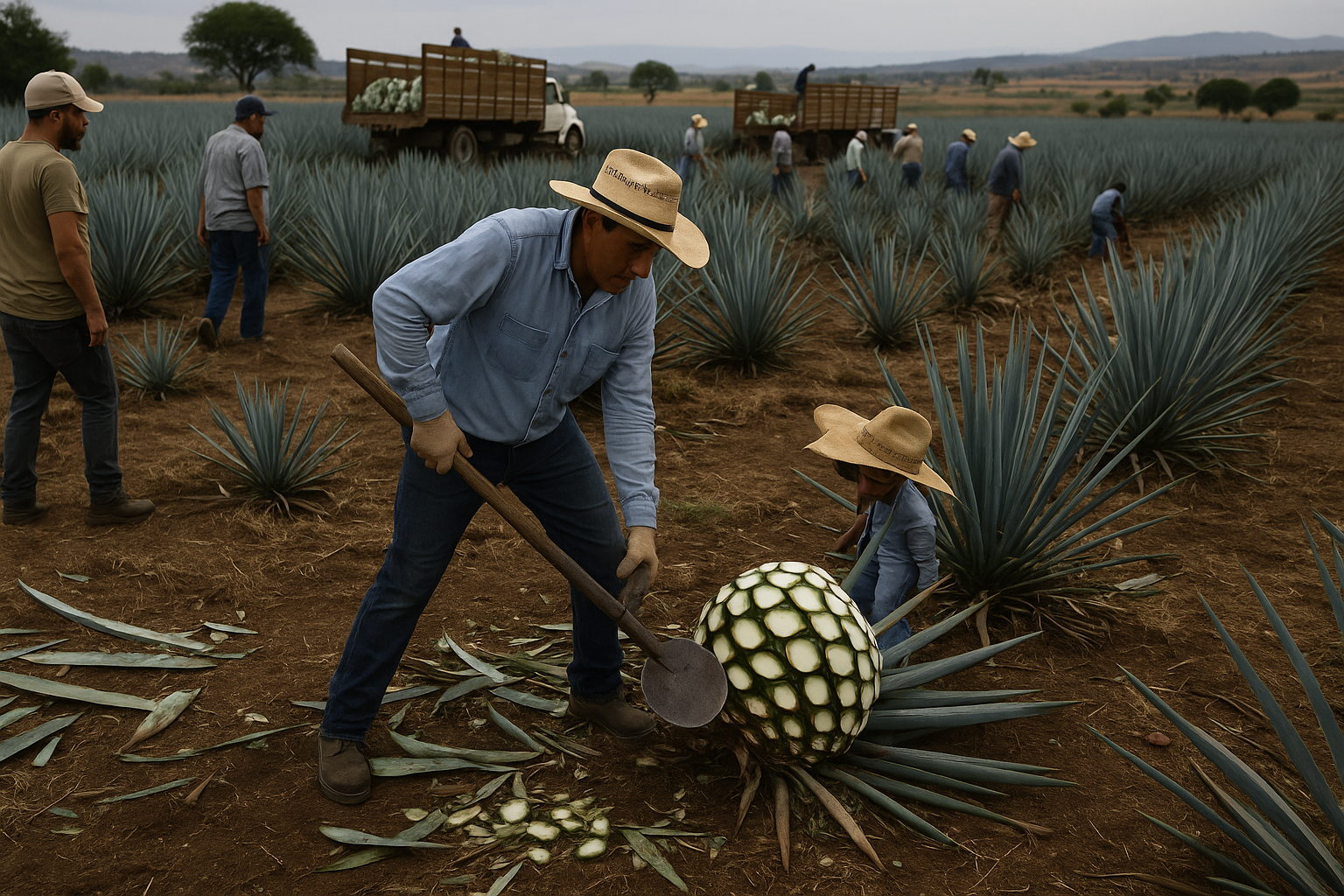
Brown-Forman had a $15 billion problem sitting on the table, and it still said no.
Sazerac’s unsolicited $32-a-share cash offer, made on May 1, 2026, was deemed “not actionable” by Brown-Forman’s board in late July. That is not just a bourbon-industry stoush between two Kentucky heavyweights. It is a warning shot for anyone who thinks tequila remains an automatic ticket to premium growth.
Brown-Forman owns Herradura and el Jimador. Its tequila portfolio fell 4% in reported net sales in fiscal 2026, or 6% organically. Herradura was down 9% reported and 10% organically; el Jimador slipped 2%. Meanwhile, its New Mix ready-to-drink business grew 41% reported and 33% organically.
There it is, plain as day: consumers are not abandoning agave. They are changing how, where and how much they buy it. If you run a tequila brand and you are still presenting a fancy bottle, celebrity launch party and inflated wholesale price as a strategy, you are not building a business. You are just hoping the old boom comes back.
The deal story is really a growth story
The headline is Sazerac versus Brown-Forman. Sazerac, the privately held owner of brands including Fireball, Southern Comfort and Myers’s Rum, wanted to buy the maker of Jack Daniel’s, Woodford Reserve, Old Forester, Herradura and el Jimador. Reports put its approach at roughly $15 billion, with a $32-per-share cash proposal.
Brown-Forman had already been in discussions with Pernod Ricard about a possible combination. Those talks were publicly confirmed on March 26 and formally terminated on April 28 after the companies could not reach mutually agreeable terms.
That sequence matters. It says Brown-Forman was willing to examine a large strategic move. This was not a company pretending consolidation did not exist. But a board controlled by a founding family has a different equation from a fund manager trying to juice next quarter’s share price. Cash is lovely. Control, legacy and a belief that the buyer is underpaying are lovelier.
For Sazerac, Brown-Forman would have brought global scale, a deep whiskey portfolio and meaningful agave assets. For Brown-Forman, Sazerac’s interest validated the underlying quality of the portfolio but did not solve the central question: why sell at a cycle low if you believe the brands can recover?
That is the optimistic reading.
The tougher reading is that the buyer and seller could not agree on what those brands are actually worth in a market where premium spirits growth has stopped being easy. That is where tequila enters the picture.
Tequila has gone from tailwind to knife fight
The tequila category did not suddenly become bad. That is lazy analysis. It became crowded, expensive and much less forgiving.
For years, tequila had almost every structural advantage an alcohol brand could dream of. It had a strong cultural story, premium credentials, cocktail relevance, a clean-label halo compared with syrupy flavoured spirits, and a consumer base happy to trade up. Big companies bought in, celebrities piled in, distributors filled their books, and every founder with a famous mate decided they had discovered Mexico.
The result is predictable: too many brands chasing too few clear reasons to exist.
Brown-Forman’s fiscal 2026 results are a useful reality check because they show the split inside a serious spirits company. Its total tequila portfolio declined 4% in reported sales. Herradura, the more premium-facing brand, was hit harder, with sales down 9% reported. Brown-Forman specifically pointed to lower U.S. volumes for Herradura. el Jimador declined in both the United States and Mexico, though higher Colombian volumes partly offset the damage.
At the same time, New Mix — a tequila-based ready-to-drink brand with momentum in Mexico and a U.S. launch underway — grew 41% in reported sales.
You do not need a strategy consultant in a navy suit to interpret that. The consumer has not woken up and decided agave is boring. The consumer is deciding that convenience, occasion and value matter more than another aspirational bottle collecting dust behind the bar.
That is an uncomfortable message if your business plan depends on selling $80 blanco tequila to people who were happily paying $45 two years ago.
The overlooked angle: RTD is not tequila’s enemy
A lot of tequila people talk about ready-to-drink as though it cheapens the category. That is snobbery dressed up as brand protection.
RTD can be rubbish, obviously. Plenty of it is. But a good RTD is not a betrayal of a spirit brand. It is a route into occasions that a 750ml bottle cannot win on its own: beaches, concerts, barbecues, sporting events, casual gatherings and the fridge of someone who does not want to play amateur bartender after a long week.
New Mix’s growth matters because Brown-Forman says it was driven by market-share gains in Mexico, an accelerating category there, and its U.S. launch. That is not a gimmick. It is evidence that format can matter as much as liquid pedigree.
The smart tequila operator should not read that and rush out a neon can next Tuesday. That would be the usual industry overreaction. The lesson is more basic: build products around real drinking behaviour, not founder mythology.
Ask better questions. Where is the product consumed? What job does it do? Is it for sipping, cocktails, gifting, travel, an easy fridge grab, a restaurant pour or a celebration? Can a consumer understand the proposition in three seconds without a brand ambassador explaining it to them?
While building Agave Finder, I keep coming back to the same thing: the agave world has more information and more choice than ever, but the average buyer still wants a shortcut to confidence. They want to know what is good, what it costs, where it fits and whether it is worth buying again. Brands that make that easy will win more often than brands that simply shout “premium” louder.
Why a rejected bid matters to founders and investors
The easy takeaway from the Sazerac bid is that big spirits assets are still valuable. True. But incomplete.
The more useful takeaway is that buyers are buying distribution, repeatable brands, production capability, geographic reach and cash flow — not vibes. A strong tequila story is not the same thing as a strong tequila asset.
Brown-Forman finished fiscal 2026 with $3.9 billion in net sales, down 1% reported but flat organically. It generated $1.0 billion in cash flow from operations and $893 million in free cash flow. That is what makes it strategically consequential. Its tequila brands sit inside a company with global routes to market, serious supply infrastructure, established distributor relationships and a huge whiskey engine.
Your emerging tequila brand does not need all of that. But it needs to understand what it lacks.
If you are a founder, do not confuse a great launch with a durable route to market. Retailers can list you once. Distributors can take meetings. Influencers can create a spike. None of that proves consumers will reorder after the novelty has worn off.
If you are an investor, stop treating “tequila” as an investment thesis. It is a category. Categories do not generate returns; businesses do. The questions are whether the brand has pricing power, gross-margin resilience, a sane supply position, genuine differentiation, repeat purchase and a credible distribution plan.
And if you are an operator at a larger company, the Brown-Forman result should make you less interested in blanket discounting. A soft category is when weak brands panic, slash price and train consumers to wait for promotions. The better response is sharper architecture: know which SKU is your accessible entry point, which one earns premium margin, and which one should be killed because it adds complexity without demand.
The contrarian bet: tequila may be healthier after a brutal clean-out
Here is the bit most people miss. A slowdown can be the best thing to happen to tequila.
The boom created inflated expectations, lazy branding and an assumption that every agave bottle deserved a premium multiple. That was never going to last. Now the market is forcing a distinction between brands with real operating muscles and brands that were just good at being photographed.
That is healthy.
Herradura’s decline does not mean established tequila brands are finished. New Mix’s growth does not mean every future winner will come in a can. Sazerac’s rejected offer does not mean Brown-Forman is untouchable forever. It means the next phase will be more disciplined than the last one.
The winners will not necessarily be the loudest celebrity brands or the most expensive bottles. They will be the businesses that can earn a place in a consumer’s routine, protect product quality, manage inventory, communicate value clearly and keep distribution partners hungry to sell them.
That is a much harder game than launching a label. It is also where actual fortunes are made.
What this means for you
If you are building a spirits brand, run this test tomorrow morning:
1. Identify your repeat buyer. Not your launch-night buyer. Not the mate who wants a bottle for Instagram. Who buys again within 60 days, and why? 2. Map your price ladder. If consumers trade down, where do they go within your portfolio? If the answer is “to someone else’s brand”, you have a problem. 3. Treat RTD as an occasion, not a compromise. If the liquid and format fit a real use case, test it properly. If they do not, leave it alone. 4. Measure depletion, not applause. Sell-through, reorders, account retention and contribution margin tell you the truth. Social reach is often just decorative wallpaper. 5. Build for a buyer before you need one. Buyers pay for durable systems: supply, distribution, margins, consumer loyalty and management depth. They do not pay top dollar because your deck says tequila is hot.
Sazerac’s $15 billion swing at Brown-Forman is a reminder that great spirits assets remain strategic. Brown-Forman’s tequila and RTD numbers are the more useful lesson: the money is no longer flowing automatically to “premium tequila.” It is flowing to brands that fit the way people drink now.
That is not bad news. It is just the end of easy money — and good businesses should be delighted by that.