Bundesliga’s $100M Fandango Deal: Why Bayern Munich Just Took a Pay Cut
The Bundesliga didn’t win America with a $100 million TV deal. It sold cheaper rights, handed its shop window to Fandango, and called it growth.
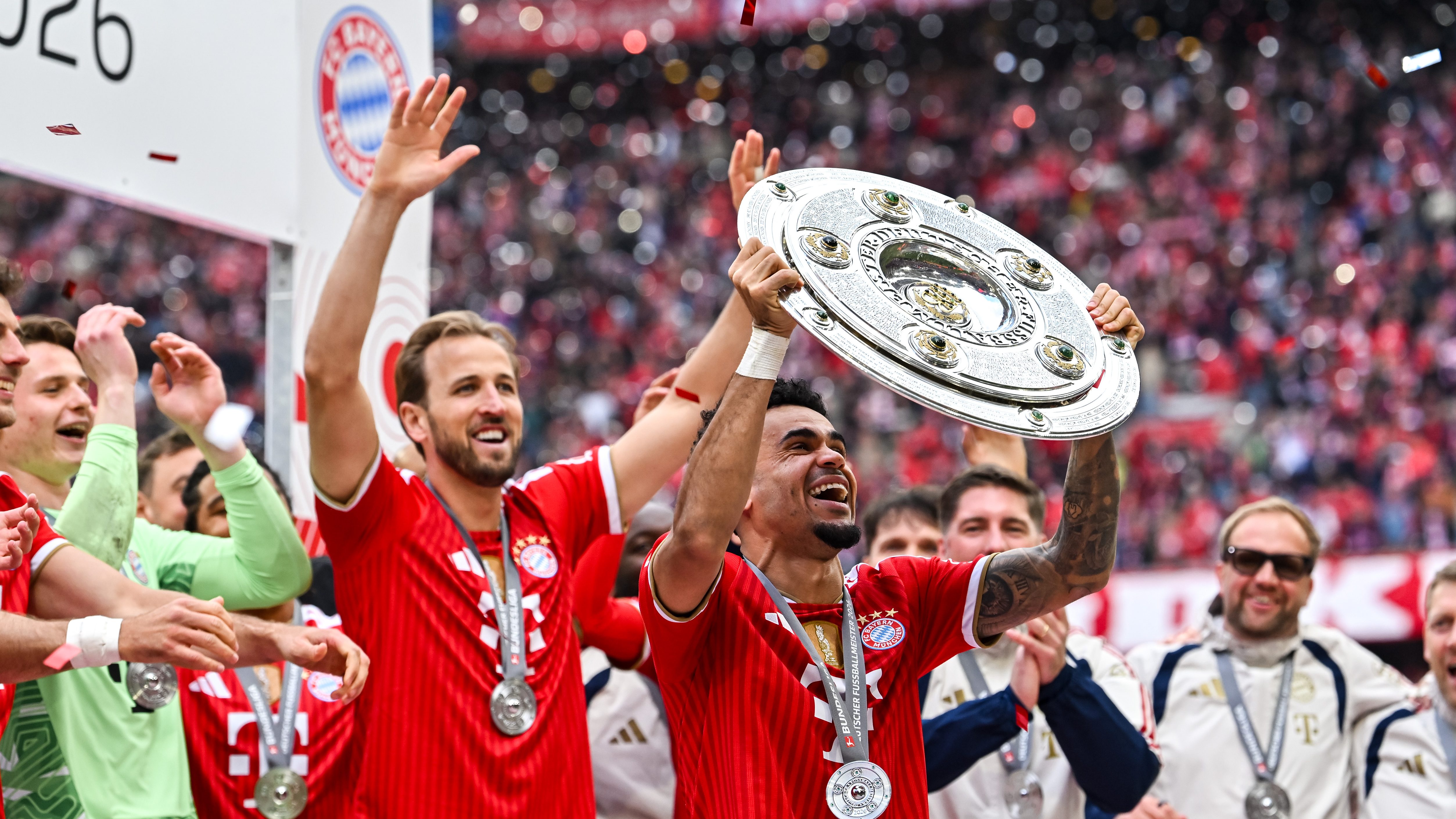
The Bundesliga didn’t win America with a $100 million TV deal. It sold cheaper rights, handed its shop window to Fandango, and called it growth.
That sounds harsh because it is. But if you run a business, you learn quickly that a big headline number can hide a lousy trade. Bayern Munich, Harry Kane, Jamal Musiala, Luis Díaz, Michael Olise and Borussia Dortmund are not being sold into the United States because Germany suddenly discovered a better cheque. They are being used to test whether a freshly separated media company can turn a movie-ticket brand into a sports platform.
The $100 million deal is really a distribution bet
The Bundesliga has agreed to a five-year English-language U.S. media-rights deal with Versant’s USA Sports. Sports Business Journal reported the package is worth $100 million in total, or $20 million a year.
Beginning with the 2026-27 season, more than 300 live Bundesliga matches will be carried in the U.S. across USA Network and Fandango. USA Network will show more than 30 matches per season; the rest of the English-language inventory goes to Fandango.
Read that again: Fandango.
Not ESPN. Not Amazon. Not Apple. Not YouTube. Fandango — the company most Americans associate with buying cinema tickets — is getting a live-sport use case.
Versant is not pretending this is just another football-rights acquisition. It is trying to make Fandango more useful, more habitual and more commercially valuable. The Bundesliga is the bait.
For the league, the upside is reach. USA Network gives marquee fixtures linear-TV visibility. Bayern Munich against Borussia Dortmund, Kane against Karim Adeyemi, or Musiala against a major rival can be packaged as a proper event rather than left to disappear inside an app menu. Meanwhile, Fandango creates a free, ad-supported route for the wider schedule.
That is the theory.
The problem is that reach is not the same thing as revenue, and availability is not the same thing as habit. A product can be technically free and still hard to find. Ask any founder who has built something good, then watched customers fail to understand where it lives or why they should care.
What Bayern Munich and Borussia Dortmund are actually selling
The Bundesliga’s strongest export is not German football in the abstract. Nobody in Texas wakes up desperate for a lesson in the DFL’s governance structure.
They tune in for stars and stakes.
Bayern have Harry Kane, Jamal Musiala, Luis Díaz and Michael Olise. Borussia Dortmund remain one of the game’s recognisable youth-development and supporter-culture brands, with Karim Adeyemi among the headline names. Those are commercial assets, not merely players on a team sheet.
The league is also selling a product American fans can understand quickly: loud stadiums, packed stands, attacking football, historic clubs and a regular supply of young players before they become Premier League property. It is a decent product. In plenty of ways, it is a better television product than the prices attached to it suggest.
But the Bundesliga has a structural headache. The Premier League has become the default global league, the way the NFL is the default American football product. La Liga owns Barcelona and Real Madrid. Serie A has heritage and a growing North American commercial push. MLS owns local access and is using the 2026 World Cup halo in its backyard.
Germany’s league needs an answer sharper than, “We have good football too.”
That answer appears to be distribution: more than 80 million U.S. homes across the new English- and Spanish-language arrangements, according to the Bundesliga. Telemundo and Universo will show more than 100 matches a season in Spanish, while every match will be available to stream on Peacock in Spanish.
That is intelligent on paper. The U.S. Hispanic football audience is not an afterthought; it is central to the market. Treating Spanish-language coverage as a core product rather than a side feed is simply better business.
The overlooked angle: Fandango is the real customer here
Most coverage of media-rights deals asks whether the league got enough money. Fair question. It is also incomplete.
The more interesting question is: who needs whom more?
The Bundesliga needs American relevance before and after the 2026 FIFA World Cup. Versant needs distinctive live programming as it builds USA Sports and searches for ways to make Fandango more than a transactional movie brand. That gives both sides an incentive to make noise.
But their incentives are not identical.
For the Bundesliga, the goal is to turn a casual viewer into a Bayern, Dortmund, Leverkusen or Frankfurt fan — someone who buys shirts, follows players, watches clips, travels for summer tours and eventually becomes commercially useful to clubs and sponsors.
For Versant, the goal is much simpler: acquire viewers cheaply enough, serve them advertising, collect data and make them come back. It does not need a 20-year Bayern fan. It needs a measurable audience that helps justify an ad-tech and streaming strategy.
That distinction matters.
In business, the bloke paying you is not always your customer. Sometimes your customer is the audience, and the payer is the advertiser. Sometimes the audience is merely the inventory. If you confuse those roles, you make dreadful decisions.
The Bundesliga is effectively wagering that Fandango can become a discovery engine instead of a dead end. If it works, the league gets younger viewers, first-party viewing data through a modern platform and a new commercial channel in the world’s richest advertising market.
If it fails, fans will simply go back to watching highlights, social clips and whichever English club is easiest to find on the service they already pay for.
Why the lower cheque may still be rational
Here is the contrarian view: taking less guaranteed media money is not automatically stupid.
I have done deals where the larger upfront cheque was the wrong deal because it trapped the business in the wrong distribution, with the wrong customer relationship, for too long. Cash matters. But strategic optionality matters too.
The Bundesliga’s 17-year partnership with Relevent, announced in 2024, was designed to build a dedicated commercial operation across the Americas. The league is not treating U.S. rights as a one-off auction anymore. It is building local sales, sponsorship and audience infrastructure.
That makes a broad-reach agreement more defensible.
The catch is execution. “More accessible” only means something if the product is easy to locate, the app works on the telly, match times are promoted properly, commentators and shoulder programming are credible, and the biggest games do not become a scavenger hunt across cable, Fandango and Peacock.
Sport is not a normal content business because it is live, tribal and perishable. Miss Bayern versus Dortmund live and the value falls off a cliff. You cannot sell convenience while making the customer work harder than they did before.
So the Bundesliga does not get to celebrate the deal yet. It gets to prove it.
The bigger warning for sports owners
Every sports league now wants to be a media company, a data company, a creator economy and a direct-to-consumer platform. Fine. Just don’t confuse ambition with a business model.
Media-rights inflation is not guaranteed forever. The old model — auction exclusive rights to a giant broadcaster, bank the cheque, repeat — is under pressure. Fragmented viewing means leagues increasingly trade some certainty for distribution, data and flexibility.
That can build value. It can also become a very expensive excuse for weaker economics.
The smart operator watches three things over the next two seasons: average audience for USA Network windows; Fandango’s ability to convert casual viewers into repeat viewers; and whether Bundesliga clubs can turn U.S. attention into sponsors, merchandise, tours and paid memberships.
Not social-media impressions. Not press-release reach. Money and repeat behaviour.
What this means for you
If you are a founder, investor or operator, nick this lesson: never judge a deal by its headline value alone.
Ask four blunt questions before you sign anything:
1. Who owns the customer relationship? If another platform owns the data, the billing and the habit, you may be renting growth rather than building it. 2. Is the distribution frictionless? Great products die every day because customers cannot find them, understand them or access them on the device they actually use. 3. What does the smaller cheque buy us? Lower upfront revenue can be sensible if it creates measurable reach, future pricing power or a better route to the customer. If it buys only a prettier slide deck, walk away. 4. What proves this worked in 12 months? Define the numbers before the champagne: active users, retention, advertising yield, conversion, sponsor revenue or merchandise sales.
The Bundesliga’s $100 million wager is not really about football. It is about whether distribution can become an asset instead of a compromise.
Bayern Munich, Harry Kane and Jamal Musiala will get the clicks. But the real game is whether Fandango can keep the viewer after the final whistle. That is where the money is.
Sources
- Bundesliga, Versant ink five-year deal, putting games on USA Network and Fandango
- USA Sports and Bundesliga announce exclusive multi-year U.S. media rights agreement
- Bundesliga broadens U.S. broadcast access with USA Sports and Telemundo deals
- DFL and Relevent Sports agree long-term Bundesliga Americas partnership