Cadbury and LUAR’s 5-Clutch Campaign Is Selling Sharing
A handbag that took eight hours to make and cannot be bought is a better marketing investment than most brands’ next 50 Instagram posts.
A handbag that took eight hours to make and cannot be bought is a better marketing investment than most brands’ next 50 Instagram posts.
That is the uncomfortable lesson in Cadbury’s latest move. On September 10, Cadbury launched its largest U.S. campaign to date with a crystal-covered LUAR clutch built to carry chocolate. Just five exist. None are for sale. And that is precisely why people might care.
Cadbury Is Selling a Behaviour, Not a Chocolate Bar
The campaign is called “There’s Magic in More.” Its central idea is generosity: more thought, more care, more chocolate shared with someone else.
Yes, that can sound like the sort of line a committee writes after too much catering. But Cadbury has done something smart with it. Instead of merely filming a soft-focus ad about kindness, it has given the idea a physical object people can talk about.
The Cadbury Clutch was designed with Raul Lopez’s New York fashion label, LUAR. It is jewel-tone purple, has gold accents and Swarovski crystals, and contains an insulated interior intended to keep Cadbury chocolate cool. The flap took roughly eight hours to complete. Cadbury made five of them.
The clutch will appear around New York Fashion Week, including LUAR’s Spring/Summer 2027 show on September 14. NYLON editor-in-chief Lauren McCarthy and creator Tefi Pessoa are also part of the activation. Consumers cannot buy the thing; instead, two people nominated through a pay-it-forward sweepstakes, and the people who nominate them, will receive the custom clutches.
That last bit matters. Cadbury has not made an expensive accessory and pretended it is product innovation. It has made a cultural prop that turns its positioning into an action: give someone something, tell their story, share the moment.
Most marketing departments get this backwards. They start with channels: TikTok, creators, outdoor, paid social, whatever the intern has put in the deck. Then they shovel a bland message across every surface and act surprised when it produces bland results.
Cadbury has started with a behaviour it wants associated with the brand: sharing. The clutch is just the highly photographable evidence.
Why a $11.7 Billion Company Needs a Five-Bag Stunt
Hershey is not some scrappy challenger hoping one clever campaign will save it. The company says it generates more than $11.7 billion in annual revenue, operates across more than 85 brands and sells in roughly 65 countries. It also employs more than 20,000 people.
Big companies have a nasty habit of mistaking distribution for relevance. They have the shelves, the retailer meetings, the media budgets and the household recognition. Then they wake up one day and realise consumers still know them, but no longer feel much about them.
That is the real job here: make an old, familiar product feel culturally alive without making it unrecognisable.
Cadbury is trying to do that by taking a mass-market chocolate brand into fashion, creators and a giveaway built around generosity. The brilliance is not that a chocolate company has found New York Fashion Week. Plenty of brands can rent a piece of culture for an evening. The question is whether Cadbury’s core product logic survives the trip.
In this case, it does.
Chocolate is already a small gift. It is cheap enough to be casual, personal enough to feel thoughtful and easy to share. A clutch designed to carry XL chocolate bars is not random brand cosplay. It exaggerates what the product is already for.
That is a rule founders should tattoo somewhere visible: the best campaign idea is usually hiding inside the product’s existing behaviour. You do not need to invent a new personality every quarter. You need to make the truth of the product more noticeable.
Hershey’s Bigger Shift Is From Reach to Resonance
Cadbury’s campaign is not happening in isolation. Hershey has been openly reshaping how it thinks about marketing and commercial execution in 2026.
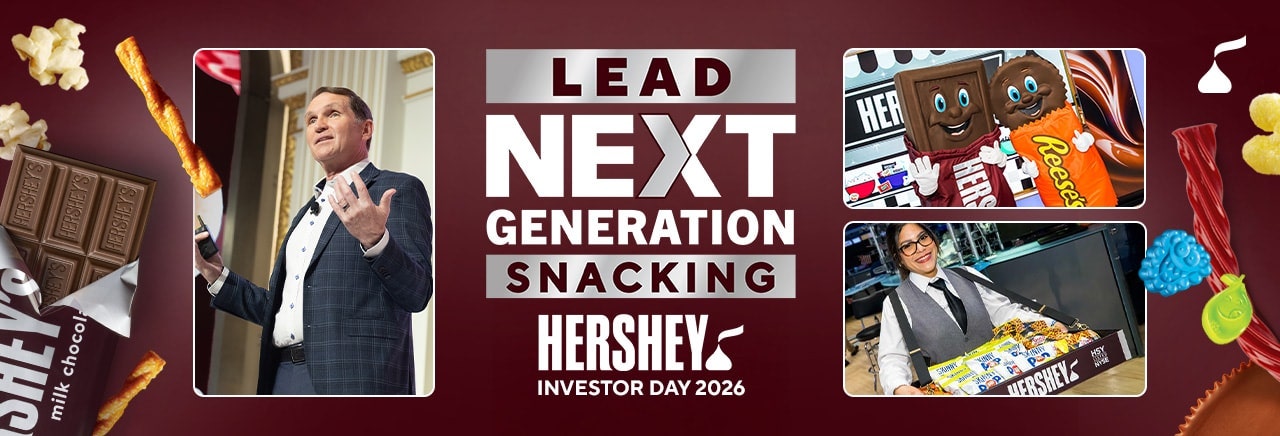
At its March 31 investor day, the company put a useful phrase on the table: it wants more resonance, not simply more reach. That is corporate language, admittedly, but the underlying point is dead right. Being seen is not the same thing as being chosen.
Hershey says its social-first Reese’s Oreo Cup campaign generated billions of earned impressions and was 1.5 times more effective than prior Reese’s campaigns. The company is also projecting more than $1.5 billion in sales over five years from innovation across premium, functional, customised and multisensory products.
More importantly, Hershey has brought its confectionery, salty-snack and protein portfolios together under an operating model called ONE Hershey. The company says its 1,100-person sales force serves more than 75,000 stores.
That means a Cadbury fashion stunt is not merely a communications play. If it works, it gives the company material for retailer conversations, social content, sampling, in-store activation, product bundles and seasonal displays. It gives the sales team a story that is bigger than “please give us another shelf.”
This is what good brand marketing does when it is properly run: it makes distribution work harder. It gives every commercial interaction a little more leverage.
The rookie error is treating brand and performance as rival religions. One lot wants awards and cinema-grade films; the other wants cheap clicks and dashboards full of arrows. Meanwhile, the customer does not care about your internal politics. They simply decide whether your product is worth remembering, trying and buying again.
Cadbury’s clutch is designed to do the remembering bit. The bars, retail execution and follow-through must do the buying-again bit.
The Contrarian View: The Clutch Is Not the Point
Let me be blunt: five fancy handbags will not move the needle on their own for a company of Hershey’s size.
If the campaign ends with a few fashion photos, a nice film and a clutch people discuss for 48 hours, then it is decorative nonsense. Expensive decoration is still decoration.
But dismissing the activation because only five bags exist would miss how modern consumer marketing actually works. Scarcity is not the sales strategy here. Scarcity is the signal.
The five clutches tell editors, creators and consumers that Cadbury has made a genuine object, not another AI-generated mood board with a hashtag underneath it. The object is rare enough to be newsworthy. Its purpose is simple enough to explain in one sentence. And its visual cues — purple, gold, chocolate, sharing — are unmistakably Cadbury.
That is the overlooked bit. Distinctive assets are commercial assets.
Too many businesses spend fortunes making ads that could belong to any competitor if you removed the logo. Generic bright colours, generic young people, generic soundtrack, generic claim about “unlocking possibility.” Absolute porridge.
Cadbury is leaning into cues it owns: purple, Dairy Milk, abundance and sharing. LUAR gets to bring fashion credibility and craft. The partnership has tension, but it is coherent tension. That is what makes it useful.
There is also a warning for founders. Do not chase cultural relevance by borrowing a cool brand like a rented jacket. Before you partner with anyone, ask one ruthless question: does their audience make the product’s existing meaning sharper, or are we just trying to look less boring?
If it is the second one, save your money.
What This Means for You
Whether you sell software, sandwiches, advisory work or spirits, the lesson is not “make a Swarovski handbag.” Please do not. The world has enough embarrassing brand stunts already.
The lesson is to build one useful, memorable expression of the behaviour your product already enables.
Start tomorrow with this:
1. Name the customer behaviour you want to own. Not a value like “innovation” or “community.” A behaviour. Cadbury chose sharing and generosity. What is yours? Faster decisions? Better hosting? Less admin? Smarter saving?
2. Find the product truth underneath it. If you cannot connect the behaviour to something your product genuinely does, the campaign will smell like perfume sprayed over rubbish.
3. Create one object, event or ritual that proves the idea. It should be easy to describe, visually distinct and worth repeating. This is not about making it expensive. It is about making it specific.
4. Design it for the whole commercial machine. Ask how the sales team, retailer, creator, customer-support crew and paid-media buyer can each use it. If the answer is “they can share the campaign video,” you have not gone far enough.
5. Measure the boring stuff after the exciting stuff. Earned attention is lovely. But watch search demand, product trial, repeat purchase, retailer conversations and sales conversion. The stunt earns its keep only when it changes behaviour.
Cadbury’s September 10 launch is a good reminder that memorable branding does not come from saying more. It comes from making one clear idea impossible to ignore.
That is harder than posting every day. It is also how you build a brand people choose when the price is not the only thing on the shelf.