Castelion’s $1B Round Proves Defence Startups Are Now Industrial Businesses
A $1 billion cheque for a missile startup is not a venture-capital headline. It is a brutal reminder that the next great startups will need factories, contracts and the nerve to build hard things.
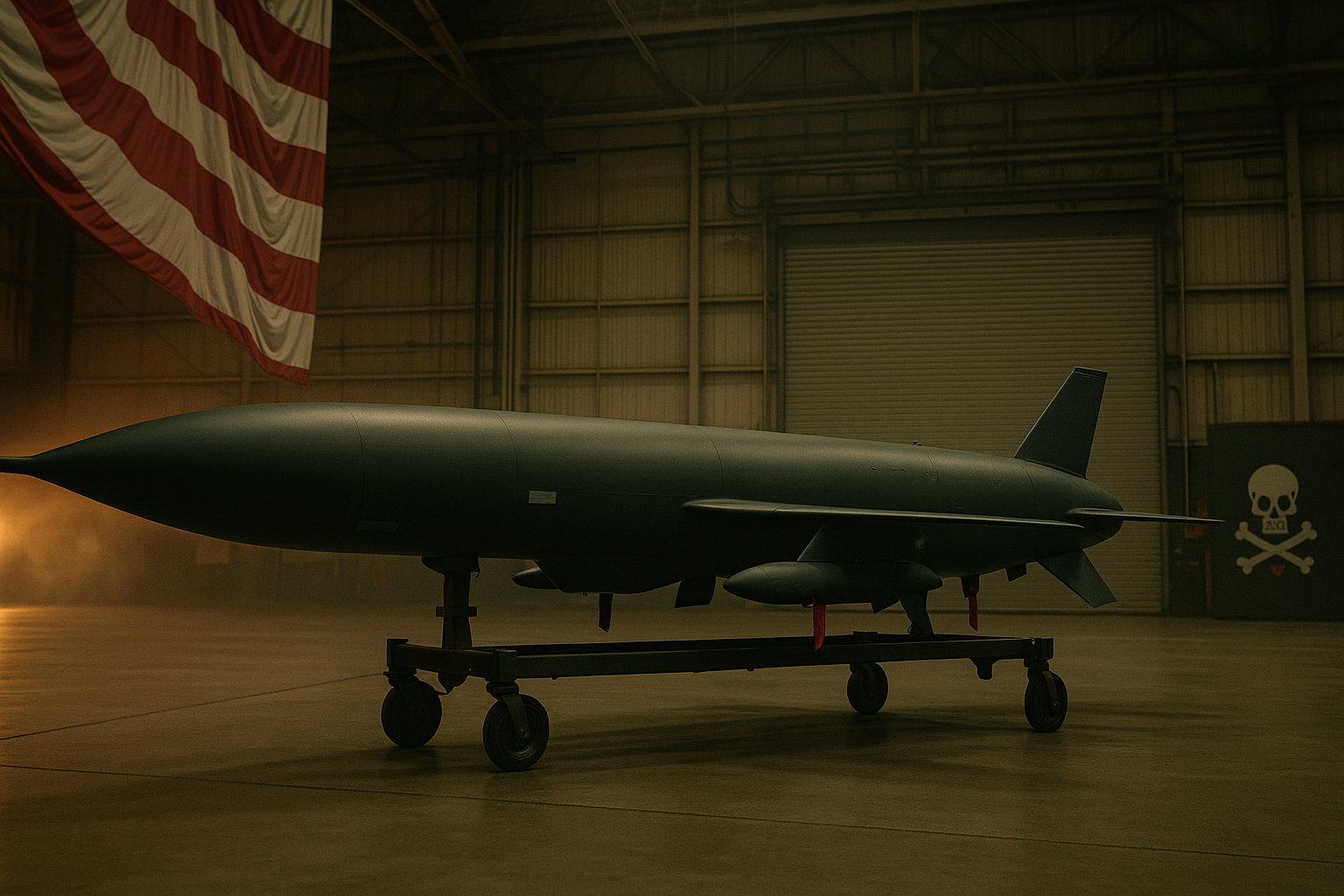
Castelion’s reported $1 billion raise is not a venture-capital headline. It is a warning shot for every founder still mistaking a slick demo for a business.
Carlyle joining the hypersonic-missile startup’s new round tells you where serious capital thinks the money is going: not merely into software that writes emails faster, but into companies that can build strategically important physical products at industrial scale.
That is harder, slower and far more expensive than starting another AI wrapper. It is also where the moat is.
A $1 billion vote on whether America can still build
SpaceNews reported that Castelion, the California-based maker of the Blackbeard hypersonic weapon, has raised $1 billion. That is a monster number for a startup founded in late 2022.
But the important bit is not the number. Plenty of companies can raise a pile of money when the market is drunk on a theme. The important bit is what the company had to do to make the raise credible.
Castelion did not turn up with a nice brand video and a chatbot. It turned up with hardware, test flights, government contracts, manufacturing sites and a very clear customer problem.
Its prior $350 million Series B in December 2025 was earmarked for Blackbeard’s integration with Army and Navy platforms, Project Ranger — a 1,000-acre solid-rocket-motor manufacturing campus in New Mexico — and a production ramp measured in thousands of missiles per year. The round was led by Altimeter Capital and Lightspeed Venture Partners, with Andreessen Horowitz, General Catalyst and others participating.
Since then, the customer traction has become much more concrete.
In April, Castelion announced a $105 million U.S. Navy contract to integrate Blackbeard with the F/A-18E/F Super Hornet, with the goal of an early operational capability in 2027. In May, it announced a production framework agreement targeting a minimum of 500 weapons annually after testing and validation, with a pathway to thousands more. In June, the Navy awarded Castelion a $23.4 million firm-fixed-price order for 50 early-operational-capability pre-production prototypes and 50 shipping containers.
Now we have the $1 billion round.
That sequence matters. Fundraising is not validation. Contracts are not full-scale production. And a framework agreement is not the same thing as cash in the bank. But put the pieces together and you can see why big private-capital firms are leaning in: Castelion is trying to turn a national-security requirement into an actual manufacturing machine.
That is a vastly more serious proposition than selling software seats on a promise.
The real product is not the missile. It is production capacity.
Here is the uncomfortable truth: in a serious conflict, the best weapon on earth is useless if you can only make a handful of them each year.
The old defence model excelled at building spectacular, exquisite systems in modest quantities, on glacial timelines, at prices that make taxpayers wince. Castelion’s pitch is that it can do the opposite: design for manufacture from day one, test rapidly, vertically integrate the critical bits and build enough inventory to matter.
I have a lot of respect for that approach because it is how real businesses are built.
A founder who says, “We’ll sort out operations after product-market fit,” is usually talking about a digital product. In hard tech, operations are product-market fit. If you cannot source components, hire the specialist labour, meet safety standards, run quality control, maintain a test cadence and deliver to a customer’s timetable, you do not have a business. You have a very expensive science project.
Castelion says it conducted more than 20 development flight tests during 2025. It says Project Ranger is designed to produce thousands of Blackbeard missiles each year. The company has manufacturing operations across New Mexico, Texas and California.
This is why the latest funding round is so significant. A billion dollars is not there to make the pitch deck prettier. It is there because the ugly work costs real money: land, tooling, machinery, inventory, specialist engineers, propulsion facilities, testing, safety systems, supply-chain buffers and working capital.
Software founders have been conditioned to worship capital efficiency. Fair enough — I hate waste as much as the next bloke. But capital efficiency does not mean spending as little as possible. It means spending the right amount to achieve a defensible outcome before somebody else does.
If the prize requires a factory, being undercapitalised is not disciplined. It is fatal.
Why Carlyle matters more than another VC logo
The Carlyle name is a tell.
Traditional venture capital is comfortable funding the search for product-market fit. But a company moving from prototype to production needs a different breed of capital — patient, operationally literate and capable of underwriting asset-heavy growth.
That does not mean the company has “graduated” from venture, nor that the normal rules of execution no longer apply. Quite the opposite. It means Castelion is entering the dangerous middle stage where a business can burn a fortune before it proves repeatable delivery.
Building one working missile is engineering. Building hundreds or thousands of reliable missiles, with stable quality and predictable unit economics, is industrial management.
Those are different sports.
The investors backing this round are effectively betting that the Castelion team can make that transition before the money disappears into capex, delays and defence-procurement bureaucracy. The company’s founders and senior leaders include SpaceX alumni, and that matters because SpaceX changed expectations around rapid hardware iteration and building internally rather than outsourcing every critical capability.
But pedigree is not immunity. Hardware companies die all the time because brilliant engineers underestimate manufacturing, and finance people underestimate engineering. The winners marry both disciplines brutally well.
The overlooked angle: defence tech is becoming a supply-chain trade
Most people will read this as a hypersonics story. I think that is too narrow.
It is really a supply-chain story.
The United States needs more capacity in solid rocket motors, propulsion, energetics, specialised electronics and precision manufacturing. These are not glamorous categories until suddenly they are the bottleneck. Then everyone discovers that a nation cannot download industrial depth from the cloud.
That creates a very different startup opportunity from the usual Silicon Valley playbook. The best businesses may not be the ones with the flashiest technology. They may be the ones that own the bottleneck: a qualified production process, a rare material supply, a certified facility, a testing capability or a manufacturing workflow that turns months into weeks.
This is also why defence-tech valuations can look mad to people who only understand SaaS multiples. A company with a genuine path to long-duration government demand and scarce production capacity can be strategically valuable well before its revenue looks neat on a spreadsheet.
That said, investors should not get carried away. Government demand can be enormous, but procurement cycles can be political, lumpy and painfully slow. A headline framework agreement is not the same as a signed, funded, multi-year purchase order. Founders in this sector need to manage cash like their lives depend on it, because they often do.
The contrarian take is this: the billion-dollar round does not make Castelion safer. It makes the company more accountable.
At this scale, every delay becomes expensive. Every failed test gets more scrutiny. Every manufacturing bottleneck has more consequences. The company has bought itself runway, but it has also bought itself a much bigger standard to meet.
What this means for you
Whether you are building a startup, running an operating business or investing your own money, there are three useful lessons here.
First, go where the pain is expensive. Castelion is not solving a cute inconvenience. It is pursuing a problem for which customers can justify enormous budgets. You do not need to build weapons, obviously. But you should ask: what costly, mission-critical problem would a serious customer hate to leave unsolved?
Second, build the hard part before you need it. The moat is rarely your first version of the product. It is the capability you develop behind it: distribution, data, regulatory approval, manufacturing, customer trust or supply-chain control. Map the bottleneck in your industry and start owning it now.
Third, stop confusing a fundraise with progress. Funding is a tool. The scoreboard is customer commitment, gross margin, delivery reliability and repeatable execution. Castelion’s interesting signals are not just the $1 billion headline; they are the Navy work, the production target and the factory footprint.
That is the standard worth copying.
The next generation of great companies will not all look like software companies. Some will have factories, contracts, safety audits, inventory and very unsexy operational problems. Good. That is exactly why fewer people will be able to compete with them.
Easy businesses attract crowds. Hard businesses, done properly, create fortunes.
Sources
- Hypersonic missile startup Castelion raises $1 billion
- Castelion Closes $350 Million Series B to Mass Produce U.S. Hypersonic Weapons
- Castelion Awarded $105M U.S. Navy Contract to Field Blackbeard on the F/A-18 Super Hornet in 2027
- U.S. Navy Awards Castelion First Delivery Order for Blackbeard Hypersonic Weapon