CatGPT’s $1M Product Play: Why Brands Must Stop Renting Creators
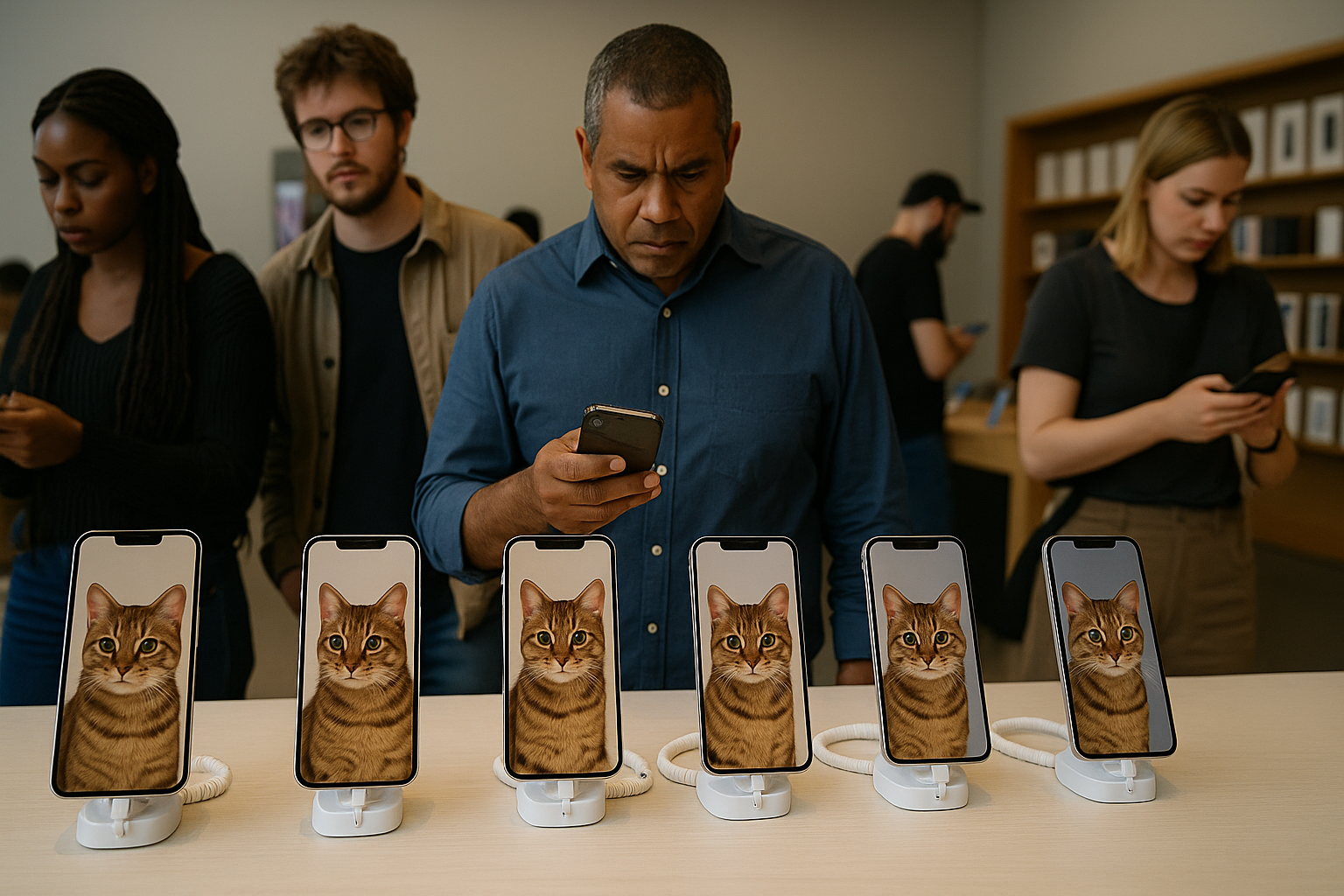
CatGPT’s Physical Phones passed $1 million in sales after making $118,000 in 72 hours. Brands still renting creators for posts are missing the real play: ownership.
Most brands are still paying creators to borrow trust for 30 days. That is a bloody expensive way to build someone else’s audience while pretending you’ve built a brand.
The smarter companies are starting to do something different: they are giving creators ownership, product input and a reason to care after the sponsored post disappears. Cat Goetze — known online as CatGPT — just made the point more clearly than most boardroom decks ever could.
On September 8, Goetze took an ownership stake in Smooth Media, the creator-management business that represents her, while joining as a strategic adviser. The size of the stake was not disclosed. But the business logic is obvious: creators are no longer just media inventory. The best of them are distribution, product research, creative direction and customer trust wrapped into one very visible human being.
If you are a founder, brand operator or investor, the message is simple. Stop treating a creator like a line item in an acquisition spreadsheet. Start treating the right one like a commercial partner whose incentives need to survive beyond this month’s campaign.
CatGPT did not become valuable because she posts online
Goetze has built an audience of more than 1.4 million followers across Instagram and TikTok, partly by teaching people how to use AI. That gives her reach. It is not, by itself, the interesting bit.
The interesting bit is that she has turned audience attention into product demand. Her Physical Phones — Bluetooth-enabled, landline-style phones designed to encourage more intentional technology use — generated $118,000 in sales in their first 72 hours and have since passed $1 million in sales, according to [Axios](https://www.axios.com/2026/09/08/catgpt-cat-goetze-smooth-media). That is sales, not a valuation, a forecast or a follower-count fantasy.
That is the number brand people should have tattooed on the inside of their eyelids: $1 million.
Not because every creator can launch a product. Most cannot. And not because a million dollars proves a long-term business. It does not. It proves something more useful: when a creator has genuine audience trust and a product that naturally fits the audience’s worldview, the creator is not merely an advertising channel. They are a demand engine.
Goetze says her business currently produces about $3 in brand-partnership revenue for every $1 in product revenue, with partnership cash helping fund product research and development. That is a sensible model. Brand money pays the bills while a creator works out which owned products deserve to exist.
This is where most consumer brands get it backwards. They spend heavily on creators after the product is finished, the positioning is blessed by seven committees, the packaging is locked and the legal team has turned the brief into porridge. Then they demand “authenticity” from a person who has been handed a script.
Good luck with that.
Smooth Media’s deal is about incentives, not applause
Smooth Media represents Goetze and more than 70 other creators across fields including marketing, finance and human resources. It is a five-year-old, bootstrapped business that says revenue has grown 2.5 times year over year since 2024 and is pacing for another 2.5-times increase this year. It grew from nine employees in 2024 to 35.
That growth is not coming from old-fashioned sponsored posts alone. Smooth says its work is expanding into events, speaking, consulting, digital products and internal technology for campaign management, invoicing and creator payouts.
That matters because creator businesses are maturing. A creator who can only sell one Instagram post is exposed. A management company that only takes a percentage of one-off deals is exposed too. Both are at the mercy of platform algorithms, shifting budgets and audiences getting bored.
Ownership changes the conversation.
A fee says, “Make this campaign work.”
Equity says, “Help build the machine.”
Those are not remotely the same brief.
If a creator has an ownership stake in a brand, agency or product venture, they have reason to worry about the boring stuff that actually creates value: retention, repeat purchase, product quality, customer complaints, margins and whether the next launch makes strategic sense. They are less likely to flog rubbish for a short-term cheque if their name and upside are tied to the result.
There is a catch, of course. Giving equity to every person with a ring light is idiotic. Attention is not a moat. Followers can be bought, rented, lost or simply stop caring. But dismissing creator equity because some influencers are all sizzle is equally lazy. You do not reject salespeople because some are terrible. You hire better ones and pay them properly.
The old influencer model is becoming a tax on lazy marketing
Creator marketing is no longer an experimental side project. Fortune reported in July that a [2026 Influencer Marketing Hub survey](https://fortune.com/2026/07/24/influencer-marketing-experiment-advertising-budget-creators/) found 72.2% of respondents expected influencer-marketing budgets to rise by at least 50% this year.
That should make brand leaders nervous, not smug.
More money flowing into creator marketing does not automatically produce better marketing. In fact, it can produce the opposite. When every brand has a “creator strategy,” feeds fill up with the same discount codes, the same unconvincing talking points and the same people pretending they woke up desperate to discuss laundry tablets.
Corporate Natalie founder Natalie Marshall put the flaw plainly in April: brands can pay enormous sums for a single creator video without ever properly meeting or speaking with the creator. Agencies then add another layer between the two sides. The result is separation, generic briefs and content that looks like an ad because it is one.
The problem is not creators. The problem is procurement-led marketing.
Procurement asks: what is the rate card, what are the deliverables, how many views can we buy and can legal approve every syllable?
A proper operator asks different questions: does this person understand our customer better than we do? Can they make the product better? Will their audience still trust them after we work together? What would make them care about the business two years from now?
One set of questions buys impressions. The other can build an asset.
The contrarian truth: do not chase the biggest creator
Here is the bit people miss because they are still drunk on follower counts: the creator with the largest audience is often the worst commercial partner.
Big reach is useful when you need awareness. Fair enough. But awareness is cheap compared with conviction.
The strongest creator partnerships sit at the intersection of four things: audience trust, category credibility, a clear product fit and genuine operating appetite. A creator who speaks to 80,000 highly engaged home-bar enthusiasts may be more useful to a spirits brand than a celebrity with 10 million followers who would struggle to identify the product blindfolded.
The creator needs to have skin in the game, but so does the company. If you offer someone equity then shut them out of product, creative and customer feedback, you have not created a partnership. You have just paid part of the invoice with a cap-table complication.
There is also a difference between an ambassador and a co-builder. An ambassador can be excellent at carrying a message. A co-builder helps determine what the message should be because they are close to the market every day.
That is why creator-founded and creator-led businesses have an edge in categories where taste, identity and community matter. Fortune’s reporting on creator-led consumer brands pointed to younger shoppers being especially receptive: research cited in the piece found 73% of Gen Z consumers rely on creators in purchase decisions, while two-thirds have bought from a creator-founded brand.
That does not mean Gen Z is gullible. It means they are suspicious of institutions that speak in polished nonsense and more willing to listen to people who have earned repeated attention in public.
Brand ownership is shifting from logos to people
For decades, the deal was straightforward. The corporation owned the brand. The celebrity or influencer lent their face. The agency bought the media. Everyone got paid, then moved on.
That model still has its place. Coca-Cola does not need to hand out equity every time it buys a media placement.
But for emerging brands, the old arrangement is increasingly inadequate. A creator can contribute much more than attention: a community, a product thesis, rapid feedback, an instinct for what will look fake online and a distribution system that does not start from zero every launch.
Look at the direction of travel. Alix Earle took an equity stake in Poppi before PepsiCo agreed to acquire the prebiotic soda company. Creator Jamie Laing’s Candy Kittens reportedly generates £15 million in annual revenue and bought snack brand Graze from Unilever for £36 million in late 2025. These are different businesses and different deals, but the commercial principle is the same: the people who create demand are increasingly demanding a slice of the value they create.
They should.
And smart founders should welcome it — selectively. If you cannot afford the cash fee a creator wants, do not casually sprinkle equity around like fairy dust. But if they can move the business in a measurable, durable way, equity can be cheaper than endless paid media and far more aligned.
What this means for you
If you run a brand, do these five things tomorrow.
1. Separate rented reach from earned trust. Stop selecting creators solely by follower count, CPM or past campaign views. Review their comment sections, repeat audience behaviour, category knowledge and whether people actually ask for their recommendations.
2. Build a three-tier partnership model. Use standard paid posts for awareness. Use longer retainers for proven performers. Reserve equity, revenue share or profit participation for the rare people who can genuinely help shape product, distribution or brand strategy.
3. Give partners a job beyond posting. Invite your best creators into product testing, customer calls, creative reviews and retail conversations. If their only job is reading your brief, you are wasting their best asset.
4. Measure the boring commercial outcomes. Track conversion, repeat purchase, email capture, retail sell-through, customer acquisition cost and contribution margin. Likes are nice. Cash is nicer.
5. Protect the brand without strangling the creator. Be clear on claims, safety, legal boundaries and disclosure. Then leave room for the person’s actual voice. If every post sounds like it was written by your compliance department, consumers will smell it from space.
CatGPT’s stake in Smooth Media is not proof that every creator should become an owner. It is proof that the economics of influence have changed. The best creators are no longer asking only, “What will you pay me for this post?”
They are asking, “What am I helping build — and do I own any of it?”
If you are still buying attention one campaign at a time, you are not building a moat. You are renting a billboard from someone who can take it down whenever they like.
Sources
- Exclusive: CatGPT takes ownership stake in Smooth Media
- Influencer marketing isn't an experiment anymore as brands expand their creator advertising budgets
- How Corporate Natalie turned a $500 brand deal into a creator empire—and her own agency
- Jamie Laing thinks tomorrow's Fortune 500 will be built by creators. He might be right.