Chicago Bears’ $5B Indiana Stadium Plan Is a Taxpayer Leverage Play
The Chicago Bears aren’t chasing a stadium. They’re selling Indiana the right to pay dearly for a team that will still call itself Chicago.
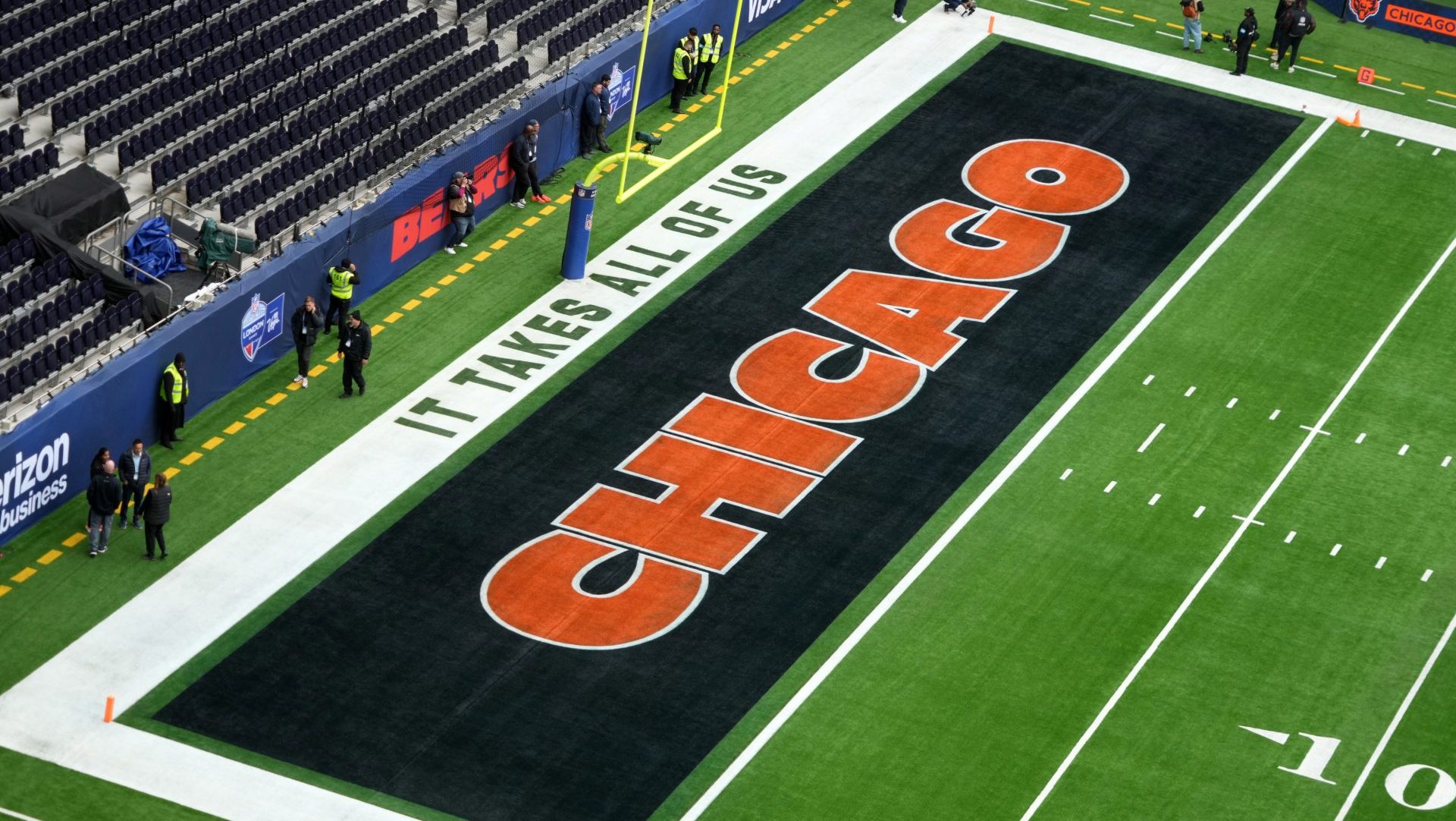
The Chicago Bears have found the oldest trick in billionaire sport: make two governments compete, then call the winner “visionary.”
Kevin Warren says Hammond, Indiana, is now the Bears’ “sole focus.” George McCaskey says hope is not a strategy. Fair enough. But neither is handing an NFL franchise a $5 billion development opportunity and pretending the public is merely buying roads and optimism.
The Bears Have Moved the Negotiation, Not Yet the Football Team
On August 14, Warren said the Bears’ focus is a world-class stadium and mixed-use development in Hammond, roughly 20 miles from downtown Chicago. The team is assessing two Hammond sites, and McCaskey says the franchise will remain the Chicago Bears even if it plays over the Indiana border.
That last bit tells you everything.
The Bears want Indiana’s financing machinery, Chicago’s corporate gravity, Illinois’s fan base and the emotional equity of a name built over more than a century. That is not disloyalty. It is business. But taxpayers should call it what it is: an elite asset owner using location optionality to improve the deal.
The proposed development carries a $5 billion headline price. Indiana’s February legislation created a Northwest Indiana Stadium Authority, giving the state a vehicle to finance, construct and lease a stadium. The funding framework draws on dedicated local revenue sources including a Hammond admissions tax, portions of food-and-beverage and innkeeper taxes, and taxes captured from the surrounding development.
Indiana lawmakers approved the framework decisively: 95–4 in the House and 45–4 in the Senate before Governor Mike Braun signed it. The political message was unmistakable: Indiana was prepared to move while Illinois argued.
The Bears’ board voted in June to advance the Hammond project after Illinois failed to pass a stadium measure during its spring session. In July, Braun said the deal was “in the red zone.” As of August 14, though, there is still no signed final agreement.
That distinction matters. A stadium authority is not a stadium. Political approval is not steel in the ground. And a $5 billion development render is not a return on invested capital.
Why the $5B Number Is Both the Point and the Distraction
Whenever a stadium proposal arrives wrapped in a giant number, people understandably fixate on it. Five billion dollars sounds enormous because it is.
But the real question is not whether a domed NFL stadium costs a fortune. Of course it does. The useful question is: who gets the upside, who carries the downside, and who is locked into the deal when the rosy forecasts miss?
The Bears and their partners would own or control the valuable bits around the venue: premium seating, sponsorship inventory, naming rights, event revenue, parking economics, hospitality, development rights and the broader uplift that comes from turning eight or nine home games into a year-round entertainment precinct.
That is why stadiums are no longer sold as stadiums. They are sold as mixed-use districts, destination assets, jobs engines and civic transformations. Sometimes they genuinely create useful infrastructure. Sometimes “transformation” is just the polite word for transferring public risk into private land value.
Indiana’s plan reportedly would cover about 60% of the stadium’s development costs. That might sound like a clean public-private split until you remember that “the stadium” and “the development” are different buckets. The surrounding district is where a lot of the long-term private value sits. Clever structuring can make the public contribution look narrower than its real economic effect.
I have built businesses and invested in plenty of deals where the spreadsheet looked lovely because someone conveniently put the ugly costs in a different column. Stadium negotiations are the same game with better architects.
Illinois Lost the First Round Because It Wouldn’t Close
Illinois did not lose the Bears on August 14. It lost leverage months earlier by failing to turn competing proposals into a deal the team could actually underwrite.
The Bears had sought property-tax certainty and infrastructure support for their Arlington Heights site. Illinois lawmakers moved pieces of stadium legislation through separate chambers but did not combine them into a final bill before the session ended. That gave Indiana a clean opening.
Now Illinois Governor JB Pritzker says the Bears need to determine what they want and build legislative support. He is right in a narrow sense. A private team asking for public cooperation should be able to articulate its terms clearly.
But here is the commercial reality: once Indiana passed a bespoke funding framework and Illinois did not, the Bears gained a credible alternative. They no longer needed to bluff. They had an option.
Options are power.
Every founder should understand this. If you have one supplier, one lender, one acquisition buyer or one city willing to host you, you are negotiating a price. If you have two credible alternatives, you are negotiating terms.
The Bears’ real achievement is not selecting Hammond. It is making Hammond credible enough that Illinois can no longer dismiss it as theatre.
The Overlooked Risk: The Bears Could Win While Hammond Still Loses
This is the bit sports fans hate hearing: a project can be fantastic for a franchise and mediocre for the public at the same time.
The Bears are a scarce asset. The NFL has only 32 teams. That scarcity gives the club extraordinary bargaining power because cities fear becoming the place that “lost” a historic franchise. Hammond does not need to rename the team to benefit from having it nearby; it wants spending, profile, development and a place in the national conversation.
But civic pride is not cash flow.
The stadium authority and tax-capture structures must be judged against hard questions:
- What happens if construction costs blow out? - What revenue is guaranteed versus merely projected? - Which public services or alternative projects lose funding if tax collections disappoint? - Who pays for transport, policing, utilities and long-term maintenance? - What happens if the mixed-use district develops slowly or not at all? - Is the public getting a meaningful share of upside if the project beats expectations?
If the answer to the last question is “the Bears will be successful,” that is not an answer. That is a press release.
A serious public deal needs downside protection: transparent project budgets, independent demand studies, clear cost-overrun responsibility, enforceable completion deadlines, clawbacks if promised investment fails to arrive, and public access to the real economics rather than an artist’s impression and some jobs multipliers.
That does not make you anti-sport. It makes you literate.
A Domed Stadium Is an Events Business, Not an NFL Expense
The bullish case is not stupid. A domed stadium can host Super Bowls, Final Fours, concerts, conventions, major international events and year-round programming. Soldier Field’s age and limitations have long constrained the Bears’ ability to chase that calendar.
That is why the project matters beyond Caleb Williams or any single Bears season. The franchise is trying to turn from a team that plays ten meaningful home dates a year into an operator of a permanent event machine.
That can be a very good business. The trap is assuming that a venue’s ability to host events means it will host enough profitable events to justify every dollar of public subsidy. Every new stadium pitch includes a packed future calendar. Calendars are easy. Net cash flow after operating costs, promoter splits, security, transport and capital maintenance is harder.
The NFL brand will fill dates. The question is whether the incremental value belongs to Northwest Indiana residents or primarily to the Bears’ balance sheet.
What This Means for You
If you are a founder, investor, operator or saver, pinch this lesson: never confuse a big headline valuation with a good deal.
This week, look at one opportunity in your own life or business and do three things.
First, separate the asset from the story. The Bears’ story is a transformational $5 billion stadium district. The asset is a bundle of contracts, land rights, taxes, financing obligations and future cash flows. Your version might be a startup raising at a flashy valuation, a property deal, a new hire, or a partnership that sounds “strategic.” Pull it apart.
Second, find out who owns the upside and who wears the downside. If one party gets the land appreciation, customer data, recurring revenue and brand lift while you carry the fixed costs, you are not a partner. You are the financing.
Third, build a real alternative before you negotiate. The Bears got serious leverage once Indiana became a plausible landing spot. You do not need a second state government chasing you. You do need a second supplier, a second distribution channel, a second buyer, a second job option or enough cash runway to say no.
That is the useful part of this whole stadium circus. The Bears are showing everyone how leverage works. Just do not be so impressed by the move that you forget to ask who is paying for it.