China’s 25% August Export Surge Hits $119.09B Surplus
China ran a US$119.09 billion monthly trade surplus after exports jumped 25% in August. The AI boom is not just enriching Silicon Valley—it is paying China’s factories.
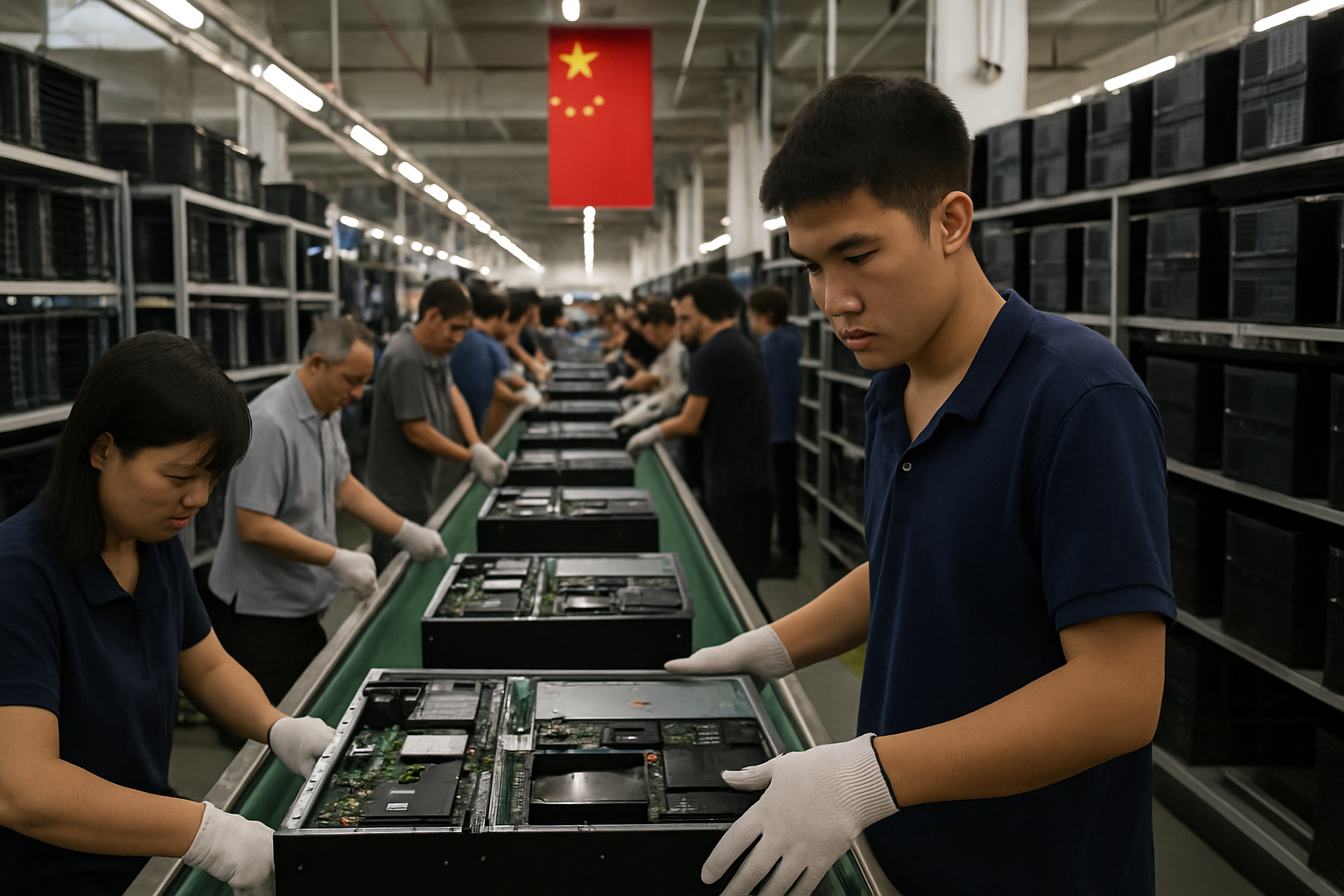
China just ran a US$119.09 billion trade surplus in one month. If you still think the AI boom is mainly making Silicon Valley richer, you’re watching the wrong end of the supply chain.
China’s exports jumped 25% year-on-year in August, reaching US$401.44 billion. Imports rose an even faster 28.2% to US$282.36 billion. That is not a cute economic data point for people who wear Patagonia vests to investment conferences. It is a hard commercial warning.
The country making much of the physical kit behind the global technology splurge is getting paid. Handsomely.
China’s export machine is not dead. It is being upgraded.
For years, plenty of Western commentators have treated China’s economy as one giant property bust with a flag on it. Property is plainly a problem. Domestic demand remains softer than Beijing would like. Consumption and investment have not done enough of the heavy lifting.
But a weak property market does not mean a weak industrial machine. Those are different facts, and confusing them is expensive.
August’s figures show China selling more into the world just as the world throws serious money at artificial intelligence infrastructure, data centres, power equipment, chips, vehicles and the boring industrial plumbing that makes flashy software work. The export growth accelerated from 23.9% in July to 25% in August.
China’s cumulative goods trade surplus for January through August reached roughly US$806 billion, according to the reported customs data. That is a ridiculous amount of cash generation from trade in eight months. You do not need to cheer for Beijing to understand the commercial significance of it.
The old lazy mental model was: China makes cheap toys, America designs expensive technology, everybody else argues about tariffs.
That model is past its use-by date.
China is selling consumer goods, yes. But it is also deeply embedded in the supply chain for semiconductors, data equipment, electrical machinery, vehicles and industrial components. The AI investment bonanza is not just rewarding the company with the best chatbot. It is rewarding whoever can manufacture, ship and finance the physical inputs at scale.
That matters because physical capacity is much harder to copy than a pitch deck.
The number that should bother competitors is not 25%
The 25% export growth gets the headlines. The more revealing number is the US$119.09 billion monthly surplus.
A trade surplus of that size means the country has sold vastly more goods abroad than it bought from the rest of the world. It gives local manufacturers scale, cash flow, production learning and political importance. Those advantages stack up over time.
This is where founders and investors get caught napping. They see a category that looks ordinary—industrial automation, batteries, networking hardware, components, electrical gear—and assume it is low-margin, slow-growth and beneath the glamour of software.
Then a Chinese competitor turns up with better procurement, more factory throughput, tighter supplier relationships and a willingness to accept a margin that would make a Western private-equity bloke spill his almond latte.
By then, the moat has become a puddle.
There is an overlooked wrinkle in the August data: imports grew faster than exports for the sixth consecutive month. That is a useful corrective to the usual simplistic story that China merely exports and never buys.
But don’t get carried away and call it a domestic-consumption revival. Imports can rise because factories are buying inputs, because commodity bills are higher, because firms are preparing export orders, or because high-value technology components are moving through Chinese supply chains. The data says trade is roaring. It does not prove that Chinese households have suddenly opened their wallets with the enthusiasm of a newly funded SaaS founder.
That distinction matters. A country can have a booming export sector and still have a lopsided domestic economy.
The AI boom is creating industrial winners, not just software winners
There is a particularly awkward detail behind the export surge. Reporting on the customs data points to strong demand for high-tech and AI-linked products, while Caixin noted that higher prices for AI-related goods helped lift export values even as some export volumes fell.
Read that again: price, not just volume, is doing some of the work.
That means parts of this boom may be constrained by scarce, valuable equipment and components. When a supplier can charge more and still sell heavily, it has something every operator wants: pricing power.
The first-order implication is obvious. Companies exposed to AI hardware, industrial power, semiconductor equipment, high-performance computing and the surrounding supply chain can enjoy a serious run.
The second-order implication is more important: every business that needs those inputs may pay more, wait longer or face less supplier choice.
That is where the pain lands. Not in a headline about China’s exports, but in your project budget.
If you are building data centres, industrial systems, electric infrastructure, logistics capacity or physical consumer products, your procurement function is not back-office admin. It is strategy. The operator who treats suppliers as interchangeable will discover that they are interchangeable only until demand gets tight.
The same goes for investors. The easy AI trade has been to buy the most obvious listed names and congratulate yourself for noticing the future. The more durable question is: who supplies the picks, shovels, cooling, energy systems, connectors, testing equipment, components and shipping capacity?
The answer is increasingly global—and China sits right in the middle of it.
The contrarian view: this is not automatically good news for China
A US$119.09 billion monthly surplus is a show of strength. It is also an invitation for other countries to get cranky.
The bigger China’s export success becomes, the harder it is for trading partners to ignore the pressure on their own manufacturers. That is especially true in sectors where industrial jobs, national security and politics collide: chips, vehicles, power equipment, batteries, communications gear and advanced machinery.
So China’s success can breed its own resistance. More trade friction, more local-content rules, more subsidies for domestic production and more attempts to diversify supply chains are all perfectly rational responses from countries that do not want their industrial base hollowed out.
That does not mean the export numbers suddenly collapse. It means the game gets more complicated.
And complexity is where mediocre operators lose money. They make one-country assumptions, one-supplier assumptions and one-price assumptions. Then geopolitics, tariffs, shipping disruptions or export controls arrive and turn a tidy spreadsheet into a bin fire.
The winners will not be the businesses that predict every political move. Nobody can do that reliably. They will be the businesses built to survive being wrong.
What this means for you
First, stop treating China as a macro headline and start treating it as a competitive variable. If you sell physical products, map your category’s Chinese capacity, pricing and supplier concentration. Not next quarter. This week.
Second, separate revenue growth from volume growth. If a supplier, competitor or sector reports booming sales, ask the unsexy question: did it sell more units, charge more per unit, or both? Those are very different businesses hiding behind the same headline percentage.
Third, build a procurement scorecard that includes more than price. Track lead times, substitute suppliers, geographic exposure, payment terms, inventory risk and component availability. The cheapest supplier is often the most expensive one after a disruption.
Fourth, if you invest, look beyond the famous AI names. The global AI buildout needs factories, energy, cooling, cabling, semiconductors, hardware and logistics. Follow the cash through the supply chain rather than chasing whatever ticker is trending on social media.
Finally, do not confuse a soft domestic Chinese economy with an irrelevant China. August’s 25% export growth and US$119.09 billion surplus are proof that its industrial engine can be formidable even when other parts of the economy are under strain.
That is the uncomfortable truth: the next decade of wealth will not be made only by inventing clever software. A lot of it will be made by owning the machinery, capacity and supply chains that let the clever software exist at all.