Chipotle’s 25% Bigger BOGO Shows Why Most Discounts Are Lazy
Chipotle gave away a second entrée and recorded its biggest sales day ever. Most brands would copy the discount and miss the bit that actually made the cash register sing.
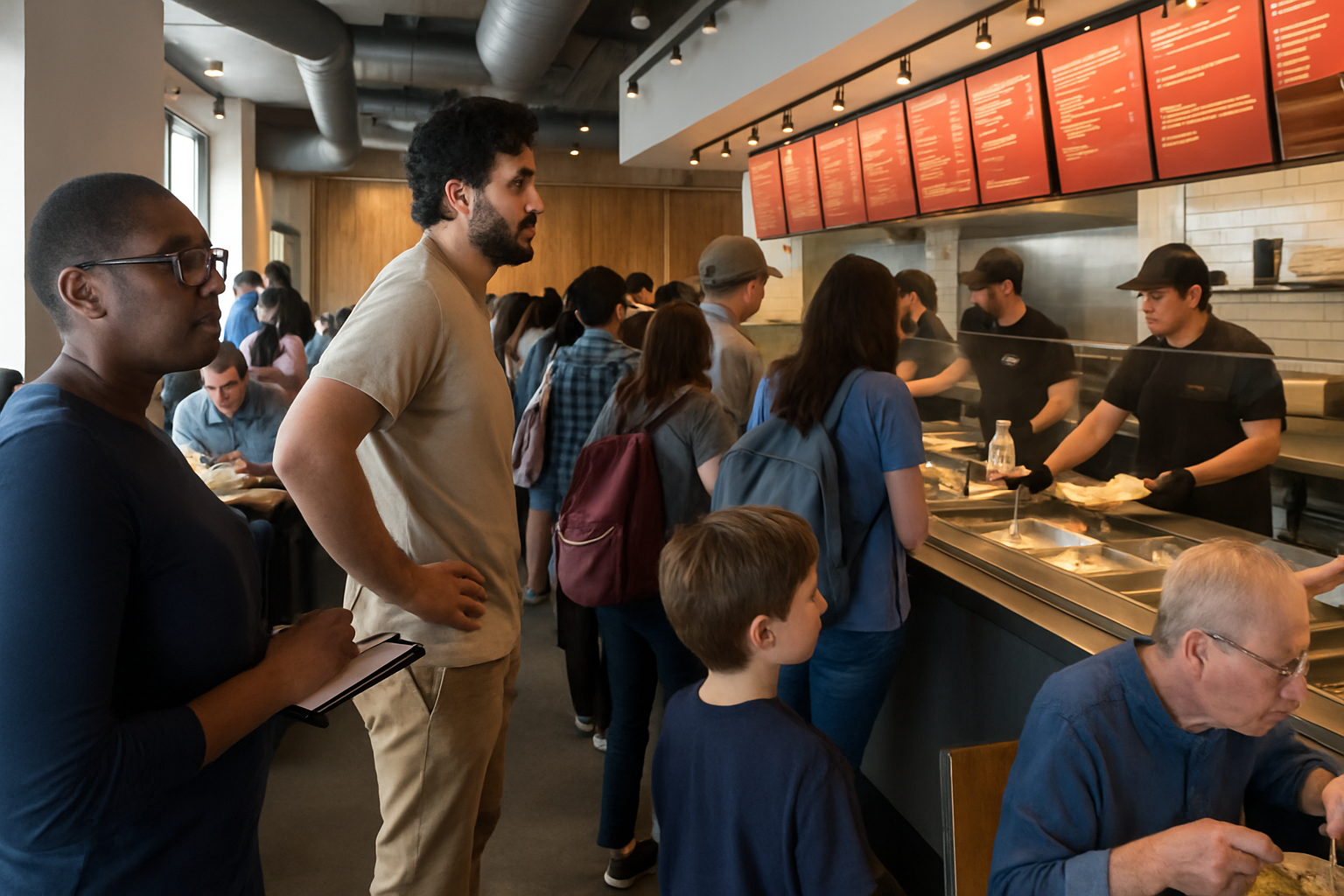
Chipotle gave away a second entrée and recorded its biggest gross-sales day in company history. Most brands will see that and conclude they need a bigger discount. That is how marketing departments turn profitable businesses into sad little coupon machines.
On August 20, Chipotle ran a School Spirit BOGO in participating U.S. restaurants: wear school apparel or accessories after 3 p.m., buy one entrée, get a second one free. The result, announced on August 21, was Chipotle’s largest gross-sales day ever and its most-redeemed BOGO promotion ever—more than 25% ahead of its previous Matchday Soccer BOGO record. ([newsroom.chipotle.com](https://newsroom.chipotle.com/CHIPOTLES-SCHOOL-SPIRIT-BOGO-DELIVERS-RECORD-BREAKING-RESULTS))
That is a serious result. But the discount was not the clever bit.
The clever bit was making the customer participate.
Chipotle did not sell cheap burritos. It sold a reason to show up.
A normal discount says, “We are cheaper today.” It attracts people who already wanted your product at a lower price, and it teaches them to wait for the next code.
Chipotle’s offer said something different: wear your colours, bring a mate, walk into a restaurant and take part in a back-to-school moment. That is a promotion with a social trigger, a time limit, an identity signal and a built-in reason to buy two meals rather than one.
The conditions mattered. It was in-store only, from 3 p.m. until close, and tied to visible school gear. That pushed people off the couch, out of the delivery apps and into a queue with a friend, partner or kid in tow. The offer was not merely a price cut sprayed across the internet like fly spray. It was an event.
This is the lesson most operators get wrong: a promotion is not a financial instrument first. It is a behaviour-design instrument first.
Price is the cost. Behaviour is the asset.
Chipotle had already been building this muscle all year. Its campaign calendar has included BOGOs tied to soccer jerseys, hockey jerseys, tattoos, college sport and regional championship moments. The School Spirit offer was not a random burst of generosity from a boardroom. It was the next repeatable format: find a tribe, give people a simple uniform, create a narrow window, and turn a meal purchase into a small public ritual. ([newsroom.chipotle.com](https://newsroom.chipotle.com/press-releases?keywords=chipotle+bogo+offer&l=10))
That is much harder to copy than “20% off.” Good. It should be.
The backdrop: Chipotle needed traffic, not a prettier brand deck
Chipotle’s result matters because this was not marketing for marketing’s sake. The company is fighting for restaurant traffic in a market where consumers have become more selective about casual dining and value.
For the quarter ended June 30, 2026, Chipotle reported $3.3 billion in revenue, up 9.3% year over year. Comparable restaurant sales rose 2.2%, made up of a 1.2% increase in average check and a 1.0% increase in transactions. But restaurant-level operating margin fell to 25.2% from 27.4% a year earlier, with food, freight, labour and other costs all biting. ([sec.gov](https://www.sec.gov/Archives/edgar/data/1058090/000105809026000063/cmg-20260729xex991.htm))
In plain English: getting people through the door again is working, but it is not free.
Reuters reported in July that Chipotle lifted its full-year comparable-sales outlook from roughly flat to low-single-digit growth, betting that value offers and menu refreshes would help it win diners back. ([investing.com](https://www.investing.com/news/stock-market-news/chipotle-raises-annual-sales-forecast-4821647))
That is why the School Spirit result deserves attention from founders and operators. It was not an agency victory lap over some cute creative. It was a demand-generation move inside a real commercial constraint: grow transaction volume without turning the whole brand into a permanent markdown rack.
And Chipotle has a distribution advantage many digital businesses would kill for. It has more than 4,200 restaurants across its markets, with 80 Chipotlanes among the 100 company-owned restaurants it opened in the second quarter alone. Digital sales were 38.3% of food and beverage revenue in Q2. ([sec.gov](https://www.sec.gov/Archives/edgar/data/1058090/000105809026000063/cmg-20260729xex991.htm))
But even with that scale, the winning promotion drove customers into physical stores. Why? Because the store is where a visible identity cue, a shared occasion and an impulse add-on can actually compound.
A bloke walks in wearing a university hoodie for a free entrée. He does not necessarily walk out having only paid for one bowl. Someone is buying chips, drinks, guac or feeding another person. The offer creates a fuller occasion. Chipotle has not disclosed the profit economics of the day, so nobody should pretend a record gross-sales day automatically means a record-profit day. But that is exactly the point: a competent operator measures the whole basket, the labour load, the new-customer mix and the repeat rate—not just the redemption count.
Fernando Machado is building a marketing machine, not just making ads
The appointment matters here. Chipotle brought Fernando Machado in as chief brand officer effective June 1, 2026, to lead global marketing strategy, positioning and customer engagement. He previously held senior marketing roles across Burger King, Popeyes, Tim Hortons, Unilever and Activision Blizzard. ([otcmarkets.com](https://www.otcmarkets.com/filing/conv_pdf?guid=kSj-knM0-dp97ch&id=19374249))
Machado’s fingerprints are not hard to spot: cultural moments, clear participation rules, an idea simple enough to explain in five seconds, and a brand that does not act like it needs permission to have a bit of fun.
But here is what the LinkedIn crowd will miss while applauding the creative: none of this works if operations cannot carry it.
A successful BOGO can be a nightmare if the queue becomes unbearable, stock runs short, staff are blindsided or repeat customers decide the restaurant is chaos. The marketing team gets the headline; the store manager gets the stampede. If you are going to create a surge, you need to build the operational plan before you make the bloody post.
That means staffing against the expected peak, simplifying the offer at the till, making eligibility obvious, ensuring inventory covers the likely mix, and giving frontline staff one version of the rules. Marketing that ignores operations is not growth. It is just outsourcing your incompetence to the people on minimum wage.
The overlooked angle: the best promotions create identity, not dependency
There is a genuine danger here. Repeated value deals can train customers to believe the full price is for mugs. Plenty of brands have done exactly that. They get a short-term revenue bump, a deteriorating margin profile and a customer base that only wakes up when the push notification says FREE.
Chipotle’s better move is that the discount is attached to a moment, not a permanent state of being. Soccer jersey day. School spirit day. Hockey jersey day. These are not interchangeable coupon codes. They are finite cultural occasions.
That distinction protects the brand.
The customer is not saying, “Chipotle is cheap.” They are saying, “Chipotle is doing the thing today.” That is a much healthier mental association because it can drive urgency without advertising that your normal price is nonsense.
The other overlooked point is that the apparel requirement is not friction by accident. Friction is useful when it selects for intent. Anybody can click a promo code. Wearing the gear signals that the person is willing to play along. They are more likely to tell someone, show up with someone and treat the purchase as an occasion rather than a solitary bargain hunt.
Founders obsess over removing every click, every field and every obstacle. Usually that is right. But the right friction can turn a transaction into a story. And stories travel farther than discounts.
What this means for you
Do not copy Chipotle by offering two-for-one tomorrow. That would be lazy, and it could torch your margins.
Copy the underlying structure instead.
First, find a real moment your customers already care about. Not a made-up awareness day invented by your content intern. A calendar event, identity group, local ritual, seasonal pressure point or shared frustration that is already alive in their heads.
Second, make participation visible and stupidly simple. Chipotle asked for school gear. Your version might be bringing a colleague, showing a project milestone, turning up with a club shirt, submitting a before-and-after, or attending a live demo. The mechanic must be explainable in one breath.
Third, put a hard edge around it. A day, a few hours, a capped allocation, a specific location. Urgency works when it is real. Fake countdown timers are for businesses that enjoy being distrusted.
Fourth, decide what behaviour you are buying. More first purchases? Bigger baskets? More referrals? App downloads? In-store traffic? Higher repeat frequency? If you cannot name the behaviour, you are not running a campaign; you are simply giving money away with a logo on it.
Finally, build the scoreboard before launch. Track redemption, gross margin after the offer, add-on rate, new versus existing customers, service time, customer complaints and repeat purchases over the next 30 days. A record day is nice. A better customer base is the actual prize.
Chipotle’s 25%-bigger BOGO is not proof that discounts are magic. It is proof that a well-designed offer can make people move when it gives them more than a lower price.
That is the standard. Give customers a reason to join in—not just a reason to wait until you panic.