Christian Gonzalez’s $135M Patriots Deal Makes Defence a CEO Decision
Paying a cornerback $135 million is what you do when losing him would cost more than the contract. Robert Kraft has just told every Patriots player the old rules are dead.
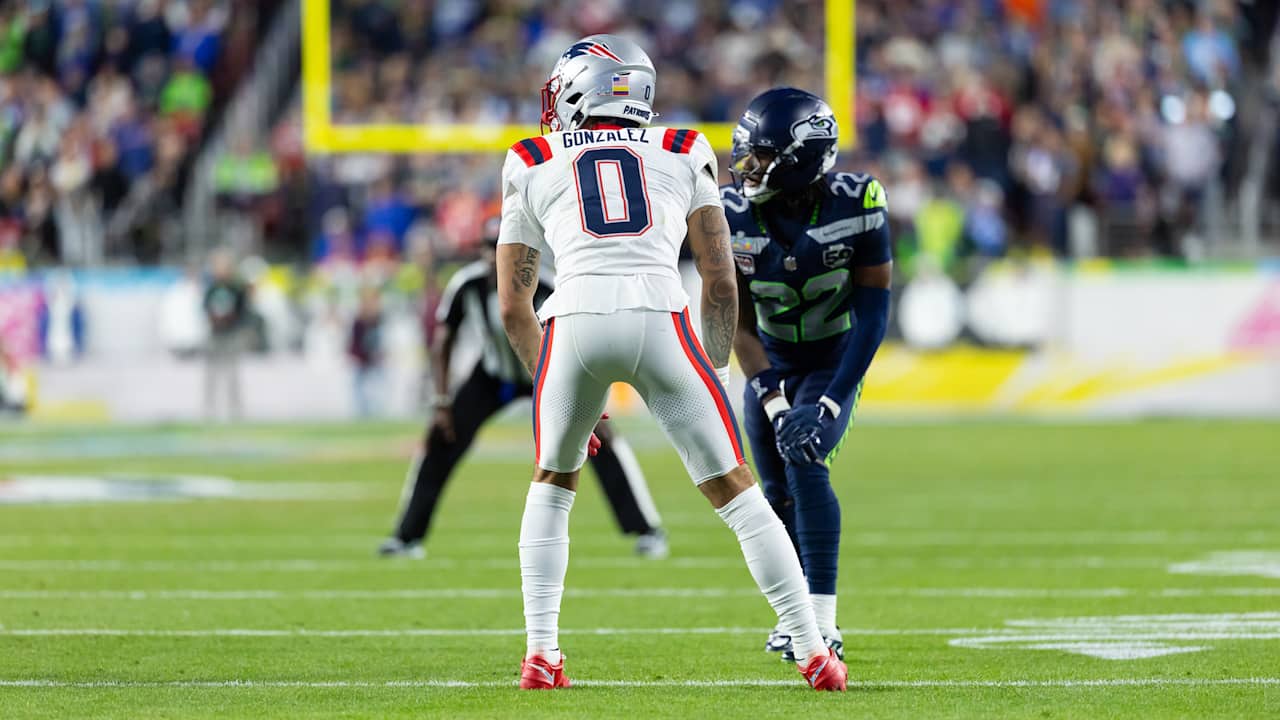
The New England Patriots have handed Christian Gonzalez $135 million because being “disciplined” is a lovely idea right up until another club takes your best player.
That is the real story here. Not that a cornerback got rich. Good on him. The point is that Robert Kraft and the Patriots have paid $102 million guaranteed to make Gonzalez the NFL’s highest-paid cornerback, and reportedly the highest-paid player in franchise history, because elite talent is now a boardroom asset before it is a football asset.
Gonzalez is 24. He was the 17th pick in the 2023 NFL Draft. He is not a quarterback, he does not sell jerseys at quarterback rates, and he plays a position plenty of old-school football people still treat as interchangeable. New England just put that thinking in a bin.
The $135 million decision New England could not avoid
The reported four-year extension carries a $33.75 million average annual value, edging the four-year, $132 million deal the Seattle Seahawks recently gave Devon Witherspoon. Gonzalez’s $102 million in reported guarantees also tops Witherspoon’s reported $101 million.
That is how markets work when the supply is tiny and the alternative is ugly. The Patriots were not deciding whether Gonzalez was “worth” $33.75 million per year in a vacuum. They were deciding whether a club trying to contend could afford the risk of letting an elite, home-grown defensive cornerstone become a contract distraction, a trade candidate, or eventually someone else’s problem.
The timing matters. The agreement landed days before New England opens its 2026 season against the Seattle Seahawks in a Super Bowl LX rematch. Gonzalez had skipped organised team activities earlier in the offseason while seeking greater long-term security, though he reported for training camp and practised. That is not a minor footnote. It is the leverage.
A player with a year or two left on a cheap deal has one precious moment to force the conversation: before the season begins, when the team’s fear of disruption is at its highest. Gonzalez and his representatives understood that. Kraft understood it too.
Kraft had already said the club made Gonzalez an offer that would reset the cornerback market and become the largest contract in Patriots history. Once you say that publicly, you have moved from negotiation into expectation management. If the deal collapses, everyone knows exactly who blinked.
So New England paid.
Christian Gonzalez did not get paid for potential alone
This is where plenty of fans get it wrong. They see a young player and a huge number and assume the Patriots are paying for a highlight reel and some internet hype. They are paying for a scarce operating advantage.
Gonzalez was a second-team AP All-Pro in 2024 and made his first Pro Bowl in 2025. Last season, he recorded 10 passes defensed in 14 regular-season games. Across his first 34 NFL appearances, he accumulated 145 tackles, 24 passes defensed, three interceptions, a sack, three tackles for loss and a fumble-recovery touchdown.
More importantly, he has already shown New England he can be the defender an entire game plan bends around. A true No. 1 corner does not merely cover a bloke. He changes the arithmetic for everybody else: the pass rush gets an extra beat, the safety can help elsewhere, the defensive coordinator can call more aggressive coverage, and the roster does not need to spend as much capital trying to disguise a weakness.
That is the bit the box score misses. Elite players are not line items. They are multipliers.
The Patriots have spent years being praised, often rightly, for their willingness to let expensive veterans walk before sentiment gets in the way. That approach built a dynasty under Bill Belichick. But copying the habit without understanding the conditions is how organisations become museums.
The dynasty-era Patriots had Tom Brady, a great coach, an extraordinary run of defensive leadership, and a system that consistently found useful players at prices other clubs ignored. You cannot simply say “we used to be ruthless” when the whole environment has changed. The salary cap grows, guaranteed money grows, players understand market timing better, and premium young talent has more power than ever.
The Patriots are buying certainty, not just coverage
The most valuable thing in sport is not talent. It is certainty about talent.
Every NFL club has money. Every club has scouts. Every club tells itself it has a clever plan. What they do not all have is a 24-year-old All-Pro-calibre cornerback whom they drafted, developed and know intimately.
Replacing Gonzalez through the draft would mean accepting the usual lottery ticket. Replacing him in free agency would mean paying a premium anyway, while also taking on a player another club decided not to keep. Trading for a replacement costs draft capital, cash and usually a new contract. There is no bargain-bin version of this outcome.
That is why the “never make a non-quarterback the highest-paid anything” crowd sounds smart only until you ask the obvious question: what exactly is your replacement plan?
If the answer is “we’ll be disciplined,” that is not a plan. That is a slogan printed on a coffee mug.
New England has also made a cultural purchase. A young locker room watches every negotiation. So do agents. If the Patriots had lowballed Gonzalez after publicly declaring he was central to the future, the message would have been brutal: perform at an elite level, become indispensable, and we will still make you fight us until the final minute.
Instead, Kraft and the football operation have said something more useful: if you become a genuine pillar of this club, we will pay pillar money.
That does not mean they should hand out stupid contracts to keep everyone happy. Quite the opposite. It means the organisation needs a brutally clear definition of who is actually irreplaceable.
The overlooked angle: this is a warning to the rest of the NFL
Witherspoon briefly held the cornerback record at $132 million. Gonzalez has now moved it to $135 million. The headline difference is only $3 million, but the market signal is much bigger than that.
The next elite young cornerback will not negotiate from the old number. He will start from Gonzalez’s number and ask why he should take less. That is why front offices hate waiting. Every fresh contract is a comp, and every comp is a tax on delay.
This is the part founders and investors should recognise immediately. You do not save money by postponing an inevitable deal with an exceptional person. Often, you just buy the same asset later at a higher price, after creating resentment and uncertainty along the way.
There is also a contrary lesson here. Not every valuable employee deserves a market-resetting package. Businesses get wrecked when management confuses “good” with “impossible to replace.” NFL teams do it too. The expensive mistake is not paying stars. The expensive mistake is paying star money to players whose production can be recreated by a competent system.
Gonzalez clears that test because premium outside cornerback play is rare, because he is young, because he has already produced, and because New England has a direct competitive reason to keep him. The Patriots are not paying for a resume from five years ago. They are paying for the next phase of their defence while he is still ascending.
That is a much better bet.
Why the guarantee matters more than the headline
Anyone can announce a big number. The serious part of a contract is what happens if things go sideways.
The reported $102 million guaranteed is the headline inside the headline. It tells Gonzalez that New England is not merely renting his best years while keeping an easy exit door. It tells the league that the Patriots were prepared to take genuine financial risk to get the deal done.
That is important because guarantees are where owners reveal their actual conviction. A contract can be dressed up with years, incentives, options and nonsense designed for a press release. Guaranteed money is harder to talk your way around.
For Gonzalez, it converts performance into security. For New England, it locks in cost certainty before another elite season could have made the price even more ridiculous. And for the market, it moves the baseline again.
Will $33.75 million a year look enormous in 2030? Maybe. But that is the wrong question. The correct question is whether the Patriots will regret owning the rights to an elite cornerback during his prime more than they regret the cheque.
I know which risk I would rather have.
What this means for you
Whether you run a startup, manage a sales team, invest in businesses or negotiate your own pay, pinch three lessons from the Gonzalez deal.
First: identify the multipliers early. The best people do not just complete their own tasks. They make the people around them better, reduce risk and give you more options. Those are the ones worth fighting to retain.
Second: negotiate before panic arrives. If someone is clearly becoming essential, waiting for the contract year, the rival offer or the product launch is not prudence. It is self-inflicted leverage. Start the conversation while both sides still have room to think.
Third: separate price from value. $135 million sounds outrageous because it is a gigantic number. But the relevant comparison is not zero. It is the cost of replacement, the cost of disruption, the cost of losing momentum and the cost of explaining to everyone why you let a foundational asset walk.
Robert Kraft did not pay Christian Gonzalez $135 million because he enjoys spending money. He paid because elite assets do not become cheaper when you pretend they are optional.
That is a lesson worth more than a football contract.
Sources
- ESPN: Sources: Christian Gonzalez, Patriots reach 4-year, $135M deal
- New England Patriots: Report: Patriots sign Christian Gonzalez to record-breaking extension
- NFL.com: Robert Kraft says Patriots offered Gonzalez largest contract in franchise history
- The Boston Globe: Patriots, Christian Gonzalez agree to record-setting extension