CivilGrid’s $26M Series A Targets an $83.2B Problem Nobody Can See
America is losing $83.2 billion a year because grown adults with billion-dollar projects still dig first and discover the facts later. CivilGrid just raised $26 million to make that stupidity harder.
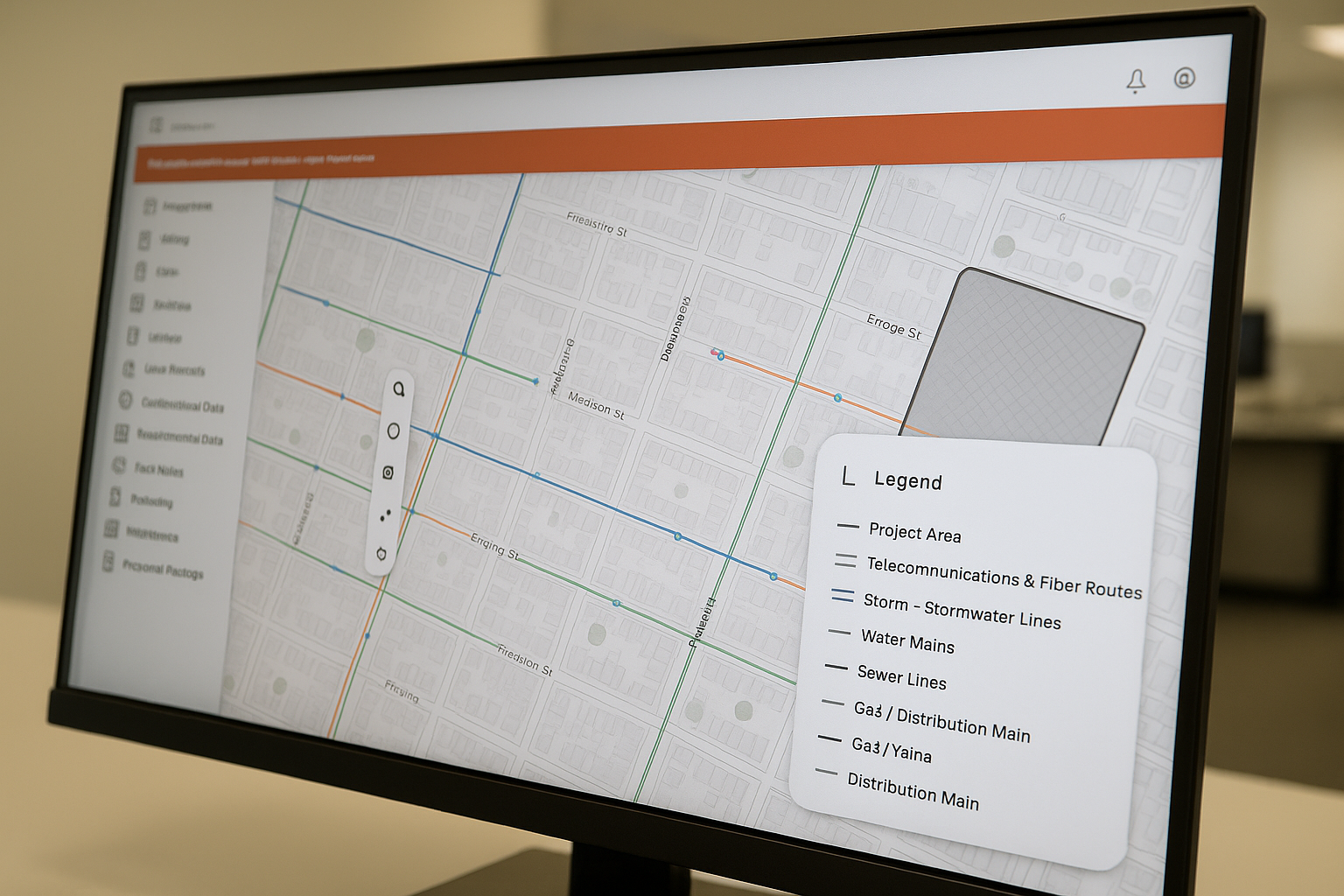
America is losing $83.2 billion a year because grown adults with billion-dollar projects still dig first and discover the facts later.
CivilGrid just raised $26 million to make that stupidity harder. And frankly, this is a more serious startup story than another AI chatbot getting priced like it has cured death.
The $26 million bet on the stuff nobody sees
On August 27, CivilGrid announced a $26 million Series A led by Spark Capital. Energy Impact Partners joined, alongside Afore, A*, Ford Street Ventures and SNR.
The company was founded in 2020 by Josh Mackanic, who had spent a decade as an engineer at Pacific Gas and Electric. He did not stumble onto this opportunity while having a latte in San Francisco. He found it the useful way: by living the pain.
At PG&E, an excavation job stopped when workers found an unidentified pipe. Nobody knew who owned it, whether it could be touched, or what was inside it. The answer took three days to find. The delay cost $60,000.
That is the bit founders should pay attention to. The best companies are often born when someone sees a costly, recurring problem from the inside and becomes sufficiently annoyed to leave a respectable job and fix it.
The $60,000 matters because it is not a theoretical cost-of-inefficiency slide. It is a specific loss attached to a specific failure: the people doing the work did not have the information they needed before they started. That is the sort of pain buyers understand without needing a TED Talk.
CivilGrid pulls together fragmented information on underground utility assets, property ownership and environmental regulations. It sells that shared operating picture to utilities, governments and civil-engineering firms. Mackanic calls it “Google Maps for what’s underground,” which is a handy shorthand, but it understates the commercial point.
This is not a map business. It is a mistake-prevention business.
Before a utility or contractor spends money on surveying, design, permits, crews, asphalt and equipment, CivilGrid is trying to tell them what will go wrong. In infrastructure, finding a problem before construction starts is not a nice-to-have. It is often the difference between a profitable project and a complete dog’s breakfast.
That position in the workflow is the whole game. Software that arrives after a project is delayed helps explain a mess. Software that helps avoid the mess can protect budgets, schedules and reputations before they blow up.
The market is bigger than a few damaged pipes
The Common Ground Alliance’s latest analysis puts the annual economic cost of damage to buried infrastructure in the United States at $83.2 billion, based on 668,999 damage incidents in 2025. That figure includes far more than repair bills: business interruption, construction delays, emergency response, road closures, injuries, property damage and broader community disruption.
That is worth dwelling on. The direct repair is usually the visible cost, so it gets all the attention. The real bill arrives everywhere else: delayed housing, delayed broadband, delayed water projects, delayed grid upgrades, workers standing around, traffic snarls, angry communities and executives explaining why a timetable has blown out again.
This is why the $83.2 billion figure is more useful than a flashy total-addressable-market claim. It describes money already being burned by a broken process. CivilGrid does not need to convince the market that underground infrastructure exists. It needs to prove it can help customers avoid enough of the existing waste to justify paying for the product.
We talk endlessly about America needing to build more. More power generation. More transmission. More data centres. More housing. More water infrastructure. More fibre. Fine. But all that building runs through a physical world that is already full of pipes, cables, sewers, gas lines and old records scattered across different owners and systems.
You cannot build quickly if every project begins with a treasure hunt.
CivilGrid’s pitch is compelling because it attacks the bottleneck before the bottleneck looks dramatic. The product sits at the earliest stage of decision-making: where should something go, what constraints exist, who owns what, and what permits might be needed?
That is where the money is.
PG&E says that since deploying CivilGrid in 2025, it has identified more than $60 million in paving conflicts that could be avoided through portfolio optimisation, reduced field-research and survey activity by 40%, and cut as much as four months from scoping, planning and design timelines. Its case study covered 1,600 planned gas-distribution projects.
Those numbers point to three different forms of value: conflicts avoided, field work reduced and planning time removed. That matters because infrastructure buyers do not all buy for the same reason. One operator may care about capital allocation. Another may care about getting crews out of the field. Another may care about delivering projects before a deadline becomes a political problem.
Those are company-and-customer case-study figures, not independently audited financial statements. But that does not make them irrelevant. It makes them exactly what a sensible operator should interrogate next: What was the baseline? How repeatable are the savings? How much of the benefit becomes revenue for CivilGrid? And can the product work beyond one former employer that already trusts the founder?
Still, it is a hell of a better starting point than “we have lots of users and a Discord.”
Why the investor list matters more than the valuation
CivilGrid did not disclose a valuation. Good. More founders should stop treating a paper price as a business achievement.
What matters here is who wrote the cheques and why. Spark Capital leading the round says a mainstream venture investor sees software-scale returns in a sector most people dismiss as slow, dull and overly regulated. Energy Impact Partners matters for a different reason: it invests around the energy transition and has utility companies among its limited partners.
That sort of investor can be more than capital. In a market like utilities, access and credibility matter. A clever product can die on the vine if nobody trusts it with critical infrastructure data, or if selling it means knocking on doors for five years before landing a pilot.
The hard part is not getting a meeting with someone who agrees that buried infrastructure is a mess. The hard part is becoming trusted enough that they will change how engineers, planners and field teams make decisions. That is where a lot of enterprise software companies get found out.
CivilGrid has something many venture-backed startups do not: a named customer that understands the pain deeply, plus evidence that the software fits into actual field operations.
There is a lesson there for founders chasing enterprise customers. Your first customer should not merely be someone willing to test your software. The right first customer is a reference account that makes the next ten customers less nervous.
PG&E is not just revenue potential for CivilGrid. It is proof that the company can operate in a world where a bug, a bad dataset or a sloppy workflow can create real costs and real safety risks.
That is a much tougher standard than getting someone to click “generate.”
The overlooked angle: data ownership is the real moat
The obvious read is that CivilGrid is an infrastructure-software company. The more interesting read is that it is building a data asset at the point where physical projects begin.
Every project adds context: underground conditions, ownership records, environmental constraints, design choices and permitting requirements. If CivilGrid becomes the place engineers start planning, it can move from showing them information to helping them decide what to do with it.
Mackanic has already described that direction: recommending where infrastructure should be placed, identifying required permits and eventually helping file them.
That is where the business could become properly valuable. Mapping is useful. Workflow is sticky. Decision support is powerful. Owning the system that converts messy site information into an approved project is a very different proposition from selling a digital map.
The progression matters. A map can be compared. A workflow that becomes part of how a project is scoped, planned and approved is much harder to rip out. The more useful CivilGrid becomes before money hits the ground, the more central it becomes to the customer’s operation.
But there is a catch, and it is a big one.
Infrastructure data is messy because reality is messy. Records can be incomplete. Assets move. Governments, utilities, contractors and landowners maintain different databases. The company’s advantage will not come from saying “AI” over a map interface. It will come from being accurate, secure, trusted and embedded deeply enough that users correct and enrich the system rather than work around it.
That is not glamorous. It is also how durable businesses are built.
The real test is whether CivilGrid can turn fragmented information into decisions customers are willing to rely on repeatedly. If it can, the product becomes part of the machinery of building. If it cannot, it is just another screen people check before going back to spreadsheets, phone calls and crossed fingers.
The contrarian take: boring is becoming expensive
Venture capital has spent years rewarding companies that promise to make white-collar work marginally faster. Some of that is useful. A lot of it will end up as feature fodder for Microsoft, Google or OpenAI.
Meanwhile, the physical economy is littered with expensive coordination failures that have barely been touched because they are hard, regulated and inconvenient. Nobody gets invited to a flashy dinner for making trench planning better.
Yet the economic value is enormous.
CivilGrid is a reminder that “boring” is often just investor shorthand for “requires real customer knowledge.” The founder’s decade at PG&E was not a detour from startup life. It was the qualification.
The companies worth watching in this category are not the ones with the loudest demo. They are the ones that understand the ugly handoffs, scattered records, approval bottlenecks and field consequences better than anybody else. That knowledge is slow to earn, which is precisely why it can matter.
The same principle applies whether you are building software for logistics, manufacturing, insurance, mining, agriculture or hospitality. Do not hunt for a market that looks exciting from the outside. Hunt for a painful workflow where people already waste serious money and have learned to call it normal.
Normal is where the opportunity hides.
What this means for you
If you are a founder, stop asking whether a problem is big enough. Ask whether the customer can put a painful number on it.
CivilGrid’s founding story contains the whole playbook: one three-day delay, one $60,000 loss, a repeated industry-wide problem, and a buyer with an obvious incentive to fix it. That is far more investable than a vague claim that a market is “massive.”
If you sell to enterprise or government, get a customer case study that names the operational result: dollars saved, time removed, rework avoided, risks identified. Not “improved efficiency.” That phrase should be fired into the sun.
Then do the uncomfortable bit: make sure you can explain how the result was measured, what the baseline was and whether it can happen again. A case study gets you attention. Repeatability gets you a business.
If you are an investor, look harder at businesses sitting upstream of massive capital expenditure. The company that helps decide where a billion-dollar project goes can be more valuable than the company selling a commodity into it.
And if you run any operation at all, make a list tomorrow morning of the decisions your team makes using incomplete information. Then calculate the cost when those decisions are wrong.
That number is probably bigger than you think. It might even be your next business.