CoreWeave’s 15% Drop Exposes the $80B AI Debt Problem
AI isn’t running out of chips. It’s running into interest rates — and CoreWeave’s 15% fall is what happens when a boom needs debt more than customers.
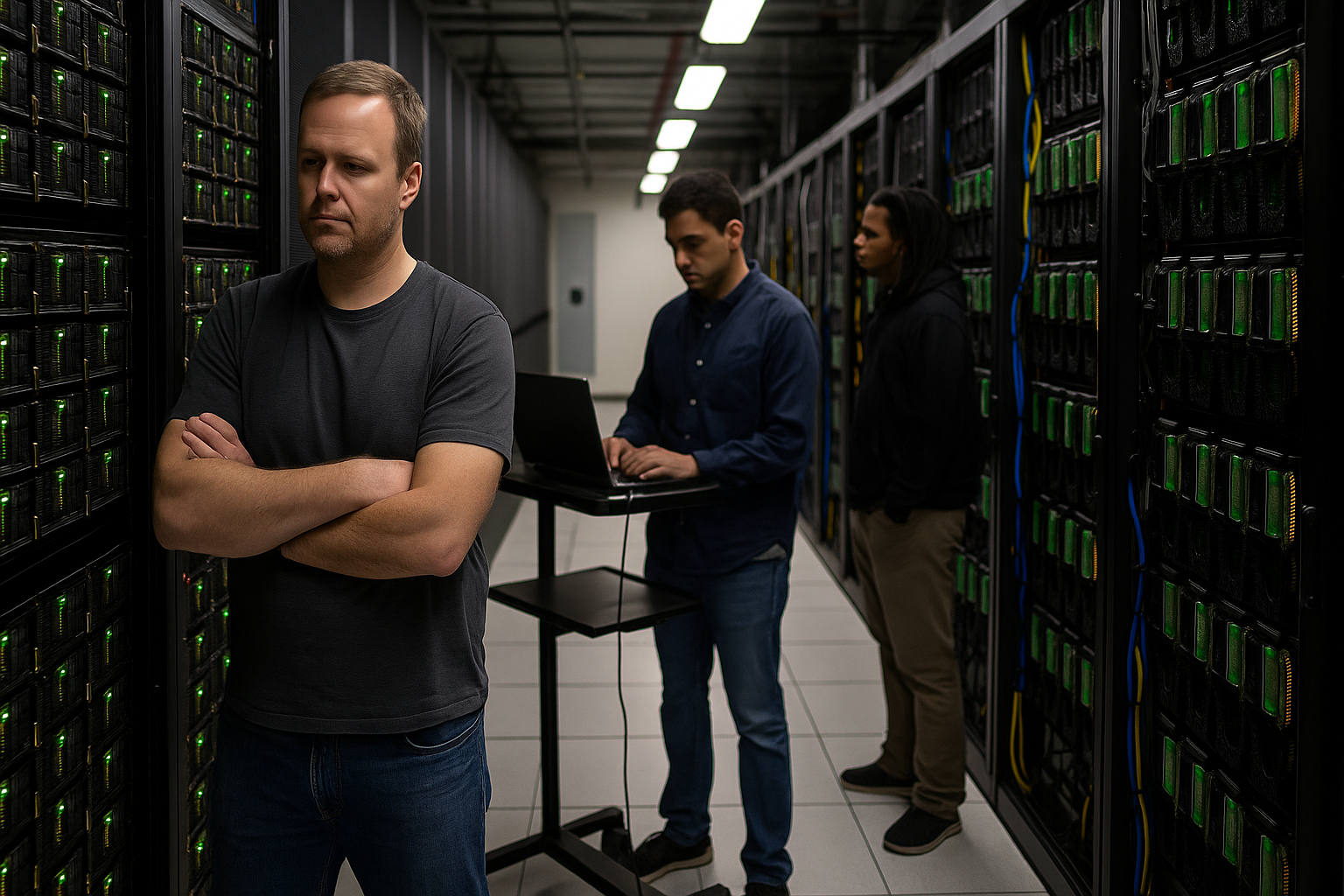
AI isn’t running out of chips. It’s running into interest rates — and CoreWeave’s 15% fall on October 14 is what happens when a boom needs debt more than customers.
For two years, the market has treated AI infrastructure as a one-way bet: buy Nvidia, build data centres, borrow whatever you need, and wait for the cash machine to start humming. That trade has just been mugged by a very old-fashioned reality: capital costs money.
The wobble is not about whether AI works
Let’s be clear. The technology is real. Demand for serious compute is real. TSMC, the company making the advanced chips at the heart of the AI build-out, reported third-quarter net income of NT$763.06 billion, or about US$24 billion, on October 15. That was its sixth straight record quarterly profit. Its revenue for the quarter was NT$1.494 trillion, while its net profit margin was a frankly ridiculous 51.1%.
That is not the profile of a fake industry.
But markets do not only price whether a thing is useful. They price who gets paid, when they get paid, and how much borrowed money gets burned before that day arrives. That is where the AI story has turned ugly.
CoreWeave, the heavily indebted cloud-computing operator that rents AI capacity, dropped 15% on October 14. It fell further in early trading on October 15. Oracle, which has been pitching itself as a major beneficiary of the data-centre gold rush, had fallen nearly 9% in the previous session. Reuters reported that the selling in CoreWeave, Oracle and related names erased about US$80 billion in market value on October 14.
That isn’t the market deciding that nobody needs AI chips. It is the market looking at a capital-intensive business model and asking the question it should have asked earlier: what happens if the money stays expensive?
AI has become an infrastructure financing trade
The romantic version of AI is a clever founder, a better model and a product that catches fire.
The commercial version increasingly looks like this: enormous data centres, vast power contracts, expensive chips, long construction timelines, and debt piled on top of revenue that must arrive years later. That is a very different beast.
CoreWeave is the cleanest example because it sits in the middle of the machine. It buys or finances expensive computing infrastructure and leases capacity to customers developing and deploying AI. When capital is cheap and demand appears limitless, that model looks brilliant. You lock up scarce capacity, sign contracts, and let the backlog do the talking.
When inflation runs hotter than expected and investors start expecting higher rates, the maths changes fast. The future cash flows are worth less. Refinancing gets pricier. The margin for an execution mistake shrinks. And investors stop treating a contract backlog as though it were cash in the bank.
That is what has rattled the broader sector. Reuters reported that the debt of CoreWeave had slid toward distressed territory, while several infrastructure fundraising plans were pulled or paused: a Blackstone-backed AirTrunk REIT, Nvidia-backed Firmus and SoftBank-backed SB Energy.
Read that again. This is not just a share-price sulk in Silicon Valley. It is a warning light on the financing dashboard for the physical AI build-out.
TSMC’s record profit and caution tell the whole story
The most revealing part of the day came from TSMC.
The company delivered blockbuster numbers. Net income rose 69% from a year earlier. It continues to benefit from the global scramble for advanced chips. Yet management also struck a cautious note on 2027, pointing to challenged consumer and price-sensitive markets amid rising component prices and macroeconomic uncertainty.
That combination matters more than another quarter of big profit.
TSMC is not some flaky app business trying to invent a story. It is the world’s most important contract chipmaker, serving customers that include the giants of AI and consumer electronics. If even TSMC is saying, in effect, “business is excellent, but don’t be stupid about next year,” operators should listen.
There are two AI economies operating at once.
The first is the profitable picks-and-shovels economy: leading chip designers, foundries, networking suppliers and power providers. These businesses can sell into genuine demand now.
The second is the financed capacity economy: businesses racing to build enough compute, land, power and cooling for the demand they expect to capture later. That group is more exposed to interest rates, capital-market sentiment and the uncomfortable possibility that its customers may negotiate harder once capacity catches up.
Investors have spent too much time lumping both together under the label “AI.” That is lazy analysis. One side makes money from the boom. The other must survive long enough for the boom to pay it back.
The overlooked risk is not a chip glut. It is negotiating power.
Most of the commentary around AI infrastructure obsesses over supply: chip shortages, electricity bottlenecks, data-centre land, cooling systems and network gear.
All real issues. But the more interesting risk is what happens when buyers get choices.
A business that has committed billions to capacity needs utilisation. It cannot casually leave GPU clusters sitting idle because the depreciation clock is ticking, the interest bill is arriving and shareholders are watching. That gives large customers leverage.
The AI labs and hyperscalers buying compute are hardly helpless. They are sophisticated, cashed-up, and able to spread workloads among their own infrastructure, cloud providers and specialist operators. If supply becomes less constrained than expected, the people renting the machines may discover they do not own the pricing power they thought they owned.
That is why a backlog is not an invincibility cloak. The quality of the customer, the duration of the contract, the ability to pass through higher costs, cancellation rights, renewal terms and the cost of funding the underlying asset all matter.
Bluntly: a data centre filled with expensive hardware is not automatically a moat. Sometimes it is just a very expensive shed with a large electricity bill.
The contrarian view: this sell-off could make the AI industry healthier
Here is the bit that most cheerleaders and doom merchants will both miss.
A tougher funding environment may be good for AI in the long run.
Easy money encourages everybody to build the same thing at once. It rewards grand presentations, heroic capacity forecasts and financial engineering dressed up as technological inevitability. That is how industries overbuild.
Higher capital costs force decisions. They punish weak contracts. They reward businesses with real customers, genuine gross margins, sensible debt structures and management teams that understand the difference between demand and hype.
That is not bad news for founders building useful AI products. In fact, it may be excellent news. The companies with a real workflow advantage can buy services, negotiate harder and avoid carrying infrastructure risk on their own balance sheets. The companies whose entire pitch is “we will raise another giant round and build more capacity” will have a more difficult time. Good.
I’d rather see ten serious AI businesses survive than 100 overfunded ones light money on fire and poison the market for everyone else.
What this means for you
If you are an investor, stop asking whether you are bullish or bearish on AI. That question is too vague to be useful. Ask who has pricing power, who owns the customer relationship, who must refinance, and who can keep operating if growth slows for 12 months.
A profitable supplier selling scarce technology is not the same bet as a debt-heavy operator building capacity for projected demand. Both may benefit from AI. They do not carry the same risk.
If you are a founder, do not build your business plan around permanently cheap compute, permanently available capital or a customer who renews because they are excited by your demo. Price your product with room for infrastructure costs to rise. Lock in customers before committing to major fixed costs. And know exactly what your gross margin looks like without venture-capital fairy dust.
If you run an established company, this is your opportunity. The AI vendors you deal with are likely to become more flexible as capital gets tighter. Push for better commercial terms, usage commitments that match reality, portability of your data and clear service-level agreements. Do not sign a five-year infrastructure-shaped headache because somebody put the words “agentic AI” in a slide deck.
The AI boom is not dead. That is the lazy conclusion.
But it is growing up. And in business, growing up means the bloke lending the money finally asks when he gets paid back.