Cotality: Sydney Property Prices Down 7.1% From Peak
Sydney property is no longer a wealth strategy with a kitchen attached. It is a leveraged bet that has fallen 7.1% from its February peak — and plenty of investors are pretending not to notice.
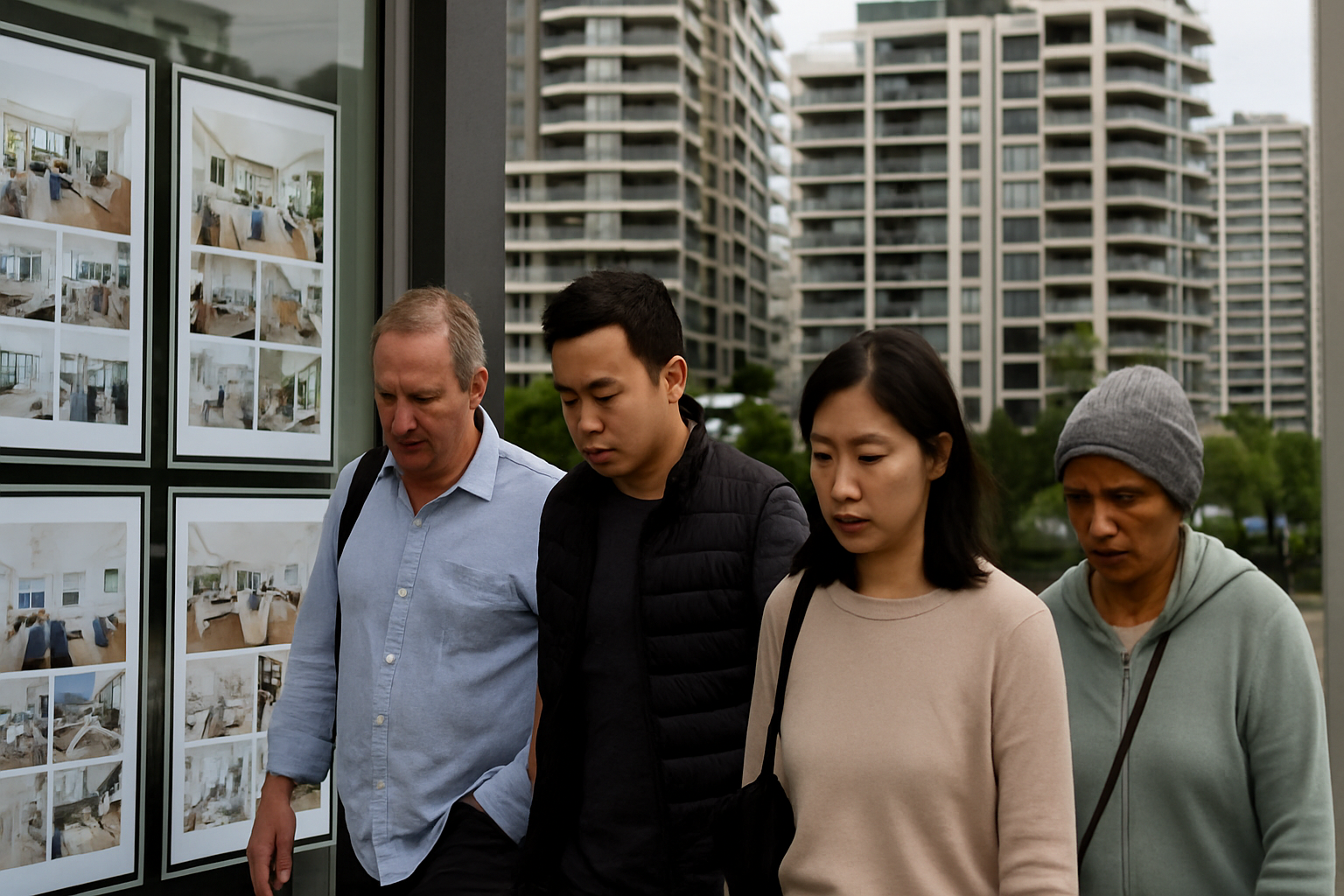
Sydney property is no longer a wealth strategy with a kitchen attached. It is a leveraged bet that has fallen 7.1% from its February peak — and plenty of investors are pretending not to notice.
That denial is expensive. Australians have spent decades treating property, particularly Sydney property, as the one investment where risk was something that happened to other people. Buy, borrow more than feels sensible, collect a tax deduction, wait, repeat. Now Cotality’s latest figures show the spell has broken: national home values fell 0.9% in August, their fifth consecutive monthly decline, while Sydney fell 1.4% in a single month.
This is not a call to panic-sell your house. It is a call to stop confusing a long bull market with personal brilliance.
The numbers are getting worse because the buyer has changed
The headline figure is straightforward. National home values are now 3.6% below their March peak. Sydney is down 7.1% from its February peak. Melbourne dropped 1.1% in August, Brisbane fell 1.0%, and Perth and Adelaide each slipped 0.8%.
More importantly, this is no longer a little wobble confined to expensive eastern-suburbs houses where a $300,000 price cut merely ruins someone’s pool renovation plans. Cotality says 93% of suburbs across Australia’s capital cities recorded falling values through winter. In autumn, that number was 45.8%.
That is the bit that matters. A narrow correction can be ignored. A broad one changes behaviour.
Sales are down roughly 15.5% on a year earlier and sit 11.5% below the five-year average. Listings across capital cities were 24% higher than a year ago in the four weeks to August 30. More stock and fewer committed buyers is not complicated: sellers lose control of the conversation.
For years, the Australian property game was built on urgency. The agent told you there were five bidders. Your mate said he had made $400,000 while sleeping. Your accountant reminded you about negative gearing. So you bought before someone else did.
Now the buyer is asking a different question: “Why would I rush?”
That one question is poison for a market priced on momentum.
The May 12 tax change has hit the most important customer
The story is not merely that interest rates are high. We have already had plenty of hand-wringing about rates. The more consequential shift is that the federal government’s May 12 budget changed the investing maths.
The new rules restrict negative-gearing access for existing properties bought after May 12, 2026, with the changes due to take effect from July 2027. New builds retain more favourable treatment. The stated objective is simple enough: reduce the incentive to keep bidding up existing homes and redirect investment towards adding supply.
Whether the policy eventually improves affordability is a separate fight. What matters today is that it has removed certainty from the investor playbook.
Investors were not a side character in Australian housing. They were a major source of marginal demand — the extra buyer at auction who could justify a thinner yield because tax treatment, capital growth and cheap debt made the spreadsheet work. Remove or weaken that buyer and first-home buyers do not magically fill the gap. They have smaller deposits, tighter borrowing limits and, in many cases, less appetite for a seven-figure debt.
That is why the property crowd needs to stop saying “a 7% fall is nothing.” A price move is only half the equation. The other half is who is willing and able to buy the next property at the next price.
If the marginal buyer leaves, valuations can reset faster than the owner-occupier crowd expects.
Australia has built household wealth on a very concentrated wager
Here is the uncomfortable context: about 60% of Australian household wealth is tied to property, according to Commerzbank’s estimate cited by Bloomberg.
That concentration has felt safe because property has generally gone up. But an asset does not become low-risk merely because millions of people own it and the newspapers run auction photos every Saturday.
Sydney’s average home price is still close to 14 times annual disposable income, based on Demographia’s 2024 comparison. Even after this pullback, homes have not suddenly become cheap. That creates the worst possible combination for the market: sellers feel poorer, while buyers still feel locked out.
And unlike the United States, Australia does not have a giant base of households protected by 30-year fixed mortgages. Less than 5% of Australian mortgages are fixed, according to Reserve Bank of Australia data cited in the Bloomberg report. When the cash rate rises, pain moves through the system faster.
The RBA has raised the cash rate three times this year to 4.35%, after years when borrowers had become accustomed to rates near zero. One more quarter-point increase is not an abstract economic event. For a leveraged investor with several properties, it can mean thousands more in monthly repayments.
That is how forced sellers are created. Not because somebody reads a gloomy headline, but because the cash flow stops working.
The contrarian view: falling prices are not automatically good news for buyers
Everyone loves to say they want cheaper homes. Fair enough. But lower prices do not help much if borrowing capacity falls even faster.
A buyer who could borrow A$1 million when rates were low may not be able to borrow anywhere near that amount now. A 7% fall in the purchase price can be overwhelmed by higher interest costs and tougher servicing tests. So the first-home buyer waiting for a bargain can end up watching the market fall while becoming less able to participate in it.
That is why “just wait for a crash” is not an investment strategy. It is a slogan.
The smarter question is whether you can hold the asset comfortably through a bad outcome. If you need prices to rise, rates to fall and rents to keep climbing just to make your numbers work, you do not own an investment. You own a hope with council rates.
There is another overlooked angle here. The tax change favours new construction relative to existing stock. That sounds logical if the goal is supply, but developers are also dealing with elevated finance costs, labour constraints and uncertain presales. Policy can make a new build more attractive on paper while the actual act of building remains brutally difficult.
So we could end up with lower investor demand for existing homes without enough new supply arriving quickly enough to solve the underlying shortage. That would be a very Australian outcome: successfully making property less enjoyable for everyone involved.
This is a stress test for investors, banks and operators
Sydney’s decline matters beyond homeowners because housing is the country’s biggest confidence machine.
When prices rise, people refinance, renovate, buy cars, take holidays and feel clever. When prices fall, they postpone decisions. That hits retailers, builders, real-estate agencies, mortgage brokers and small businesses that depend on consumer confidence.
Banks are not immune either. Bloomberg reported mortgage applications had fallen by as much as 20% since the budget, while Bathla Group, one of Sydney’s larger developers, entered insolvency owing A$3.3 billion. A property downturn does not need widespread mortgage defaults to hurt the economy. It only needs fewer transactions, lower construction activity and consumers who stop spending like their home is an ATM.
For investors, the key lesson is brutal but useful: liquidity is part of return. Property can look wonderful in a spreadsheet because nobody marks it to market every minute. Then you need to sell in a soft market, discover there is one bidder, and learn what liquidity actually costs.
I have made enough investment mistakes to know that the investment you cannot comfortably hold becomes the investment that owns you.
What this means for you
If you own property, do three boring things this week.
First, run your portfolio at interest rates at least 1.5 percentage points above today’s rate. Do not use the bank’s approval limit as your risk limit. Work out the actual monthly cash shortfall, including maintenance, vacancy, land tax, insurance and agent fees. If the result makes you sweat, fix the balance sheet before the market forces you to.
Second, value every property using recent comparable sales, not the number you need for emotional comfort. A valuation from six months ago is history, mate. A realistic price today is what a financed buyer will pay today.
Third, separate your home from your investment portfolio. Your primary residence may be a lifestyle asset you are happy to hold forever. Fine. But an investment property must earn its place through yield, growth prospects and survivability under pressure. Sentiment is not a fourth metric.
If you are looking to buy, do not try to pick the exact bottom. Nobody can do that consistently, despite what every bloke on LinkedIn claims after the fact. Instead, buy only if the deal works at today’s debt costs, with conservative rent assumptions, a genuine cash buffer and a holding period long enough to survive another leg down.
The old property religion said leverage plus time made everyone rich. The new reality is simpler: cash flow, discipline and a margin of safety decide who gets to stay in the game.
That is less exciting than an auction frenzy. It is also how you keep your money.