Cracker Barrel’s $100M Logo Debacle Put David Deno in the CEO Seat
A logo change cost Cracker Barrel about $100 million in market value. The bigger bill was teaching every operator that customers, not consultants, own the brand.
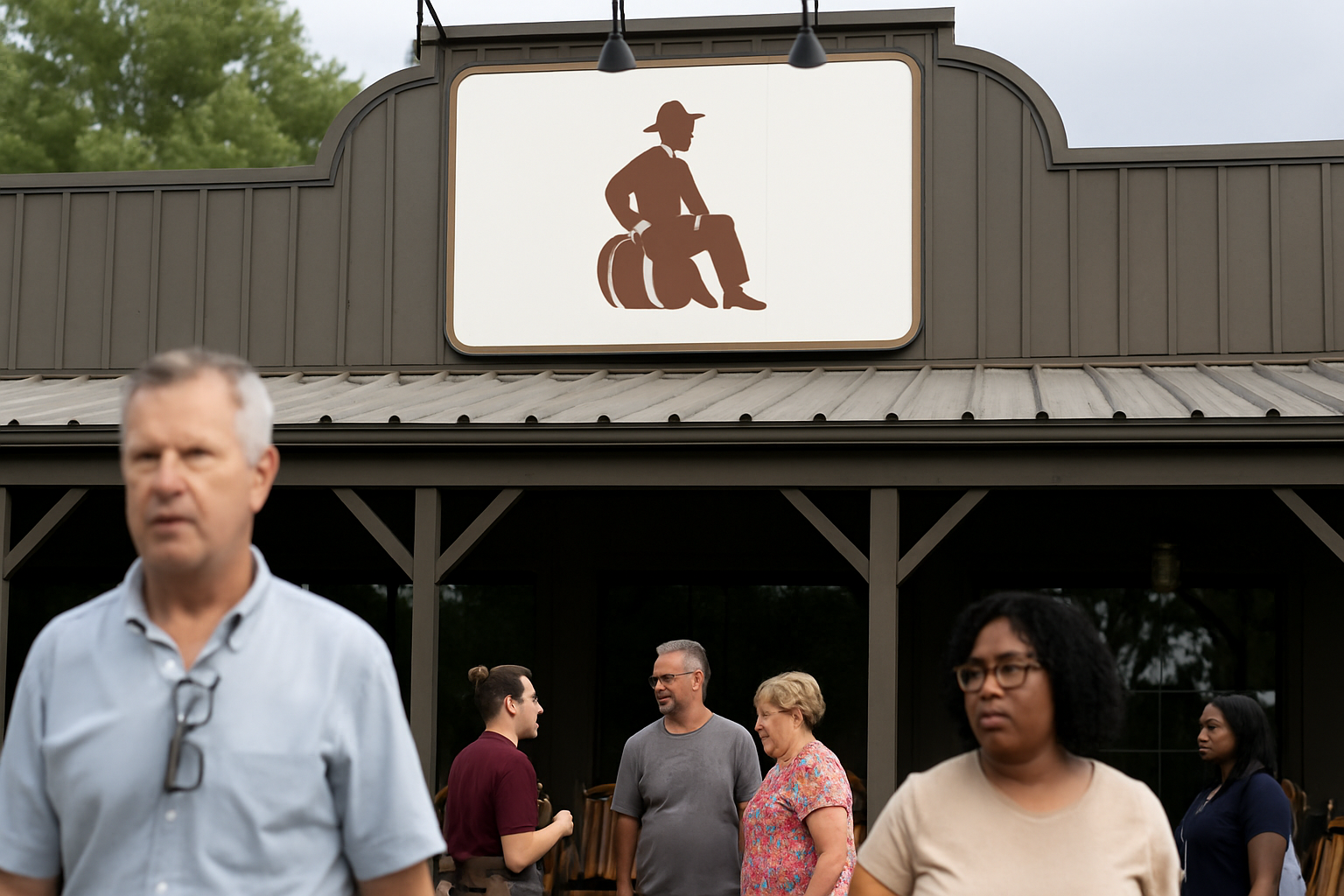
A logo change cost Cracker Barrel about $100 million in market value. The bigger bill was teaching every operator that customers, not consultants, own the brand.
That is the real job David Deno inherited when he became Cracker Barrel CEO on August 10, replacing Julie Masino. Not polishing a font. Not drafting a values statement. Rebuilding trust with people who felt the business had decided it knew better than they did.
And before anyone dismisses this as America having a tantrum over an old bloke leaning on a barrel, look at the numbers. When the backlash hit last August, Cracker Barrel’s shares dropped more than 7% in a day and roughly $100 million vanished from its market value. Same-store restaurant sales later fell 5% in the autumn quarter and 7% in the quarter ending January 30, 2026.
That is not a branding problem. That is an operating problem with a branding trigger.
David Deno Has Inherited a Business, Not a Culture-War Punchline
Cracker Barrel announced on July 27 that Deno, formerly CEO of Bloomin’ Brands, would take the top job on August 10. Masino stepped down as CEO and director, remaining in an advisory capacity through October 9.
Deno is not arriving as some hot-shot digital messiah. He ran Bloomin’ Brands from 2019 until his 2024 retirement, overseeing a portfolio that includes Outback Steakhouse, Bonefish Grill, Carrabba’s Italian Grill and Fleming’s. He also held senior roles at Best Buy and Yum Brands. In other words: he has spent a long time dealing with multi-site businesses where a bad decision is not a PowerPoint error. It is hundreds of stores executing the wrong thing at once.
That matters.
Cracker Barrel operates nearly 660 restaurants across 43 states. When a company that size gets its identity wrong, the mistake does not stay in the marketing department. It hits staff morale, franchise-like local loyalty, store traffic, investor confidence and management attention. Everyone starts discussing the stupid thing. Nobody spends enough time fixing the important thing.
Masino was hired in 2023 with a sensible enough mandate: make an ageing brand relevant again. She had experience at Taco Bell and Starbucks, and Cracker Barrel needed new customers without losing its traditional base. In May 2024, she said the brand was no longer as relevant as it had been and needed transformation.
That diagnosis may have been right.
But the treatment was miles off.
The $100M Mistake Was Assuming Recognition Equals Relevance
In August 2025, Cracker Barrel unveiled a simplified logo that removed the familiar “Old Timer” character and the “Old Country Store” wording. The business said the simpler mark would work better on road signs and phone apps.
That logic is tidy. It is also incomplete.
A brand is not your logo file. It is the shortcut in a customer’s head for what they expect to feel, receive and recognise. Cracker Barrel’s customers were not defending a drawing because they are allergic to design. They were defending a signal: roadside comfort, familiar food, gift-shop clutter, country hospitality, the whole peculiar package.
Management treated the logo as an asset to optimise. Customers treated it as evidence that the company was still theirs.
Those are very different things.
The response was immediate and ugly. Cracker Barrel reversed the logo decision within days. In September 2025, it also abandoned the restaurant-remodelling project after customer pushback. The company had tried brighter, more modern interiors and more comfortable seating. Again, the management logic was not absurd. But customers read the changes as the removal of the experience they had deliberately chosen.
Here is the uncomfortable truth for founders and executives: customers will forgive you for being imperfect. They will not easily forgive you for looking embarrassed by the reason they bought from you in the first place.
The Numbers Say the Turnaround Was Already Underway — Which Makes the Change More Interesting
The story is not quite as neat as “logo bad, CEO gone.” That is lazy analysis.
By the quarter ended May 1, same-store restaurant sales were down 2.6%, an improvement from the 5% and 7% drops after the controversy. Cracker Barrel also raised its full-year revenue and profit outlook. It sold Maple Street Biscuit Company, narrowing its focus back to the core brand. In July, it completed a sale-leaseback transaction covering 26 Cracker Barrel stores and lifted its fiscal 2026 profitability outlook.
So why change the CEO when the numbers had started improving?
Because boards do not merely judge the last quarter. They judge whether the person in the chair is the right person for the next five years.
Masino’s problem was not that every idea failed. The company was making operational adjustments, improving trends and simplifying the portfolio. Her problem was that the biggest public symbol of her tenure became a trust-destroying own goal. Once that happens, every future change carries extra political and emotional cost. Fair or unfair, the leader becomes part of the friction.
A board can live with weak numbers for a while if it believes the operator has the confidence of customers, employees and investors. It struggles to live with a leader whose next initiative will be judged through the lens of the last public disaster.
That is why the CEO role is brutally different from almost any other job. You are not only responsible for decisions. You become the container for the consequences of them.
The Overlooked Lesson: Cracker Barrel Did Not Need Less Change. It Needed Better Sequencing.
This is where most commentary gets it backwards.
The lesson is not “never change a heritage brand.” That is rubbish. Brands that refuse to evolve become museums with rent bills.
Cracker Barrel plainly had issues to solve. Traffic was under pressure. Its older customers were slow to return after the pandemic. The business needed more dinner occasions, sharper value, better food and a reason for younger guests to try it without alienating the people keeping the lights on.
But you do not start a difficult turnaround by picking a symbolic fight with your most loyal customers.
You earn permission to change.
First, fix the product. Make food faster, better and more consistent. Improve value. Clean up the digital booking, ordering and loyalty experience. Give employees a clearer operating rhythm. Test new menu items locally. Make the customer’s life easier.
Then, once customers can see and feel the improvement, you can modernise the expression of the brand. At that point, the new logo or store format looks like proof of momentum, not an attempt to erase history.
I have seen this in business repeatedly. Leaders love visible moves because visible moves feel like progress. New brand. New office. New strategy deck. New org chart. Everyone can see it, so everyone can clap.
The hard work is less photogenic: product quality, unit economics, staff training, customer feedback loops and managers who actually know what is happening in the field.
Deno’s opportunity is to make Cracker Barrel boringly good at that work again.
The New CEO’s First Test Is Whether He Can Say “No”
Deno’s appointment is not a guarantee. A former restaurant CEO is not a magic wand, and Cracker Barrel has no shortage of structural challenges.
But his background suggests the board has chosen an operator over a rebrand evangelist. That is the right instinct.
His first win should not be a grand unveiling. It should be ruthless prioritisation. What must improve at the restaurant level over the next 90 days? Which menu items drive repeat visits? Where is service breaking down? What are customers actually complaining about, not what the agency says they ought to care about? Which proposed initiatives need killing before they consume another year of management energy?
The smartest thing Deno can do is make fewer promises and create more proof.
He should spend an indecent amount of time in stores. Not for staged photos with aprons and fake smiles. To watch where guests hesitate, where employees improvise and where the experience fails. In a multi-site business, head office is where you create theories. The stores are where the truth lives.
What This Means for You
If you run a business, take this lesson before you spend a dollar on a rebrand or transformation program:
1. Ask what customers are protecting. If they are angry about a surface-level change, there is usually a deeper promise they think you are breaking.
2. Separate diagnosis from solution. “We need to become relevant” may be correct. A new logo may still be the wrong answer.
3. Sequence change properly. Bank operational wins before asking loyal customers to accept symbolic change.
4. Test with people who pay you. Not your agency. Not your executives. Not the bloke who says he represents the modern consumer. Actual customers.
5. Make the CEO own the trade-off. Big customer-facing changes cannot be outsourced to marketing. If it blows up, the chief executive wears it anyway.
Cracker Barrel’s $100 million lesson is simple: familiarity is not fluff. In the right business, it is an asset worth protecting.
David Deno now has the job of proving that the company can modernise without acting like it is ashamed of itself. That is harder than changing a logo. It is also where the money is.