Crusoe’s $1.25B Boom Breakup Exposes Backlog Risk
A $1.25 billion order disappeared before Boom Supersonic delivered a single turbine. That is what happens when AI’s power scramble meets the real world.
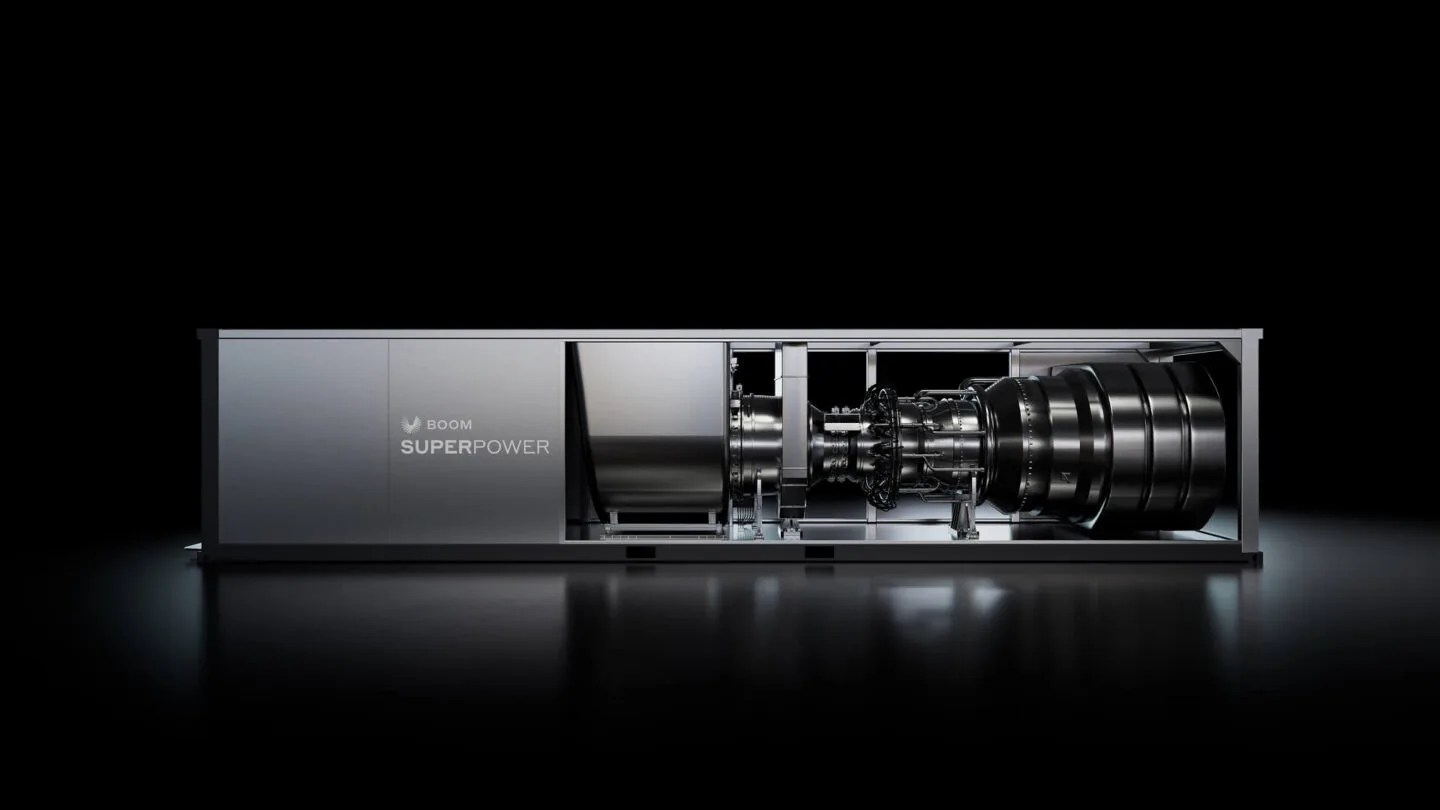
Crusoe just walked away from a $1.25 billion turbine order with Boom Supersonic before a single machine was delivered. If you think a signed mega-deal means a startup has made it, you haven’t been paying attention.
Boom had the sort of story investors love: take the advanced engine technology built for a supersonic jet, sell a stationary version into desperate AI data centres, then use the cash flow to help fund the dream of commercial supersonic travel. Smart on paper. Sexy as hell. And, for a while, backed by a very large customer.
Then the customer changed its mind.
The deal that made Boom’s AI-power pitch look real
In December 2025, Boom Supersonic announced Crusoe as the launch customer for its new Superpower natural-gas turbine. Crusoe agreed to buy 29 turbines, each rated at 42 megawatts, for a combined 1.21 gigawatts of capacity. Boom put the backlog at more than $1.25 billion.
That wasn’t merely a purchase order. It was the commercial proof point for a new business line.
Boom is best known for trying to build Overture, a supersonic passenger aircraft. But aircraft programs are brutally expensive, slow and allergic to optimistic spreadsheets. So founder and CEO Blake Scholl had found a more immediate use for the company’s engine technology: sell stationary turbines to AI-data-centre operators who cannot get power fast enough from the grid.
Boom raised $300 million alongside the Superpower announcement. The company said the turbine business could help fund development and certification of Overture. In founder language, this is called “finding a second market.” In plain English, it is trying to make one very expensive ambition pay for another.
Crusoe was central to that plan.
The Denver-based AI infrastructure company has become one of the more aggressive builders in the data-centre boom. It started in 2018 using otherwise-flared natural gas for bitcoin mining, then pivoted into AI infrastructure when compute became the world’s most fashionable bottleneck. In September, Crusoe announced a $3.9 billion Series F at a $30.9 billion valuation.
That is not pocket change. It is a giant neon sign telling you where investors believe the AI money will pile up next: not only in models and chips, but in the power, land, cooling, fibre and construction needed to make those models useful.
Crusoe did not stop needing power. It stopped wanting Boom’s power.
The important detail is not that Crusoe has suddenly become bearish on data centres. Quite the opposite.
Crusoe said its energy plans had not changed and that it still expects to use turbines — just not Boom’s. It is building an initial 1.2-gigawatt facility in Abilene, Texas, for Oracle and OpenAI, which Crusoe says is grid-powered with gas turbines used only for backup. It is also developing a 900-megawatt Abilene data centre for Microsoft that will use on-site gas turbines.
So let’s be precise: this is not a collapse in AI demand. It is a reminder that demand does not rescue every supplier.
The AI infrastructure story is usually told as though anyone who can spell “GPU” or “megawatt” is guaranteed to print money. Rubbish. Customers building at this scale will test every assumption: delivery timing, equipment maturity, financing, maintenance, fuel supply, permitting, grid connections and who carries the risk if a shiny new product does not perform.
Crusoe is no longer a founder with a clever energy angle. It has raised billions, serves serious customers and is reportedly pursuing infrastructure commitments measured in the tens of billions. At that stage, you do not buy equipment because the narrative is brilliant. You buy it because it gives you the best combination of certainty, speed and economics.
Boom may yet make a perfectly good turbine. That is beside the point. Its launch customer choosing another route tells you that “perfectly good” is a high bar when the buyer’s customer may be OpenAI or Microsoft.
The uncomfortable truth: a backlog is not revenue
Founders love announcing backlogs because the number is large, clean and flattering. Investors love them because they look like future certainty. Journalists love them because a billion-dollar headline travels nicely.
But an order book is not cash in the bank. It is not even guaranteed future revenue.
A backlog is a collection of commercial relationships, each with conditions, timelines, rights and escape hatches. Until equipment is built, accepted, installed and paid for, there is a lot of distance between “we have a $1.25 billion customer commitment” and “we have a $1.25 billion business.”
That is not a criticism of Boom. It is a criticism of the way startup land treats a signed deal as a finish line.
I have seen this mistake made repeatedly. A business gets one whale customer, hires ahead of the contract, spends against projected revenue, tells itself the hard part is done, then discovers the whale has options. Big companies always have options. Sophisticated buyers especially do.
The lesson is not to avoid large customers. Large customers can transform a company. The lesson is to avoid building a company whose survival depends on one customer behaving exactly as your deck predicted.
Boom’s initial Superpower strategy had a beautiful strategic loop: turbines would make money; turbine revenues would fund aviation; aviation success would validate the underlying engine technology. Crusoe’s departure does not destroy that loop, but it removes the easiest version of it.
Now Boom must prove it can replace a launch customer, manufacture a novel product at industrial scale and persuade buyers that a startup with aviation DNA is the right long-term partner for mission-critical power infrastructure.
That is a much harder sell than announcing a backlog.
Why the power bottleneck is still the real AI trade
Here is the overlooked angle: the failed deal may be more bullish for AI infrastructure than bearish.
Crusoe did not walk away because it no longer needs electricity. It walked away while continuing to build huge sites and pursue other turbine options. That suggests the constraint is getting tighter, not looser. Buyers have become ruthless about choosing the technology and counterparties they believe can get them energised fastest.
AI demand has created a market where time-to-power can matter more than a marginal improvement in hardware specs. If you are late bringing a data centre online, the cost is not just a delayed construction schedule. It is foregone revenue, unhappy anchor customers and a competitor securing the scarce GPUs, grid capacity and contracts first.
That changes what “product-market fit” means for infrastructure startups.
For a software startup, product-market fit might mean usage growth or retention. For an industrial startup, it means a far uglier package: financeability, manufacturing readiness, service capability, permitting confidence, credible warranties, spare parts and a customer who trusts you with a multibillion-dollar dependency.
The market is not rewarding novelty alone. It is rewarding dependable delivery.
There is another catch. The rush to build AI capacity is attracting everyone from established turbine manufacturers to aviation startups, battery companies, gas developers and modular-data-centre players. That brings innovation, sure. It also means the buyers have alternatives.
When capital is abundant, founders confuse a big market with an easy market. They are not the same thing. The bigger the contract, the more professional the procurement gets.
What this means for you
Whether you run a startup, invest in one or simply want to get better at spotting business nonsense, take four things from this.
First: discount announced backlogs heavily. Ask what is binding, what is conditional, when delivery starts, who finances the purchase and what happens if the buyer changes plans. A contract headline without those answers is marketing, not analysis.
Second: do not let one customer become your strategy. If a single account can wreck your hiring plan, factory plan or fundraising story, you do not have concentration risk. You have a hostage situation.
Third: sell certainty, not just cleverness. Customers buying mission-critical products care about the boring bits more than founders do. Delivery dates. Support. Integration. Warranties. Failure modes. If your company cannot answer those cleanly, you are not ready for enterprise-scale money.
Finally: follow the bottleneck, but respect the chain. AI may be the headline, but compute requires power; power requires equipment; equipment requires factories, permits, fuel, financing and people who know how to build things. The next fortunes will not go only to the companies with the smartest model. They will go to the operators who can turn promises into operating assets.
Boom has not been written off. Crusoe has not slowed down. But the $1.25 billion breakup is a timely reminder: in a gold rush, the bloke selling shovels still has to deliver the bloody shovel.
Sources
- Crusoe abandons $1.25B plan to use Boom turbines at AI data centers
- Crusoe raises $3.9B to build massive data centers and small modular AI factories
- Boom Supersonic to Power AI Data Centers with Superpower Natural Gas Turbines; Adds $300 Million in New Funding
- Boom Supersonic raises $300M to build natural gas turbines for Crusoe data centers