Crusoe’s $3.9B Raise Says AI’s Real Moat Is Power, Not Models
The AI gold rush is no longer about who has the cleverest chatbot. Crusoe just raised $3.9 billion because the real choke point is electricity, land and the ability to build before everyone else.
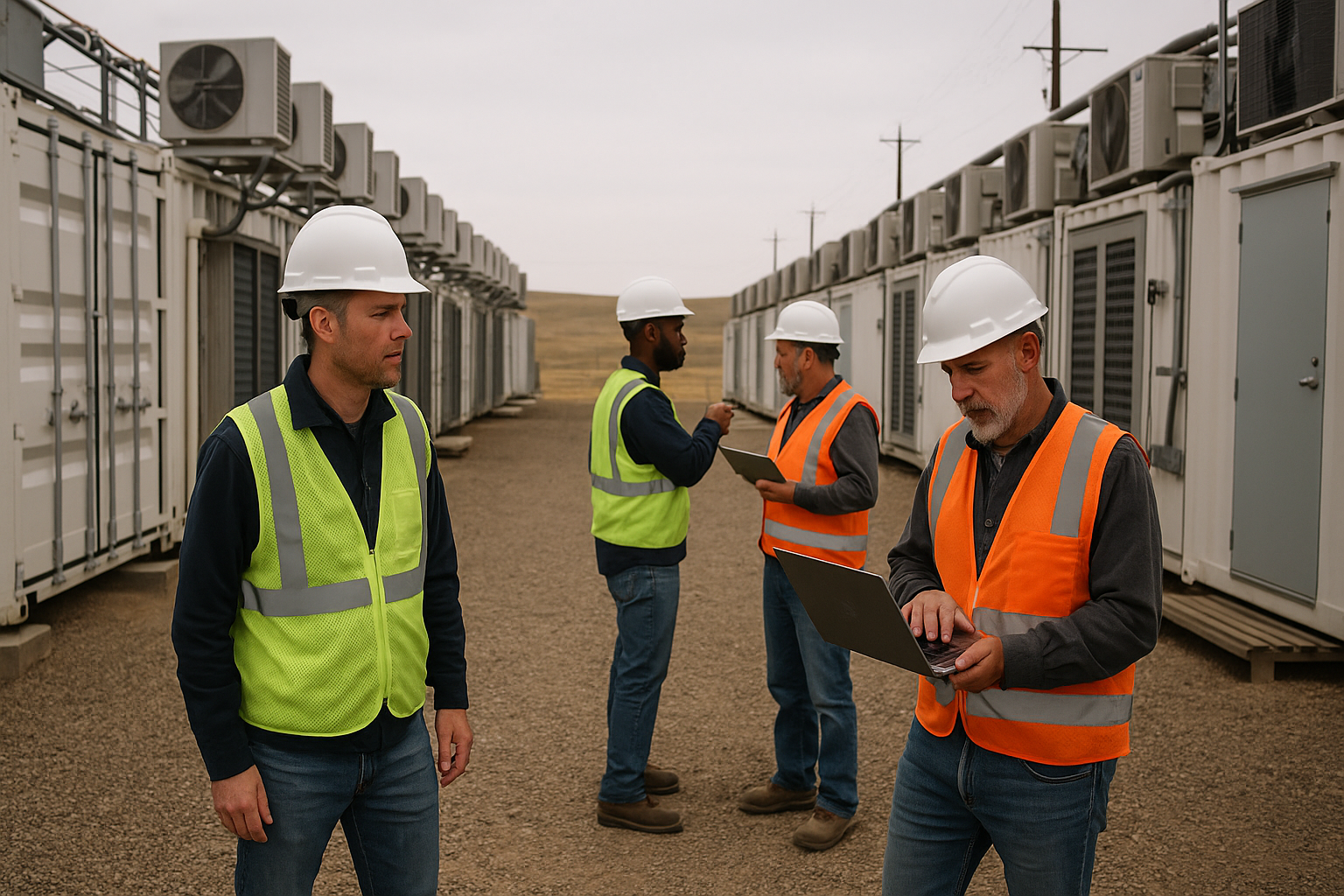
Crusoe just raised $3.9 billion at a $30.9 billion post-money valuation — and if you still think the biggest money in AI will be made by whoever builds the smartest model, you’re looking in the wrong bloody direction.
The models get the headlines. The people who control the power, chips, cooling, land, permits and construction timetable get the tollbooth.
On September 17, Crusoe announced the initial close of its Series F round, co-led by Atreides Management, Mubadala Capital and Valor Equity Partners. Nvidia, Founders Fund, GIC, Qatar Investment Authority, TPG and others joined in. That is not a normal startup cap table. It is a giant sign saying serious money believes AI’s next bottleneck is physical infrastructure.
Crusoe says it now has more than $140 billion in total contracted value, over 6 gigawatts of contracted capacity, and 1 gigawatt already operational. Those are company-reported figures, not banked profit. But even allowing for the usual startup gloss, the direction is impossible to miss: compute has become an industrial product.
The core story: Crusoe is selling the thing everyone else forgot
Crusoe began in 2018 as a crypto business. It used stranded or flared natural gas to generate electricity for computing instead of simply burning that gas into the sky.
Then the market changed.
Bitcoin infrastructure was interesting. AI infrastructure became a national arms race.
The company pivoted into what it calls “AI factories”: data-centre campuses, modular units, power development and cloud capacity bundled into one vertically integrated machine. It is trying to own enough of the stack that it does not have to wait around for a utility, a traditional data-centre developer, a landlord, a construction firm and a cloud giant to all get their act together.
That is the bet behind the $3.9 billion.
Crusoe’s valuation has gone from more than $10 billion in its October 2025 Series E round to $30.9 billion less than a year later. Its previous raise was already enormous — $1.375 billion — but this latest one is a different category of capital. You don’t raise nearly $4 billion to improve onboarding screens. You raise it to buy equipment, lock in sites, finance construction, secure energy and move faster than the next bloke.
That is why this matters far beyond one Denver-based company.
AI has stopped being software with good PR
For years, software founders were told to stay asset-light. Don’t own the servers. Don’t own the buildings. Don’t touch physical operations if you can rent them. Keep margins fat and headcount low.
AI has come along and punched a hole through that playbook.
Training and running frontier models requires enormous quantities of specialised chips, high-voltage power, networking, cooling and physical space. You can have the world’s best engineers, but they cannot write their way around a grid connection that does not exist.
This is why Nvidia is not merely a chip supplier in this story. It is also an investor. It has every reason to support companies that can turn GPU demand into live, operating data centres quickly. A chip sitting in a warehouse earns nobody much. A chip installed in a power-ready rack and rented by the hour is a very different beast.
Crusoe’s “energy-first” approach is the key point. Rather than choosing a site and then hoping power turns up, it starts with the energy equation. That sounds obvious. It is also exactly the sort of obvious thing large organisations routinely stuff up because responsibility is split across six departments and a consultant with a slide deck.
The winner in AI infrastructure may not be the company with the prettiest cloud dashboard. It may be the one that can get reliable megawatts onto a site 18 months earlier.
Abilene shows both the opportunity and the risk
Crusoe is not pitching a hypothetical future. It built a major AI campus in Abilene, Texas, for the Oracle and OpenAI ecosystem, with the first phase going live in September 2025. Crusoe had previously announced plans to expand that site to 1.2 gigawatts.
But this is where operators should pay attention: massive demand does not make project risk disappear.
In March 2026, reports said OpenAI and Oracle would not pursue a further expansion at the Abilene site. Microsoft then stepped in for two new AI-factory buildings and an on-site power plant next door. That is a useful lesson. The land, power and construction capacity still had value — but the customer plan changed.
The lazy take is that this proves AI infrastructure is bulletproof because somebody else filled the space.
The smarter take is that these projects are capital-intensive and customer-dependent. A single tenant changing its mind can leave billions of dollars of steel, concrete and debt needing a new home. Crusoe may be better placed than most because it is building a broader cloud business, but no amount of AI hype turns a 1-gigawatt campus into a SaaS subscription.
The overlooked angle: $140 billion in contracts is not $140 billion in cash
Here is the part nobody puts in the celebratory LinkedIn post.
“Total contracted value” is not revenue. Contracted capacity is not necessarily energised capacity. And a $30.9 billion valuation is not proof that the business has earned $30.9 billion of value in cash.
Crusoe says it has more than 6 gigawatts of contracted capacity, while Reuters reported 1 gigawatt is operational. That gap is opportunity, yes. It is also execution risk measured in gigawatts.
Building AI infrastructure is not like shipping an app update. It involves supply chains, financing, local politics, transmission lines, water and cooling constraints, hardware cycles, construction labour and customers whose model requirements can change faster than a data centre can be built.
There is another awkward truth: the more money that pours into AI infrastructure, the more fiercely buyers will eventually negotiate. Today, scarce compute has pricing power. Tomorrow, if too much capacity lands at once or demand shifts to more efficient models, the economics can get ugly quickly.
That does not make Crusoe a bad bet. It makes it an infrastructure bet — which is very different from a software bet wearing an AI hoodie.
What this means for you
If you are a founder, stop asking only, “How can AI improve my product?” Ask, “What scarce input does my business depend on, and can I secure it before it becomes obvious?”
For Crusoe, that input is power plus deployment capability. For your business it may be distribution, proprietary data, supplier access, regulatory approval, customer trust or elite operators. The obvious layer is crowded. The bottleneck layer is where margins live.
If you run a company buying AI, do not sign a provider because the demo looks slick. Ask painful operational questions: Where is the compute actually located? What is committed versus live? What happens if demand spikes? Who owns the power risk? What are the exit terms if your model architecture changes?
And if you are an investor, be careful with the phrase “AI company.” It now covers everyone from model labs to miners, landlords, utilities, chipmakers and data-centre builders. They do not deserve the same valuation logic.
Crusoe’s $3.9 billion round is a blunt reminder that AI is becoming less like an app-store boom and more like railways, oil fields and telecommunications. The clever software matters. But the people laying the tracks usually do alright too.
Sources
- Crusoe Raises $3.9 Billion Series F for its Vertically-Integrated AI Infrastructure Platform
- Reuters: AI infrastructure provider Crusoe valued at $30.9 billion in latest funding round
- Crusoe raising $1.375 billion at a valuation above $10 billion
- Microsoft takes over a Texas AI data center expansion after OpenAI backs away