Crusoe’s $3B Raise at $30B: AI’s Real Bottleneck Is Power
The AI gold rush is not being won by the bloke with the cleverest chatbot. Crusoe just raised more than $3 billion because it owns the boring bit everyone else forgot: power, land and delivery.
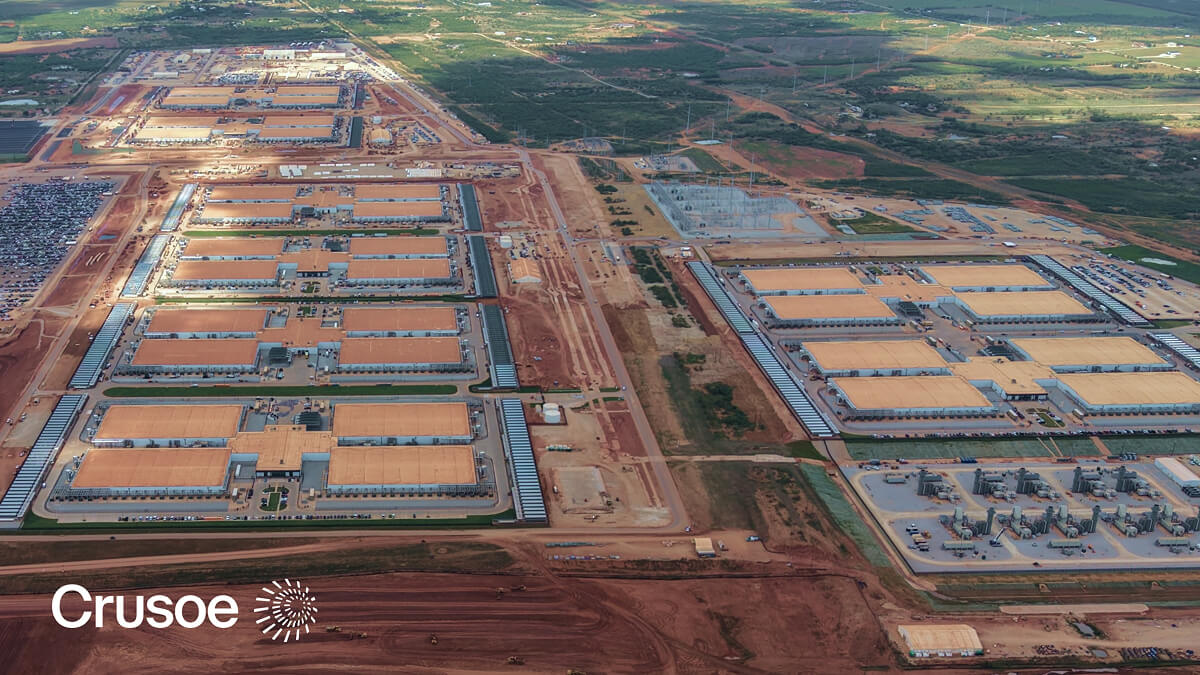
$3 billion is what investors have just reportedly poured into Crusoe at a roughly $30 billion valuation. Not because it built the world’s sexiest AI product, but because it can get electricity, data centres and GPU capacity into the ground.
That is the uncomfortable truth for every founder telling themselves AI will make capital requirements disappear. It won’t. AI may make a two-person software team more productive. But the companies capturing the fattest part of the value chain are increasingly the ones that can secure megawatts, cooling, chips, construction crews and signed customers before the next bloke does.
Crusoe’s reported funding round is the sort of deal that should make founders and investors sit up straight. It is a reminder that, in a market drunk on demos, the scarce asset is still the ability to deliver.
Crusoe has gone from flare gas to a $30 billion AI infrastructure bet
Bloomberg reported this week that Crusoe, the cloud-computing provider and data-centre developer, raised more than $3 billion at a valuation of roughly $30 billion. Atreides Management and Valor Equity Partners reportedly co-led the round, with Mubadala Capital also participating.
The valuation matters because it is roughly triple the more than $10 billion Crusoe was valued at in October 2025, when it raised $1.38 billion. Ten months. Three times the value. That is not normal startup compounding. That is a market putting an enormous price on a company’s ability to turn power into usable AI compute.
Crusoe was founded in 2018 by Chase Lochmiller and Cully Cavness. Its original business was genuinely odd: using stranded or flared natural gas at oil fields to run modular computing equipment, initially for Bitcoin mining. Most people saw crypto rigs in remote energy sites and filed it under “interesting, probably niche.”
The founders saw something more useful: energy is often the limiting input, and compute is just a way of monetising it.
That insight has aged extremely well. Crusoe has moved hard into AI infrastructure, including data-centre campuses and its Crusoe Cloud offering. The company says it had contracted 4.9 gigawatts of AI infrastructure capacity as of June 9, 2026, with a development pipeline exceeding 40 gigawatts. It has also said its footprint includes 13.6 million square feet of data-centre capacity.
Don’t get hypnotised by the big pipeline number. A pipeline is not cash flow. It includes projects in negotiation and development, not just operating assets. But 4.9 gigawatts under contract is still a serious statement of intent. This isn’t a SaaS company adding another sales rep. It is a full-contact infrastructure business where the mistakes cost hundreds of millions and delays can ruin a customer relationship.
The $13 billion Jane Street deal is the bit that changes the maths
The funding did not land in a vacuum. Bloomberg also reported that Crusoe recently secured a roughly $13 billion, five-year agreement to supply GPU and AI-cloud infrastructure to quantitative trading firm Jane Street.
On a back-of-the-beer-coaster basis, that works out to about $2.6 billion a year. But sensible people should put the coaster down before deciding Crusoe has $13 billion of clean, bankable revenue sitting in the till.
The agreement is privately reported, rather than publicly detailed by either company. The reporting does not disclose the precise capacity, locations, pricing mechanics, delivery milestones, margins, termination rights or how much of the headline figure depends on options and extensions. Those details are the difference between a spectacular contract and a spectacular press clipping.
Still, the strategic significance is obvious. A large, sophisticated customer committing to compute at this scale gives Crusoe something every capital-intensive startup needs: a better story for the next dollar of financing.
This is how the machine works. A customer contract helps justify equity. Equity helps unlock debt and equipment financing. That money pays for GPUs, networking, substations, cooling, generators and buildings. If the company delivers capacity on time, it earns the right to finance the next site more cheaply. If it misses, the whole thing can become a very expensive monument to PowerPoint.
That is why Jane Street matters more than the headline valuation. In infrastructure, contracts are oxygen.
AI has turned power into a venture asset
For years, venture capital wanted software businesses precisely because they did not need much capital. Write code once, sell it repeatedly, earn fat margins, buy a yacht if things go well.
AI is changing that neat little model at the frontier. Plenty of valuable AI businesses will remain asset-light: vertical software, workflow tools, services, agent layers and specialised applications. But the foundational layer is becoming brutally physical.
You need electricity at industrial scale. You need grid connections that can take years. You need transformers and switchgear that are not magically delivered by a bloke from Bunnings. You need water or alternative cooling systems. You need chips. You need customers willing to sign contracts before capacity is fully built.
Crusoe’s pitch is vertical integration: energy sourcing, AI-optimised data-centre construction and cloud capacity. Whether it executes that promise is another question. But the reason investors are paying up is clear. Each layer it controls can reduce dependency on somebody else’s bottleneck.
That is the big investment lesson here: scarcity beats novelty when the market gets crowded.
There are thousands of teams building AI wrappers, assistants and agent products. There are far fewer companies capable of reliably delivering powered, high-density computing capacity at scale. The latter group has more operational pain, more capital risk and more regulation to deal with. It also has a much stronger moat if it gets the execution right.
The overlooked risk: a $30 billion valuation does not install a transformer
Here is the part the cheerleaders will skip. Crusoe’s valuation has risen rapidly because the market believes demand for AI compute will remain ferocious and the company can deliver against it. Both assumptions may prove right. Neither is guaranteed.
A data-centre company can have a cracker of a customer list and still stumble badly on delivery. Construction schedules slip. Utility interconnections take longer than expected. Equipment arrives late. Power costs move. Financing gets dearer. Customers change their plans. AI hardware evolves faster than the capacity you are building around it.
Crusoe has already experienced project-level friction. Bloomberg reported in June that it had paused a planned Wyoming campus after issues around the project’s customer and timing. That does not invalidate the company. It does illustrate the point: this business is not a spreadsheet where revenue rises smoothly from the bottom left to the top right.
The physical world has veto power.
And investors should be careful with the phrase “AI infrastructure.” It makes every warehouse with servers sound like a toll road. It is not. The winners will be the operators that secure power early, finance intelligently, build on schedule and maintain enough commercial discipline to avoid signing flashy deals that cannot earn a return.
In other words: this is a great business only if you are excellent at the boring bits. I respect that. Most people don’t have the patience for boring until boring starts making billions.
The contrarian read: Crusoe is not really selling GPUs
The easy take is that Crusoe is a GPU cloud company. That is only half right.
GPUs matter, obviously. But chips become available, get replaced and eventually become yesterday’s silicon. The durable advantage is the company’s ability to assemble the whole package around them: energy, site control, construction, cooling, networking, financing and contracted demand.
That is why its origins in energy matter. Crusoe’s initial crypto-mining model may have looked like a detour. In reality, it taught the company to think about compute as an energy-conversion problem. When AI demand exploded, that capability became far more valuable than another dashboard or another model wrapper.
Founders should take note. Your first market does not have to be your final market. But it needs to give you a capability that survives the pivot. Crusoe did not merely abandon crypto and chase AI because AI was fashionable. It repurposed an operating muscle: finding difficult power and putting compute next to it.
That is a proper pivot. Same hard capability, much bigger customer demand.
What this means for you
If you are a founder, stop asking only, “Can AI make this product?” Ask, “What scarce thing do we control if this works?” It might be proprietary distribution, trusted data, regulatory access, a specialist workforce, a hard-won supply relationship or the ability to implement faster than incumbents. If the answer is merely “we use the same model as everyone else,” you have a feature until proven otherwise.
If you run an operating business, treat AI capacity and vendor access like procurement, not magic. Get clear on your workloads, your data requirements, switching costs, uptime needs and the commercial terms behind any long-term commitment. A flashy AI partnership can become a costly hostage situation if you have not done the boring work upfront.
If you invest, separate headline contract value from delivered economics. Ask what is contracted, what is conditional, when capacity must come online, who funds the build, and what happens if demand or hardware changes. A $13 billion deal sounds magnificent. The cash conversion and execution risk are where the truth lives.
And for everyone else: the next wave of wealth in AI will not belong exclusively to the people writing prompts. It will belong to the people who own the bottlenecks, build real capability and deliver when the room gets crowded.
Crusoe’s reported $3 billion round is a very loud reminder that the boring business of making things work is still where serious money gets made.