Dallas Cowboys’ $17B Valuation: Jerry Jones Built a Stadium Business
The Dallas Cowboys have not won a Super Bowl in 30 years, yet Jerry Jones just turned them into a $17 billion asset. Winning matters; owning the cash register matters more.
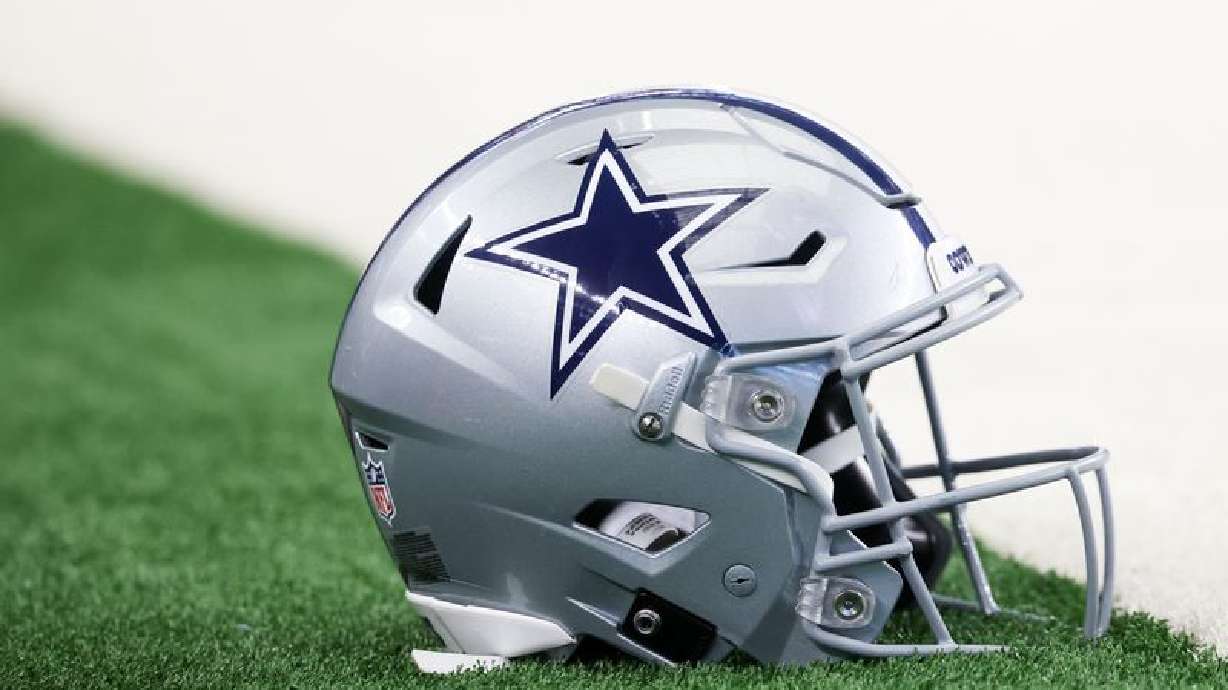
The Dallas Cowboys have not won a Super Bowl in 30 years, yet Jerry Jones just turned them into a $17 billion asset. Winning matters; owning the cash register matters more.
Forbes has valued the Cowboys at $17 billion, up 31% on 2025, after estimating they produced nearly $1.28 billion in revenue and $677 million in operating income last season. That is not a football club with a healthy side business. It is a gigantic entertainment-and-property machine that happens to play 17 regular-season football games a year. ([forbes.com](https://www.forbes.com/sites/justinteitelbaum/2026/09/09/the-nfls-most-valuable-teams-2026/?utm_source=openai))
The Cowboys are not valued like a team because they are not run like one
Most sports owners still talk as if their job is to field a competitive side and hope the accountants sort out the rest. Jerry Jones understood the opposite decades ago: build the commercial engine first, then make the football team the most valuable programming inside it.
AT&T Stadium is the clearest expression of that thinking. It is an NFL venue, obviously, but it is also a premium-events asset with vast capacity, suites, sponsorship inventory, hospitality, naming rights and a calendar that extends well beyond Cowboys home games. Forbes estimates Dallas generated nearly $1.28 billion in revenue last season, a record total for a sports team in its methodology. The reported $677 million in operating income is the number that should make every founder sit up. Revenue is applause. Operating income is what lets you buy the next advantage. ([forbes.com](https://www.forbes.com/sites/justinteitelbaum/2026/09/09/the-nfls-most-valuable-teams-2026/?utm_source=openai))
The Cowboys’ valuation is also a useful slap in the face for people who confuse sporting achievement with business value. Dallas remains one of the world’s most recognisable sporting brands despite its title drought stretching back to January 1996. Dak Prescott can affect the weekly product. Jones’s commercial machine determines whether the franchise prints money regardless of whether Prescott gets a ring.
That is not an argument that performance is irrelevant. A rubbish team eventually makes selling expensive seats, sponsors and merchandise harder. It is an argument that sporting performance is only one input. Scarcity, brand, distribution, pricing power and control of the venue are the inputs that compound for decades.
The $300 billion NFL lesson: scarcity beats cleverness
Forbes says the NFL’s 32 franchises are now worth more than $300 billion combined, with an average team value of $9.5 billion, up 34% from 2025. Its list put every club above $8 billion. Read that again: the floor of the league is now eight billion dollars. ([forbes.com](https://www.forbes.com/sites/justinteitelbaum/2026/09/09/the-nfls-most-valuable-teams-2026/?utm_source=openai))
That is not because 32 teams suddenly became 34% better at football. It is because there are only 32 ownership seats in the most reliable live-entertainment cartel on the planet, and an ever larger queue of billionaires wants one.
The current numbers are estimates, not sale prices, and different firms will produce different answers. CNBC put the Cowboys at $16 billion, the Los Angeles Rams at $14.5 billion, the Las Vegas Raiders at $13 billion, the New York Giants at $12.5 billion and the New England Patriots at $12.25 billion. Forbes’s ranking had Dallas at $17 billion, followed by the Rams at $13.5 billion, the Giants at $12 billion, the Patriots at $10.6 billion and the San Francisco 49ers at $10.5 billion. ([nbcphiladelphia.com](https://www.nbcphiladelphia.com/news/sports/nfl/cnbc-nfl-franchise-valuations-2026/4457509/))
Don’t get hung up on the gap. The discrepancy is the point. These are illiquid assets with no daily ticker and few comparable sales. The serious signal is direction: the buyer pool is getting richer, the assets are scarce, and the commercial infrastructure beneath them keeps improving.
That is why private-equity money matters even when it buys only slices. Forbes noted Arctos took roughly 3% of the Cleveland Browns at a $9 billion valuation in May and agreed in August to acquire 10% of the Atlanta Falcons at a blended $10.6 billion valuation. Small transactions reset the implied value of the whole asset. ([forbes.com](https://www.forbes.com/sites/justinteitelbaum/2026/09/09/the-nfls-most-valuable-teams-2026/?utm_source=openai))
The lesson is brutally simple: if the best buyers can only purchase minority stakes, the controlling asset becomes more valuable. Limited supply is not a marketing line. It is the business model.
Stan Kroenke and the Rams prove the stadium is the real battlefield
The Cowboys are the benchmark, but the Rams may be the more useful case study for operators. CNBC estimates Stan Kroenke’s Rams generated $950 million in 2025 revenue, second in the NFL, and valued the club at $14.5 billion. The Los Angeles Chargers share SoFi Stadium but reportedly generated $630 million.
Same city. Same building. Same league. Vastly different economics.
Why? The Rams control the economics of SoFi Stadium; the Chargers are tenants. That distinction is the whole bloody game. Kroenke built and operates the asset, so the Rams participate more directly in premium seating, venue operations and non-NFL events. CNBC reported that a concert can net well above $5 million in revenue. Run enough of them, and your stadium stops being a cost centre that hosts football. It becomes a high-end commercial precinct with football as the anchor tenant. ([nbcphiladelphia.com](https://www.nbcphiladelphia.com/news/sports/nfl/cnbc-nfl-franchise-valuations-2026/4457509/))
Founders should understand this instinctively. If you merely rent access to the thing that creates customer demand, you are donating a chunk of your upside to the owner of the platform. If you own the platform, the distribution, the customer relationship and the ancillary revenue, you have a proper business.
The Cowboys have spent years doing exactly that. They do not need every fan to attend every game. They need enough customers, sponsors and partners willing to pay a premium for access to a brand and a venue they cannot replicate elsewhere.
The overlooked angle: these valuations are a warning, not just a victory lap
It is tempting to look at a $17 billion Cowboys valuation and conclude that sport is idiot-proof. That would be lazy.
The price of any asset can rise faster than the underlying cash flow when wealthy buyers compete for status, scarcity and optionality. NFL franchises have extraordinary fundamentals, but that does not mean every sports investment at every price is smart. A minority stake with limited control, weak liquidity and no say over distributions is not the same thing as owning the Cowboys’ commercial engine.
Nor should a founder see this and decide the answer is to build a flashy headquarters or stadium-like office. That is how people torch capital trying to cosplay as Jerry Jones.
The actual lesson is narrower and more useful: identify the economic choke point in your business, then fight like hell to own it. For the Cowboys and Rams, it is venue economics. For a software company, it may be proprietary data, embedded workflow, a distribution channel, payments or a customer relationship so valuable that leaving feels painful.
Jones did not create value because his stadium is big and shiny. He created value because the Cowboys monetise far more of the customer journey than a normal team does. Big difference.
What this means for you
If you are a founder or operator, stop obsessing over vanity metrics for a minute and answer four questions.
First: what asset do customers actually come for? Your product may get them through the door, but perhaps the valuable asset is your audience, data, distribution, location or trust.
Second: which part of that asset do you rent? Every dependency deserves a hard look. If one platform, landlord, marketplace or supplier can change your economics overnight, you do not own a business moat. You have a revocable permission slip.
Third: where is your premium layer? The Cowboys do not survive on cheap seats. They build an ecosystem for customers willing to pay materially more for access, convenience and status. You should know exactly what your version of a suite, hospitality package or naming-rights deal is.
Fourth: are you building an asset that compounds without you? The Cowboys’ latest valuation is not a reward for a single good season. It is the market pricing decades of brand-building, infrastructure, pricing power and controlled scarcity.
That is the useful part of Jerry Jones’s $17 billion number. Don’t admire it. Steal the operating principle.
Build the thing people cannot easily replace. Own as much of its economics as you can. Then give the market very few chances to buy it.
That is how you make money while everyone else is still staring at the scoreboard.